Article · Field notes
Sunset Duckies: The Board
30 May 2026 23 min read
The board is done.
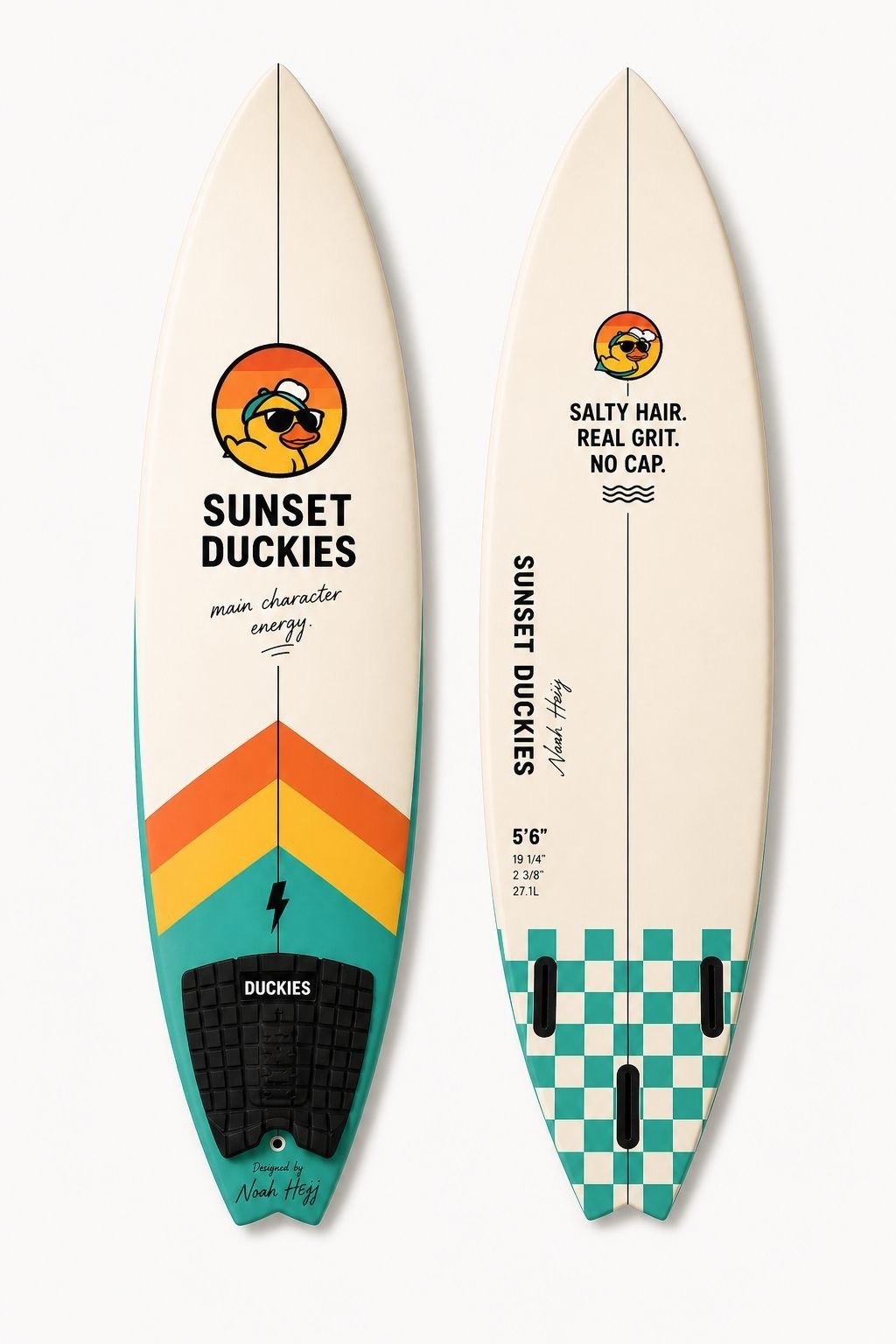
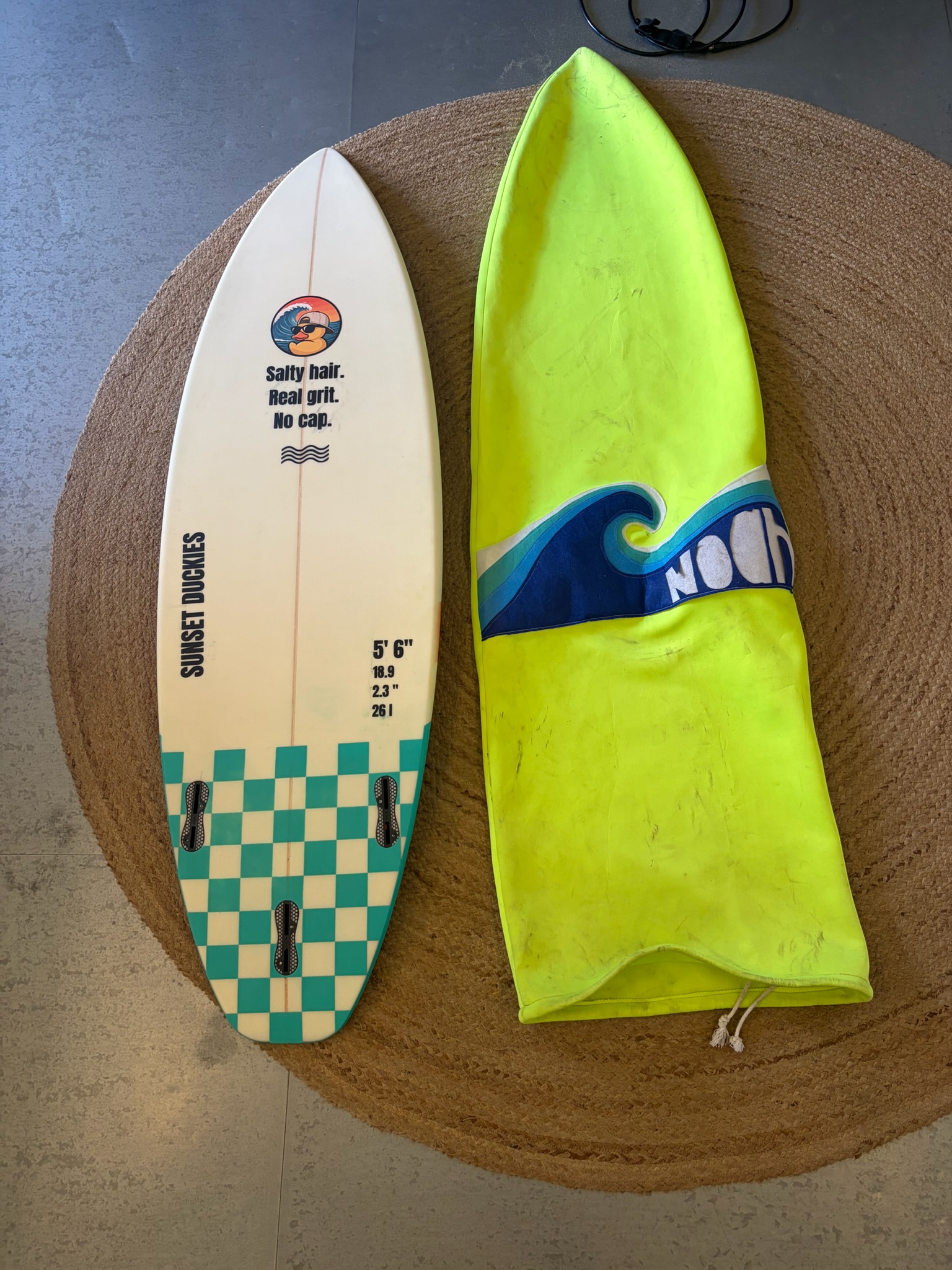
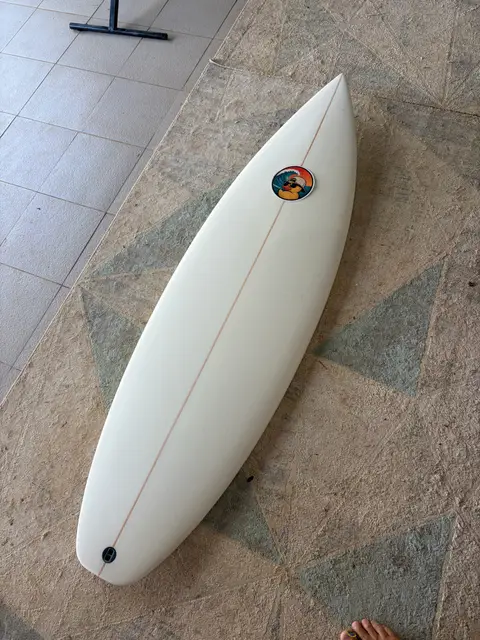
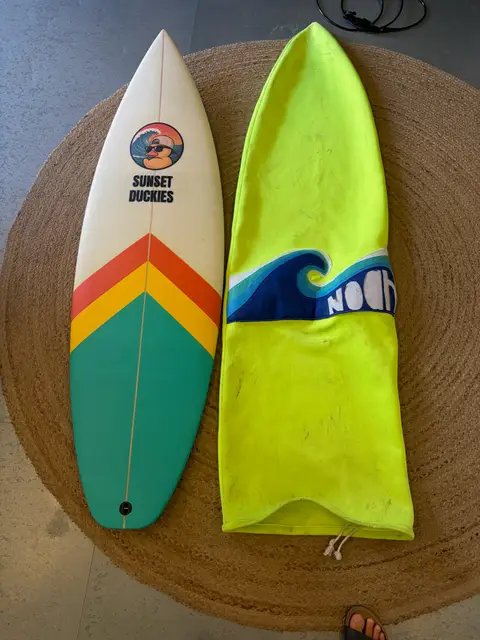
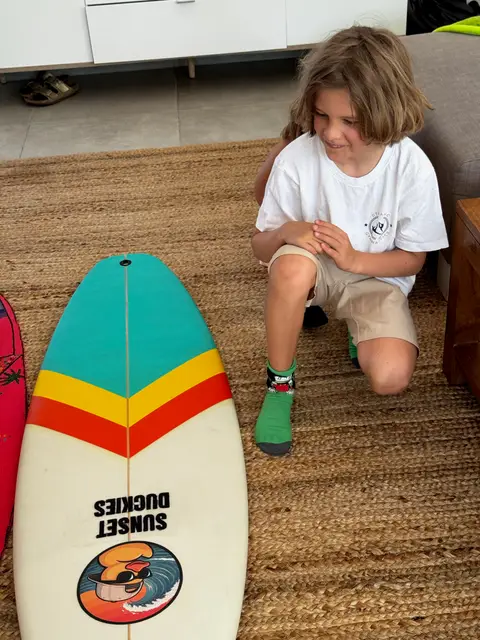
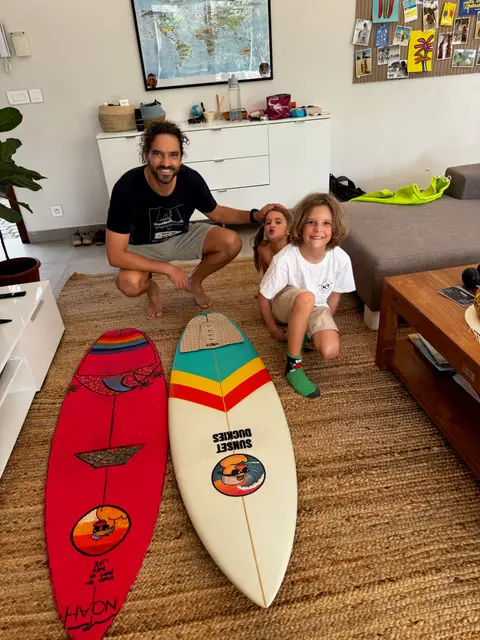
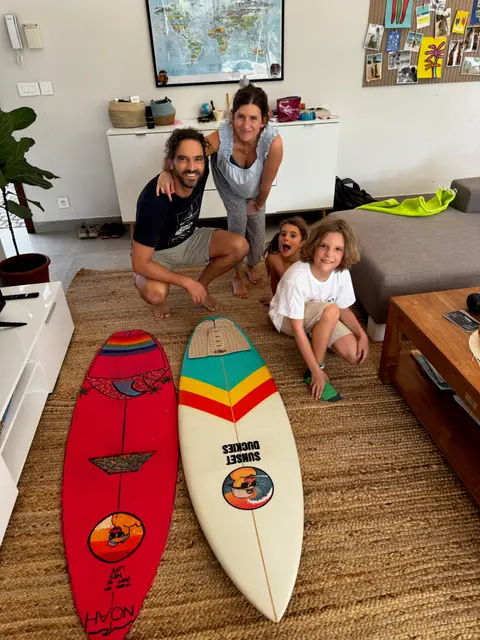
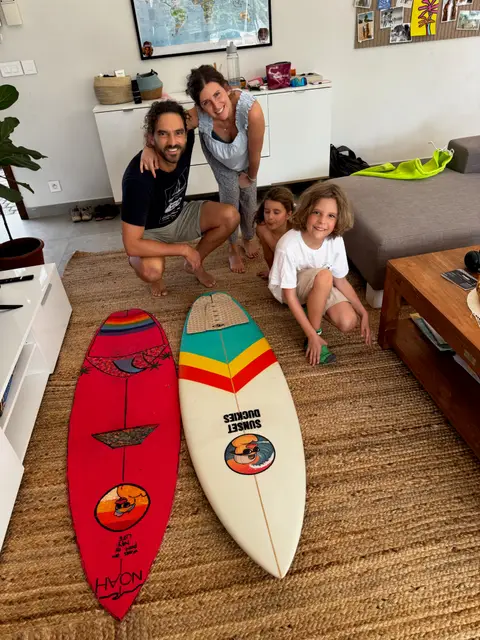
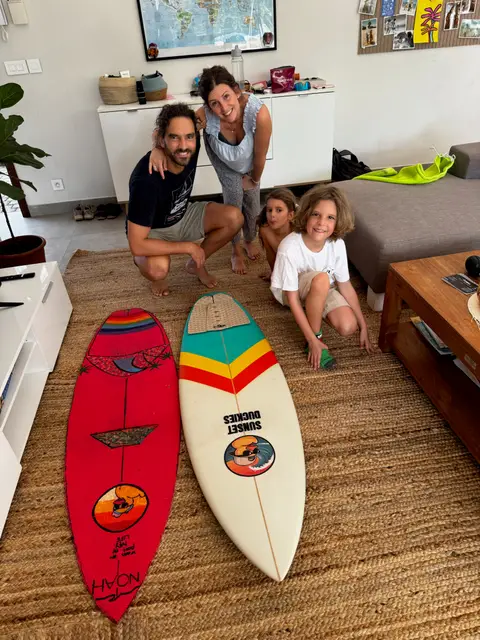
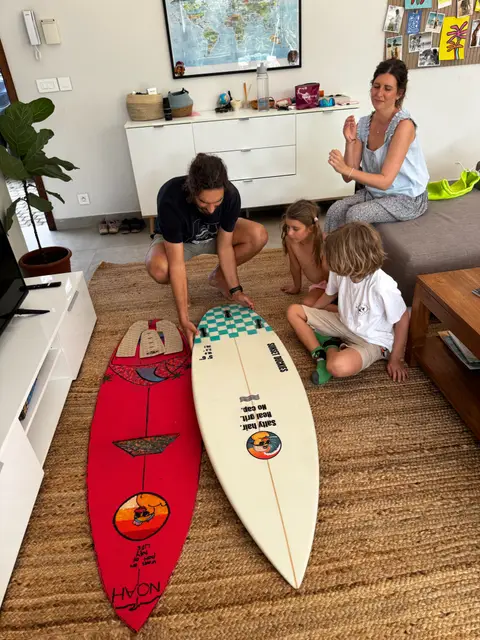
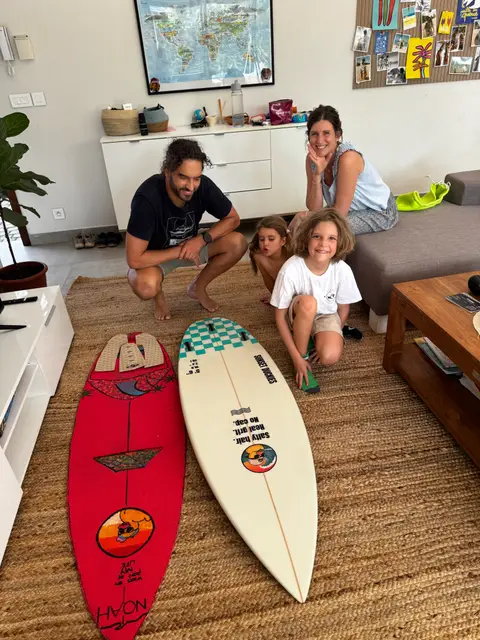
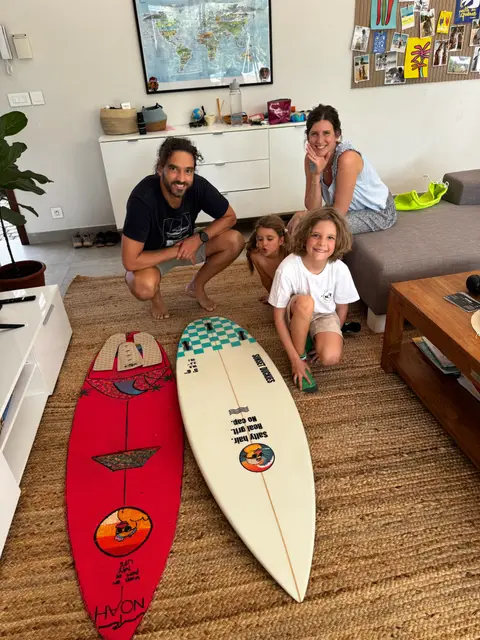
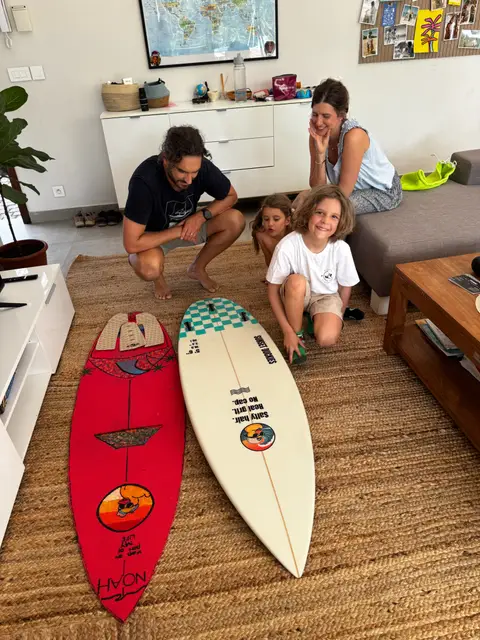
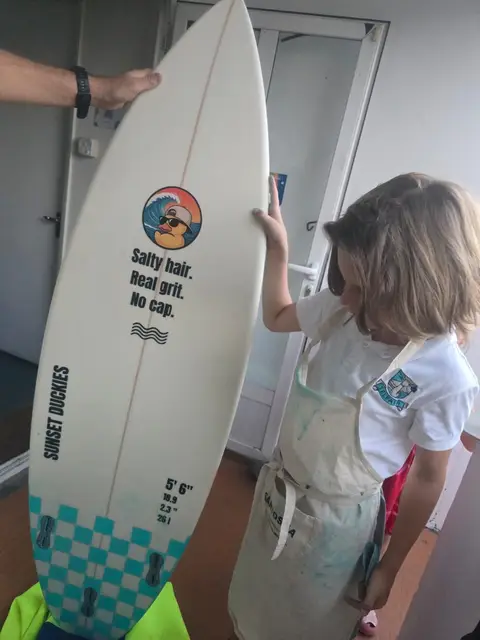
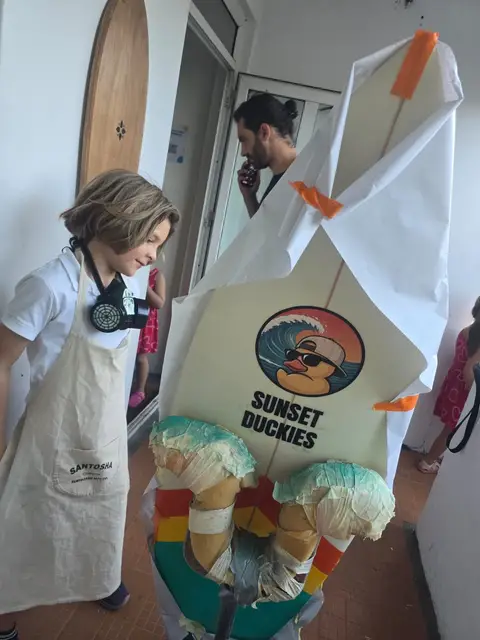
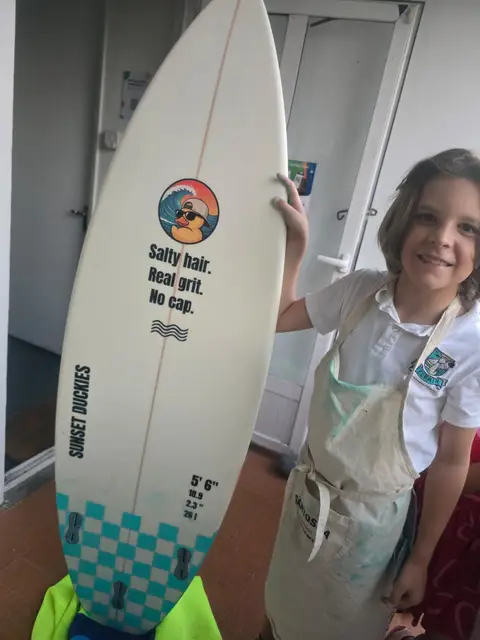
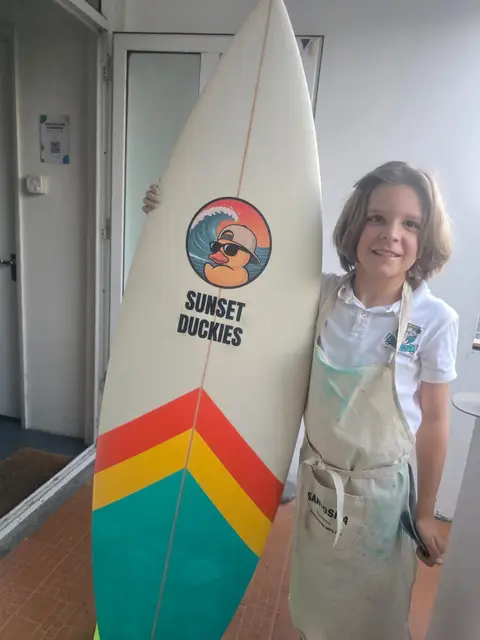
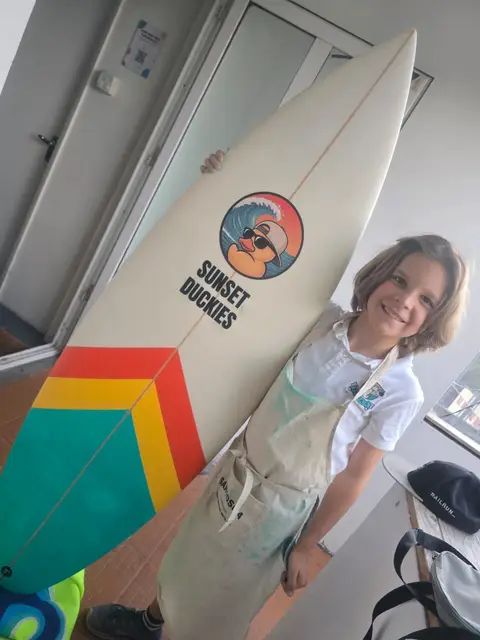
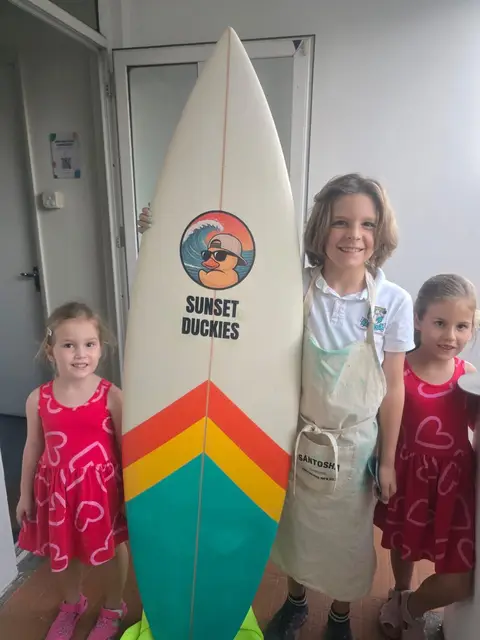
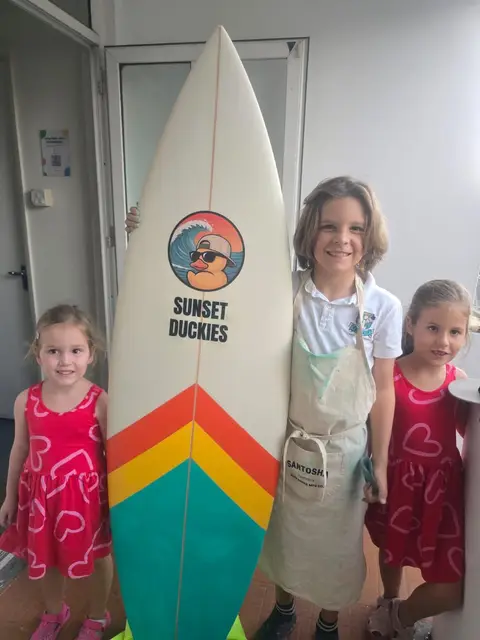
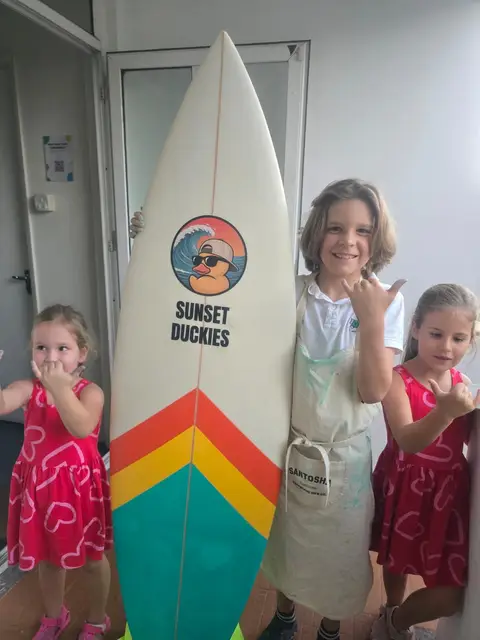
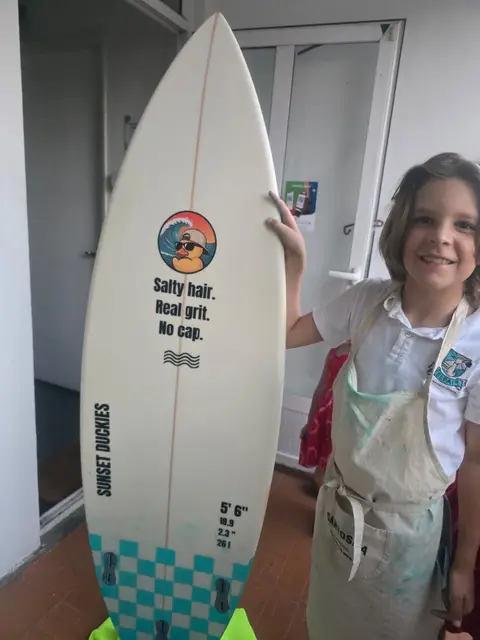
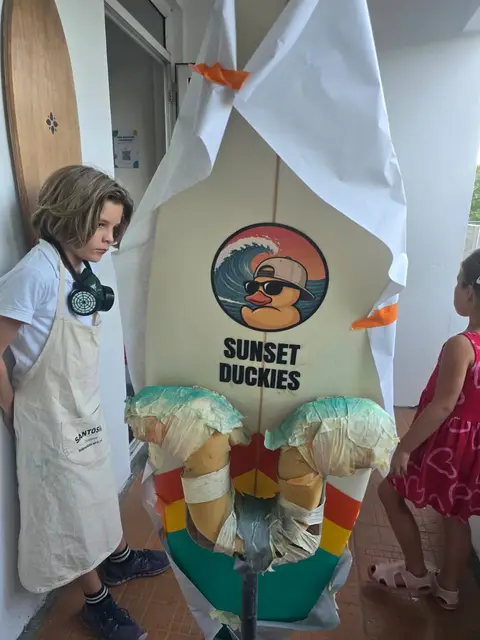
Three months ago this was a white blank on a stand at Santosha, with pencil marks on the foam and a lot of adults saying sensible things about patience. Now it’s a 5’6” shortboard with a pointed nose, three fin boxes, a teal checkerboard tail, and a duck in sunglasses on the deck.
It’s also the first thing Noah has made that’s too big for the fridge door.
The design
In the original plan Noah wanted flames. Fair enough. Flames are what you draw when you’re eight and someone asks what a fast thing should look like.
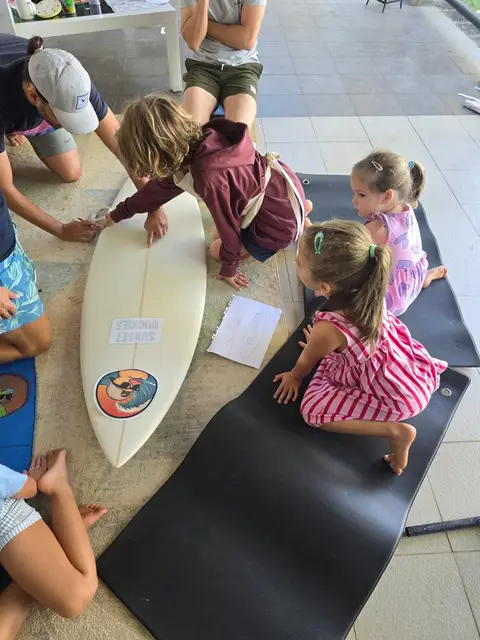
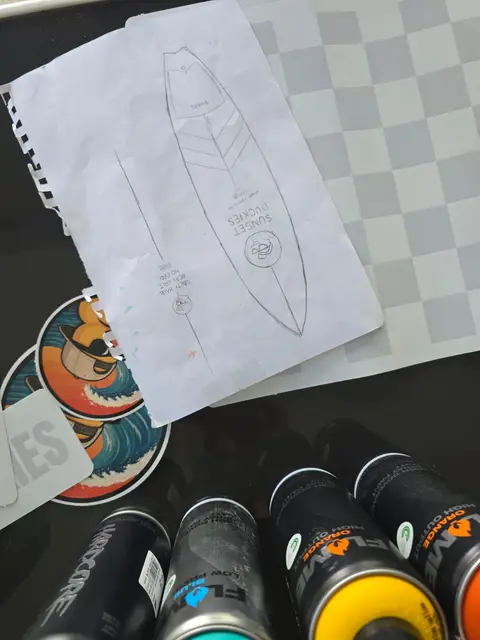
Then he sat down at the kitchen table with printer paper and drew a duck.
I’d love to say I saw straight away that the duck was better. I didn’t. I thought he was still warming up. He kept drawing, crossing things out, starting again. A version with sunglasses appeared. Then a name. Then a little map of where everything would go on the board.
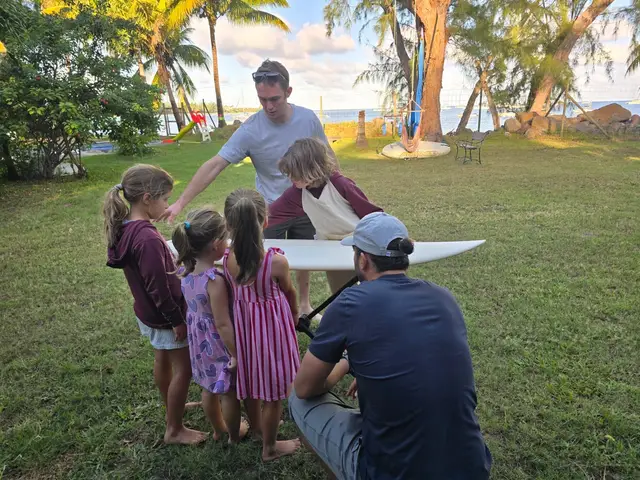
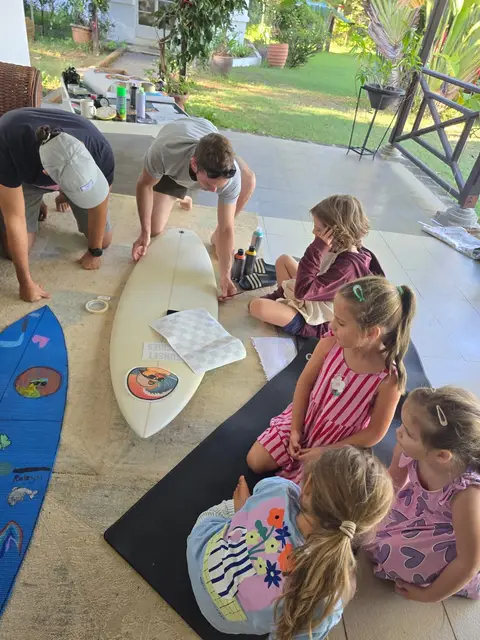
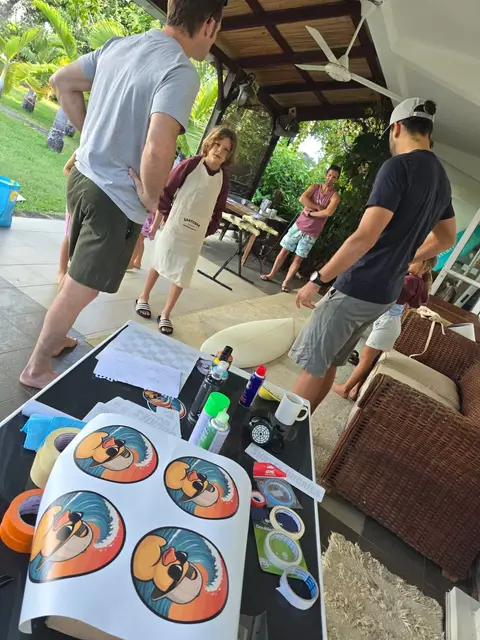
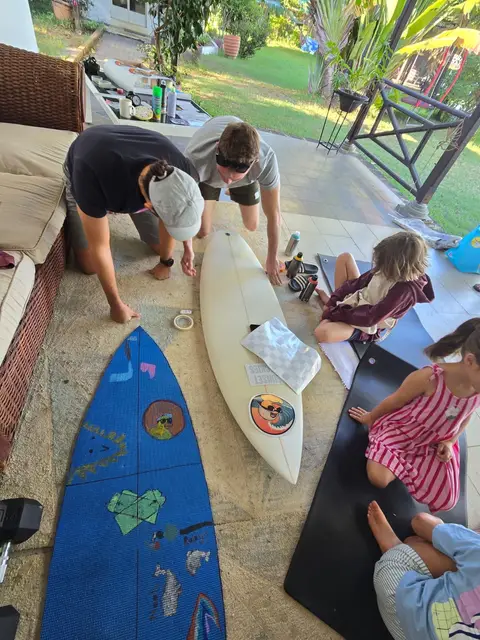
The finished logo style came later, and it was a group effort. We tried versions, put them in front of the other Duckies, let them vote, ignored some of their opinions, took others, and kept going until the thing felt like it belonged to the whole group and not just our kitchen table.
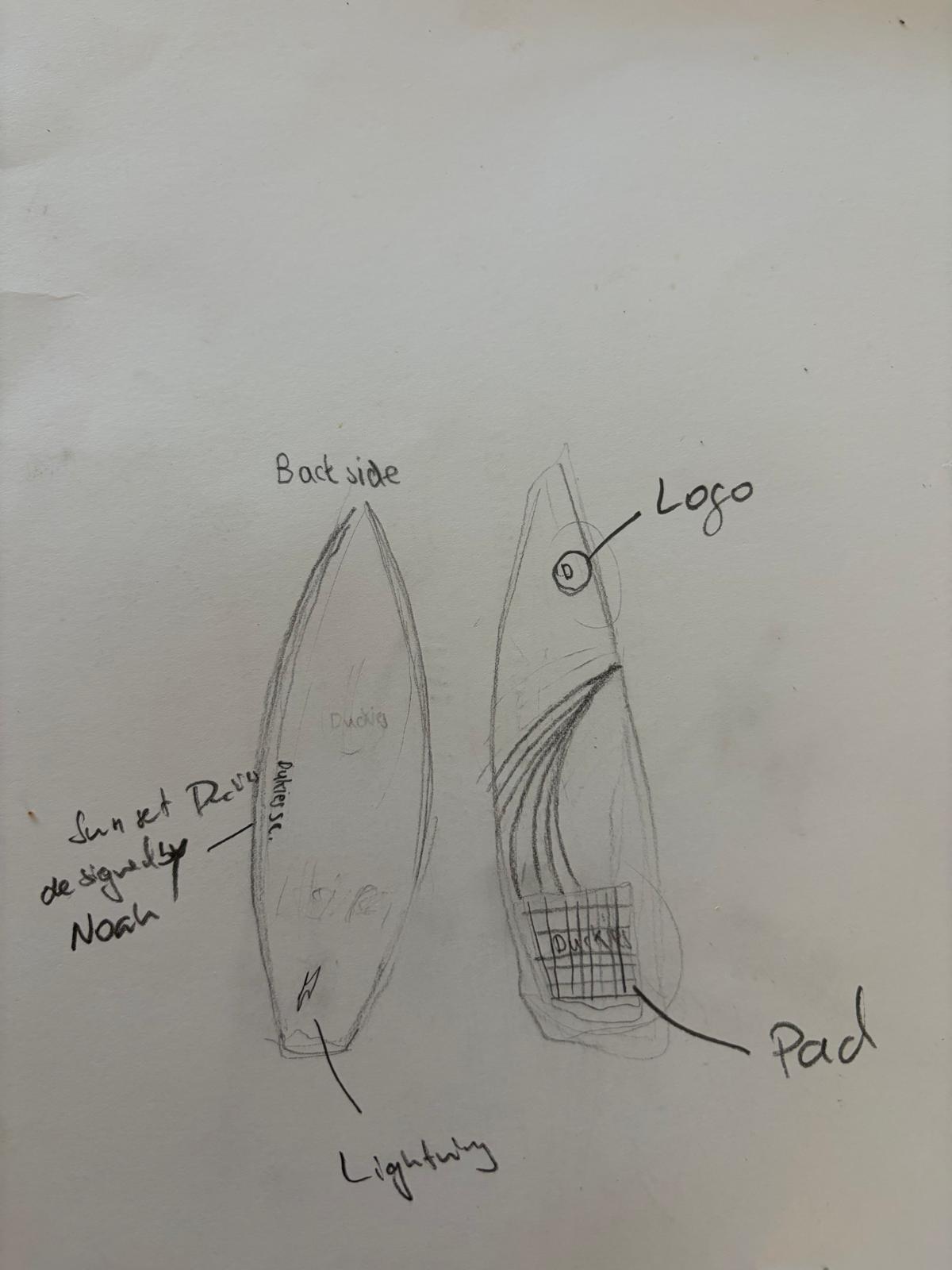
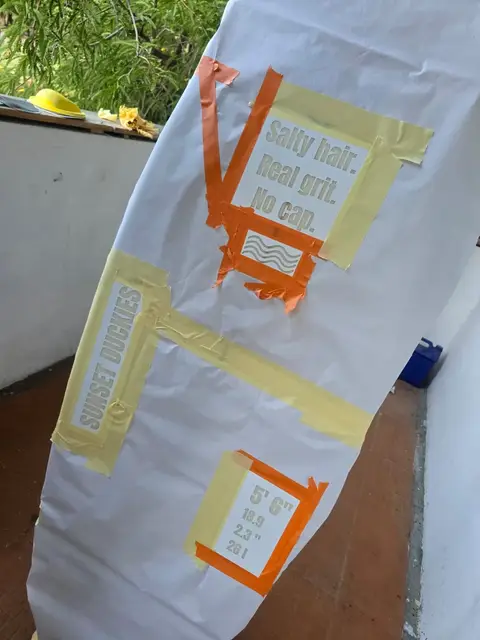
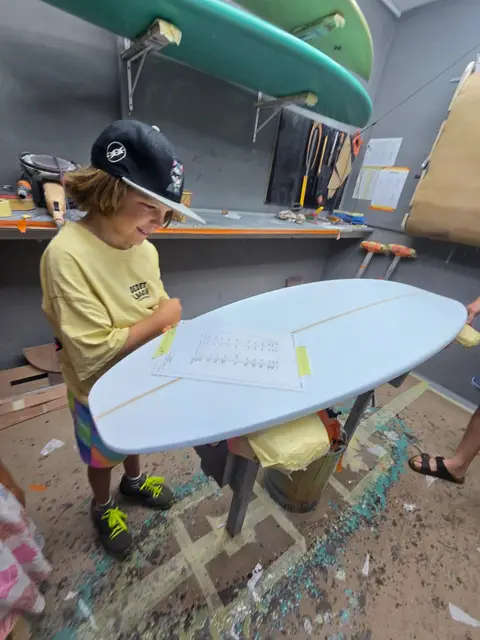
He labelled the parts in pencil: Back side, Logo, Pad, Lightning. Along the rail he wrote, “Sunset Ducky, designed by Noah.”
The useful part of all this was the pile of ugly pages before the one that stuck. The clean version the adults tidied up later mattered much less. Paper lets a kid be serious without having to be careful. Foam doesn’t. Take too much off a rail and, well, that’s the shape now.
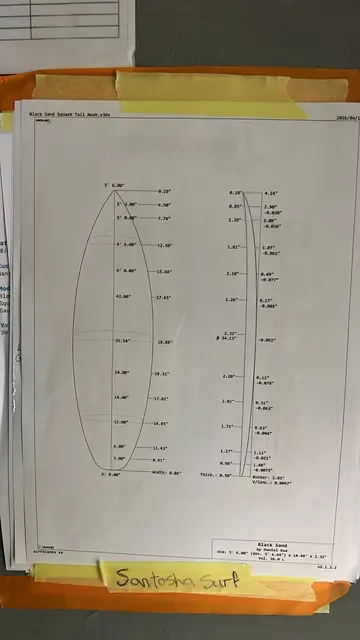
By the time we walked into Santosha, Noah’s weight and our home break had already settled the dimensions. The drawing gave us the duck. The group helped decide what it should look like once it was real.
Shaping the blank
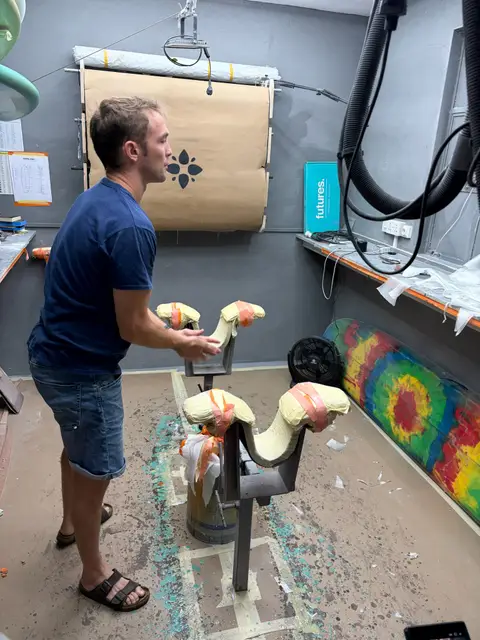
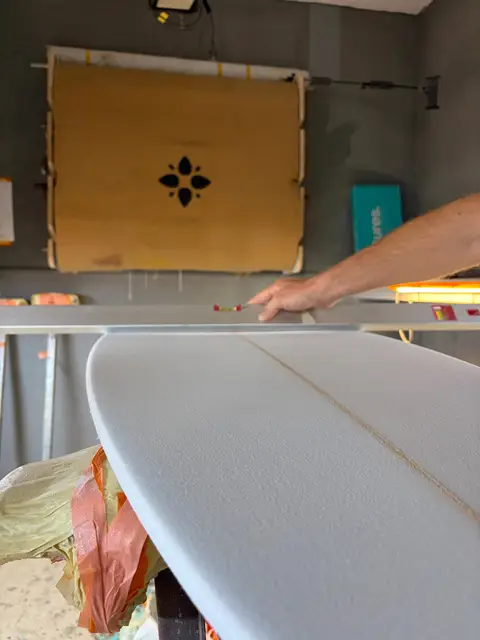
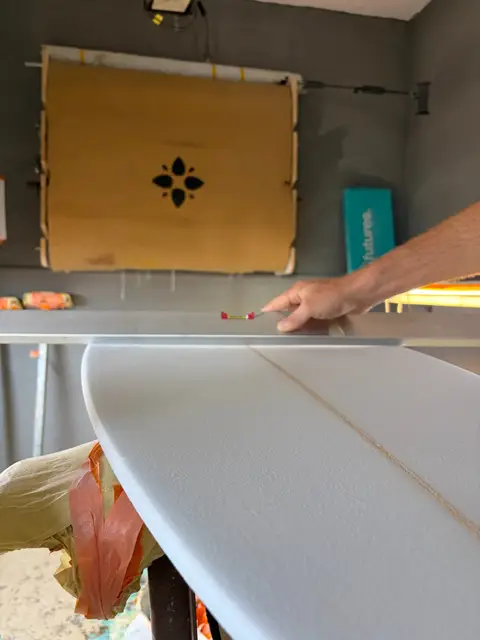
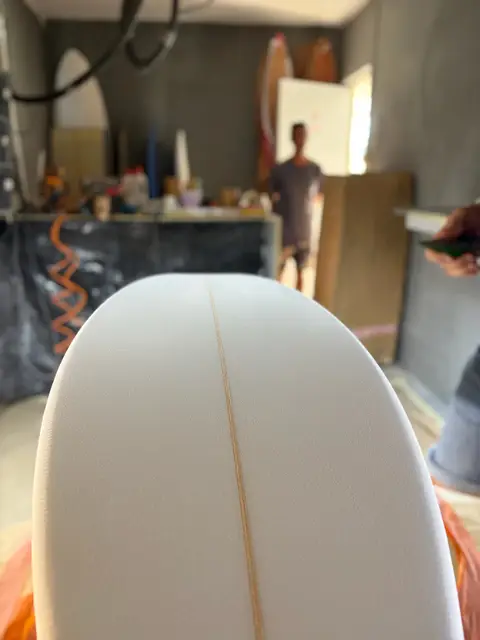
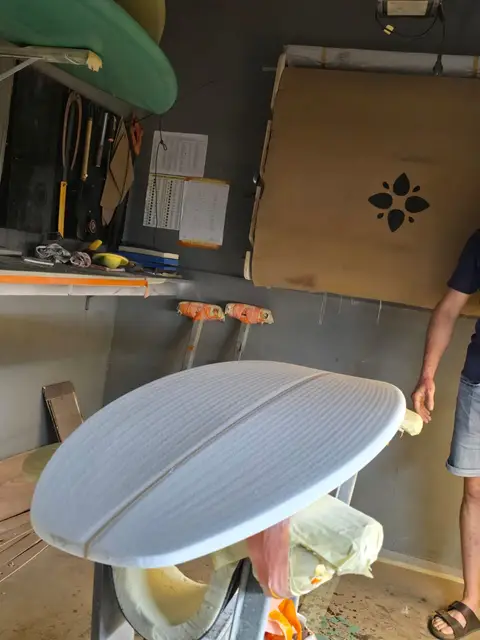
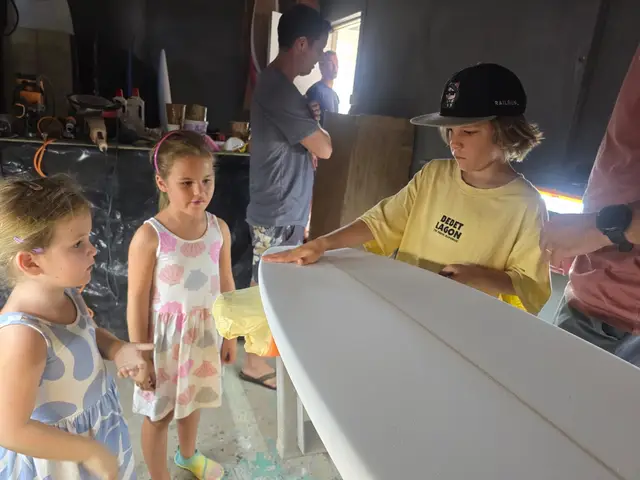
The blank arrived looking nothing like a surfboard. Foam, a stringer, some pencil marks, and far too much material everywhere.
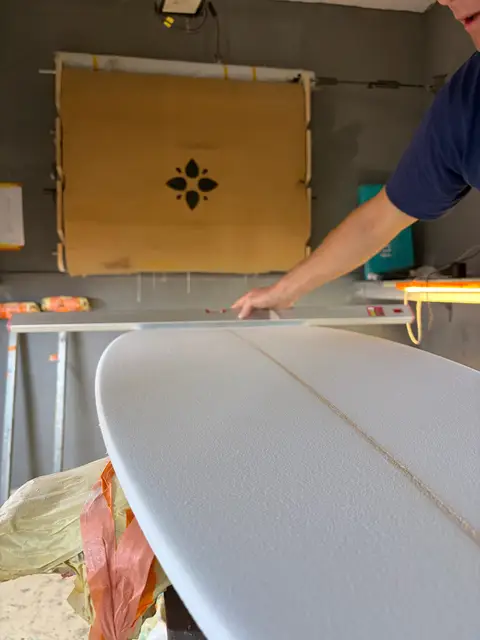
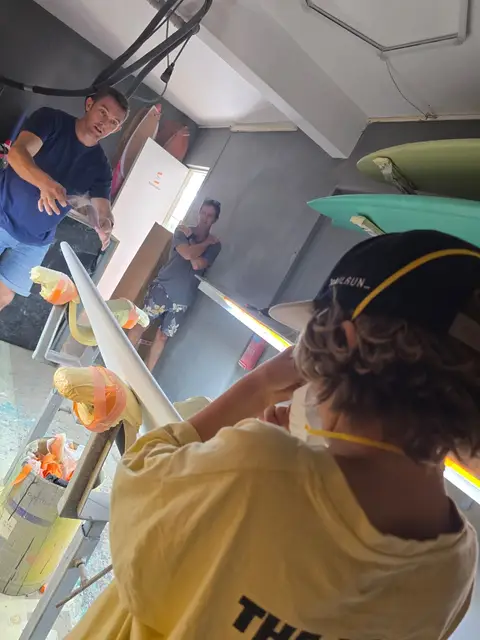
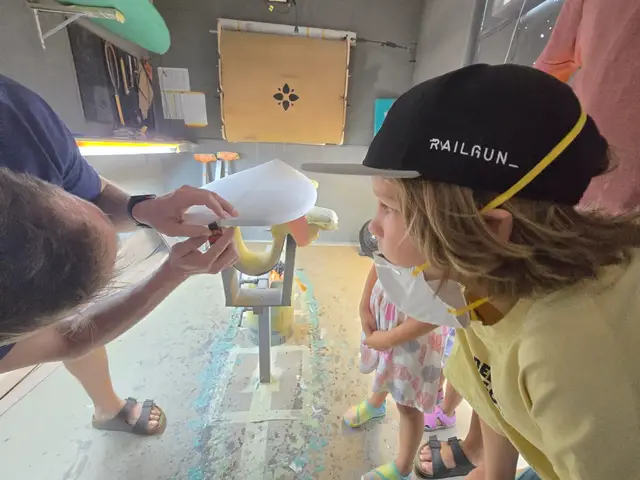
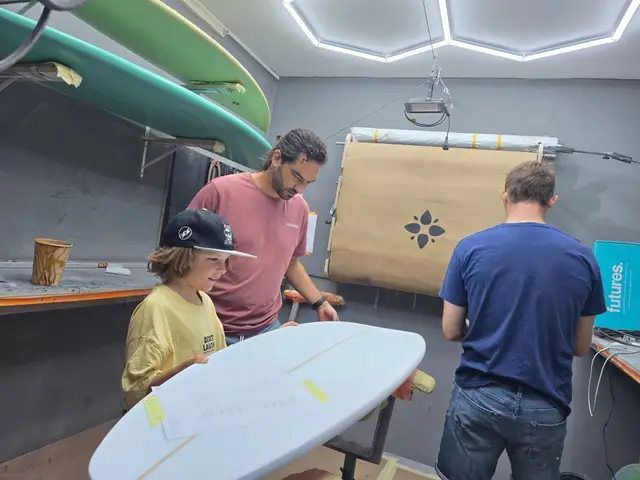
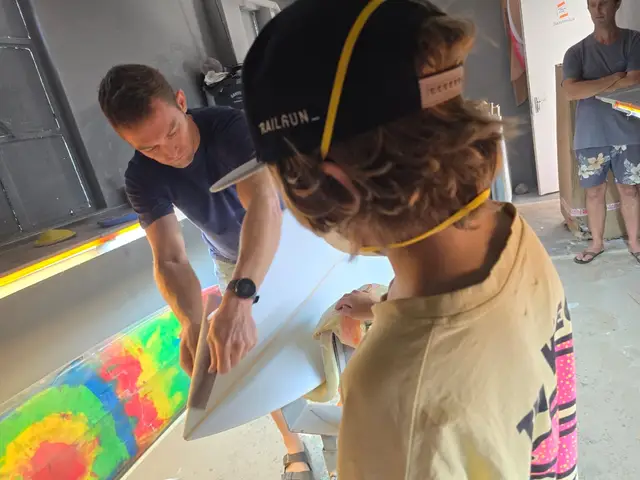
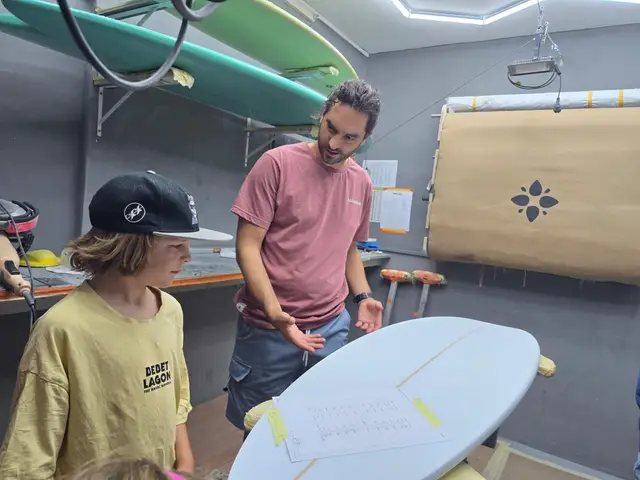
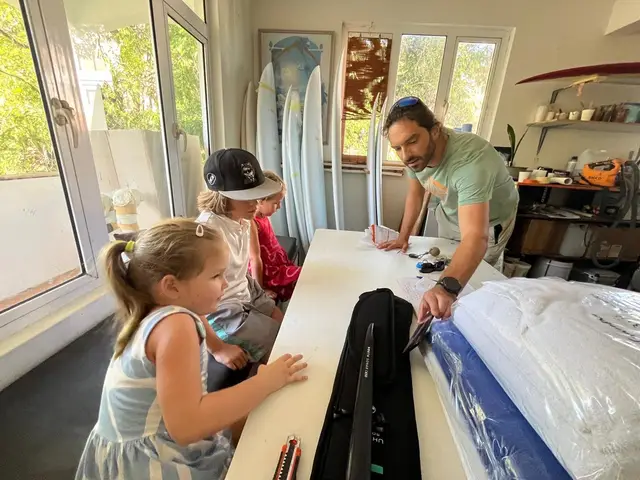
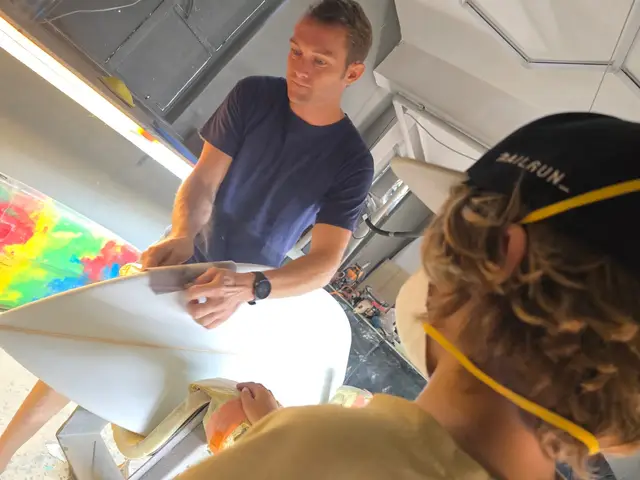
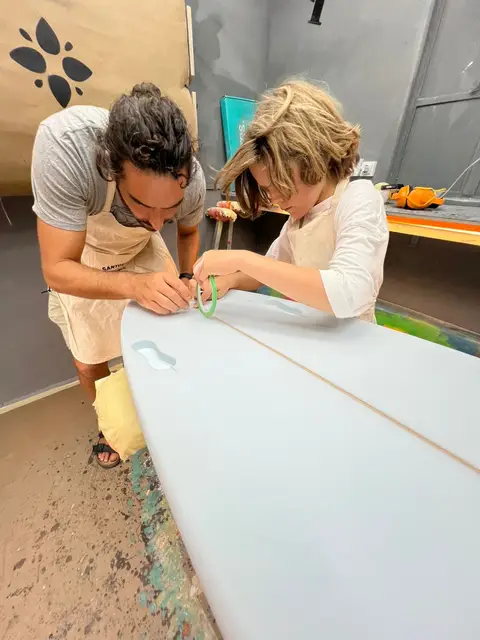
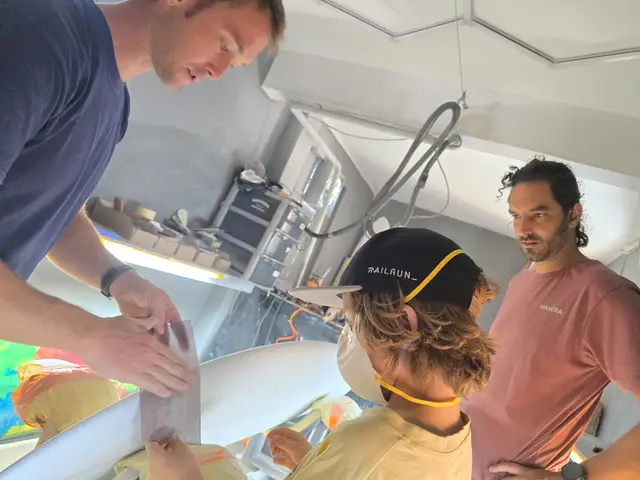
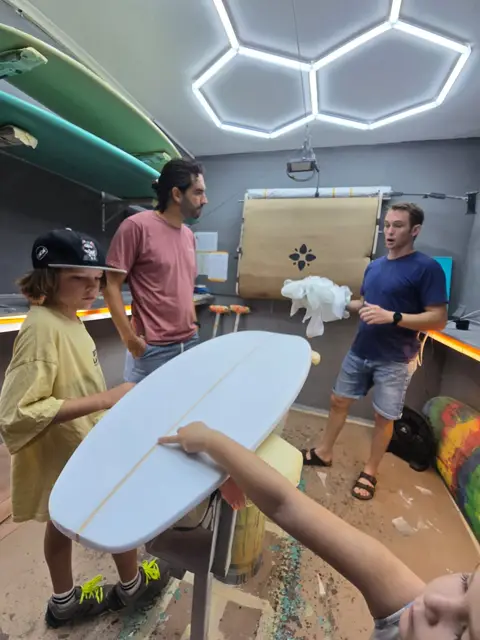
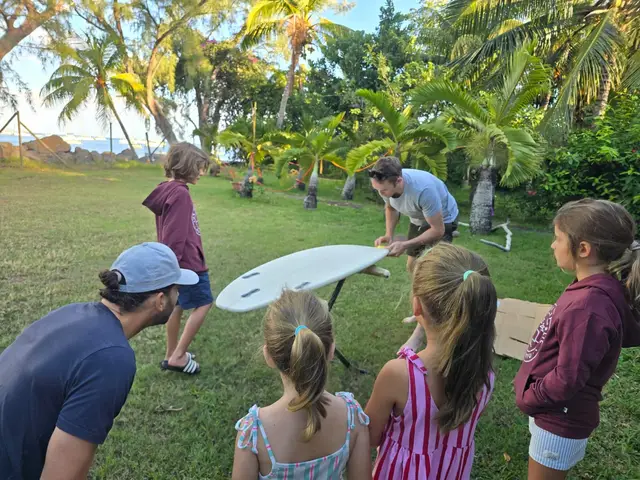
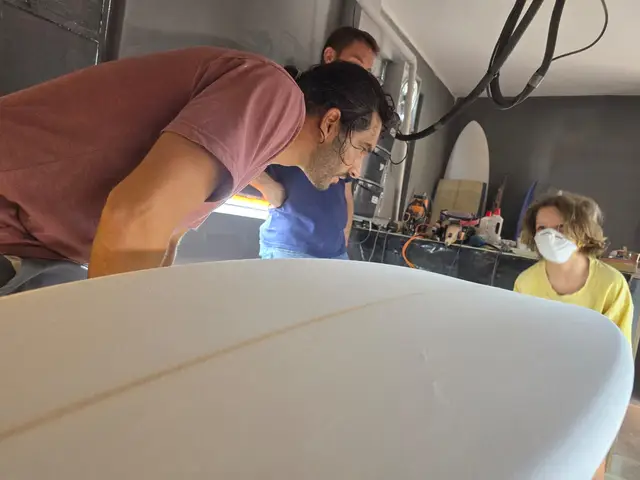
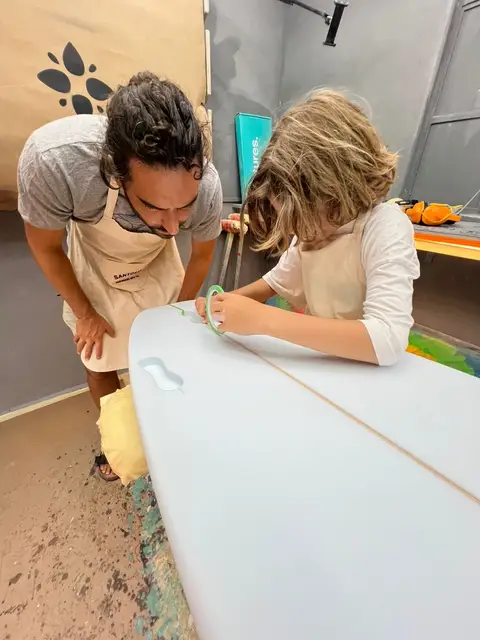
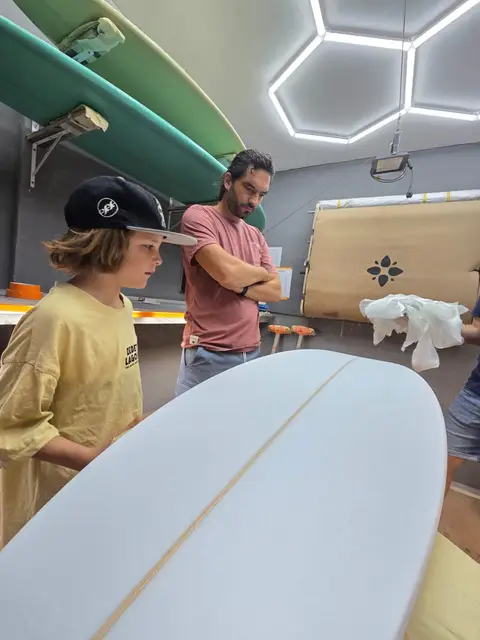
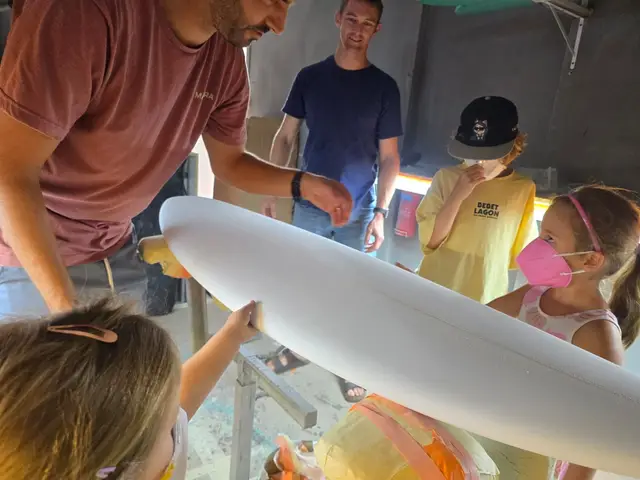
Before Daniel let him near a tool, Noah had to learn what he was looking at. Where the outline would come from. What the stringer was doing. Why a board can look symmetrical and still feel wrong under your hand.
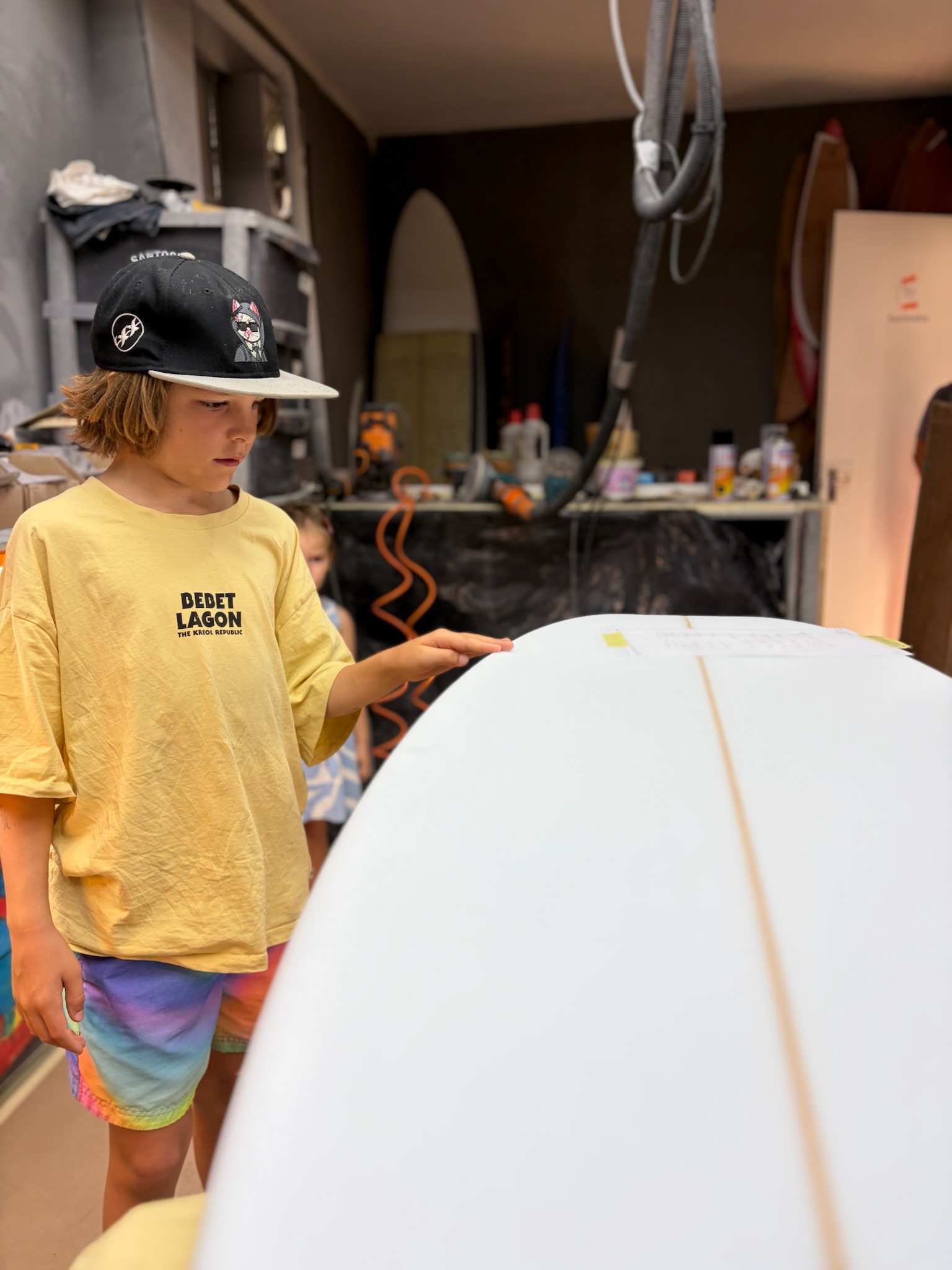
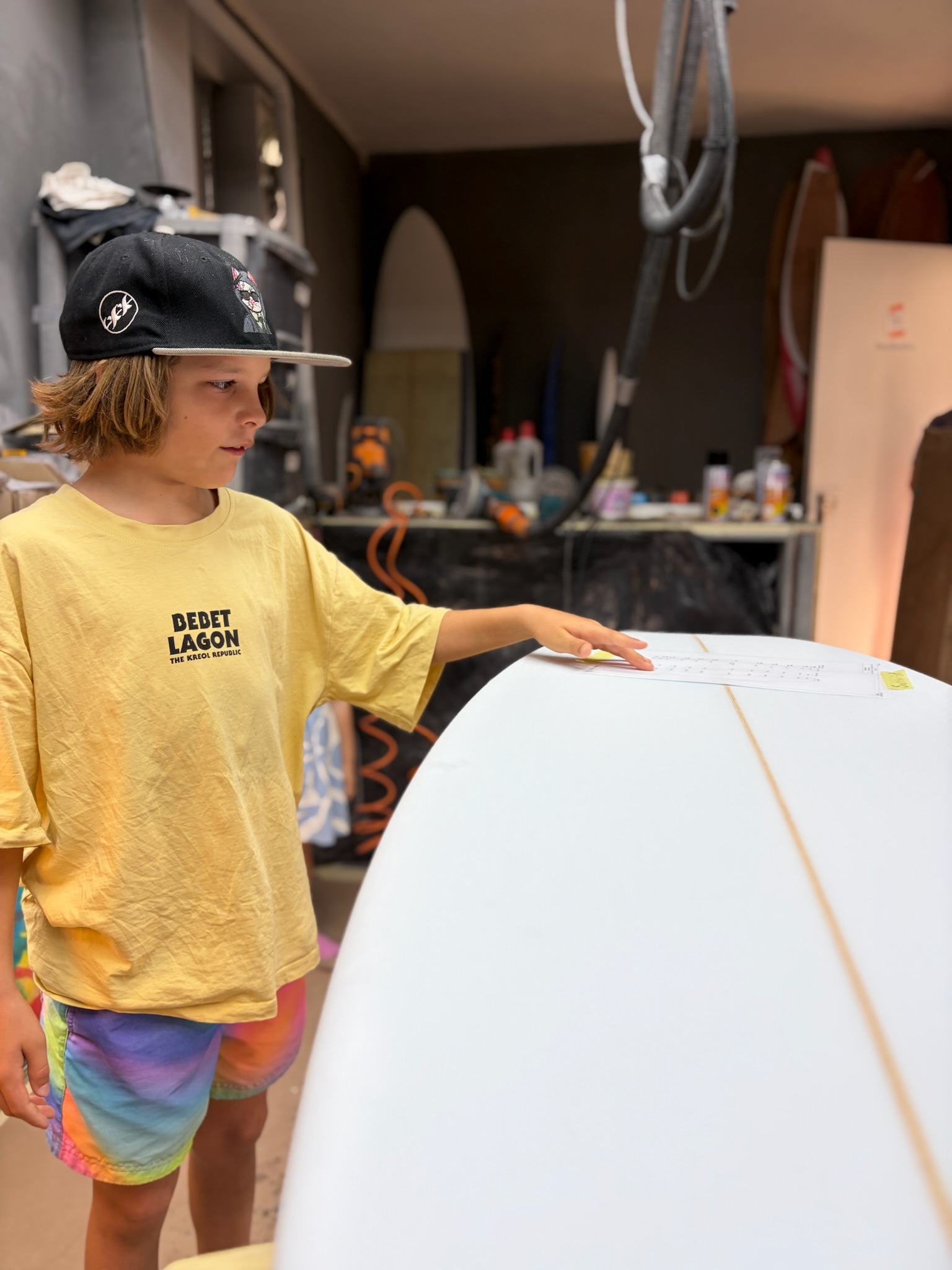
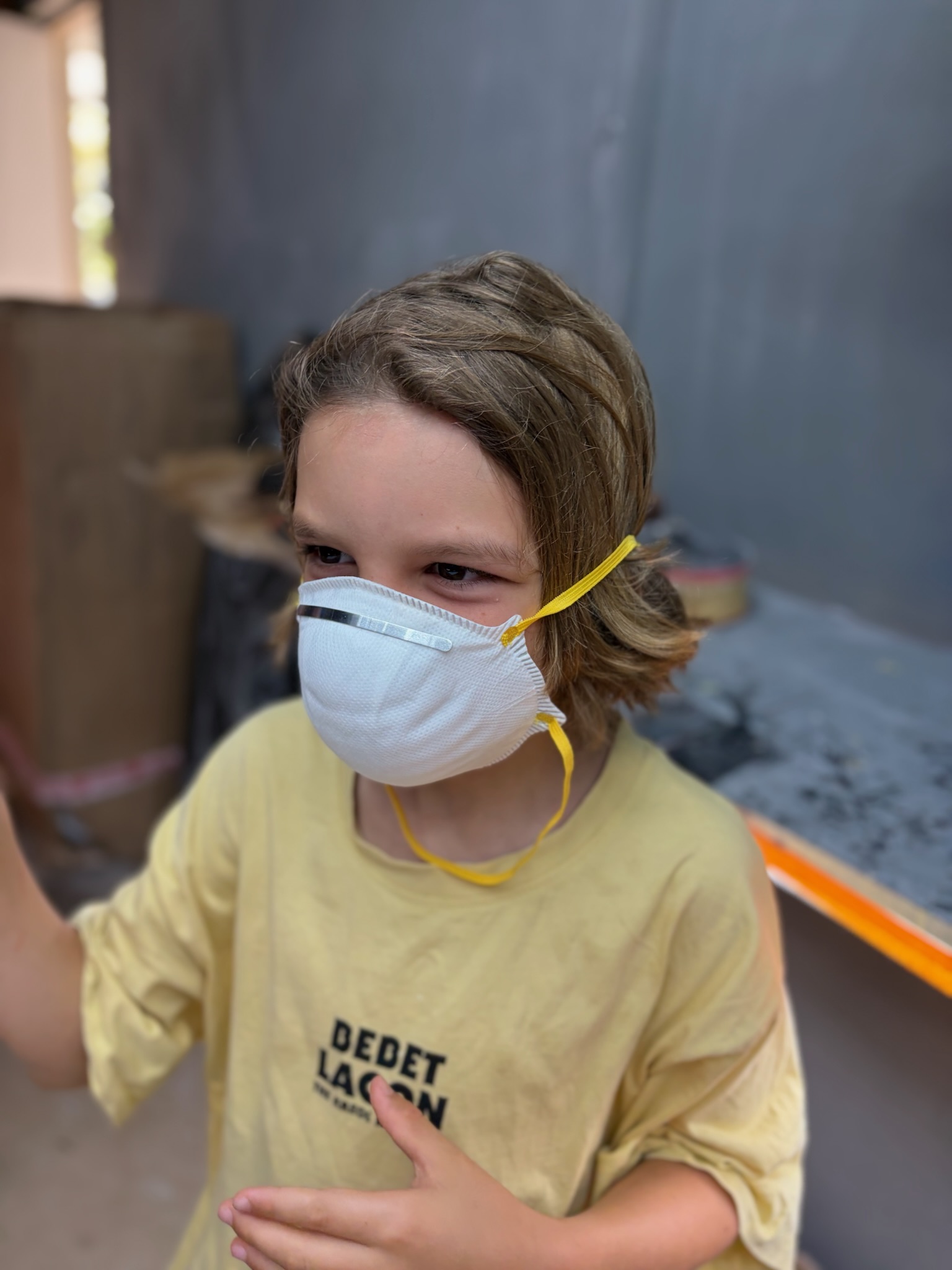
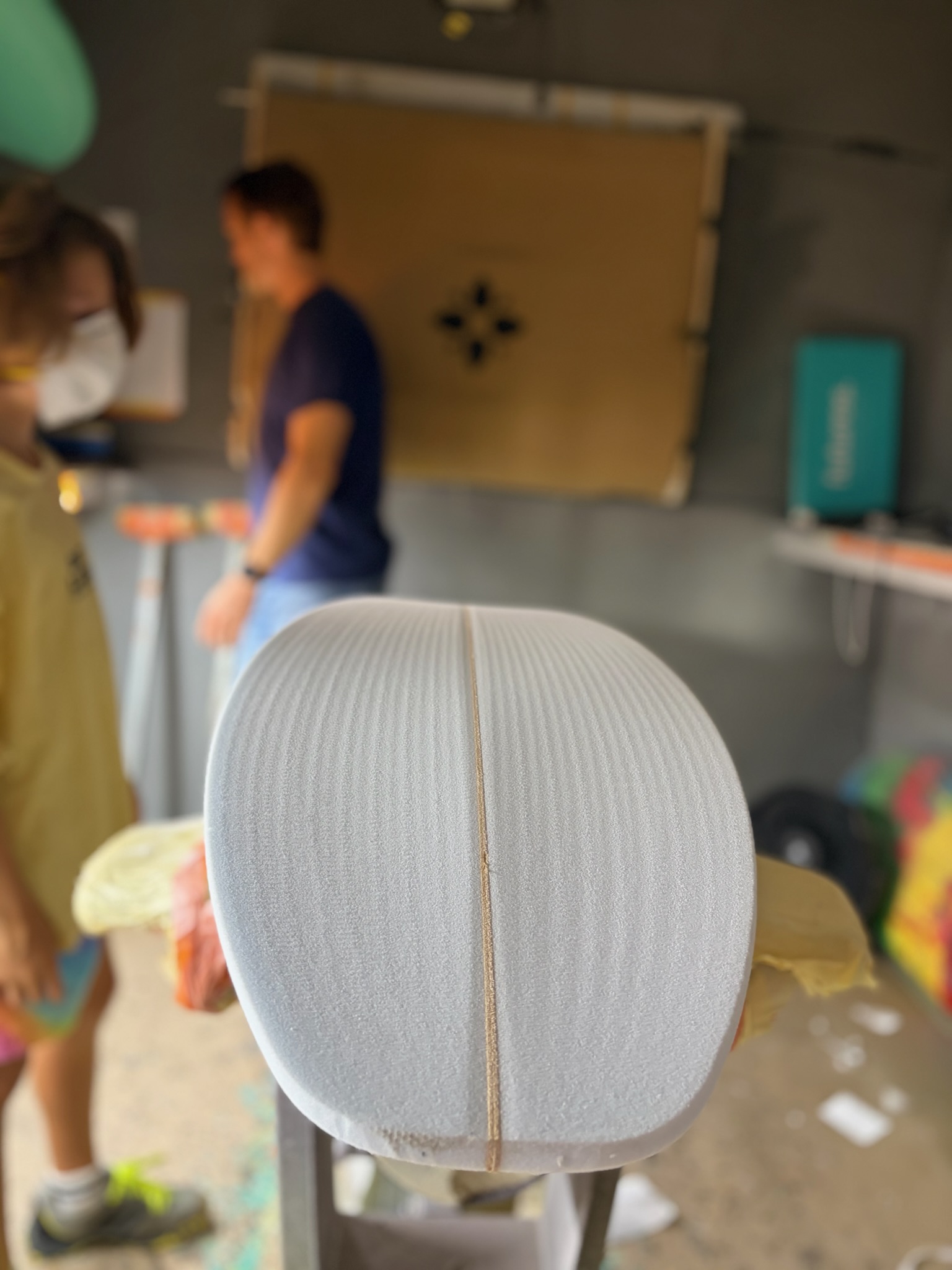
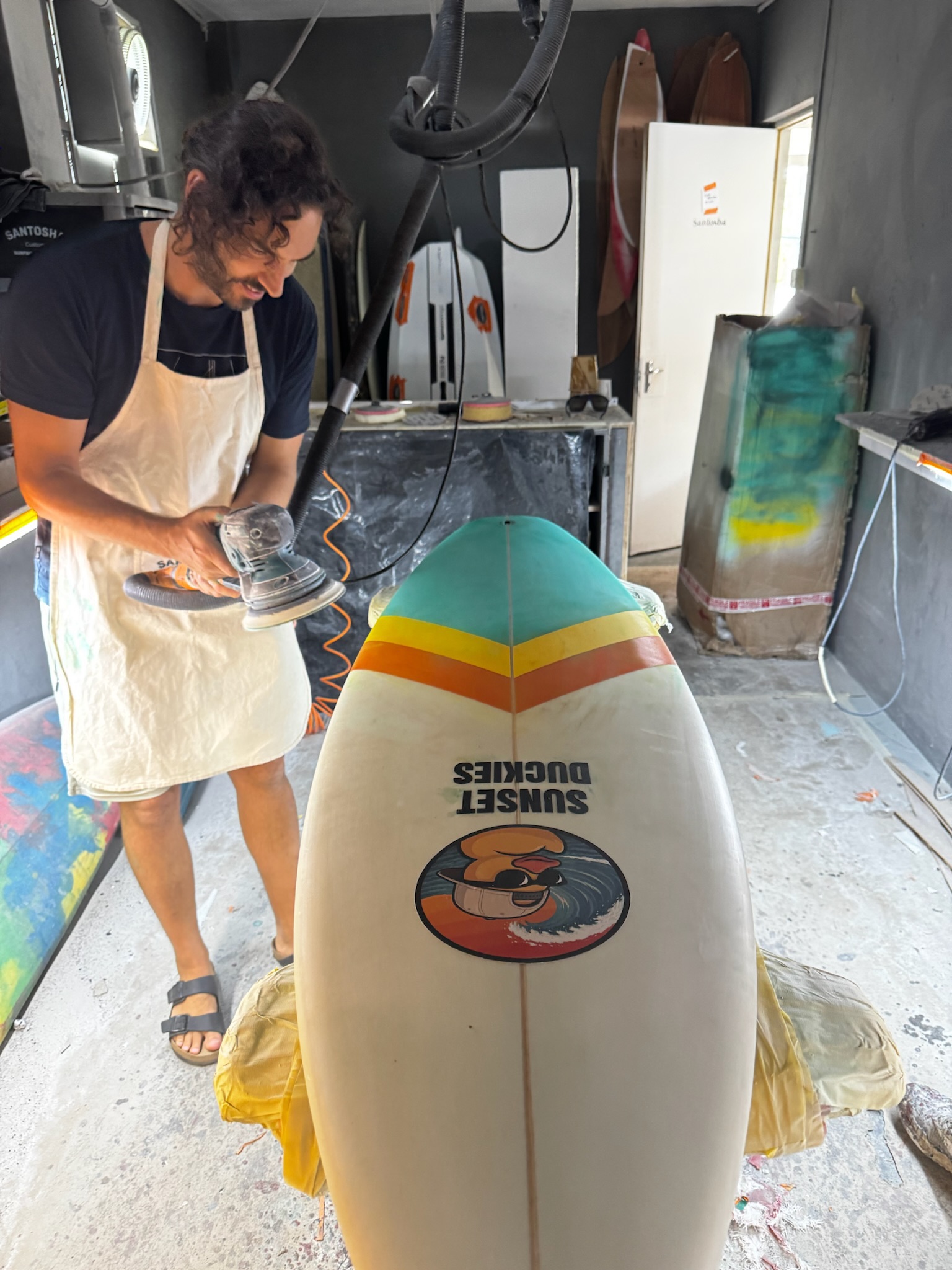
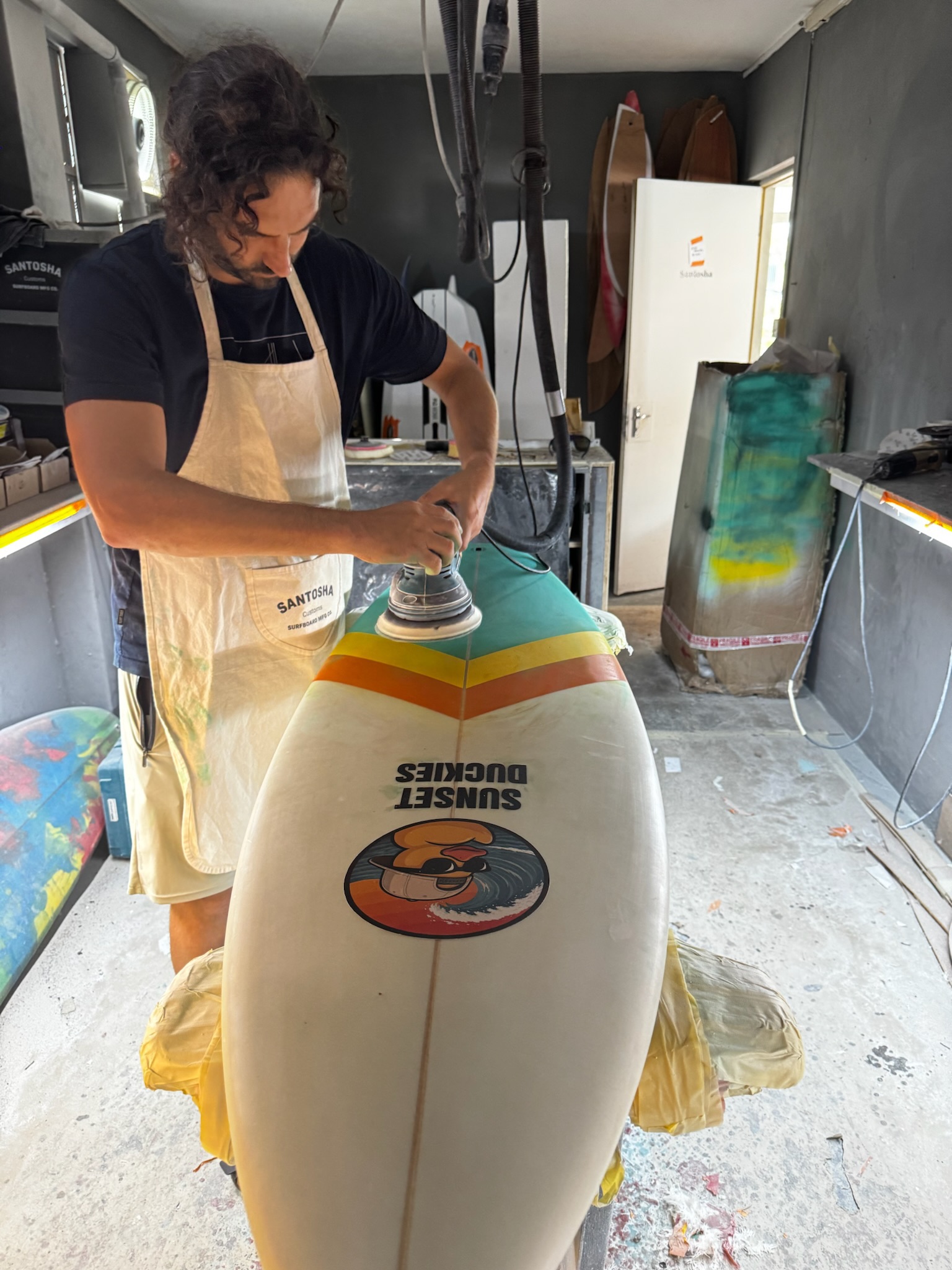
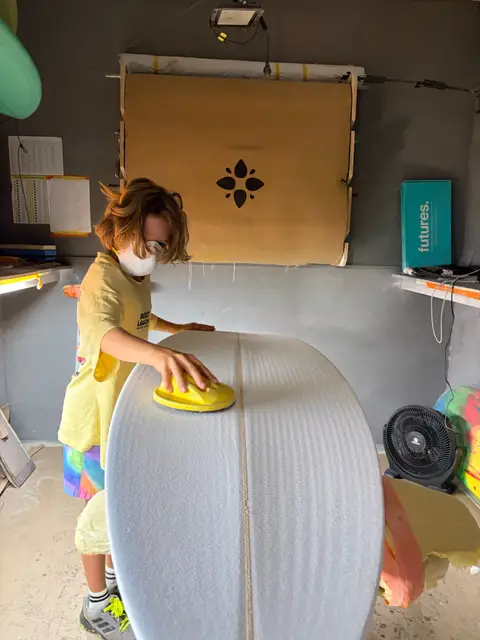
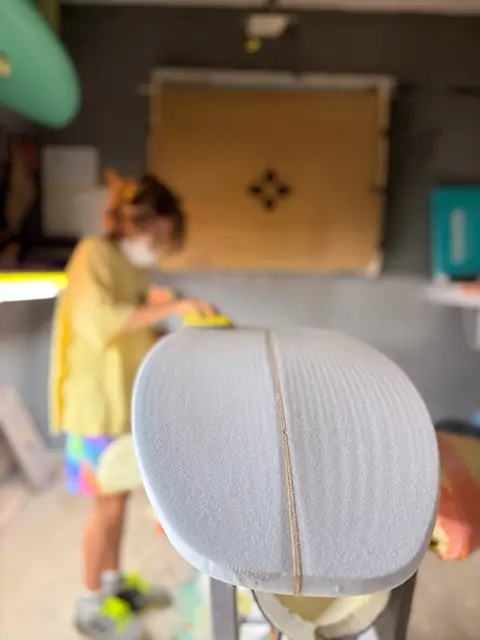
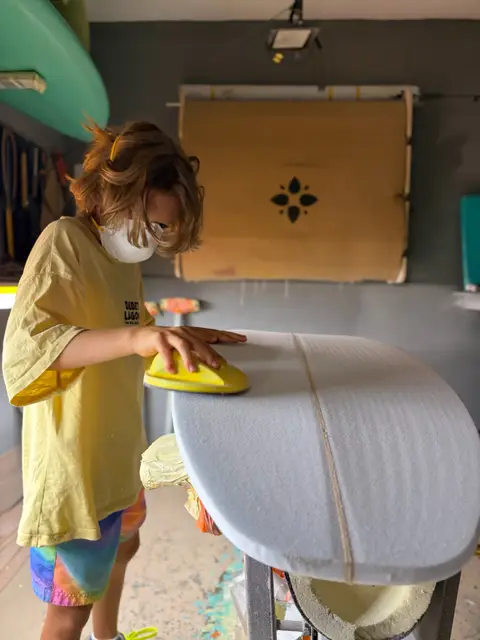
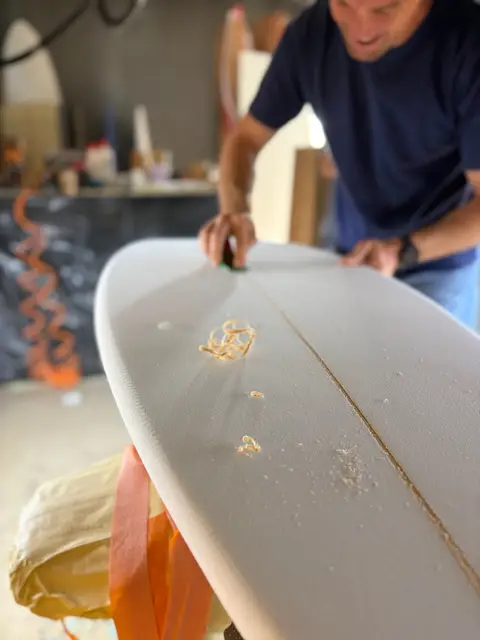
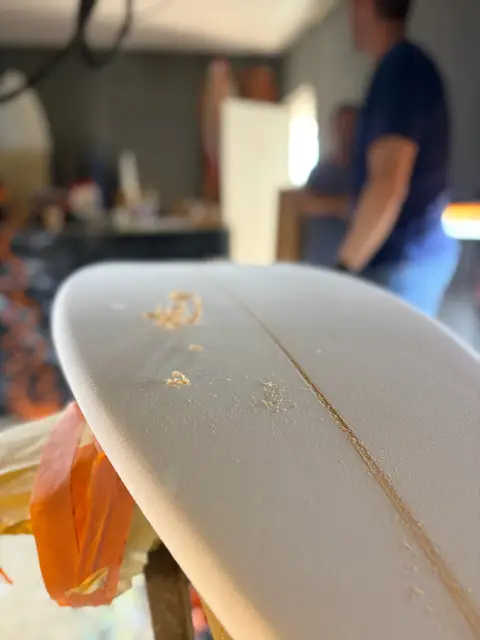
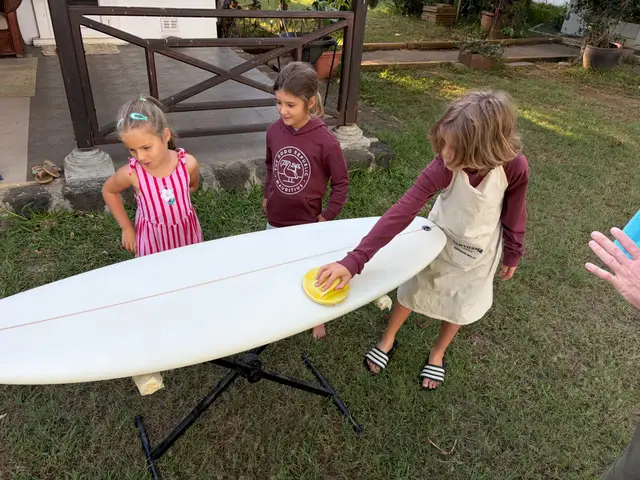
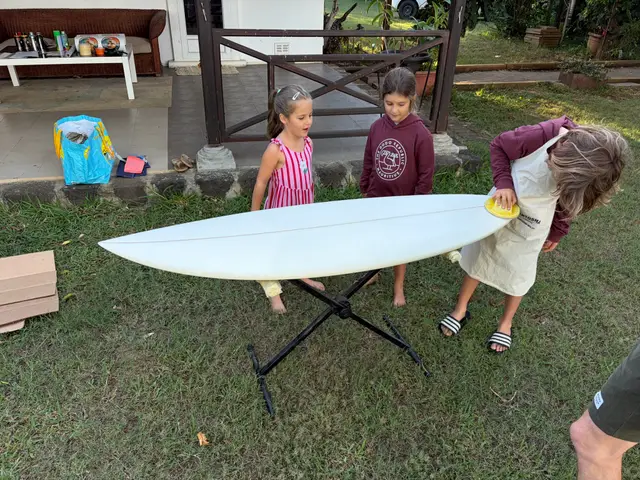
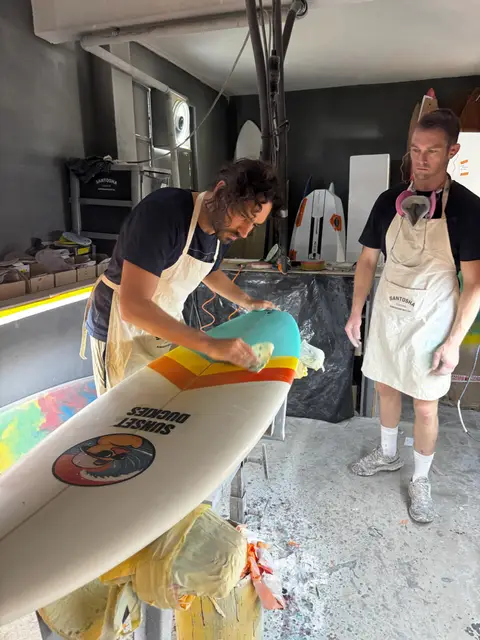
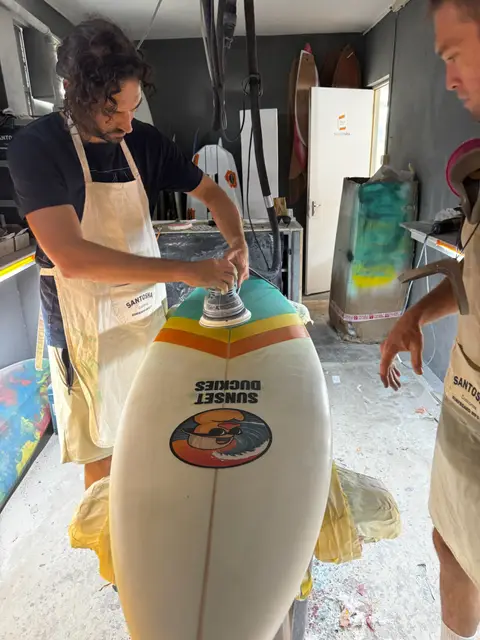
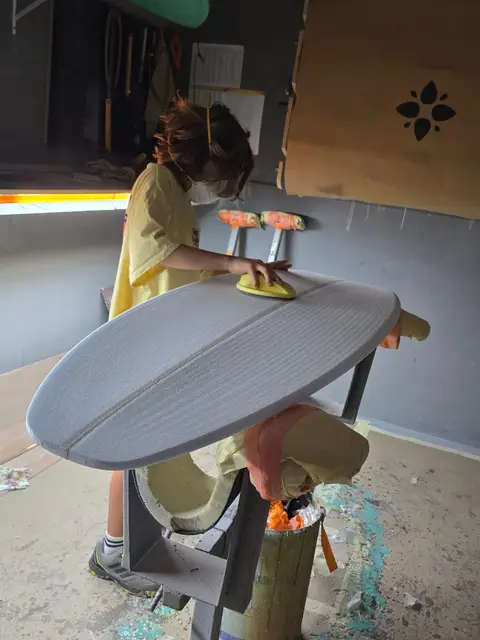
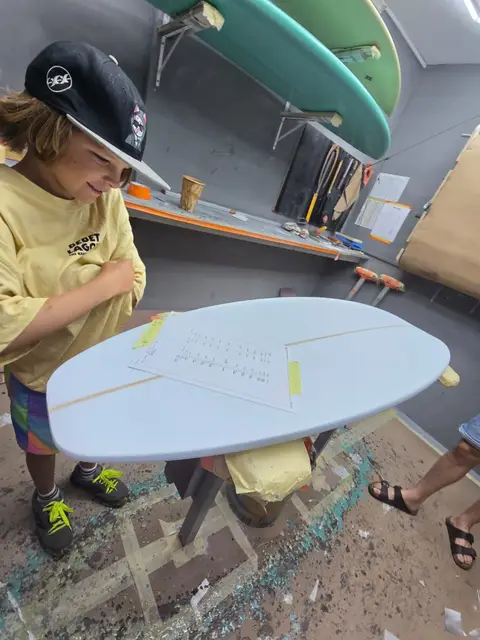
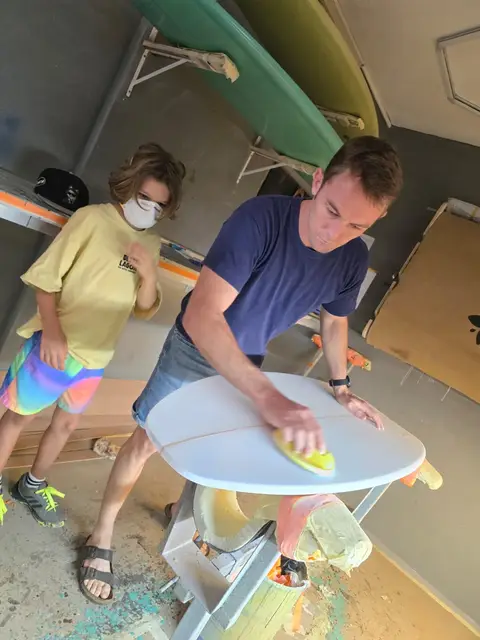
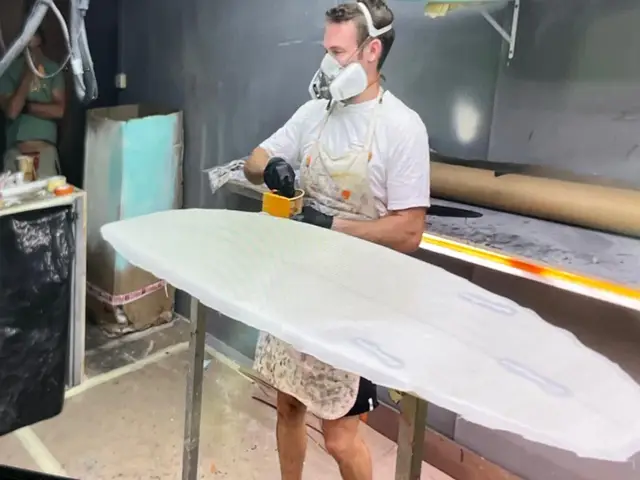
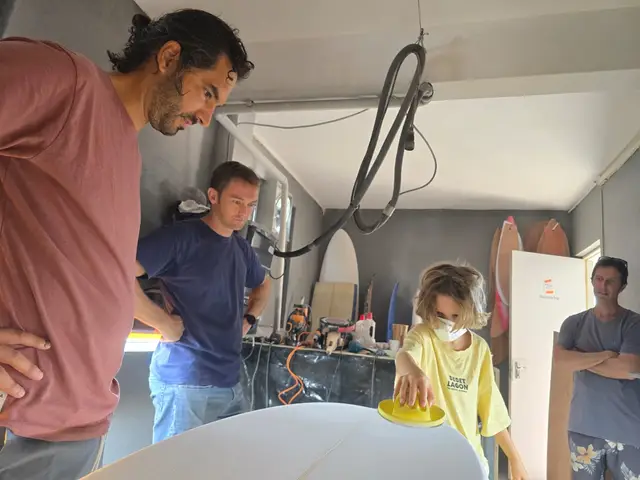
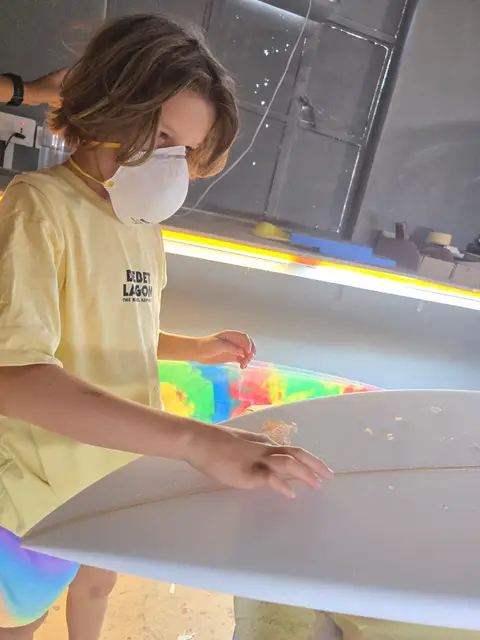
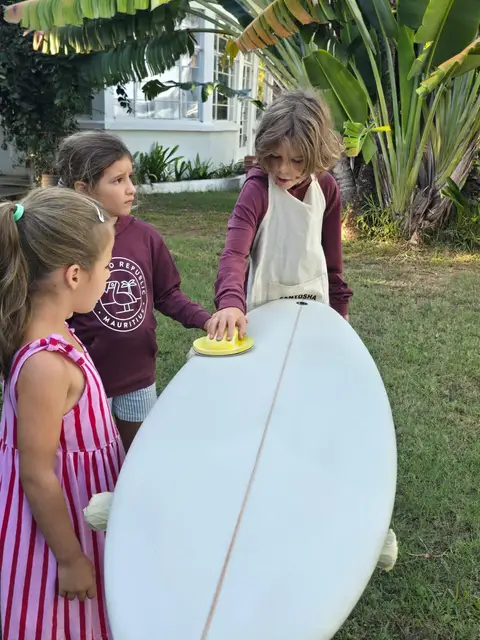
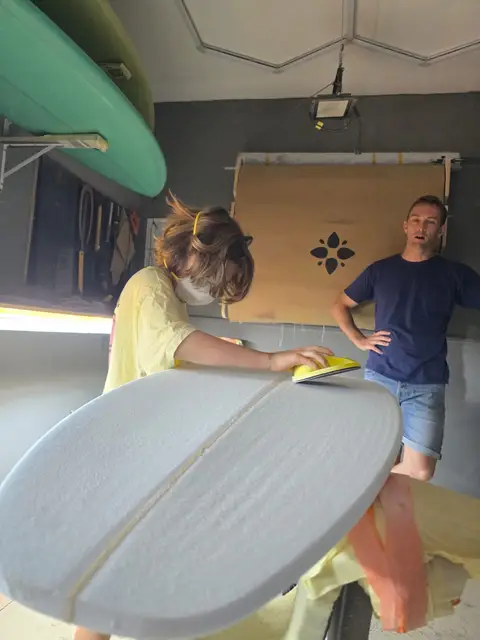
Most of shaping, from where I was standing, is sanding. Slow sanding, where almost nothing seems to change and then suddenly too much has changed.
That’s a hard lesson for a kid. The board didn’t care how excited you were. It rewarded stopping, looking, running a hand along the rail, and doing the same boring motion again. Noah learned which pad actually took foam off and which one only cleaned up the scratches. I held things, fetched grit, took photos, and tried very hard not to turn every moment into advice.
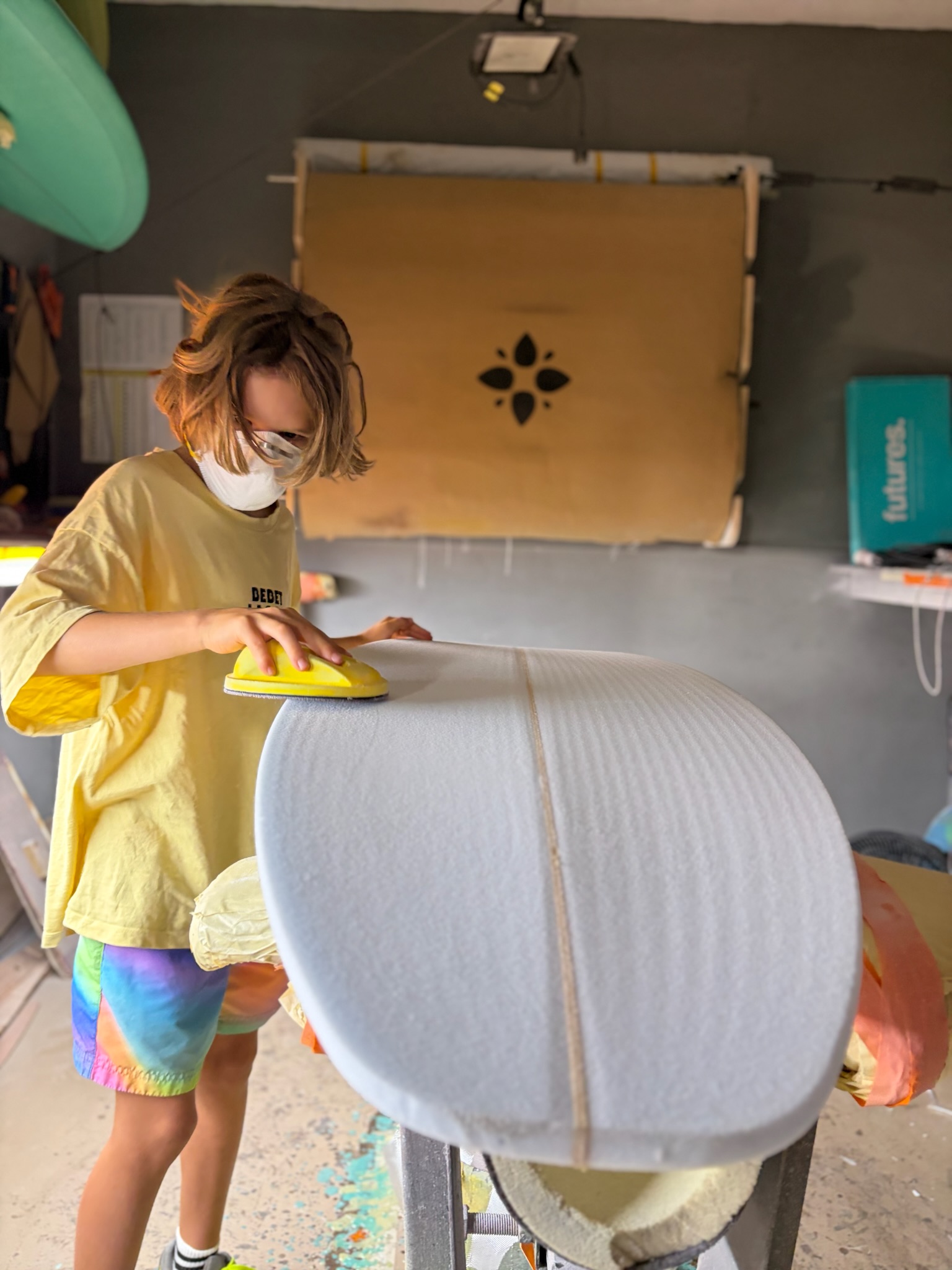
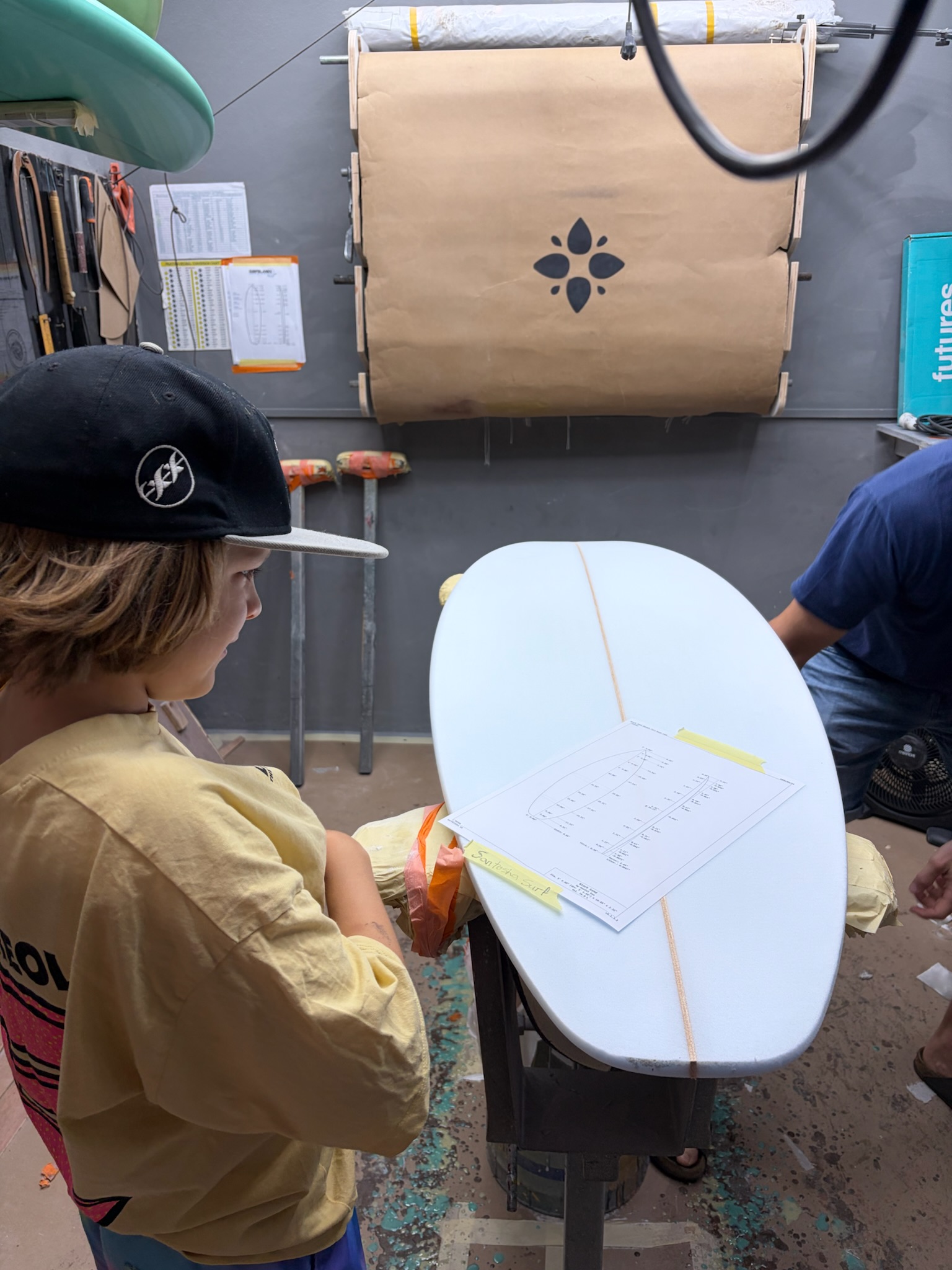
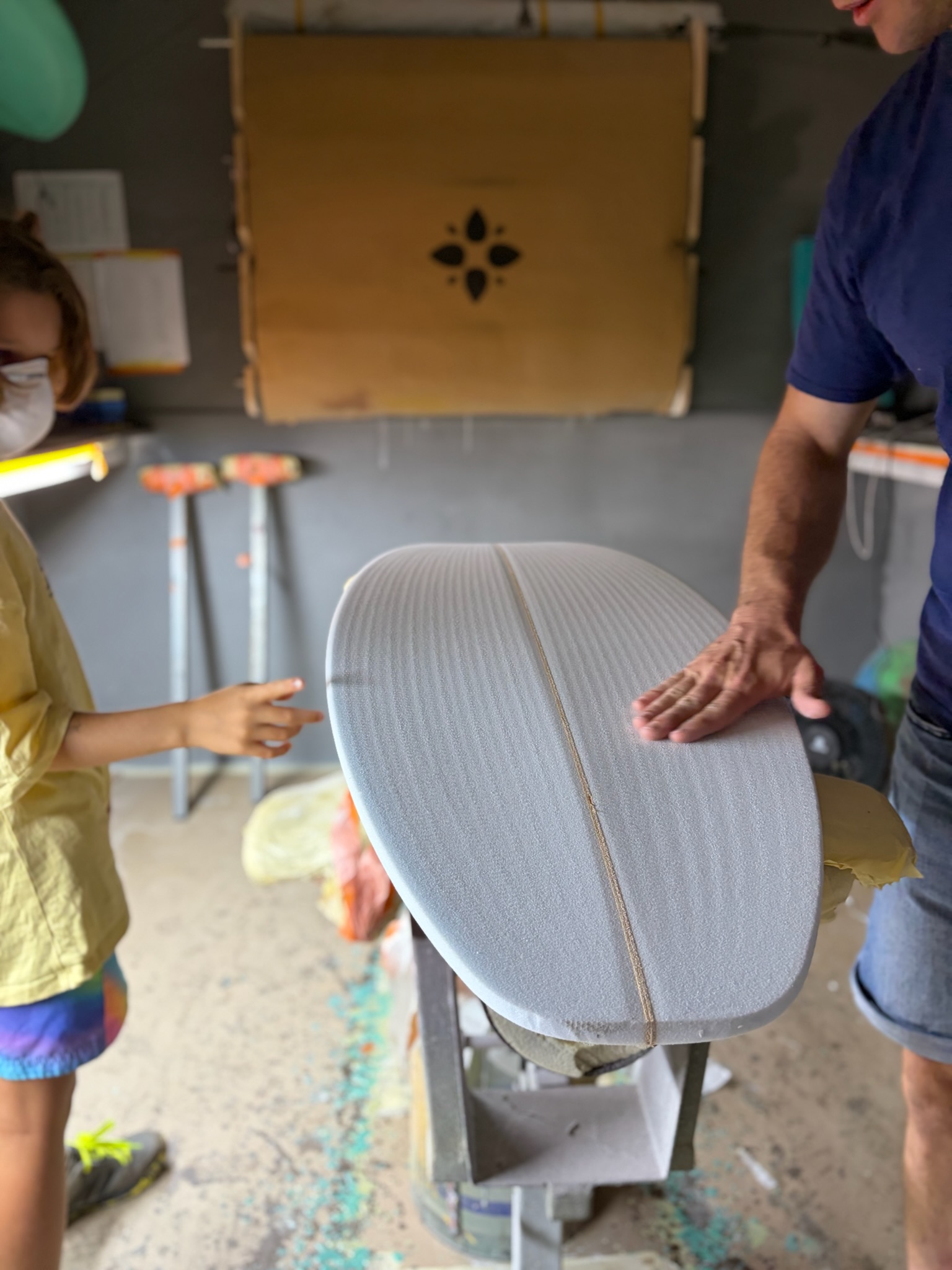
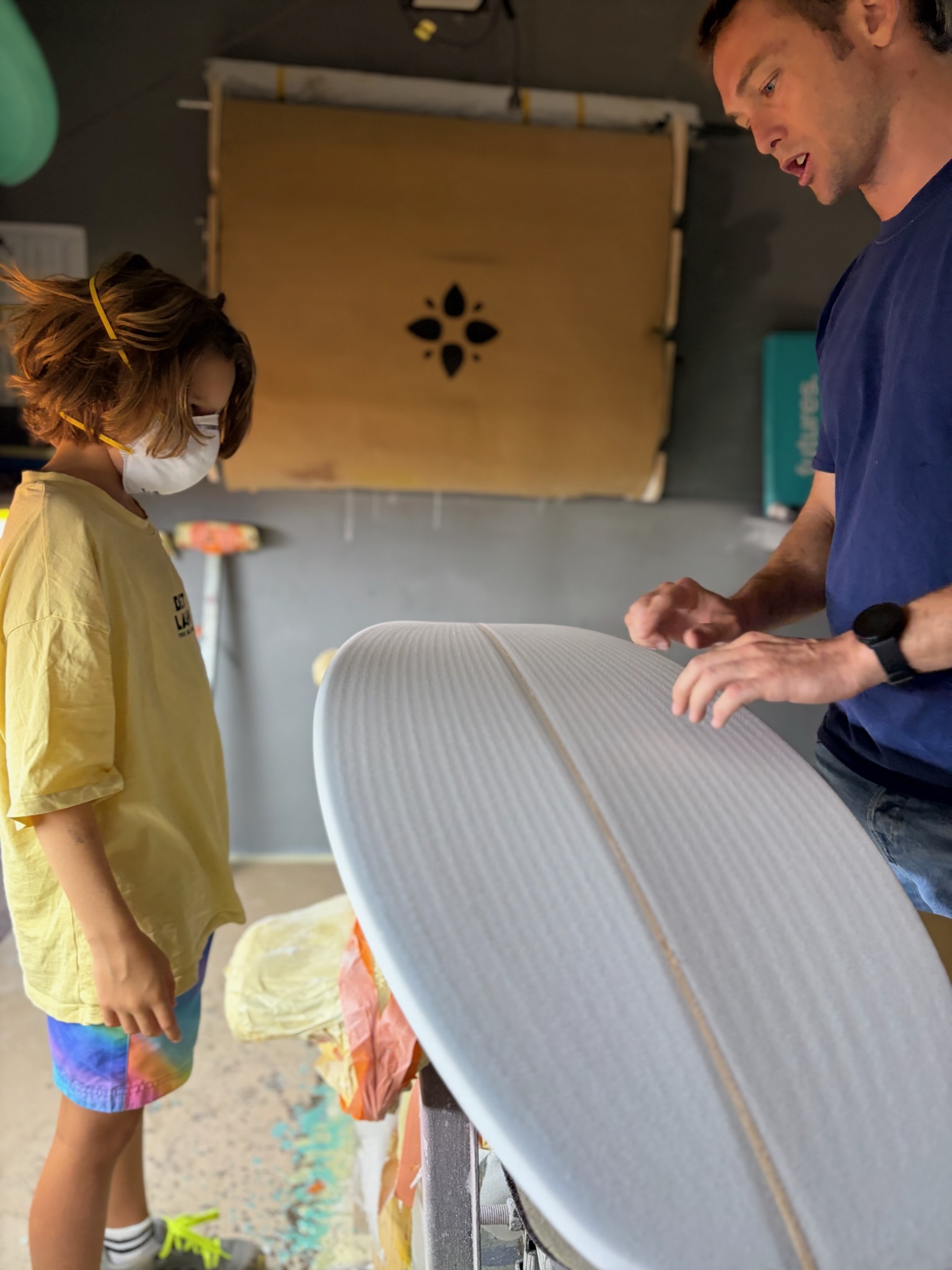
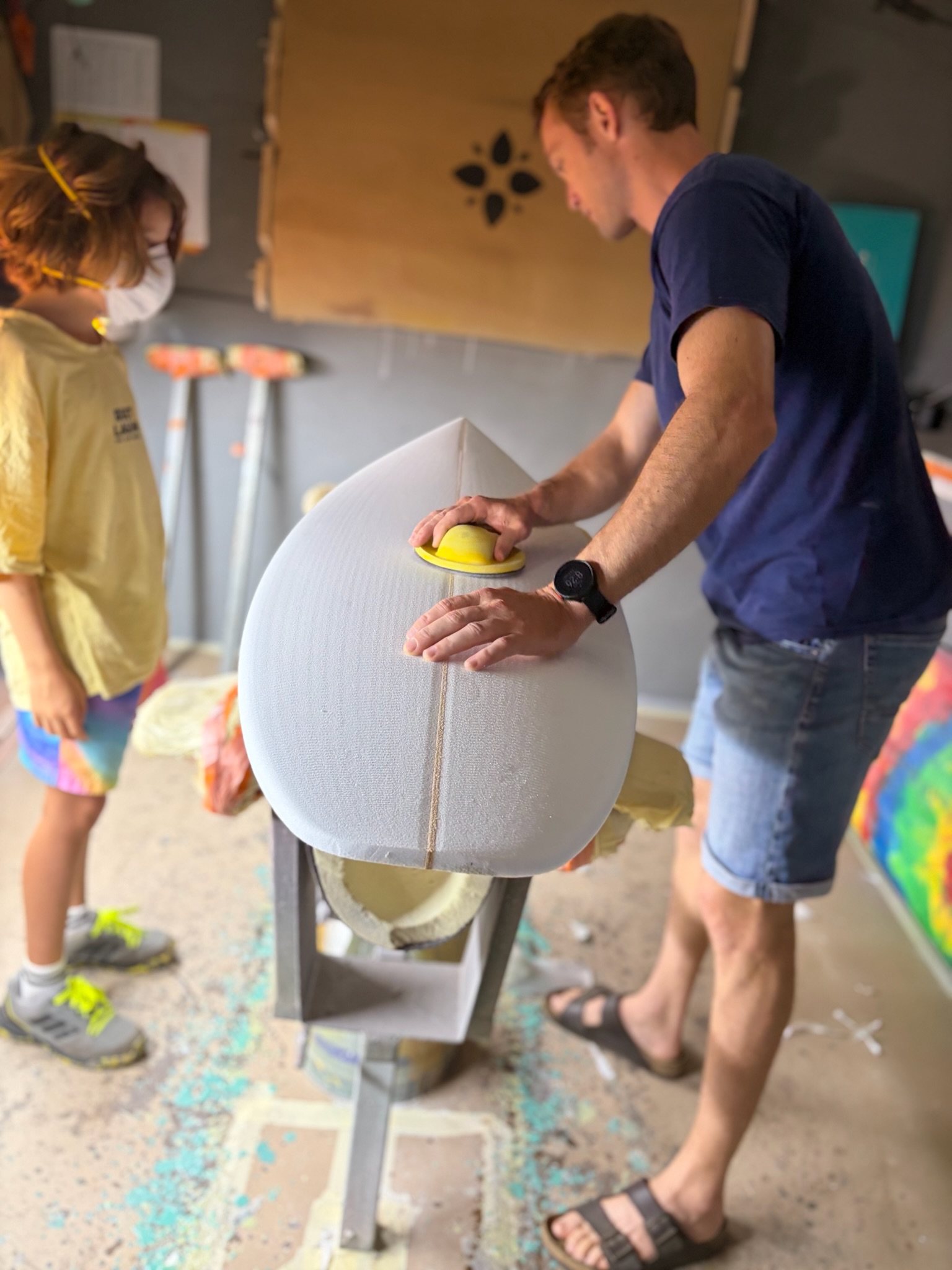
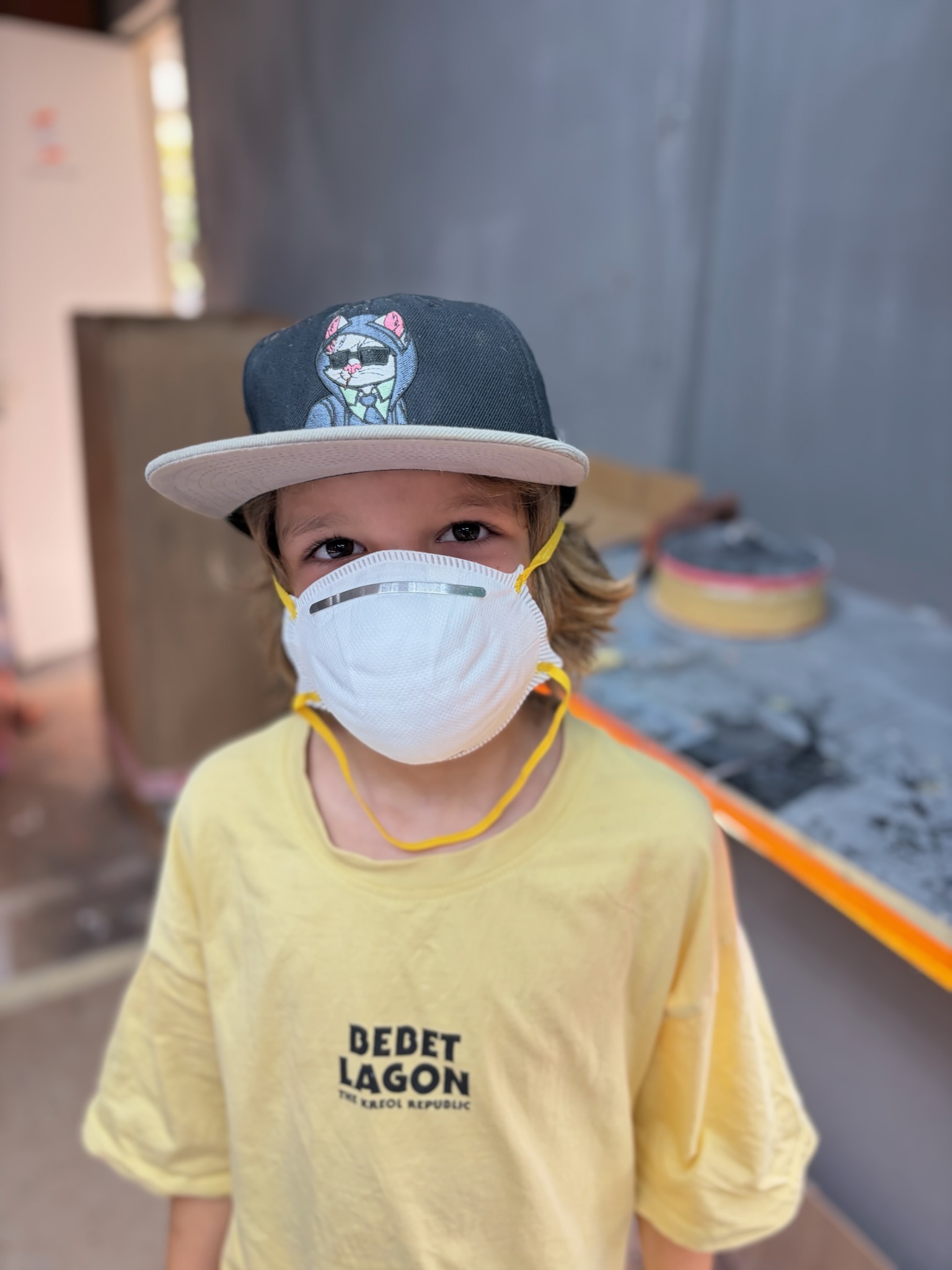
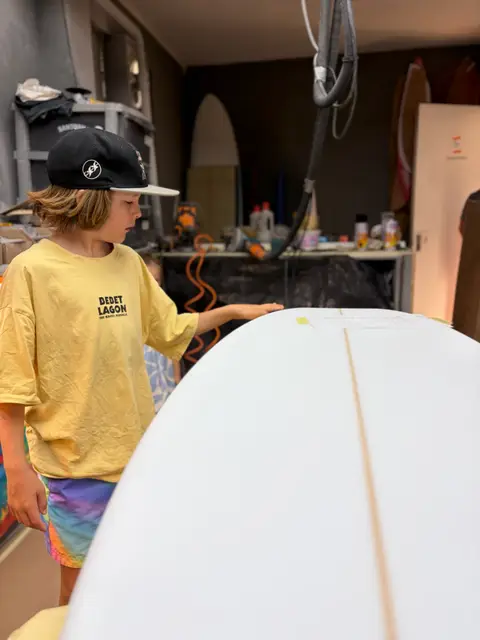
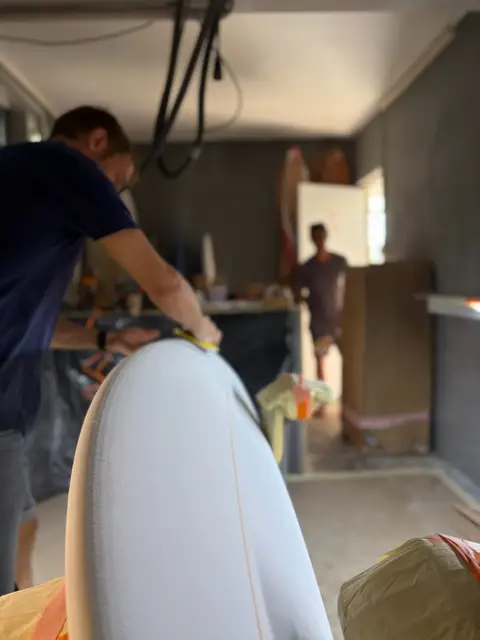
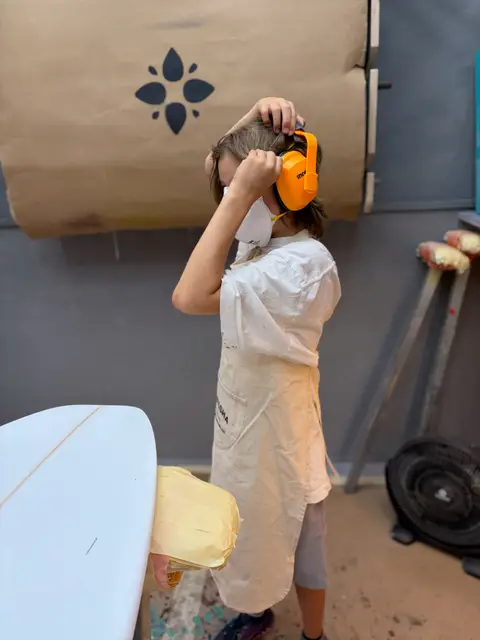
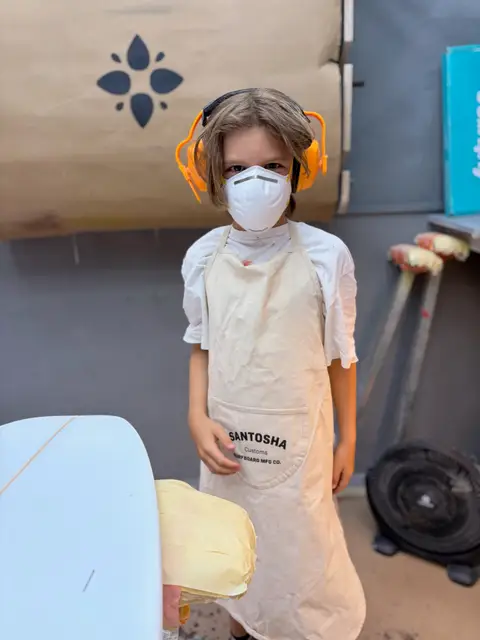
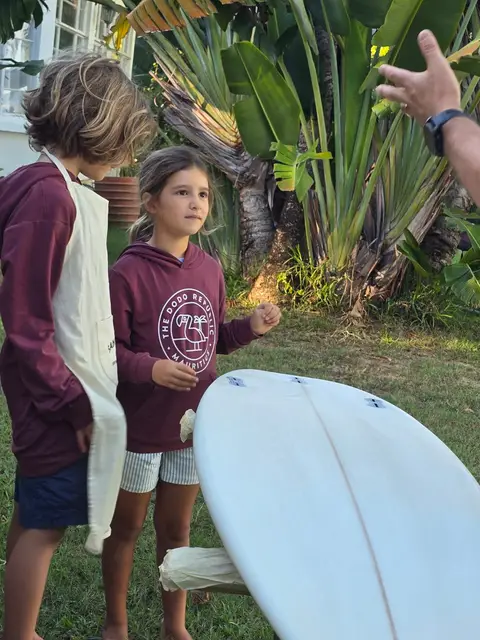
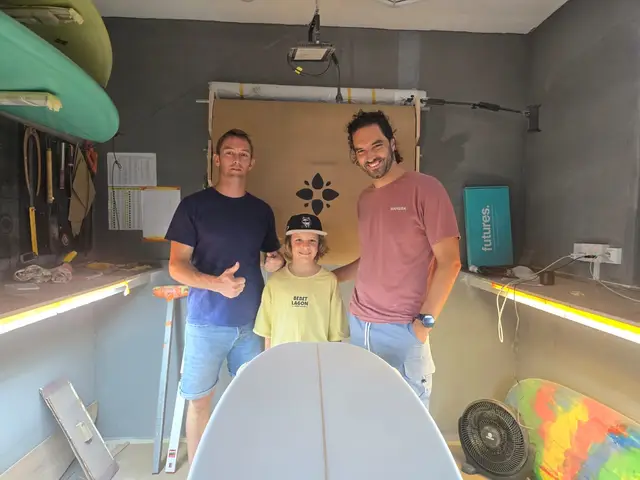
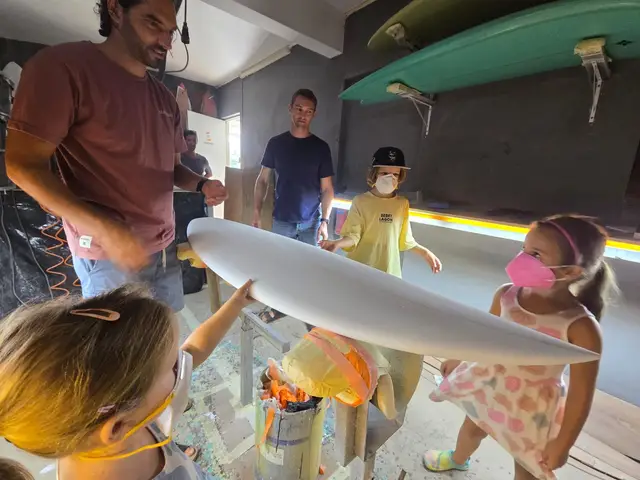
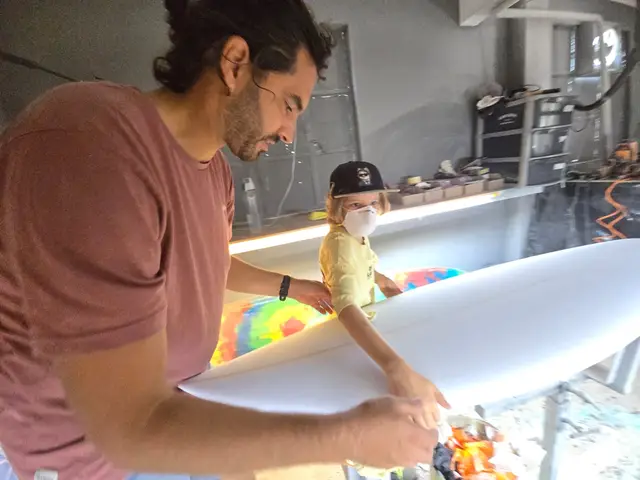
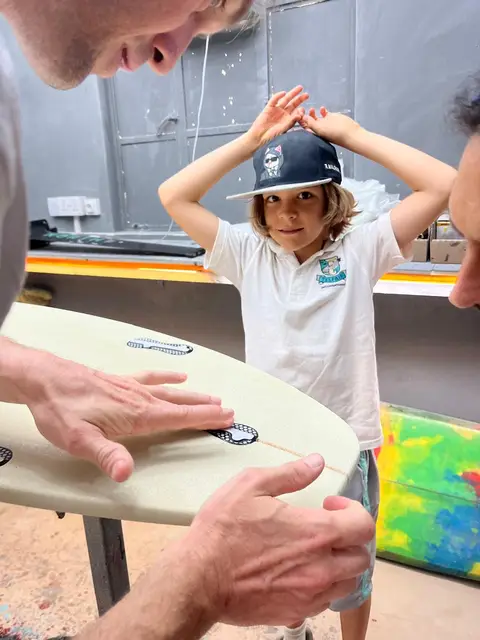
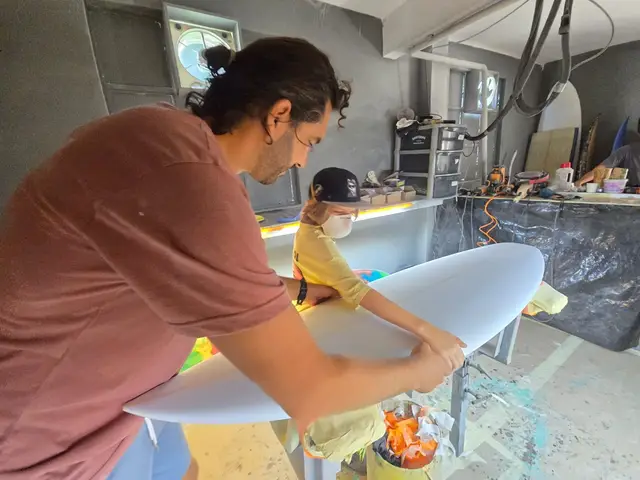
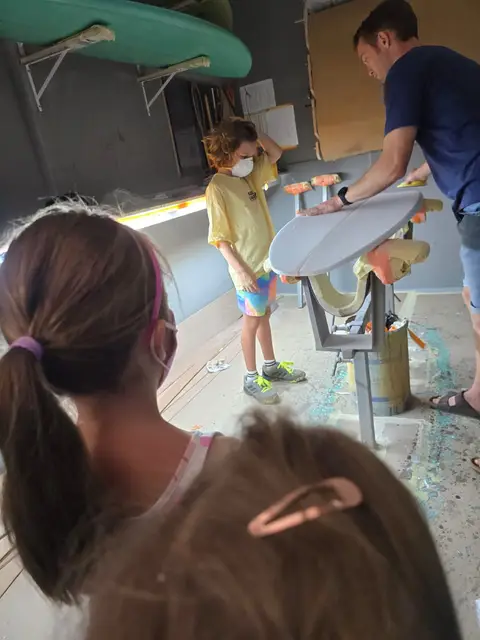
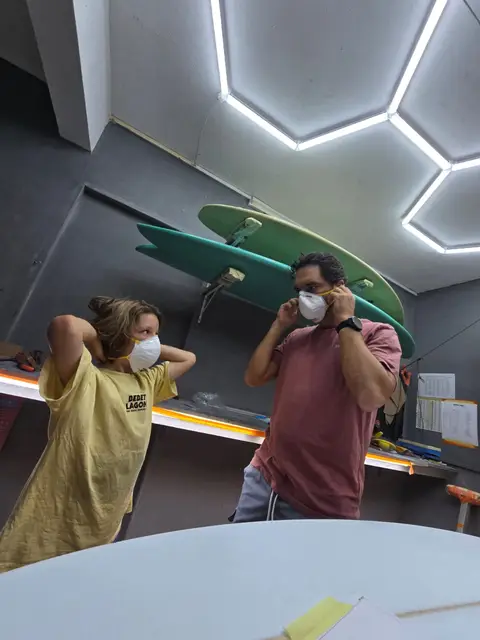
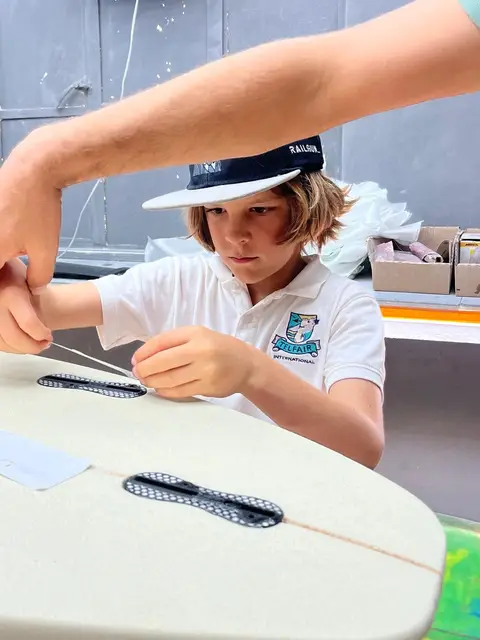
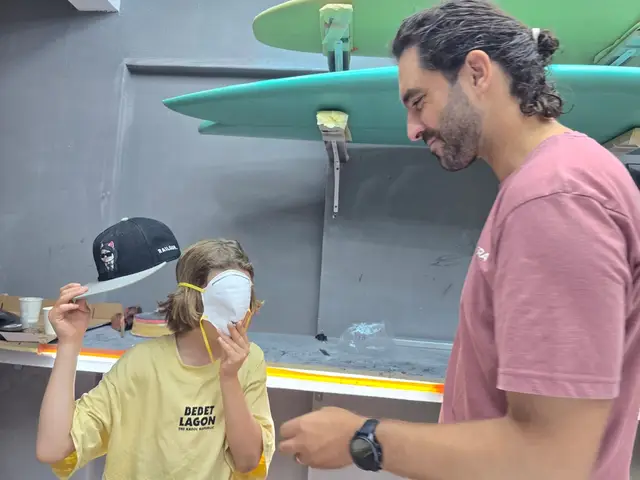
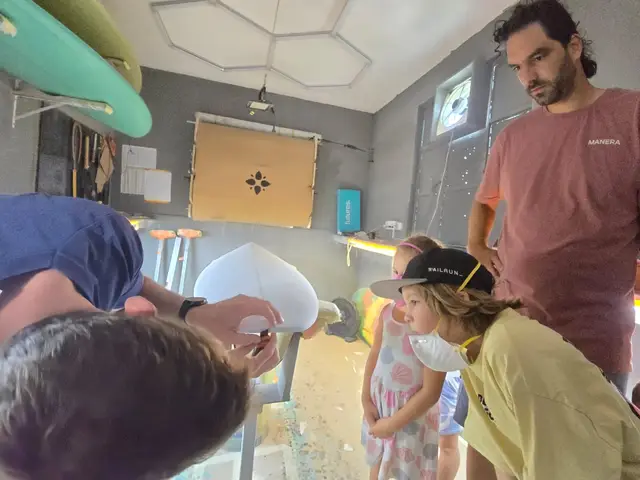
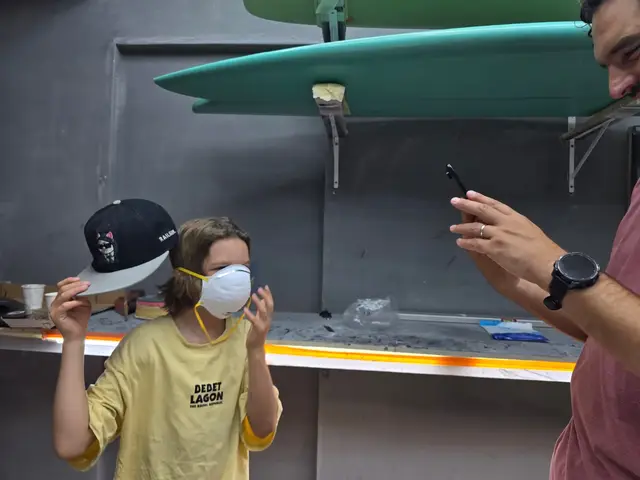
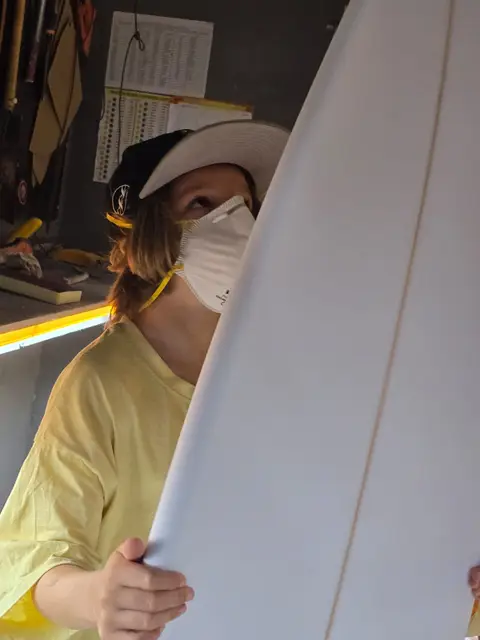
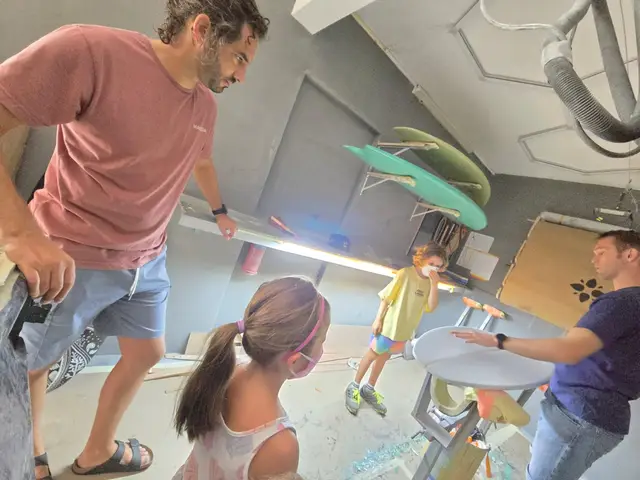
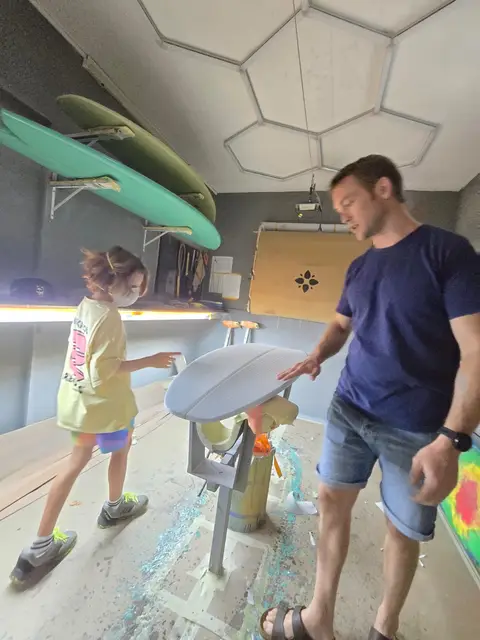
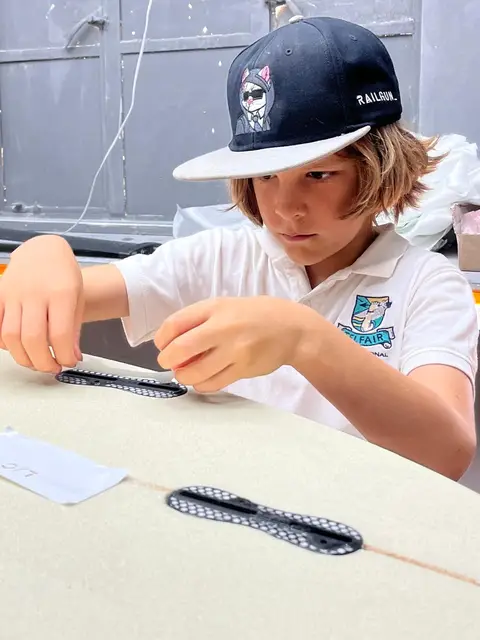
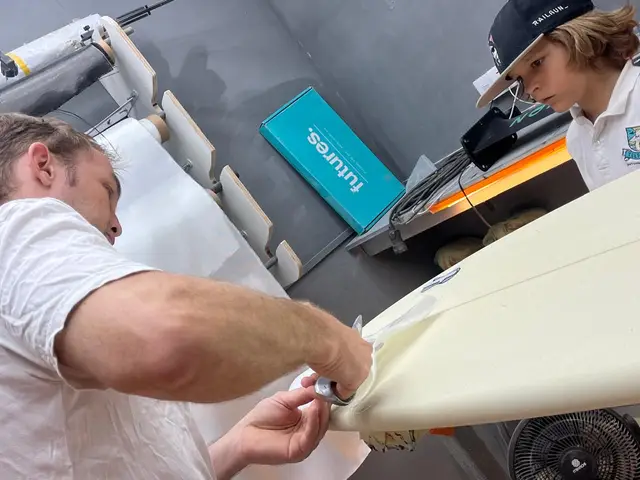
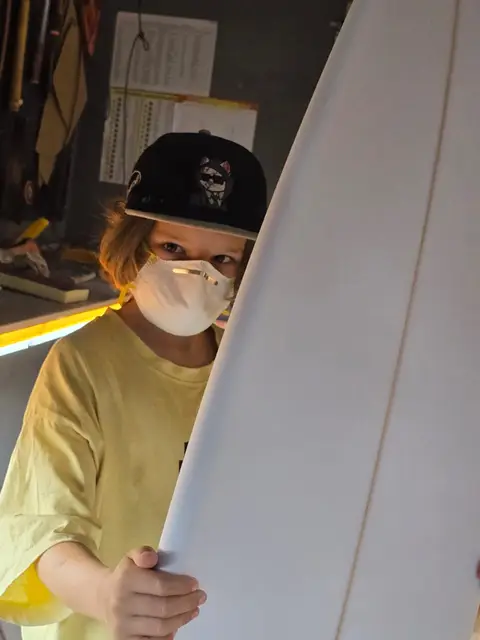
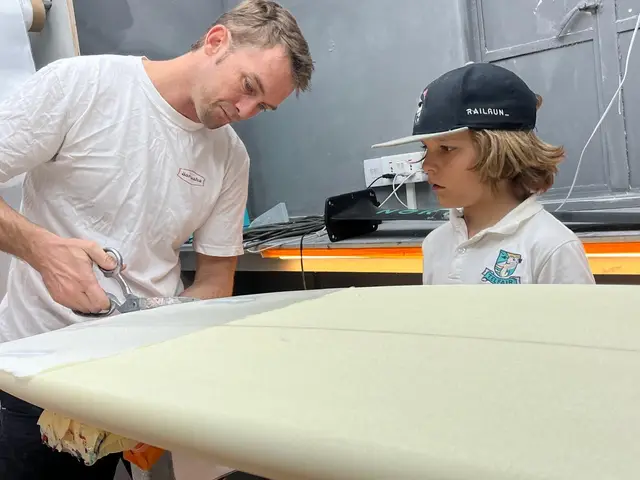
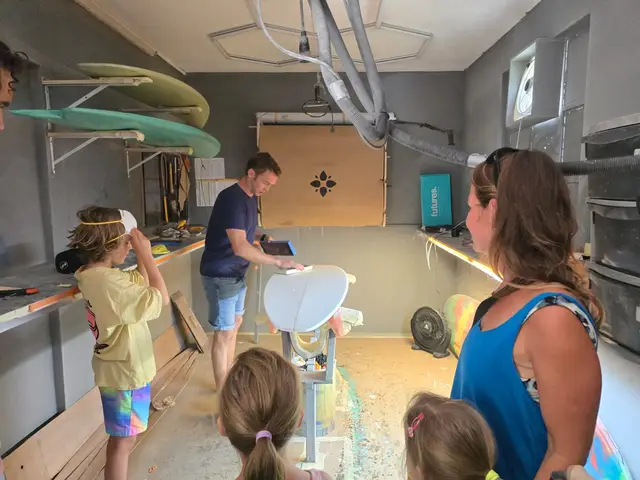
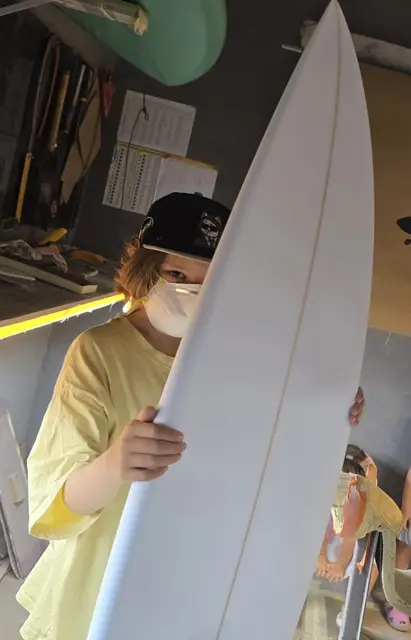
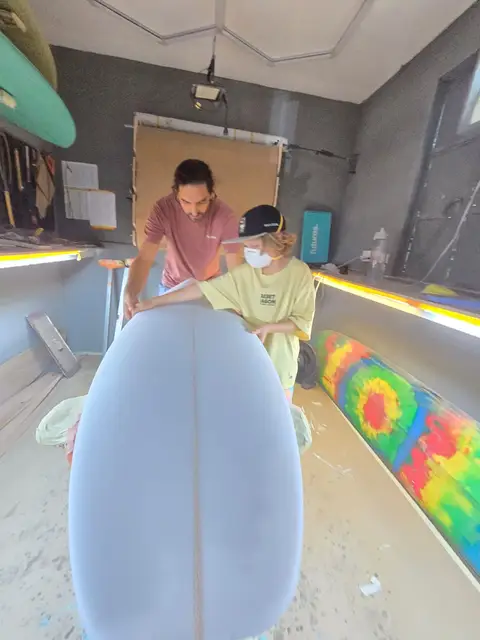
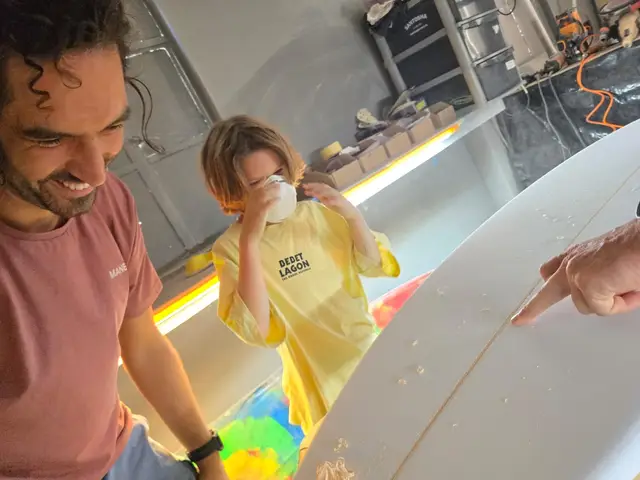
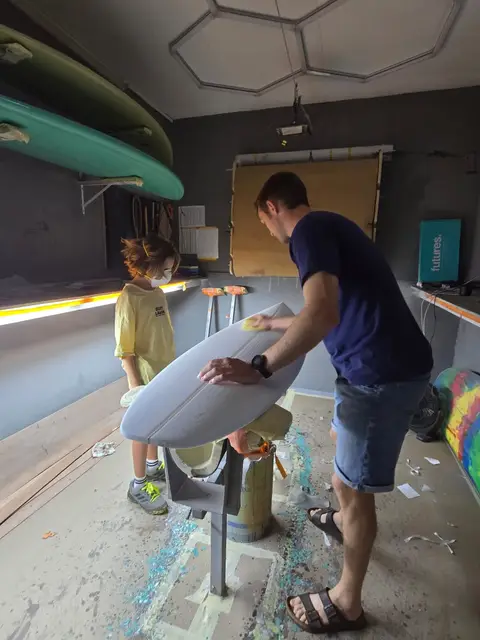
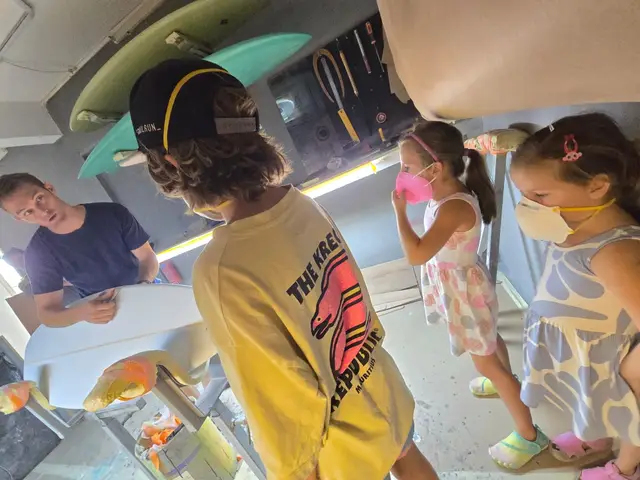
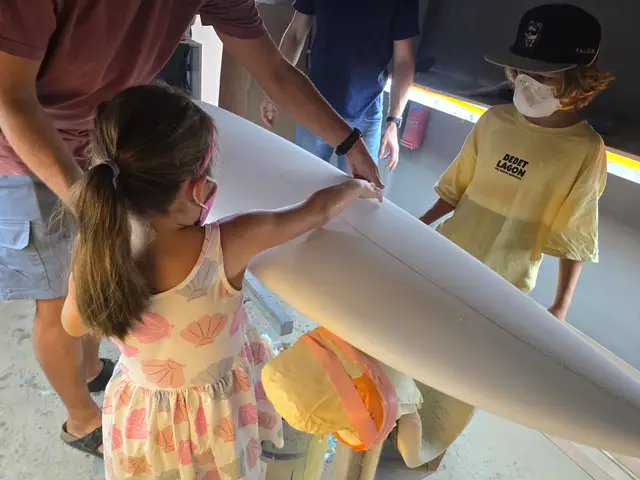
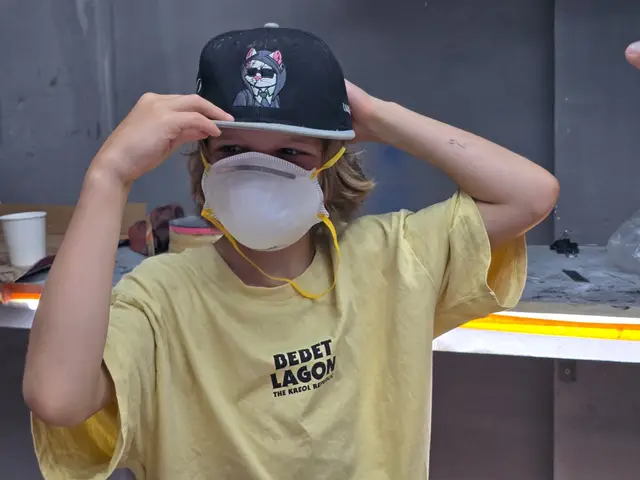
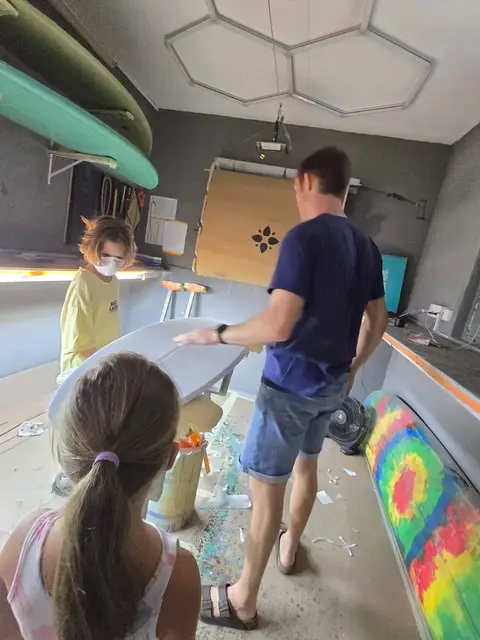
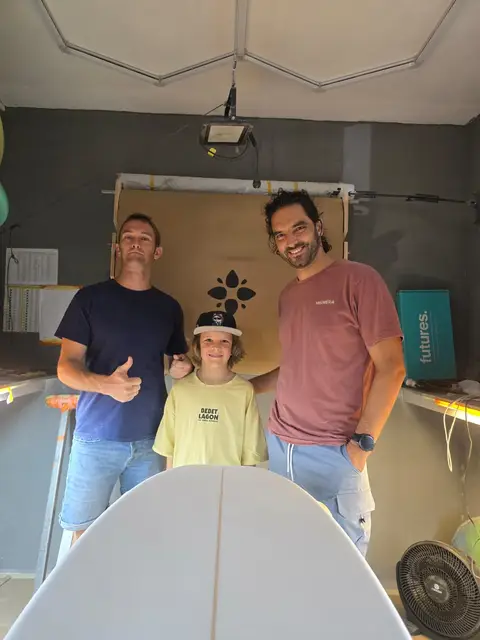
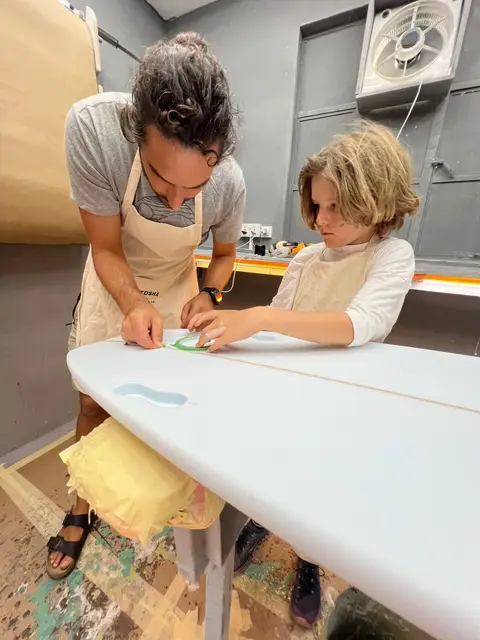
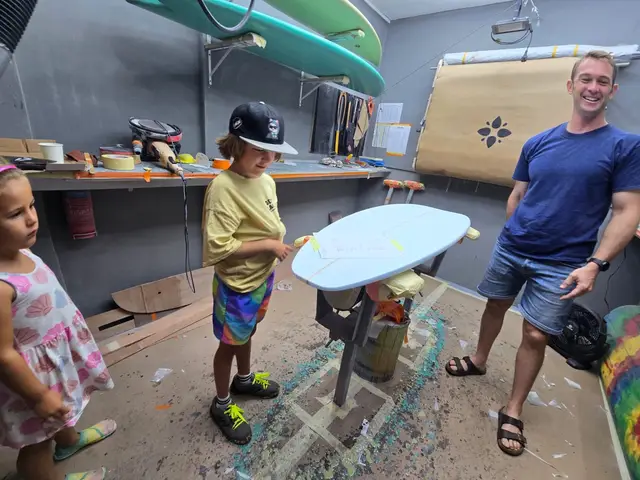
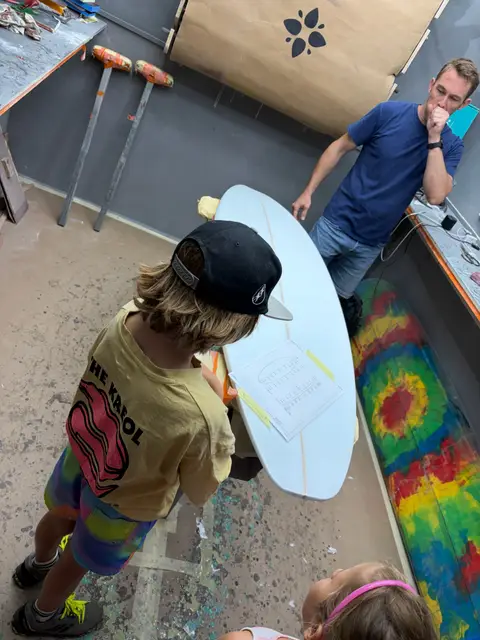
Daniel would show him the motion once, then hand him the tool. Noah did almost all of the shaping himself, and nobody staged it for the camera. He stood in the bay with a mask on and took foam off his own board.
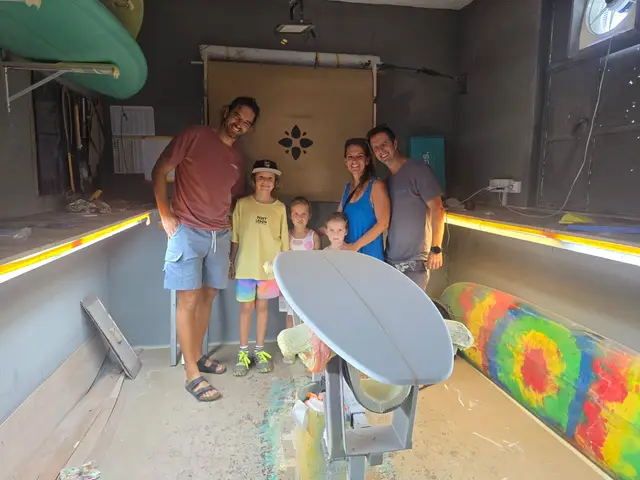
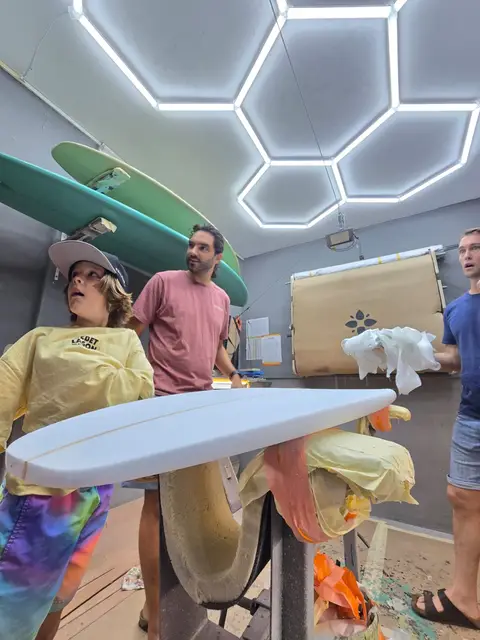
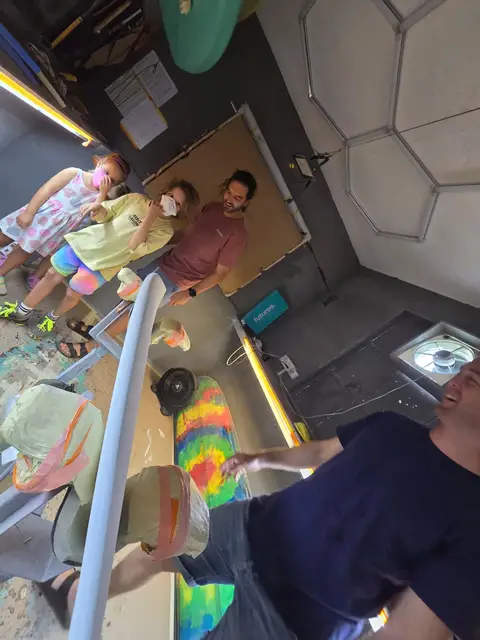
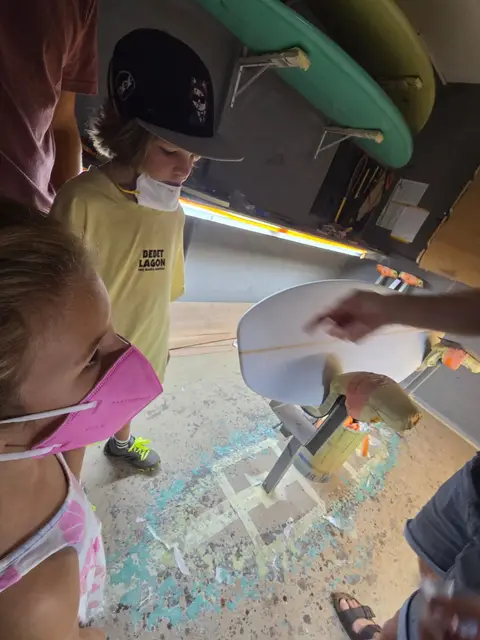
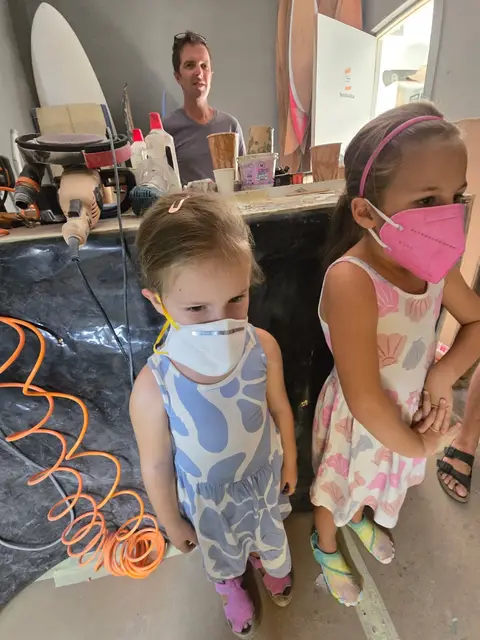
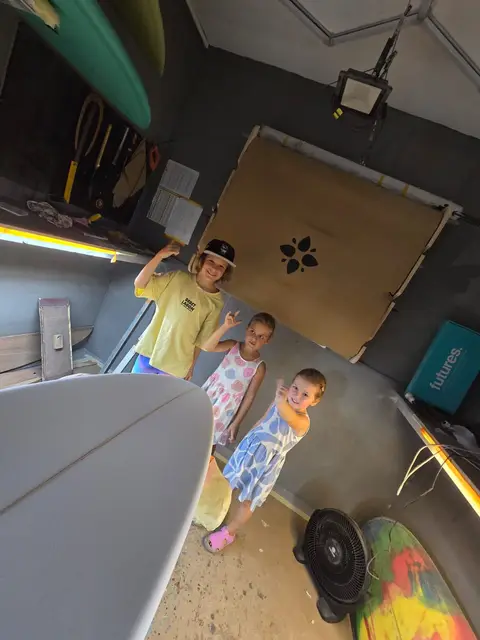
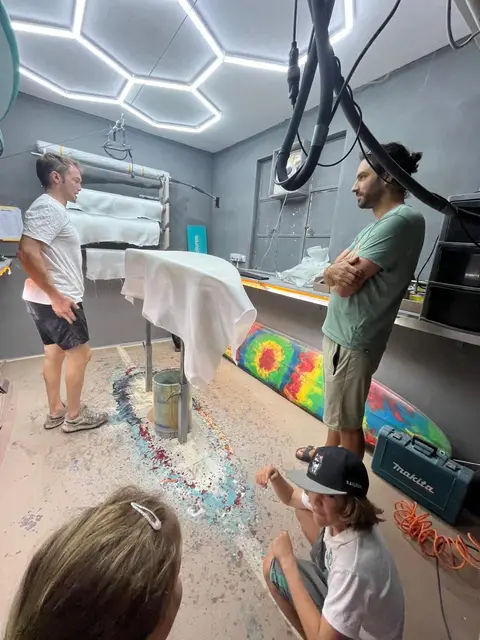
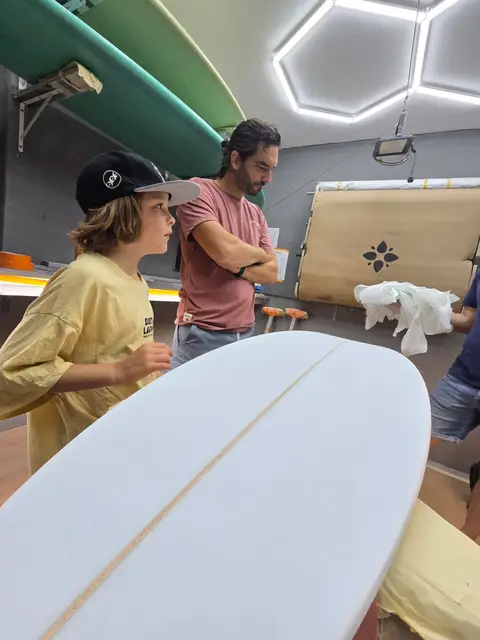
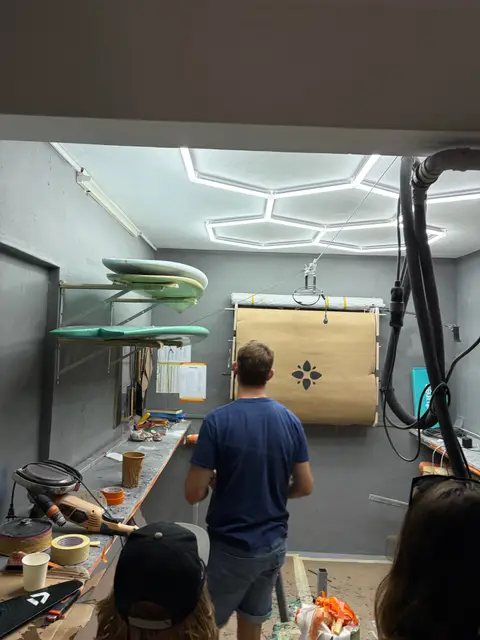
The place has its own smell and light: resin, dust, hexagons overhead, finished boards drying on the rack. Over a few weeks his passes got less nervous, and he stopped waiting for someone to put him in front of the work.
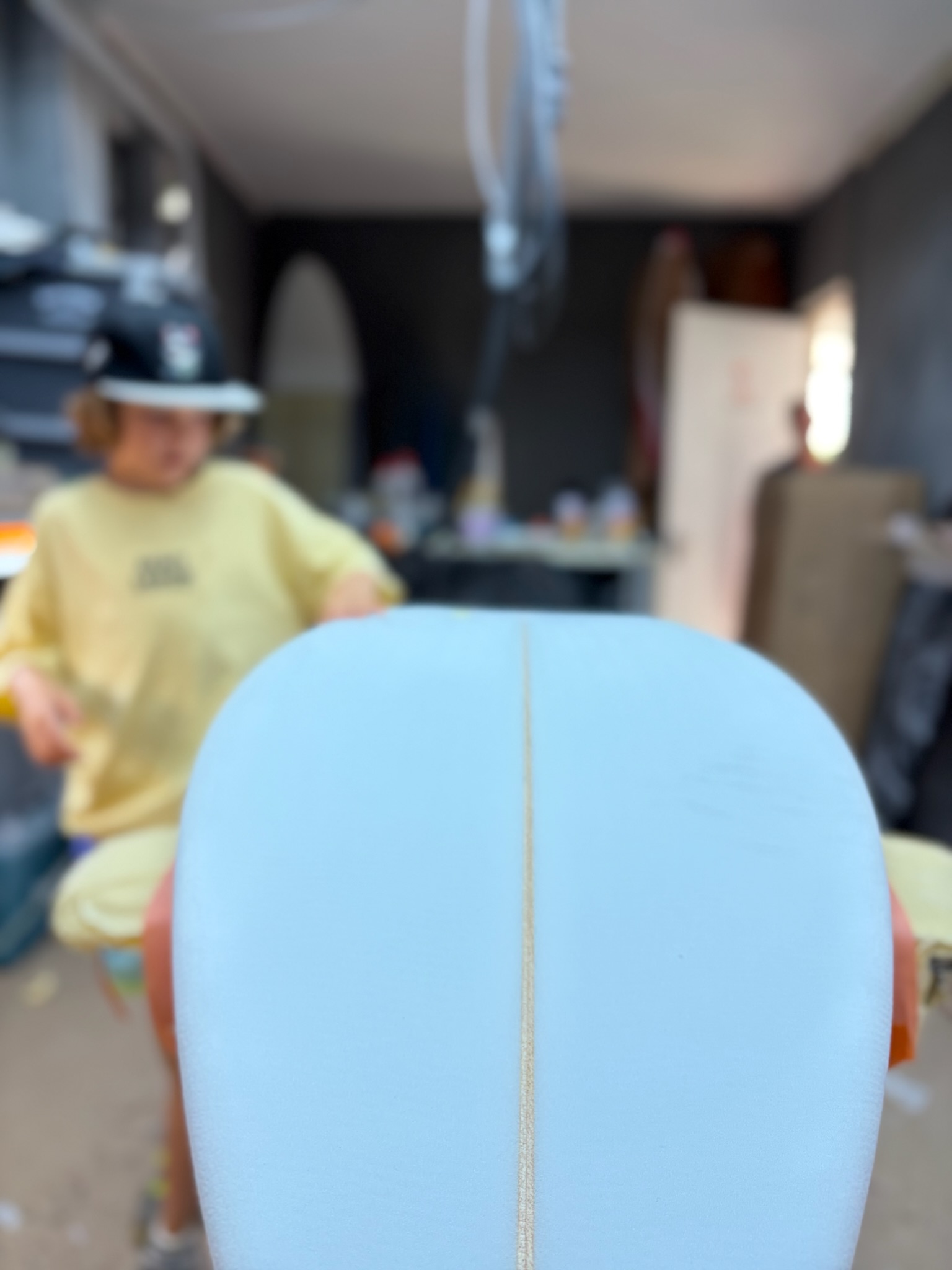
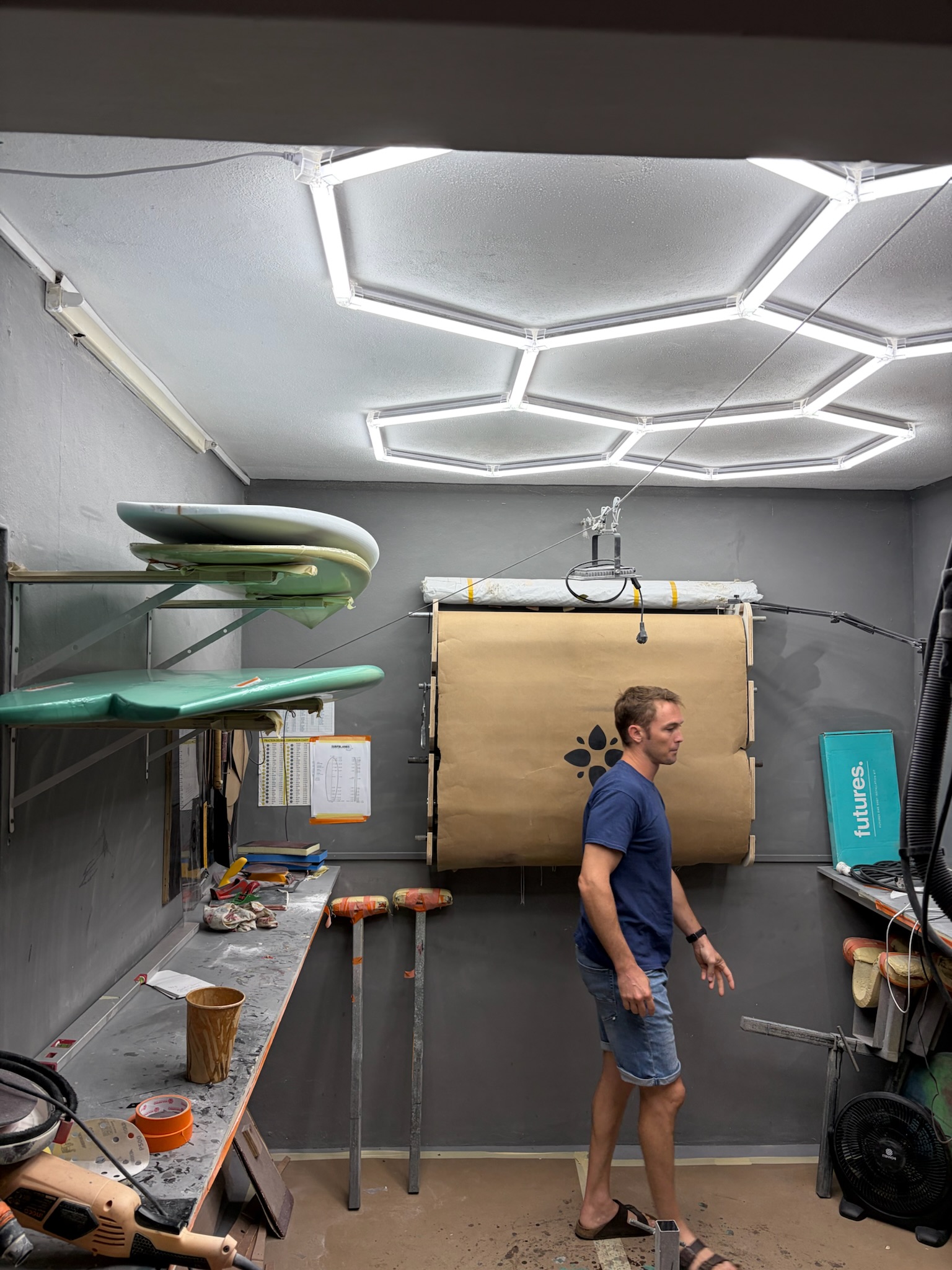
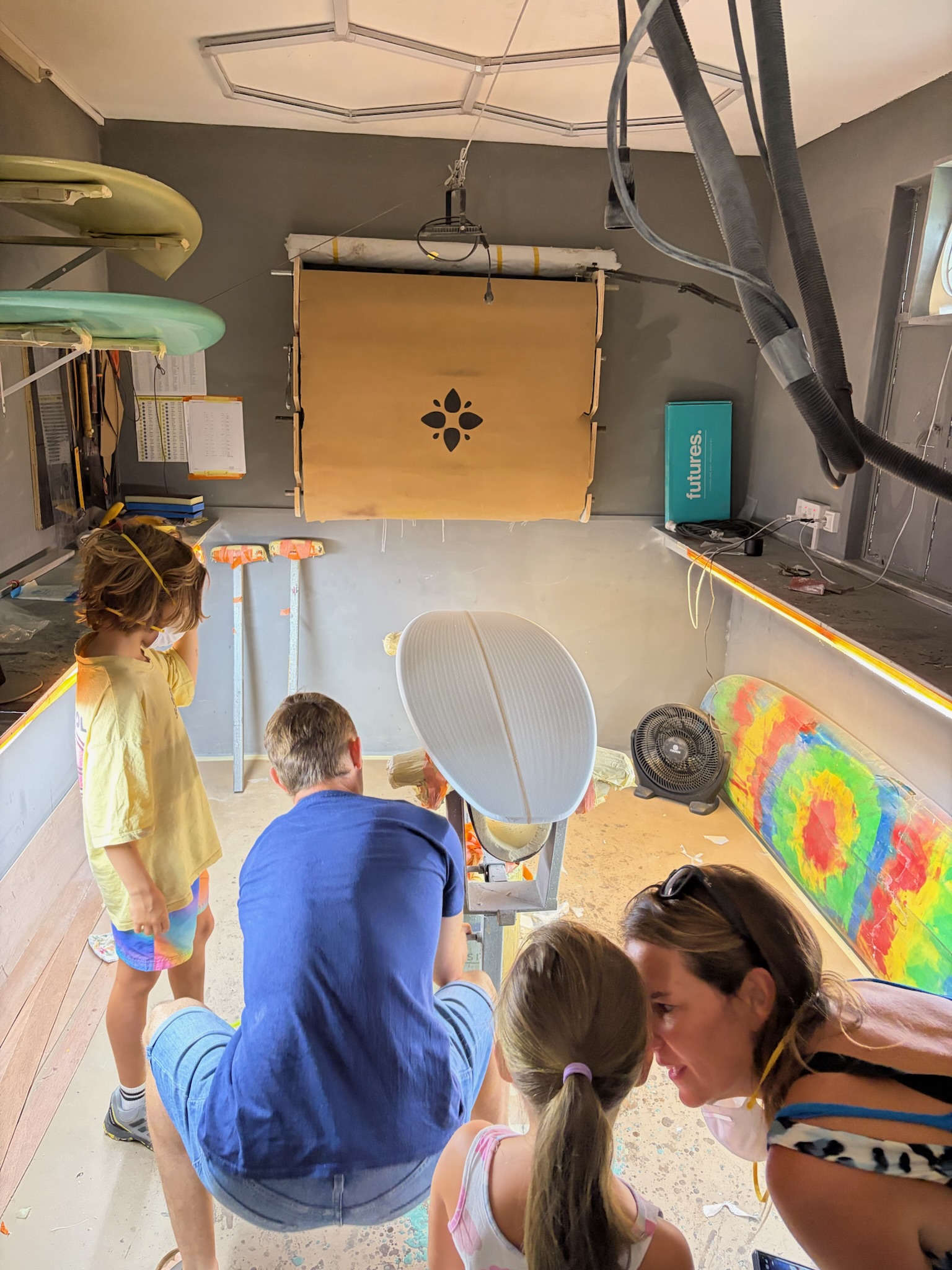
Clips from the bay. Tap to expand.
Glass and fins
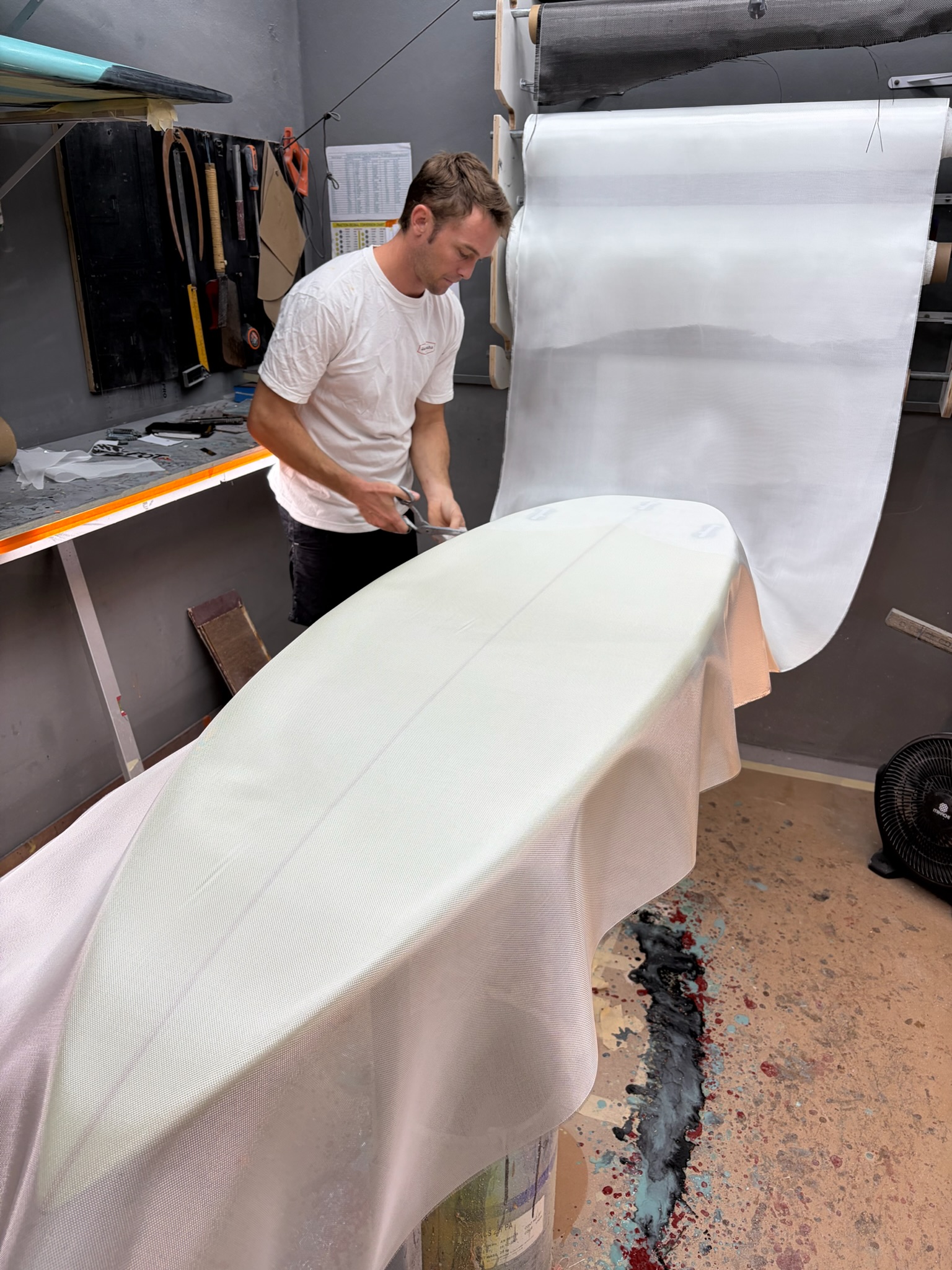
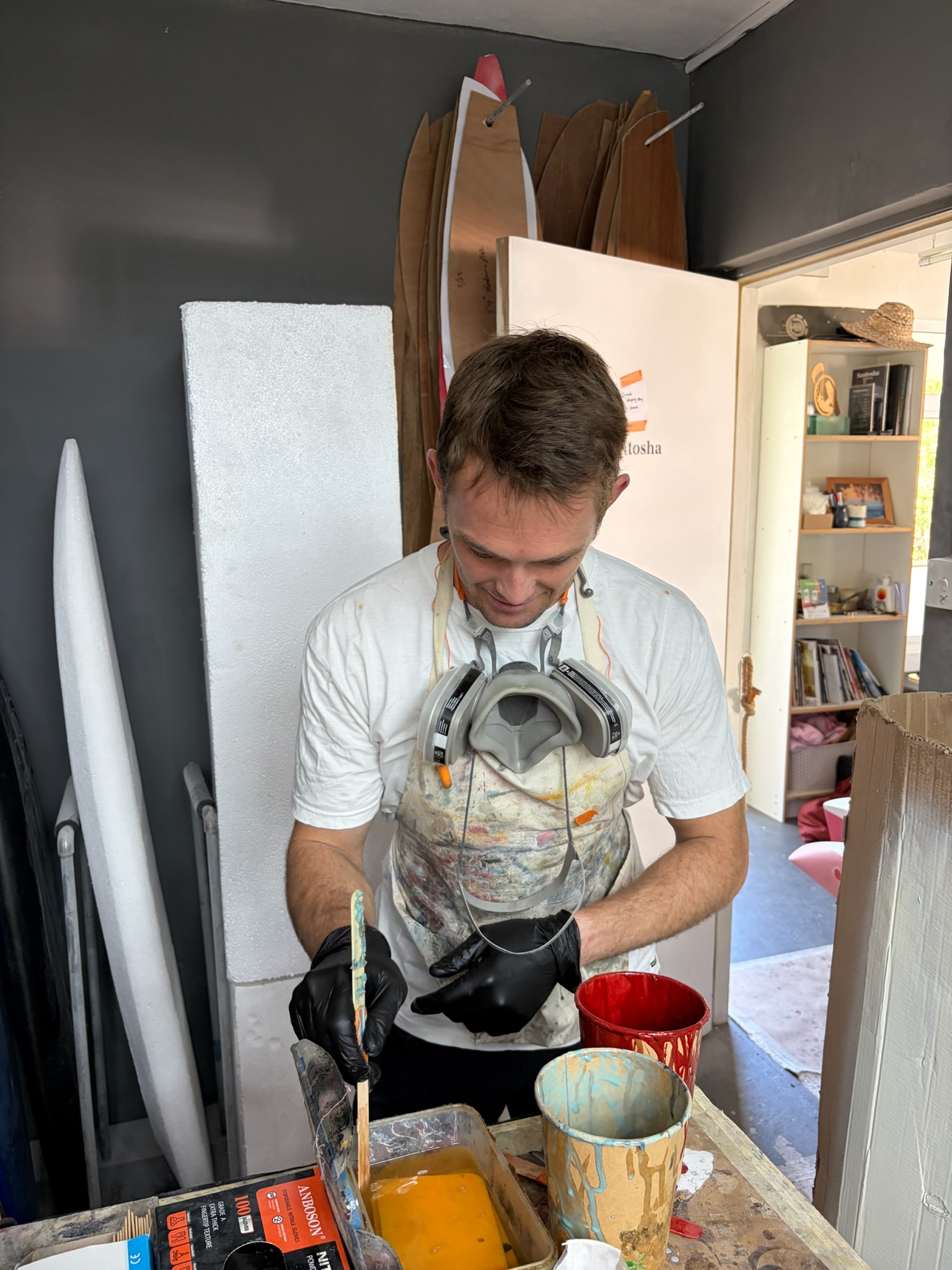
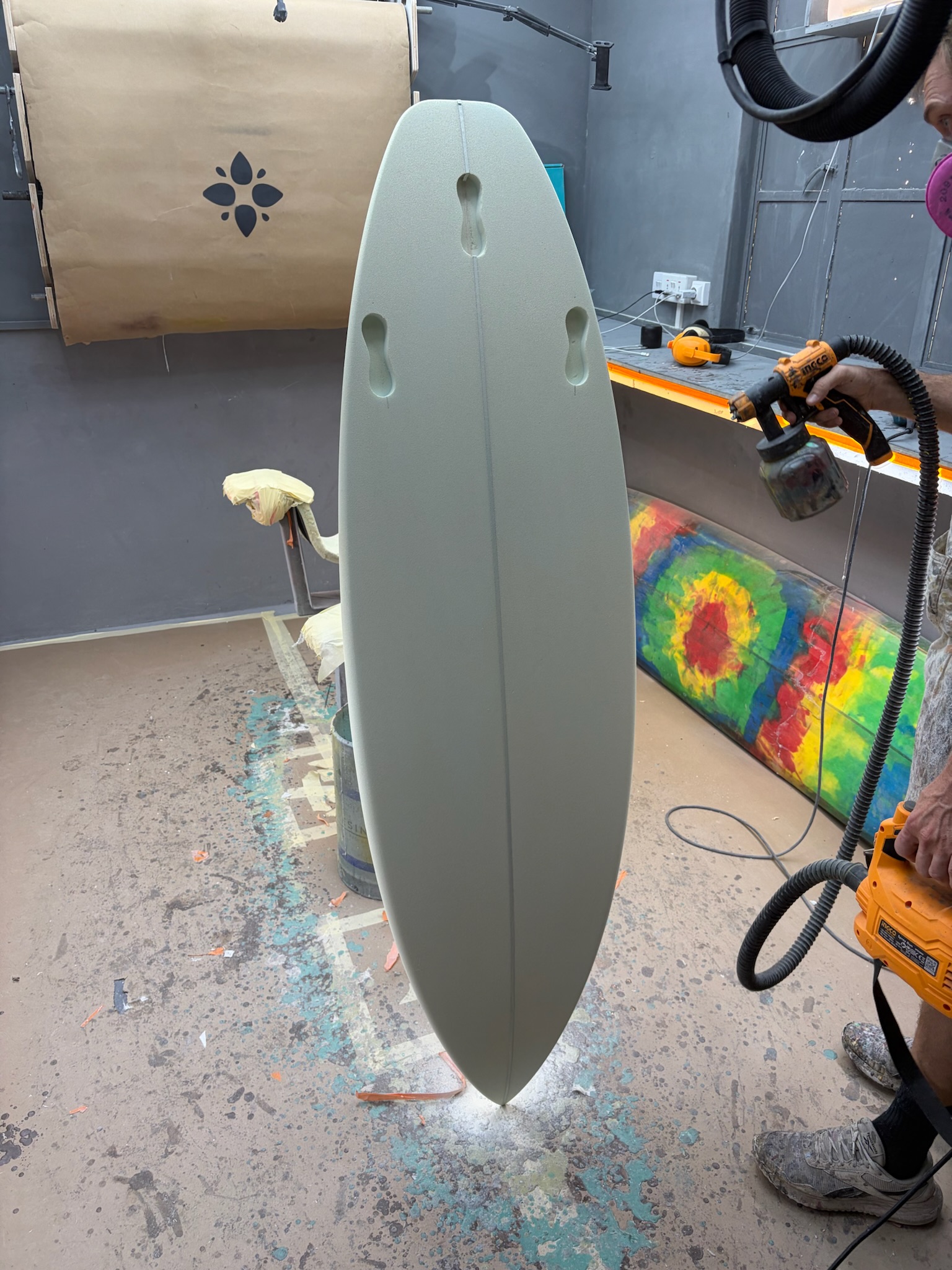
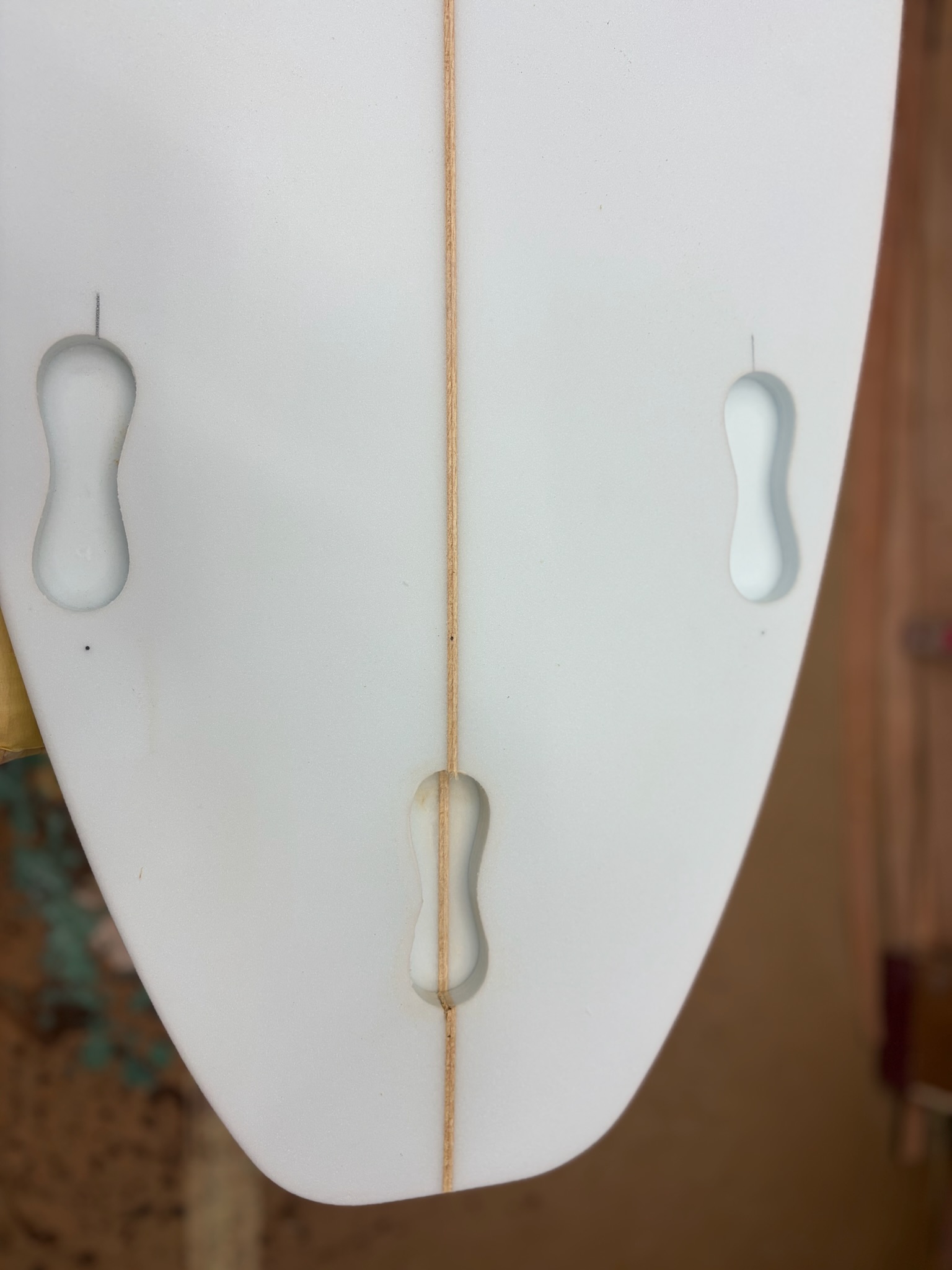
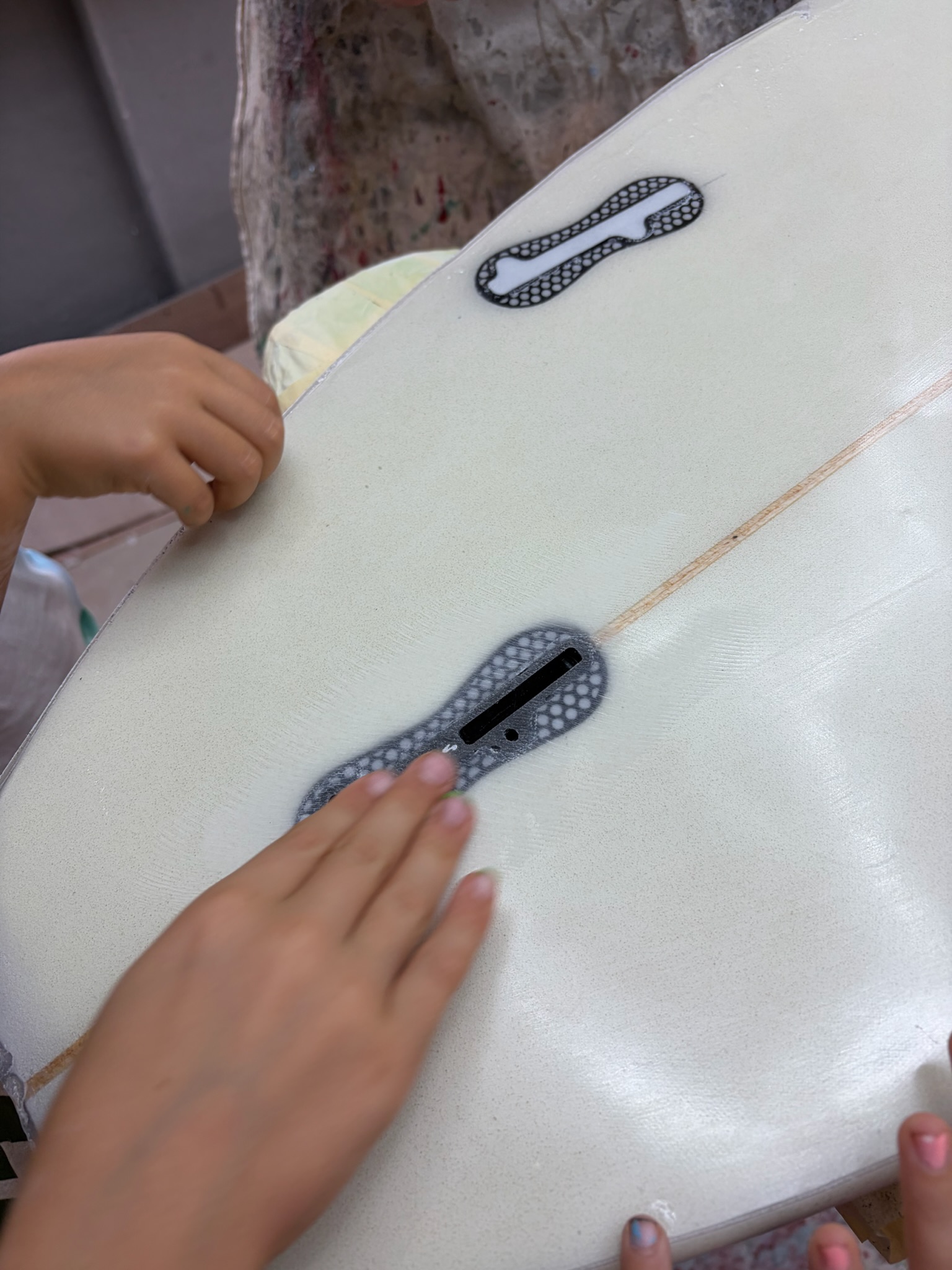
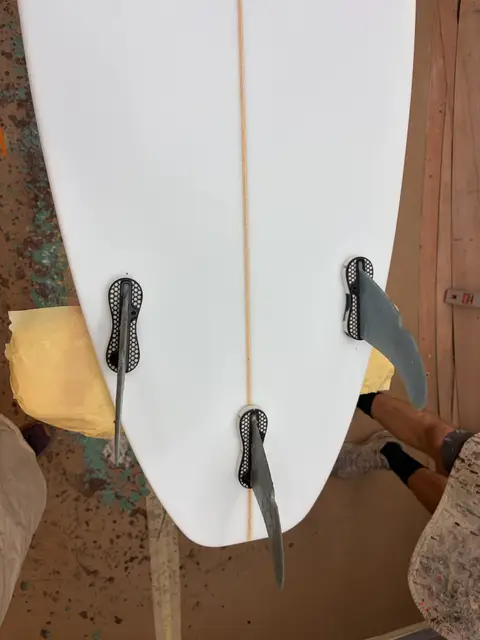
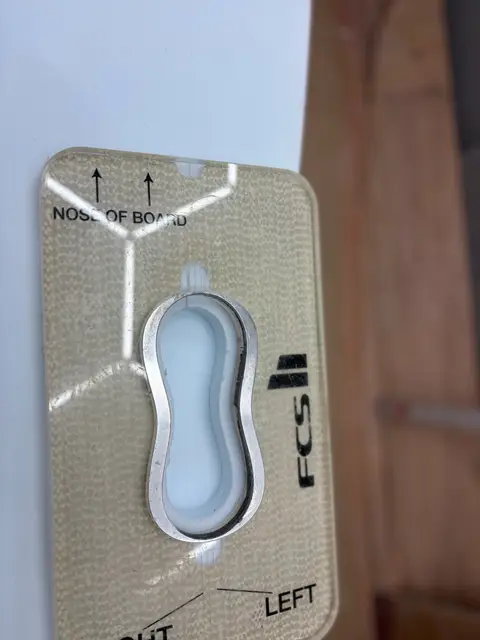
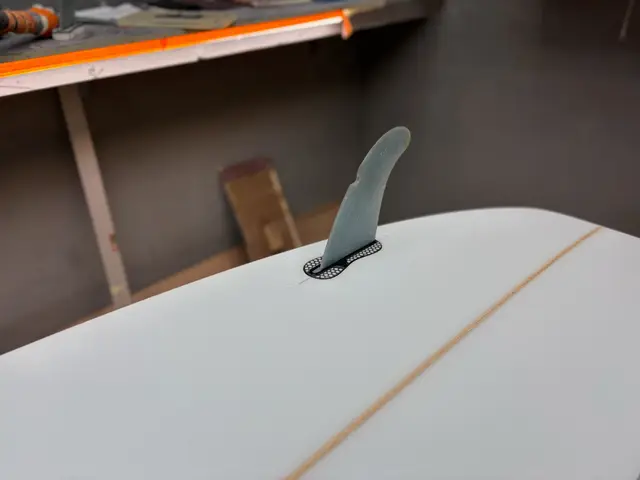
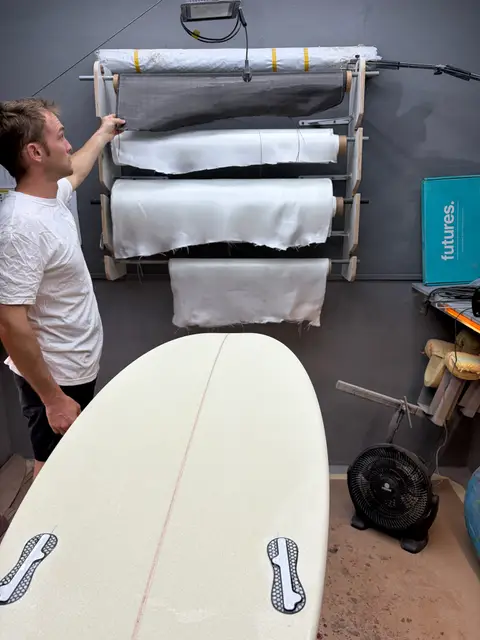
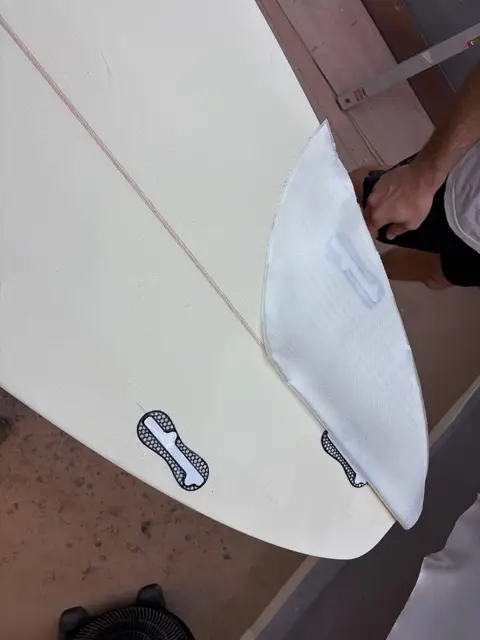
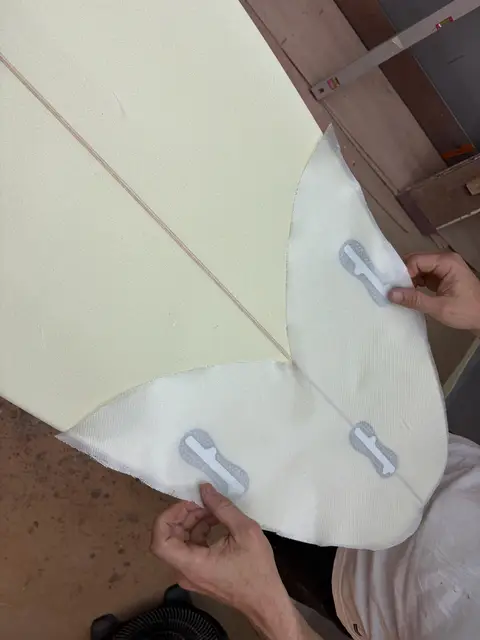
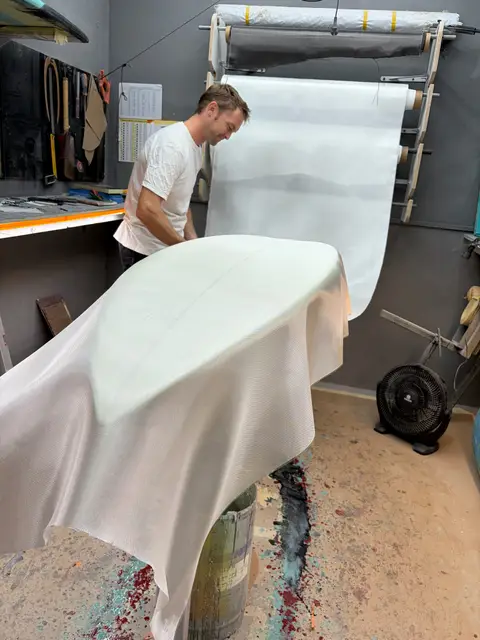
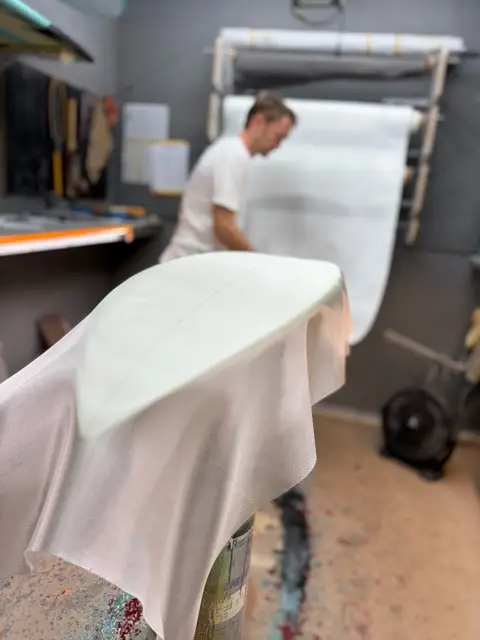
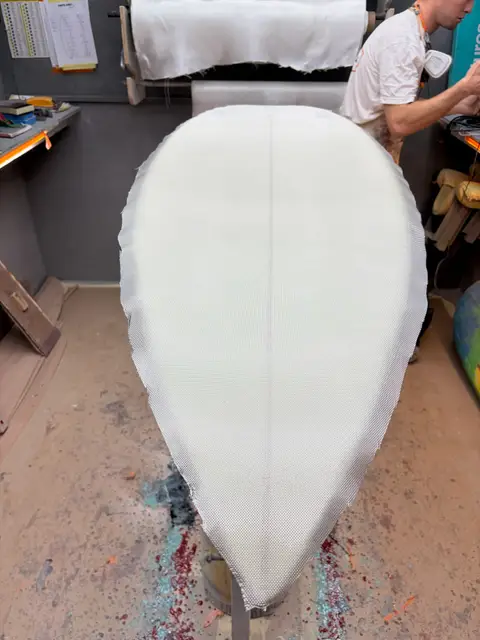
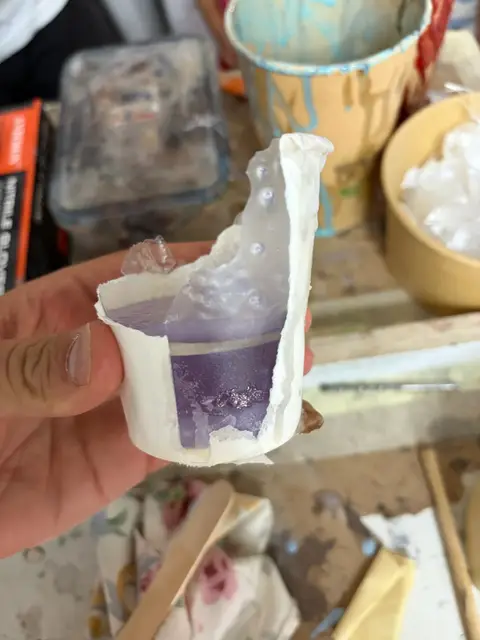
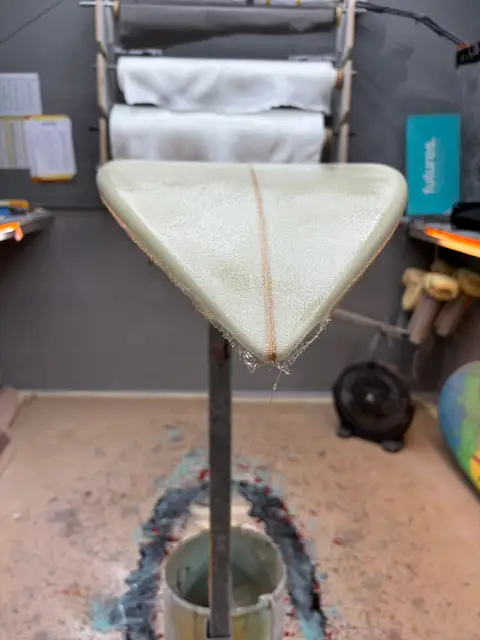
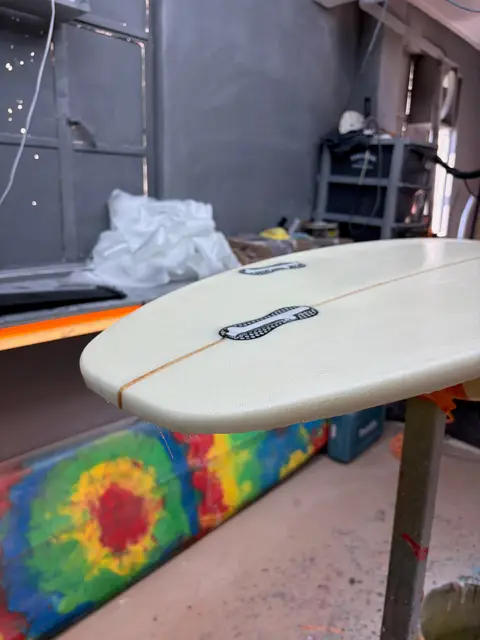
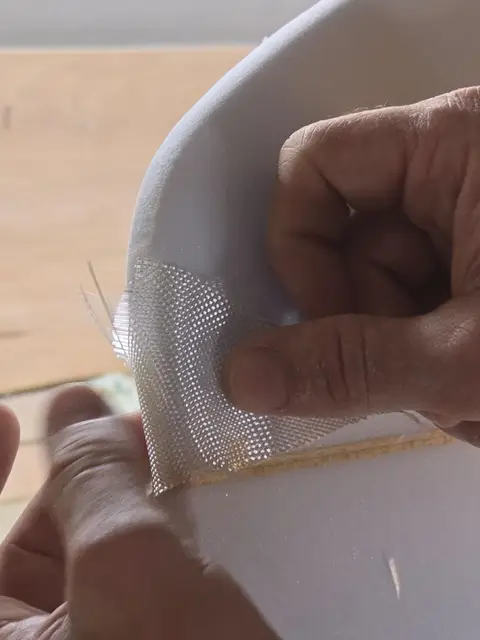
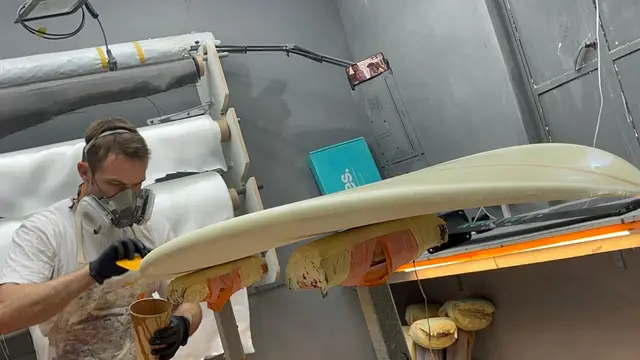
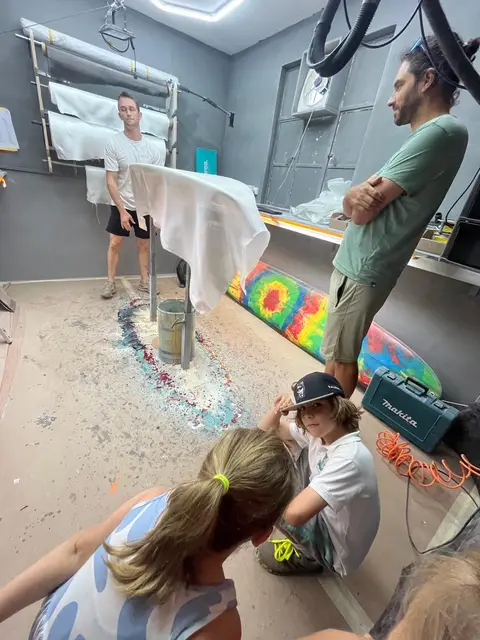
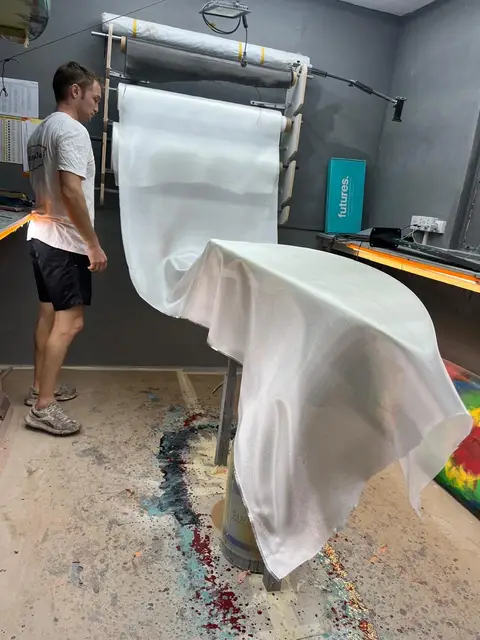
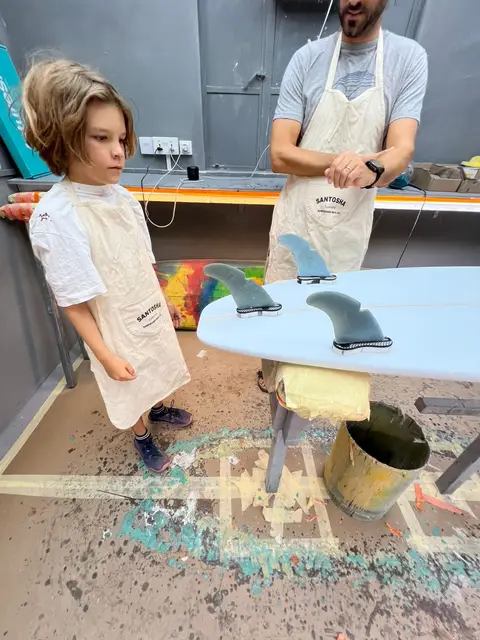
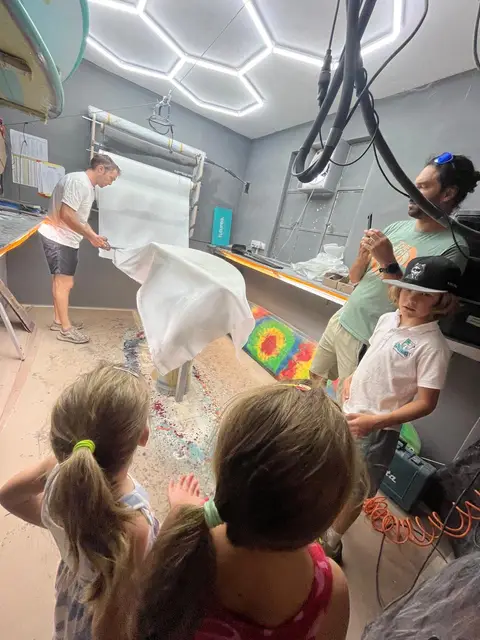
Glassing went back to Daniel and the Santosha crew. Fiberglass over foam, resin mixed and poured, fin boxes routed into the bottom, everything sealed before small hands could turn it into fingerprints.
Noah watched most of that part with his hands clamped behind his back. For him, that’s an act of real self-control.
Painting the duck
Then the colour.
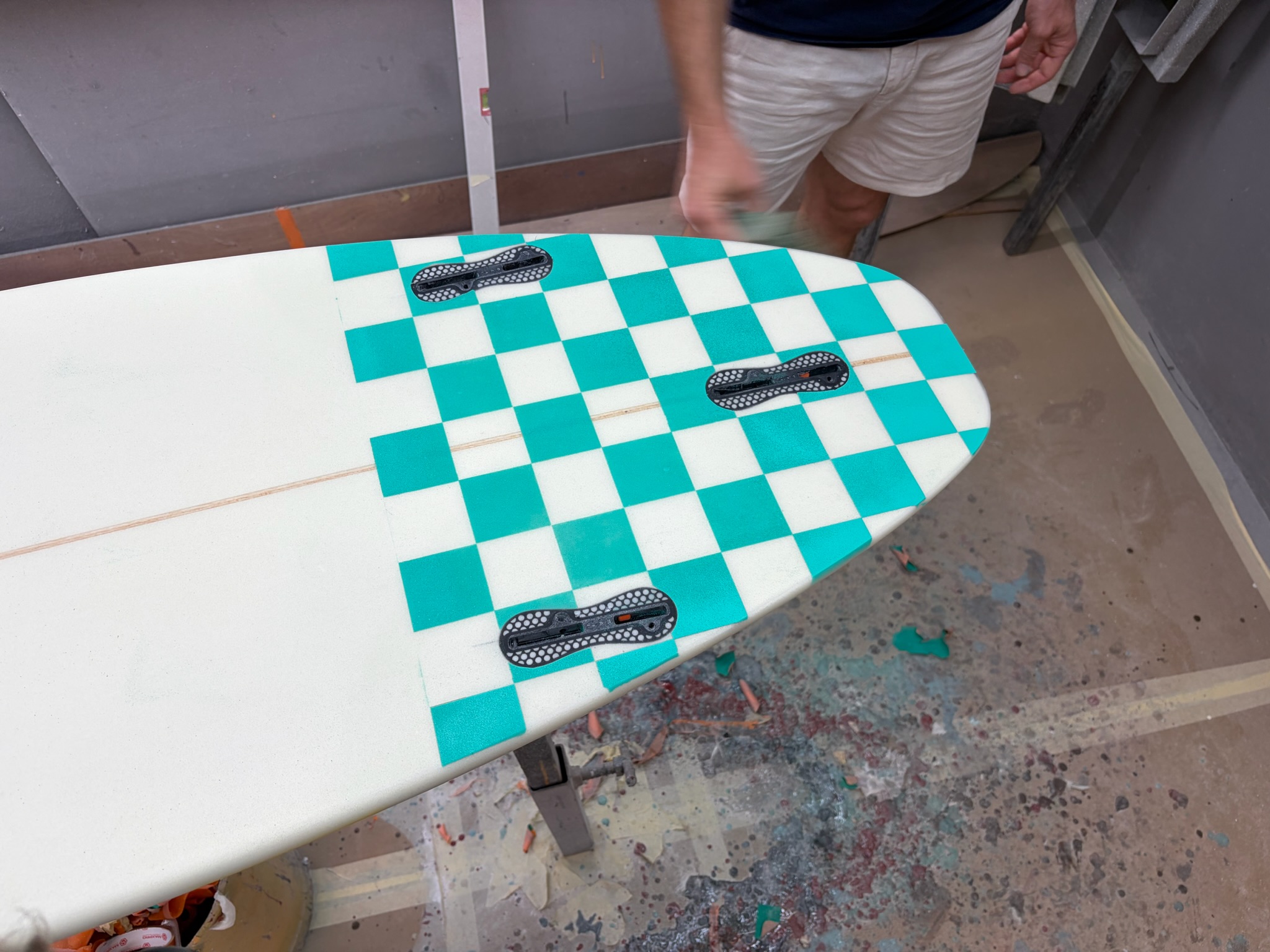
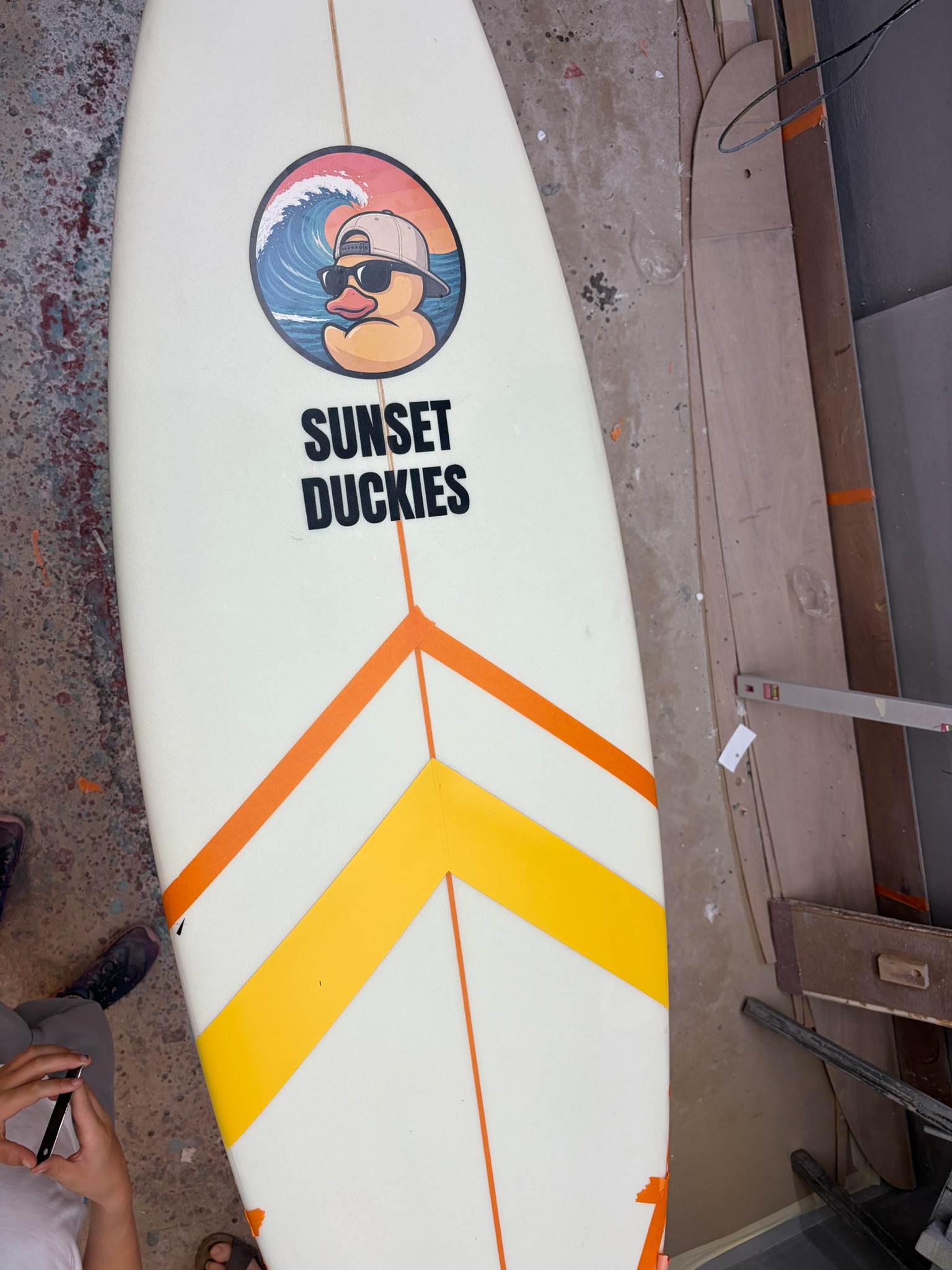
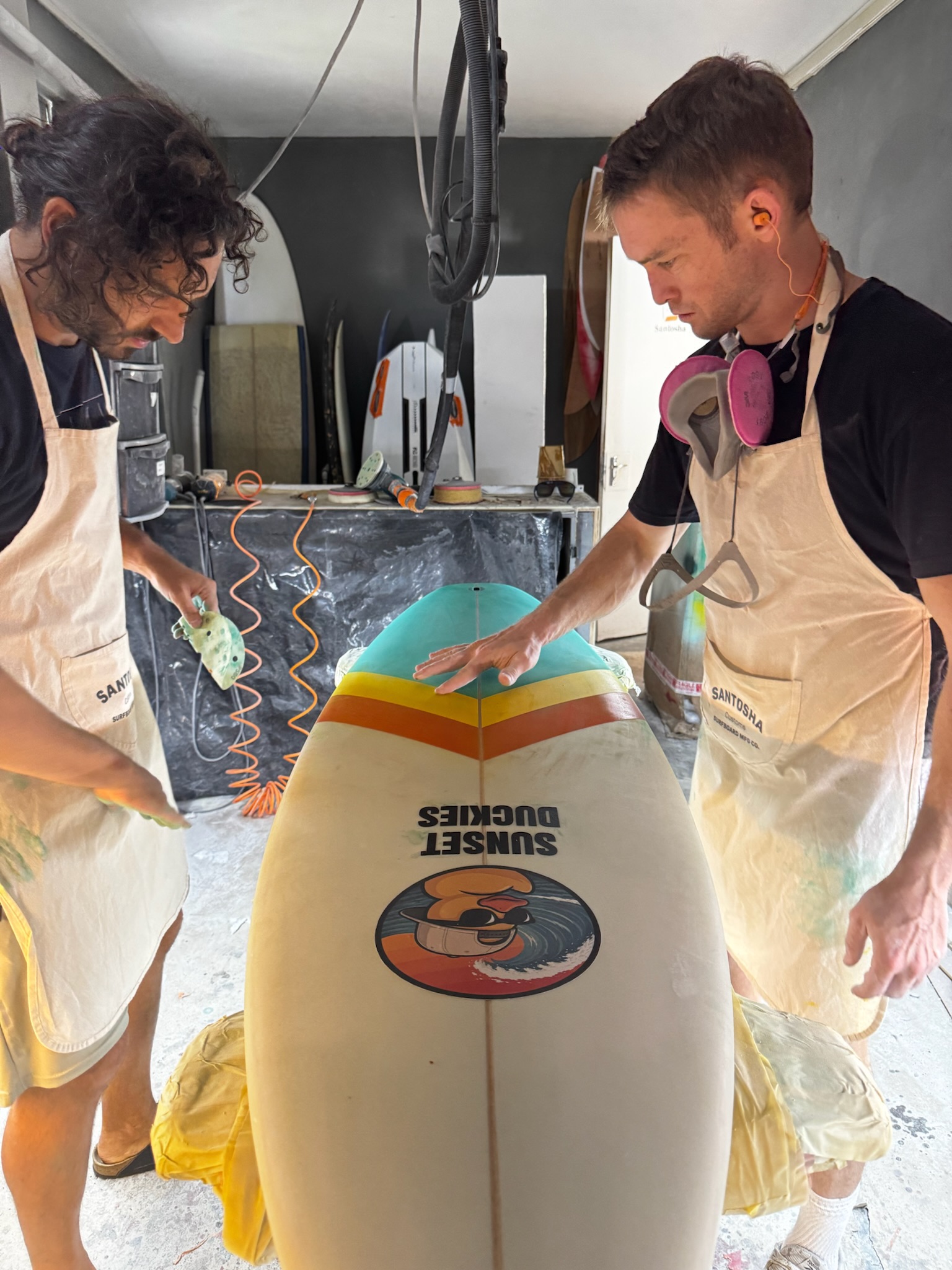
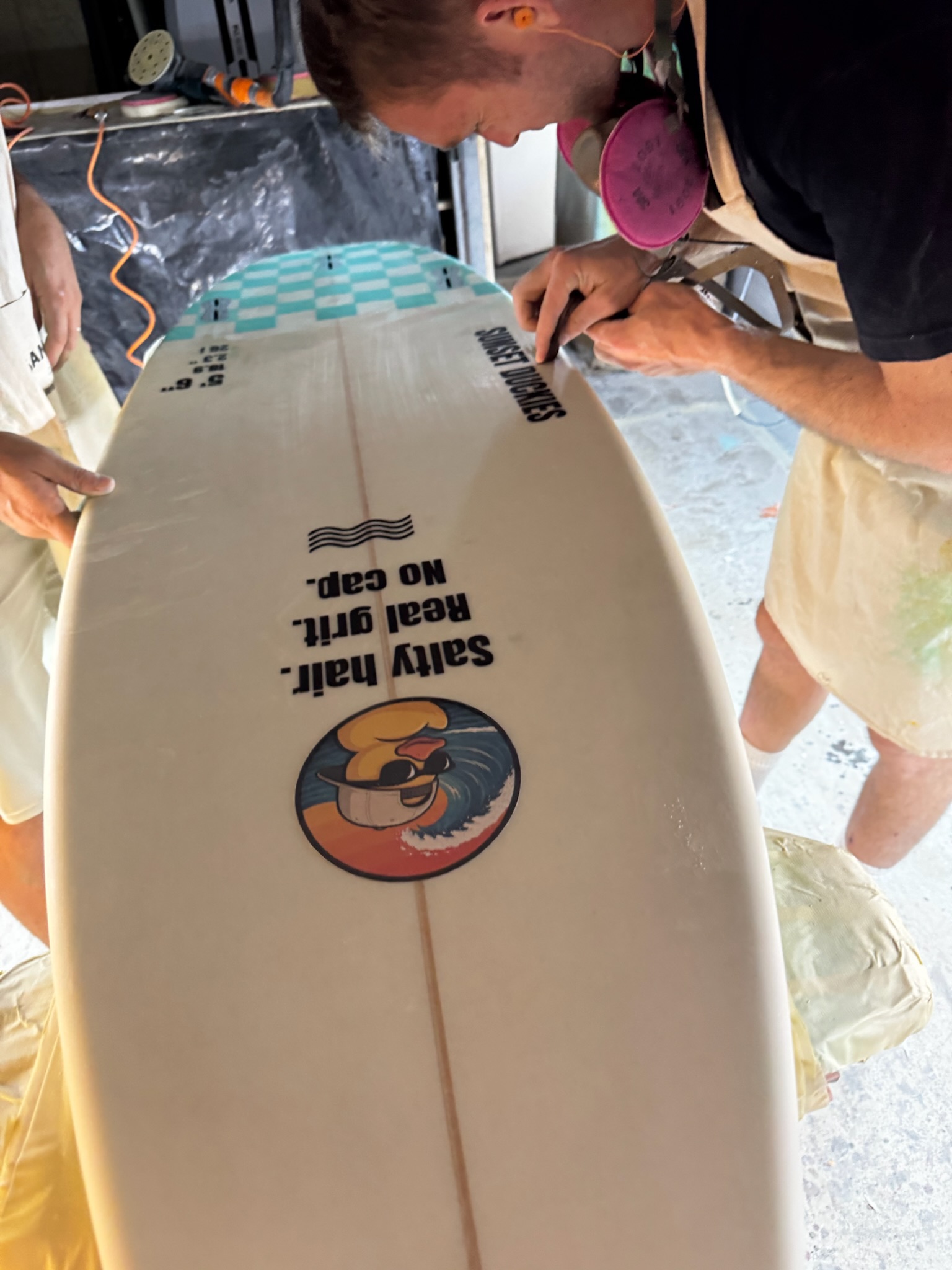
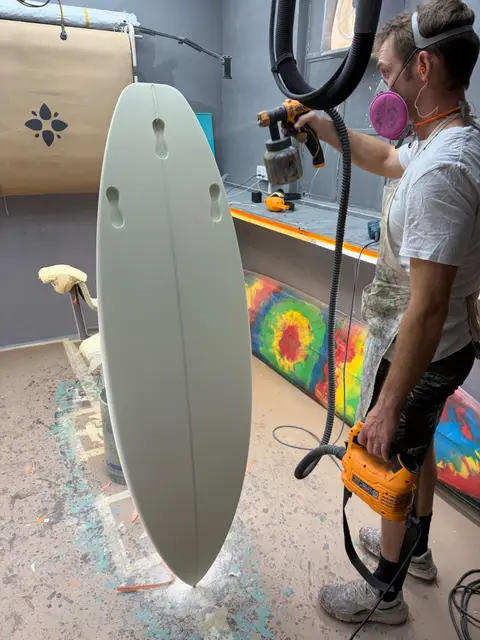
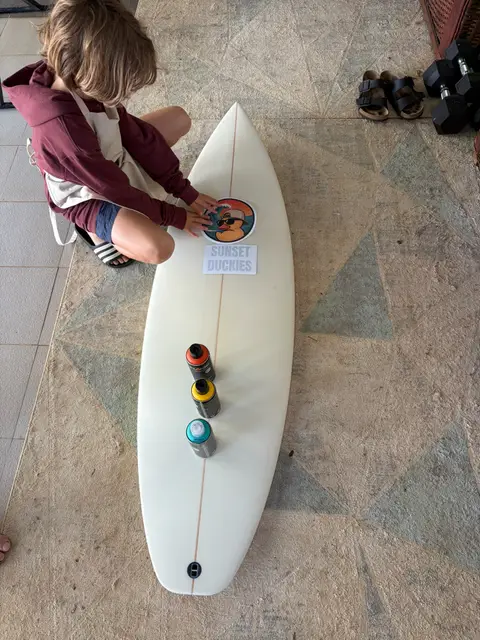
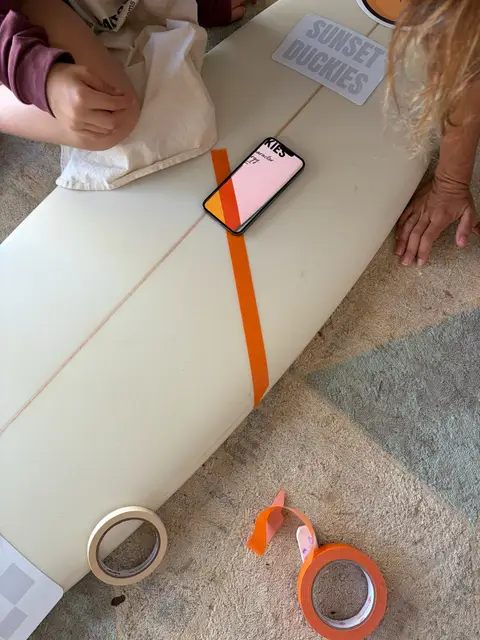
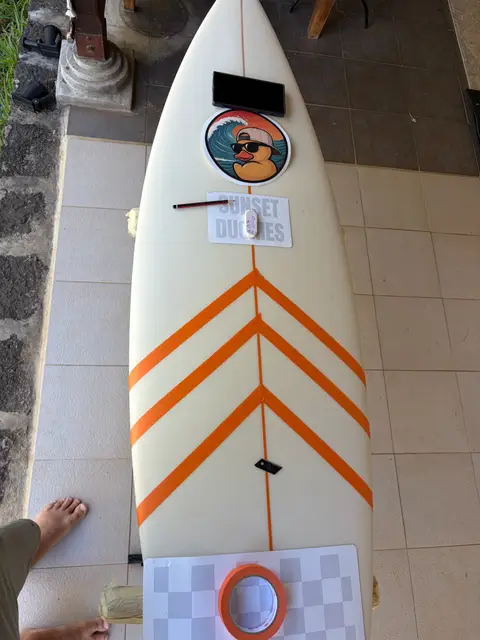
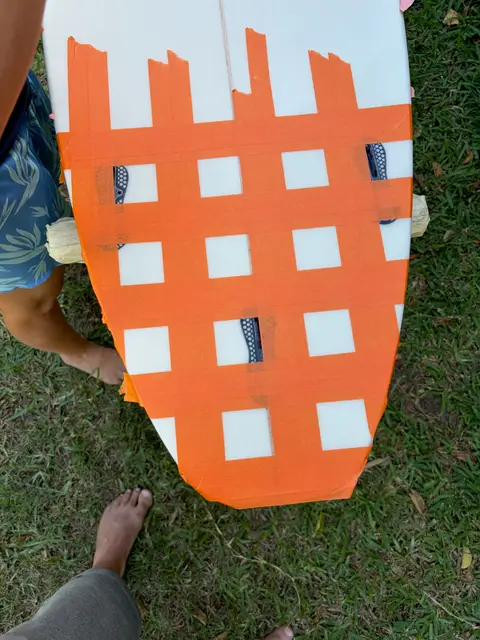
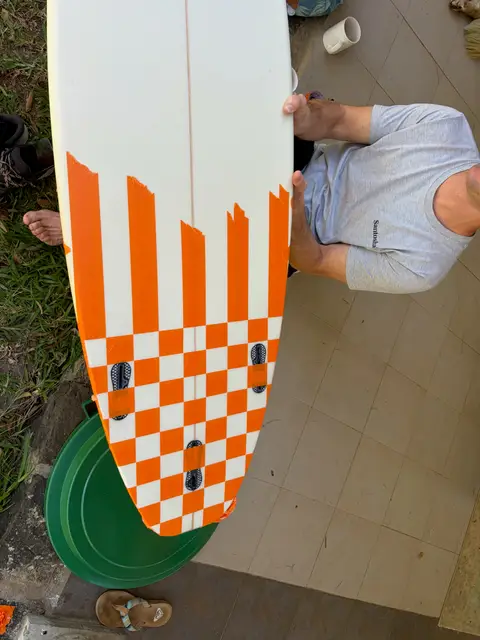
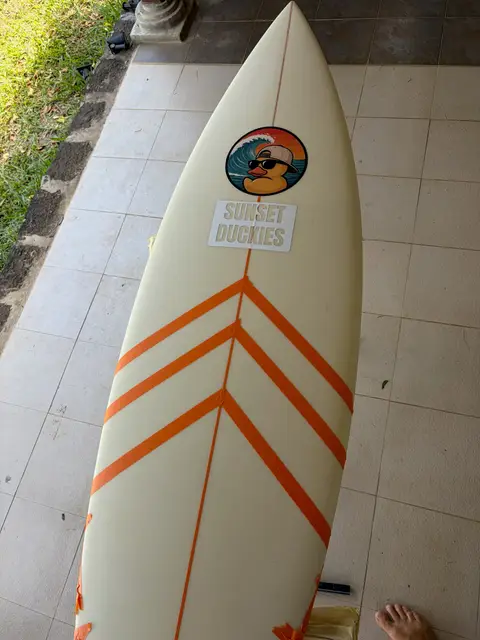
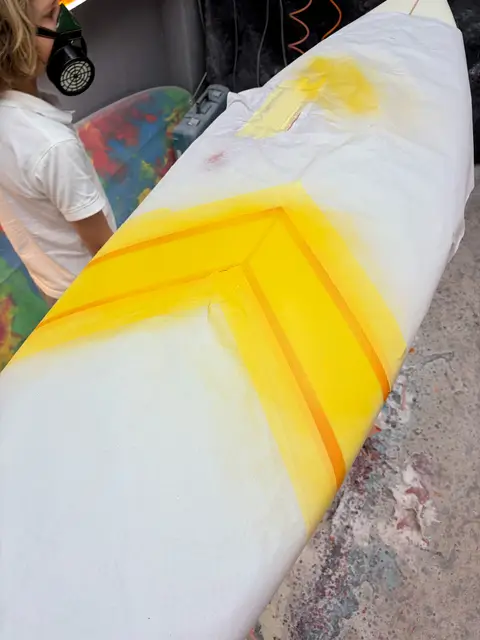
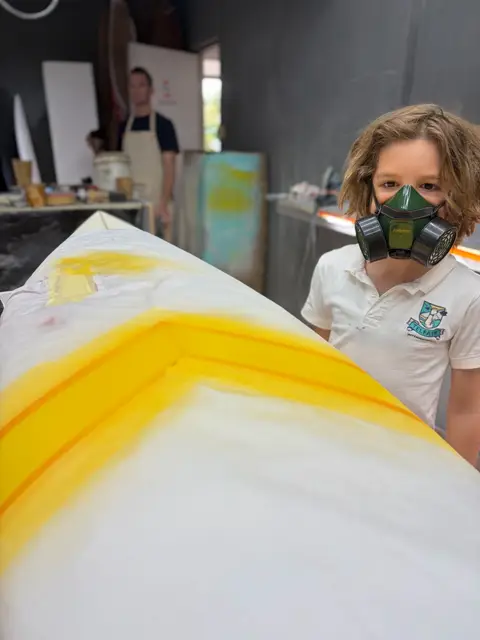
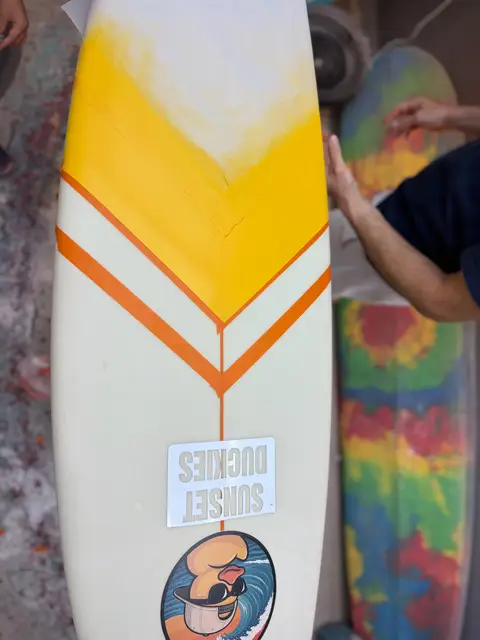
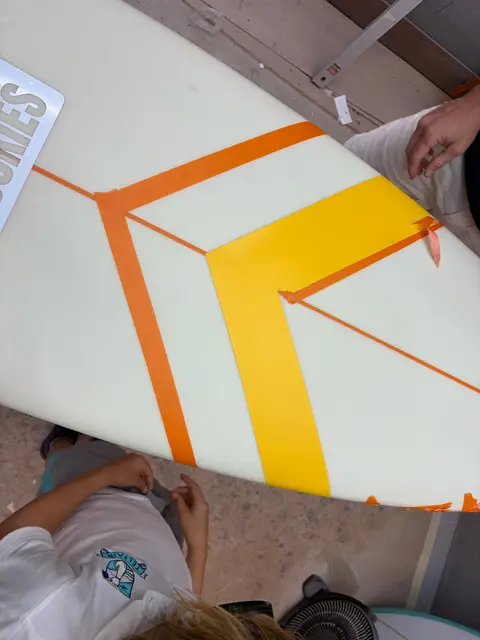
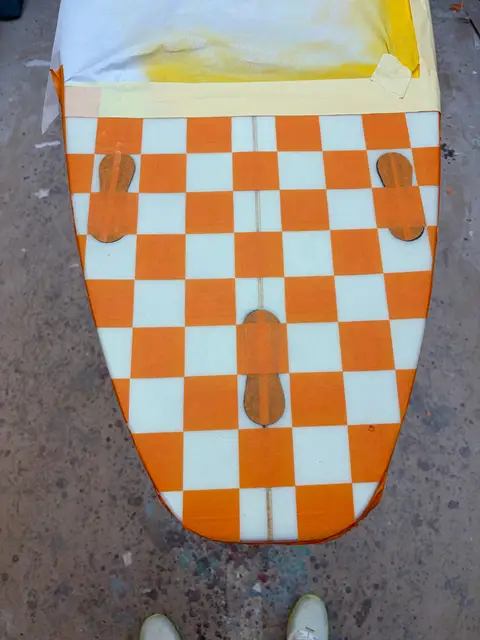
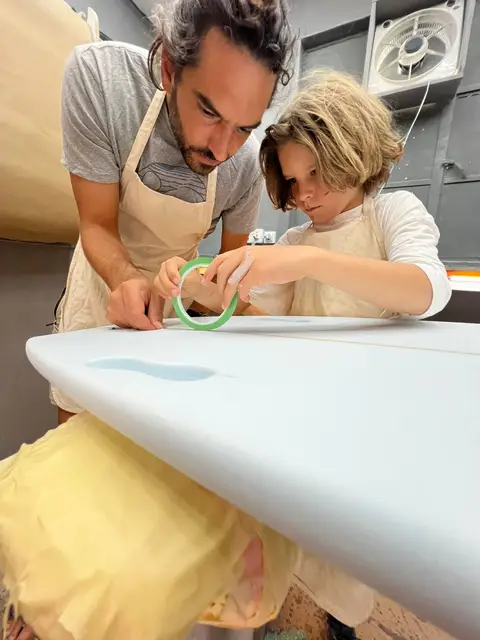
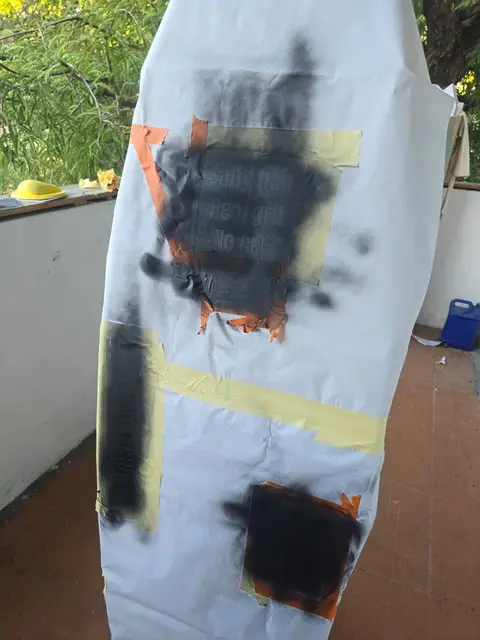
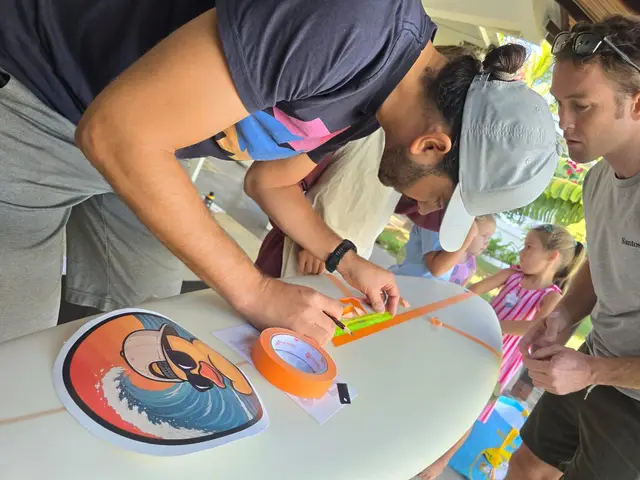
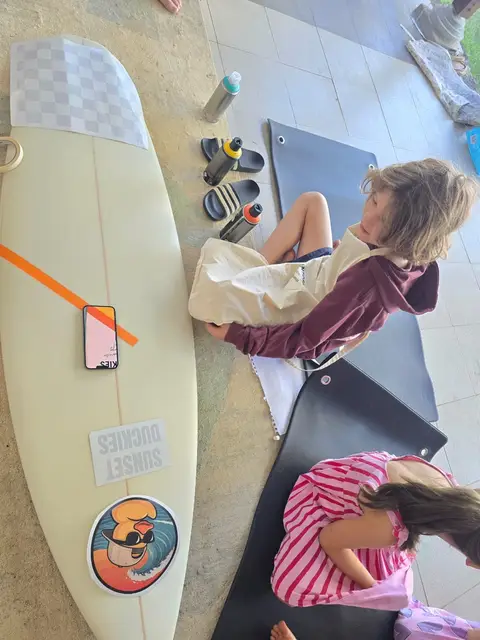
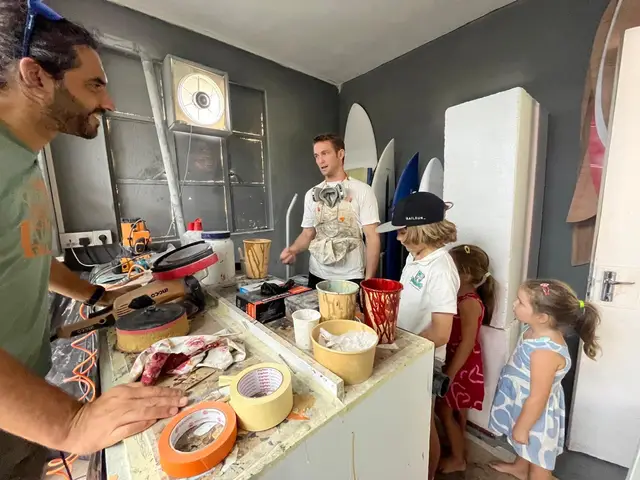
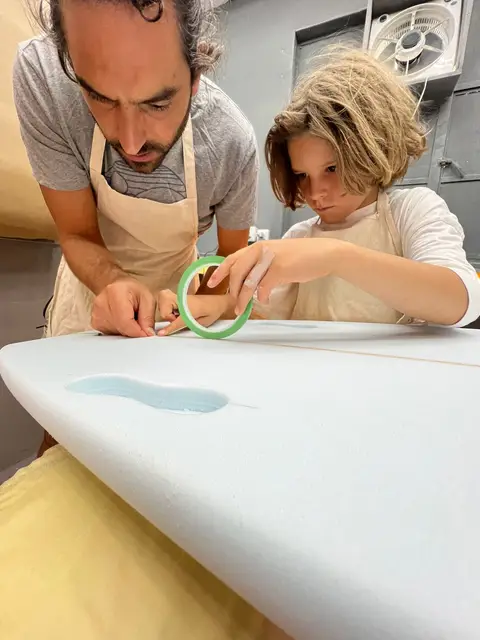
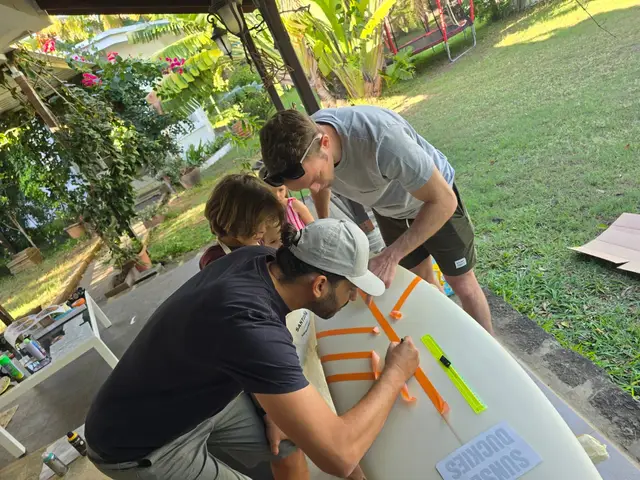
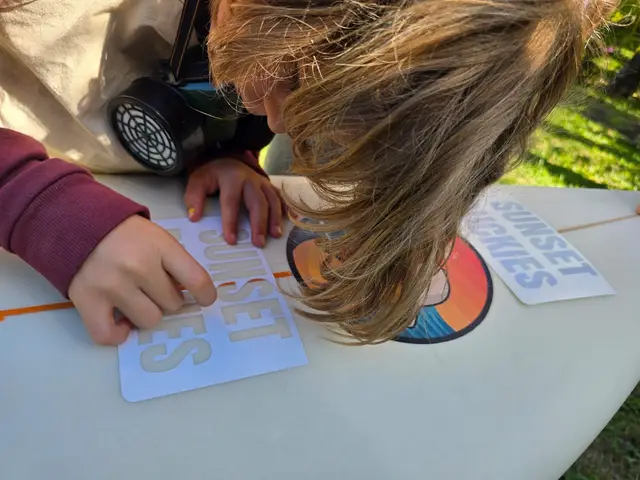
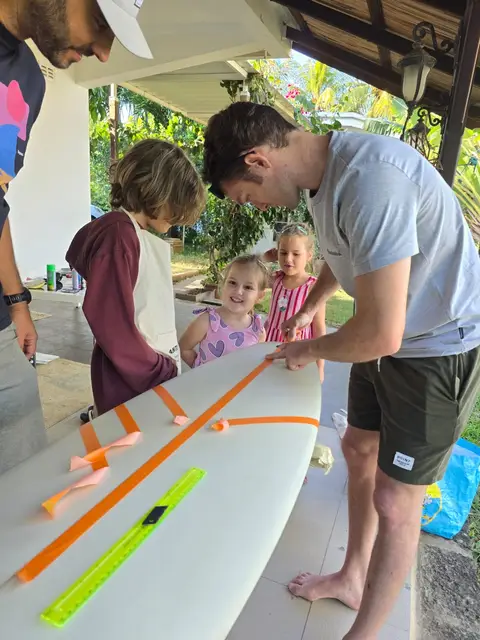
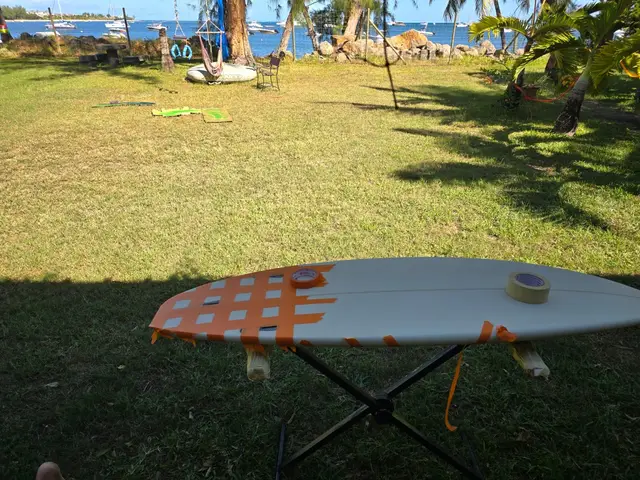
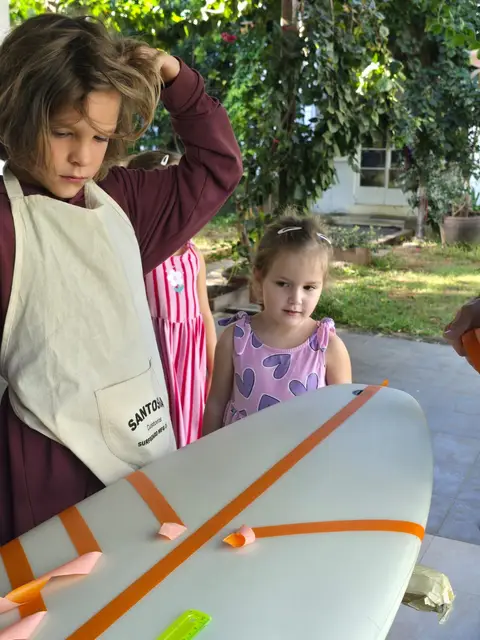
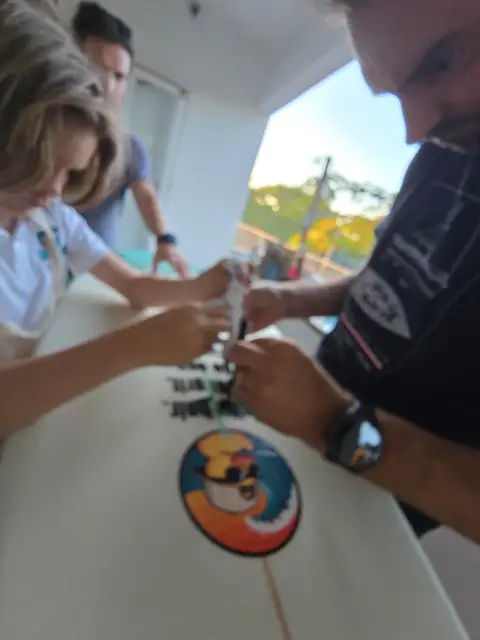
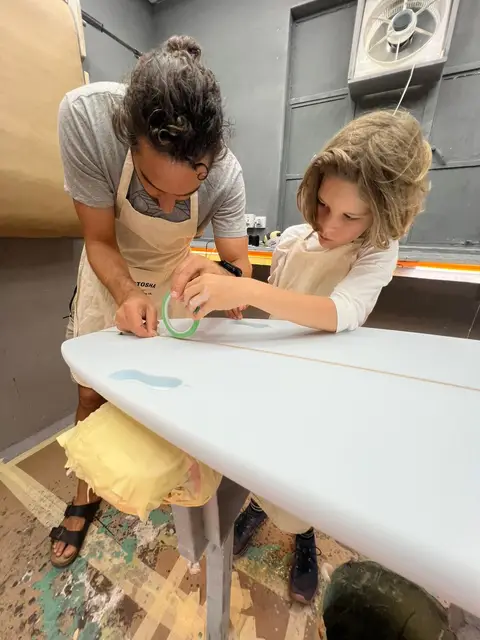
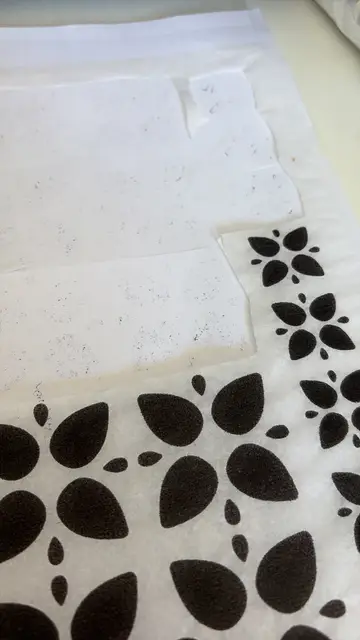
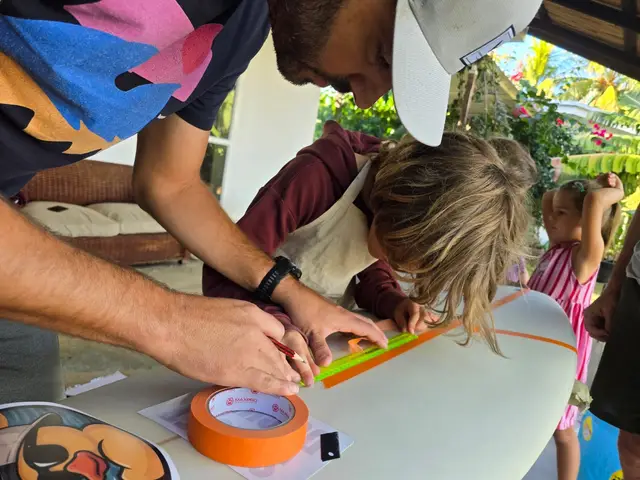
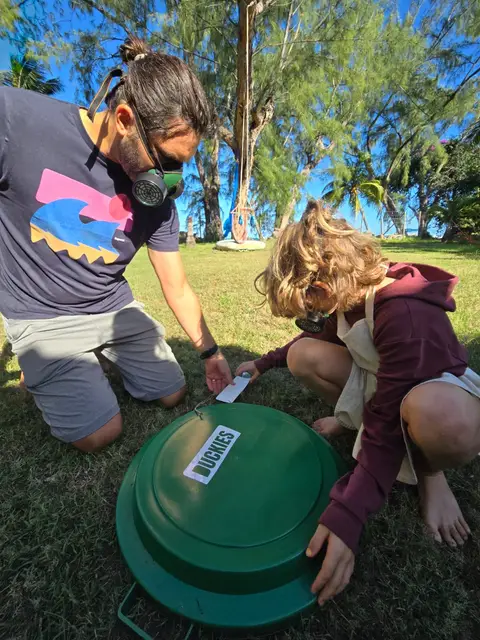
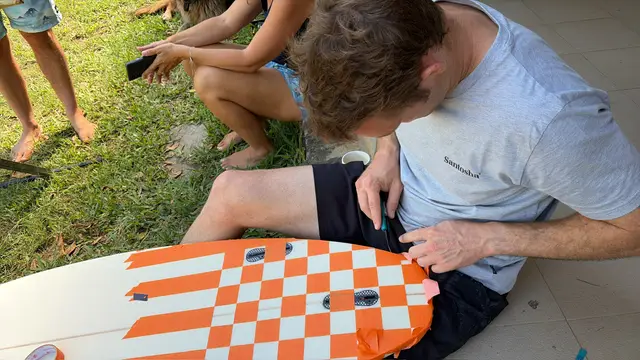
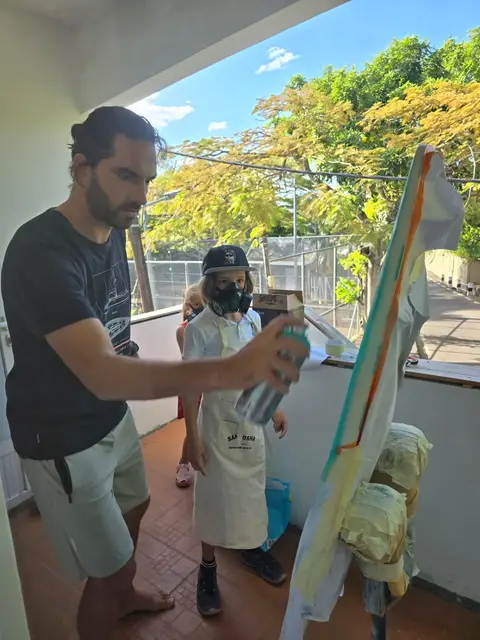
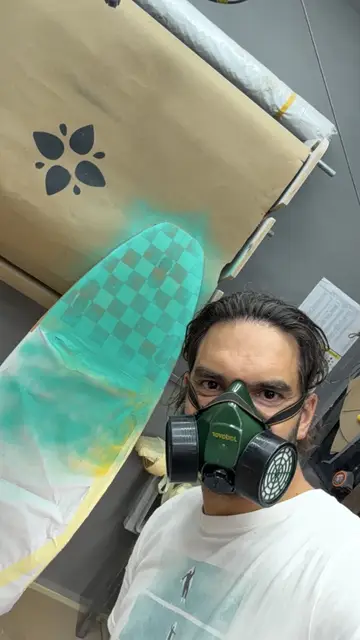
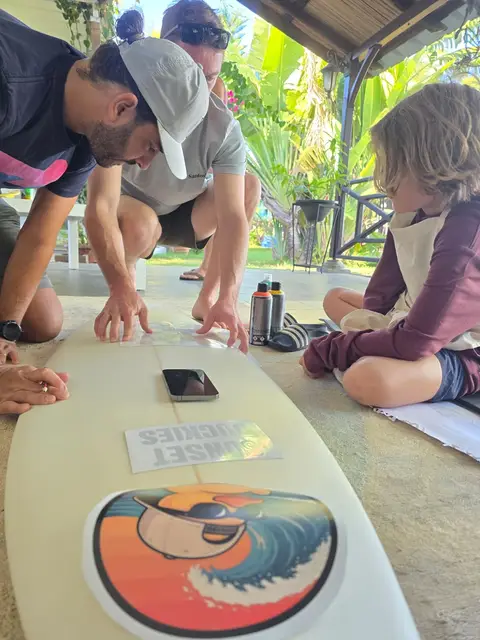
The chevron was masked stripe by stripe. The “DUCKIES” letters were cut as a stencil. The tail became a checkerboard one square at a time, with tape doing most of the precision work and Noah doing the spraying.
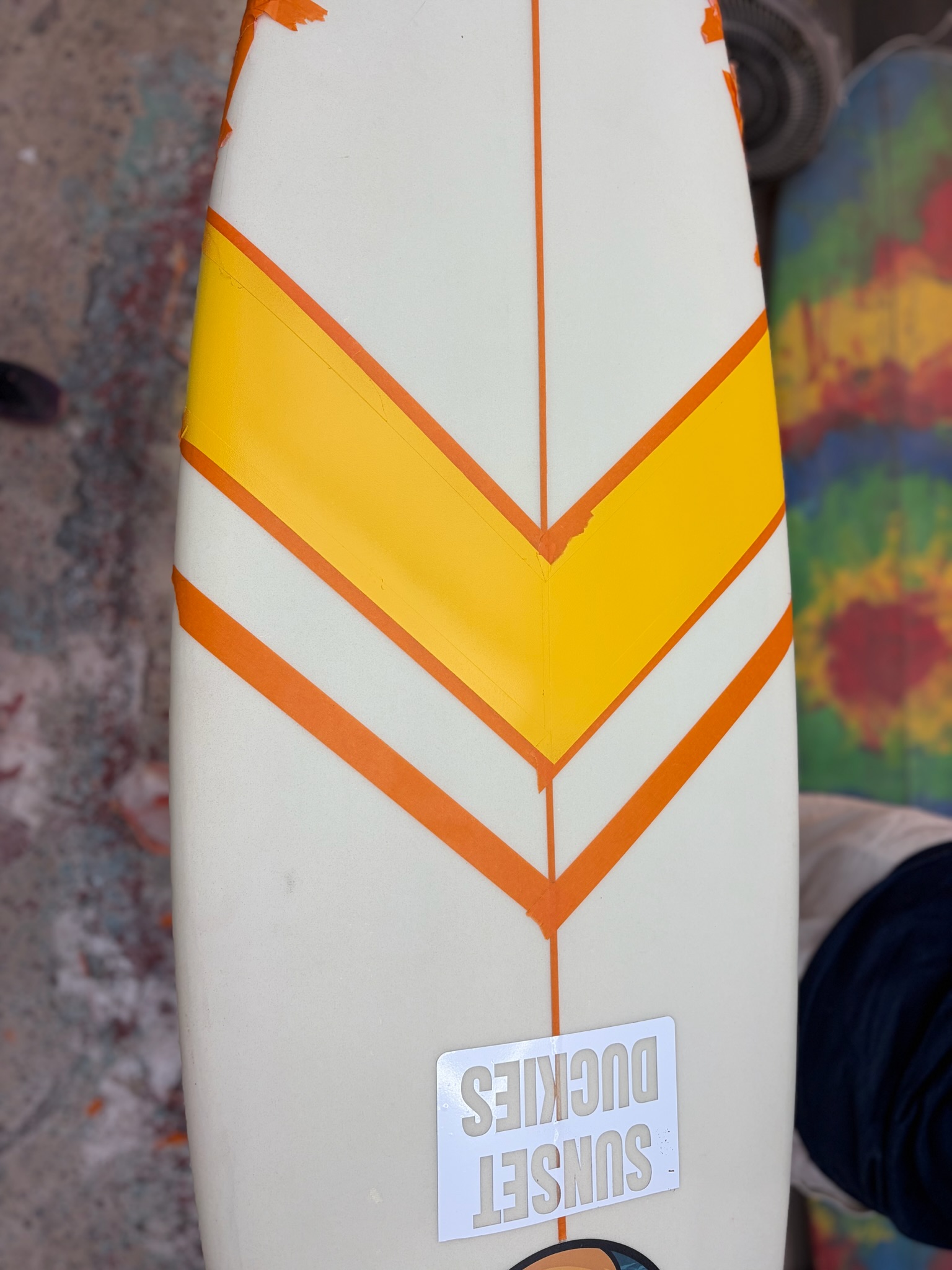
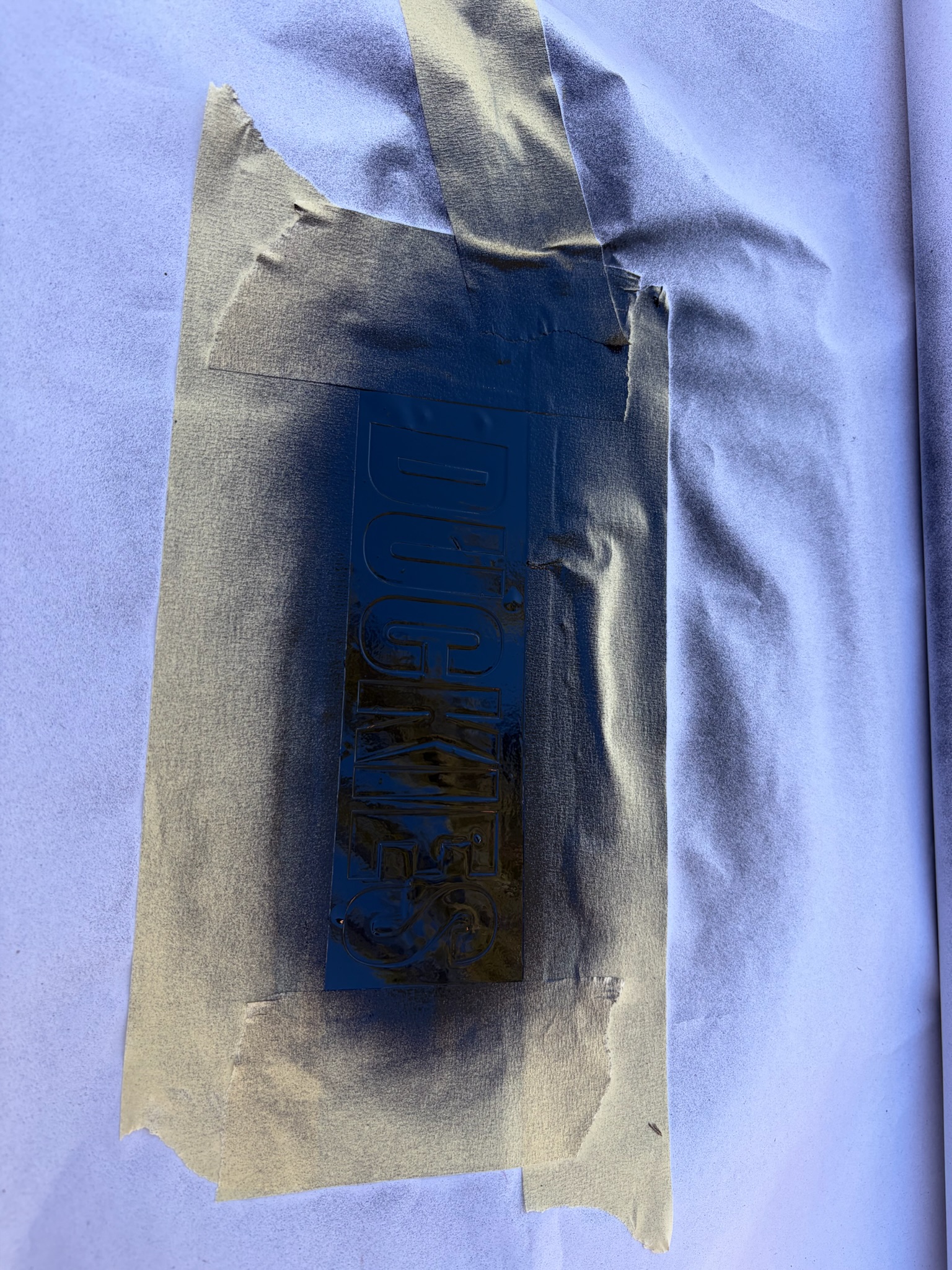
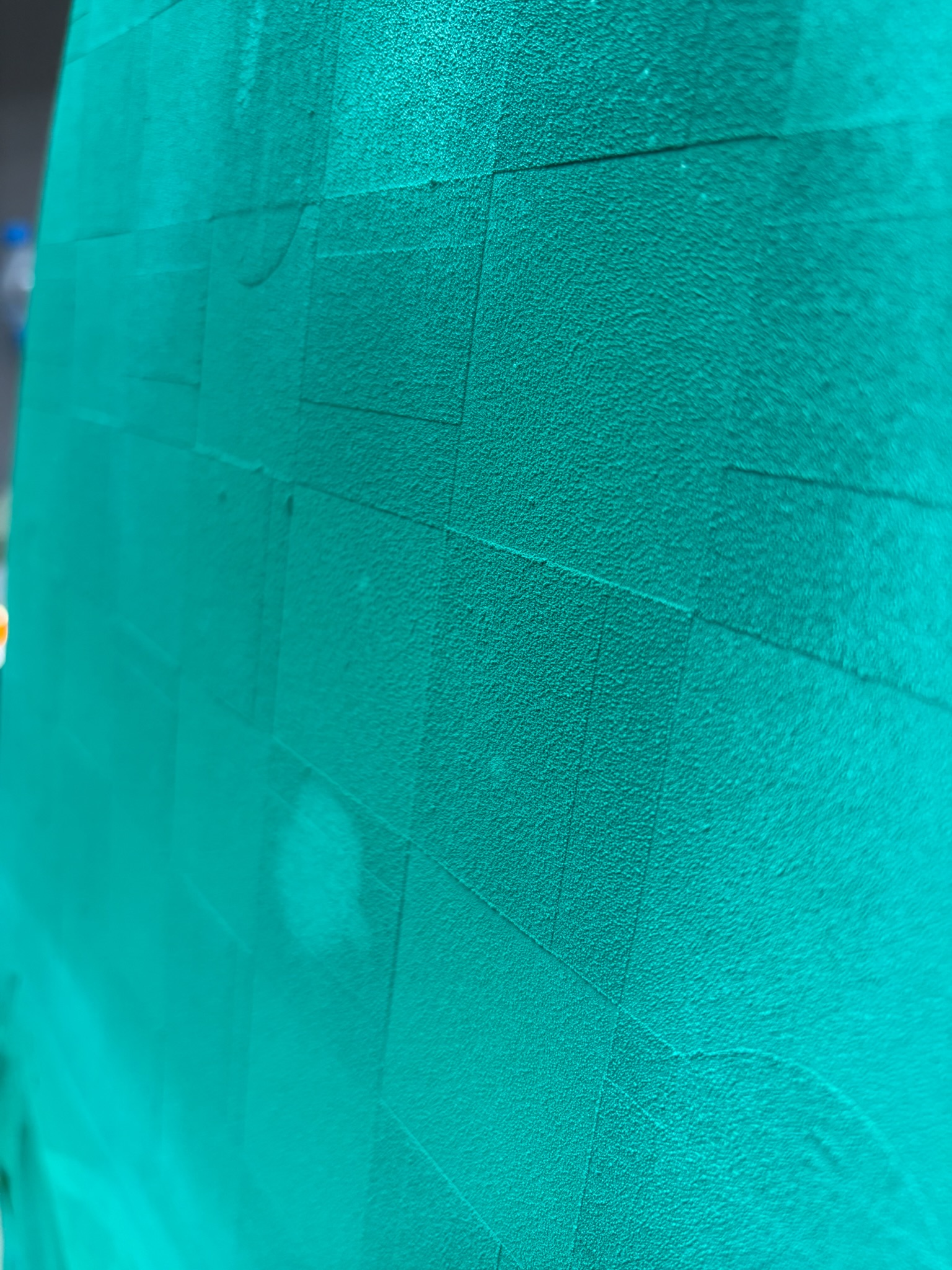
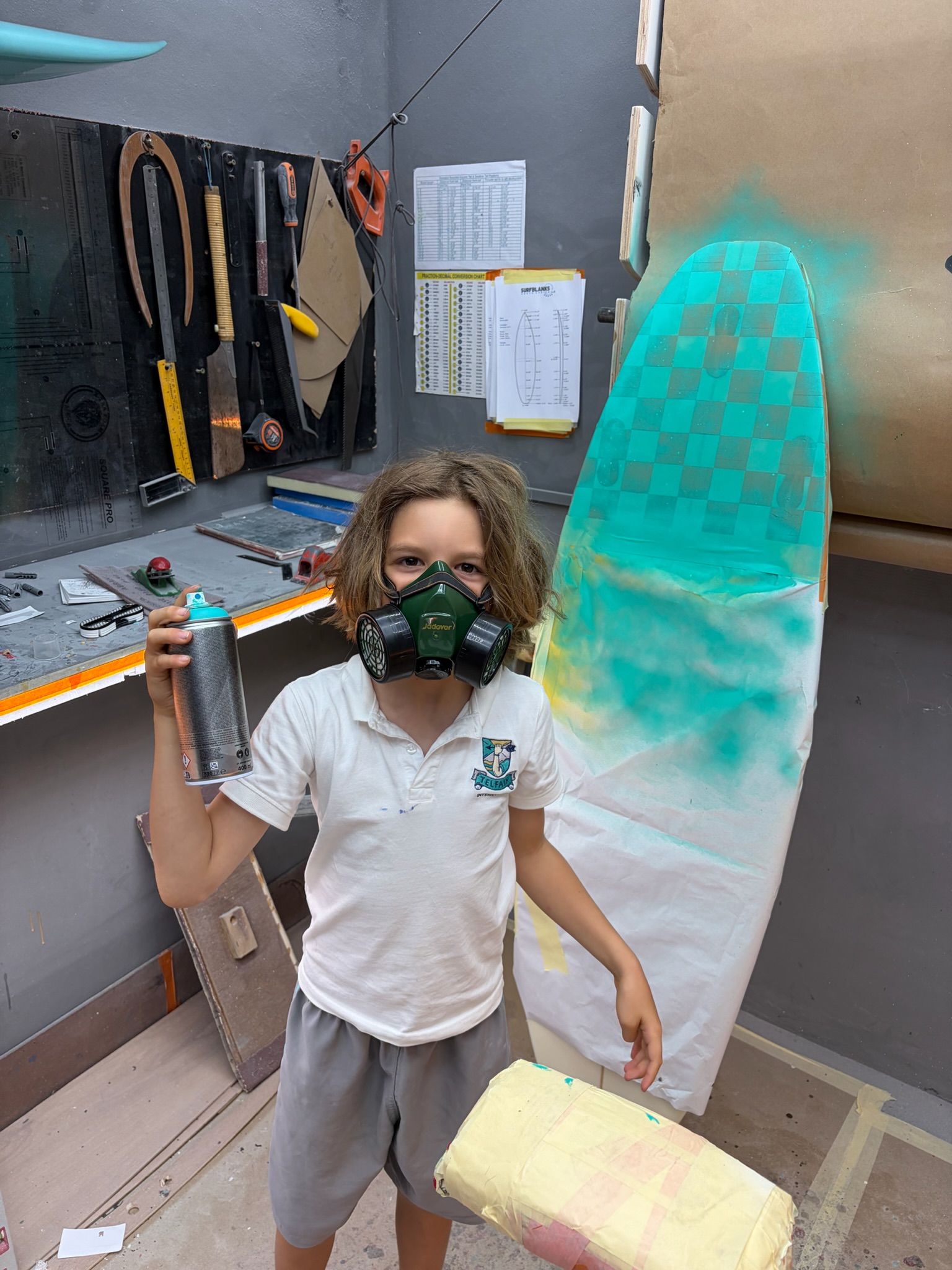
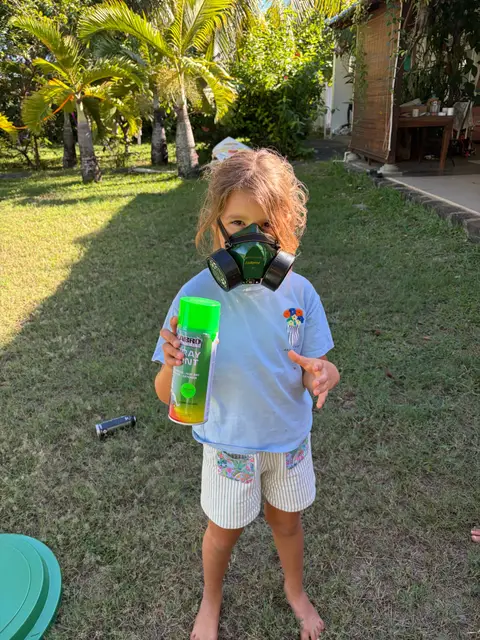
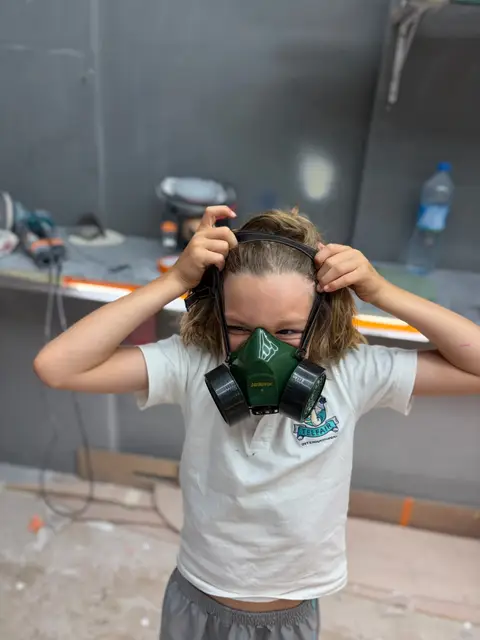
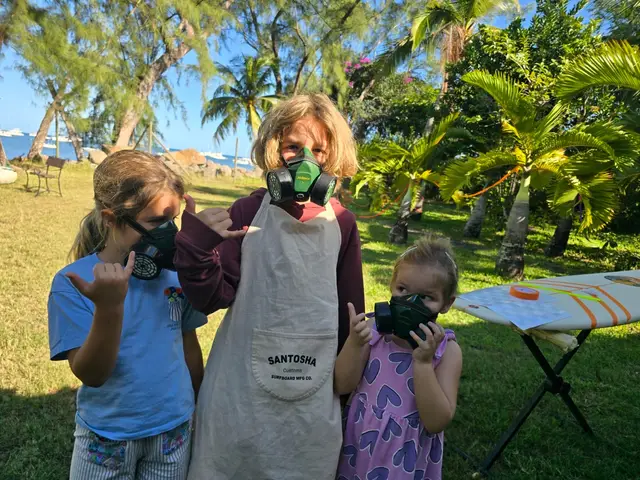
This was his favourite day. Spray paint, a respirator, and official permission to point a can at the board he’d been sanding for weeks.
The checkerboard came out cleaner than I expected. He kept the stencil offcut.
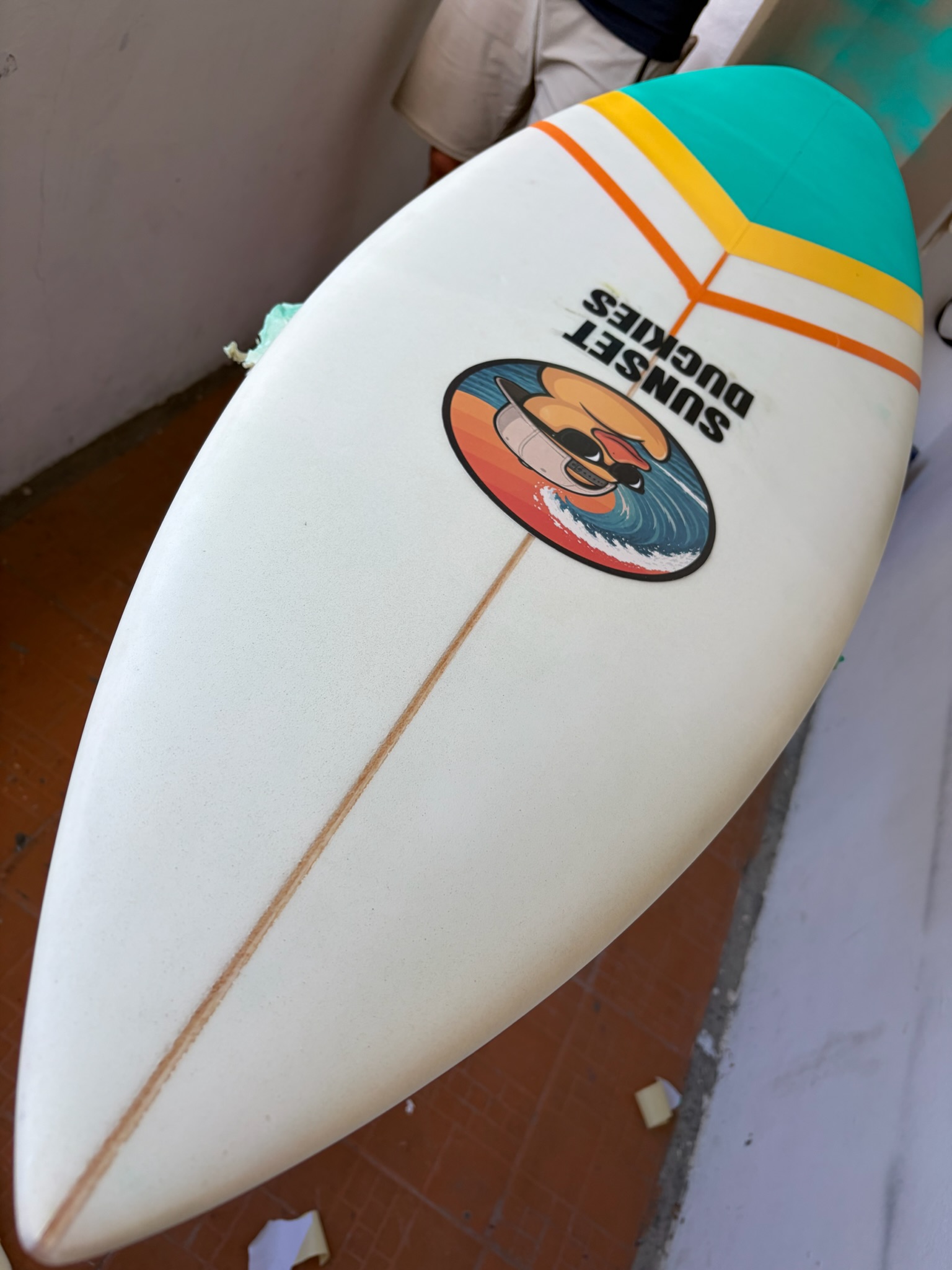
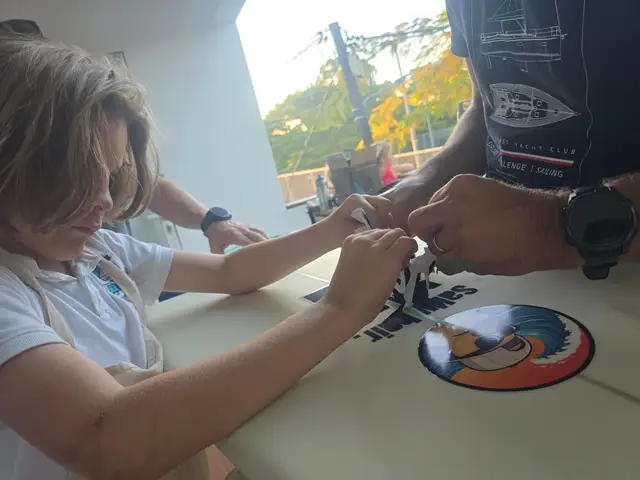
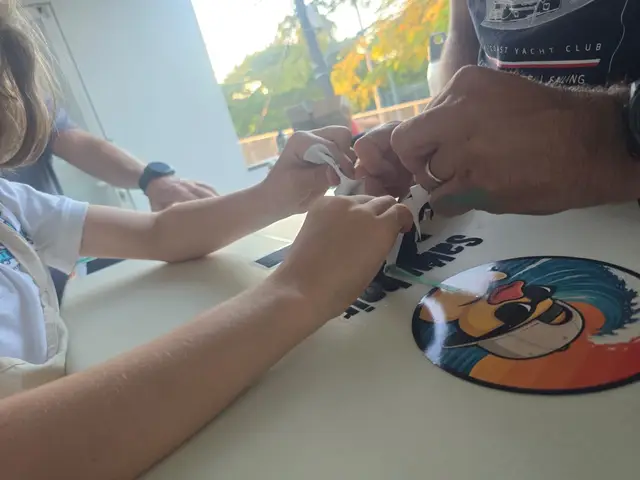
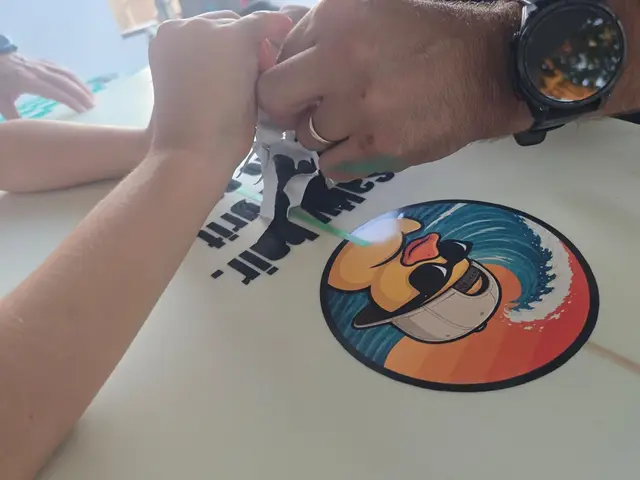
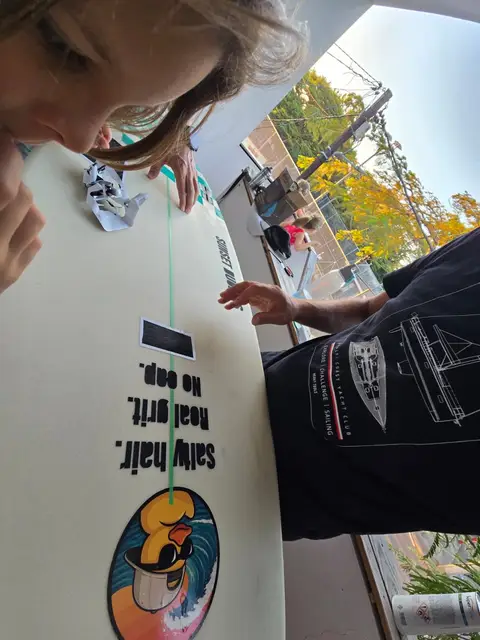
The duck logo and wordmark went on as printed decals under the gloss coat. The stripes, checkerboard, and bolt are paint Noah laid down himself. That distinction matters to him, so it matters here.
The finished board
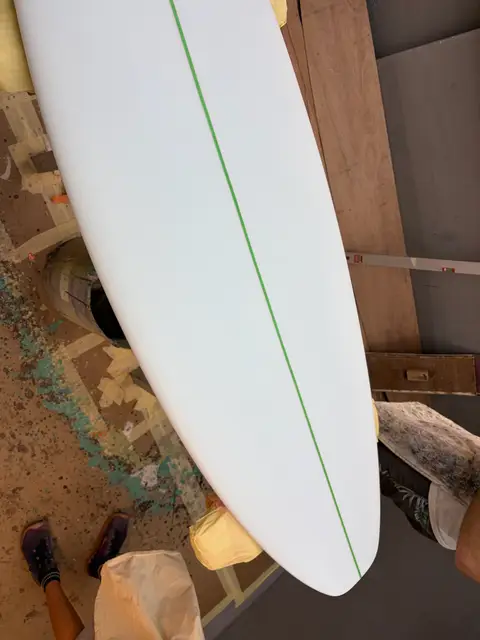
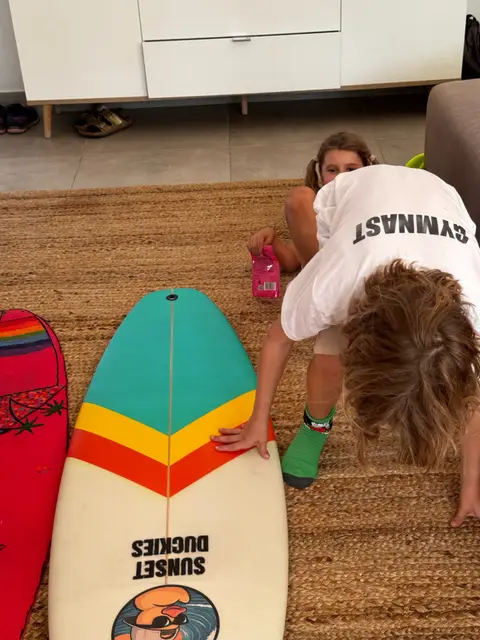
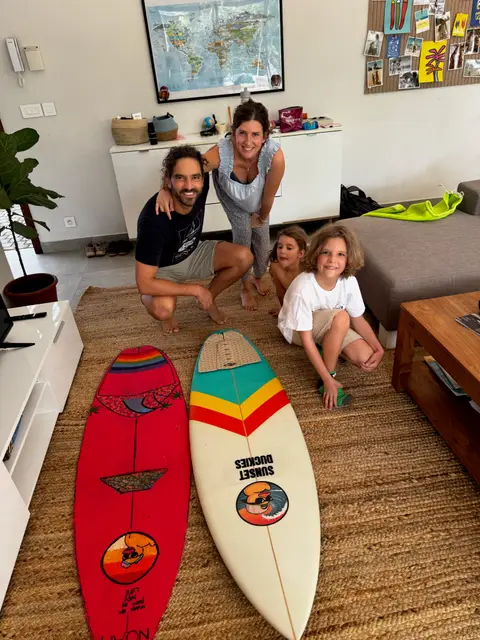
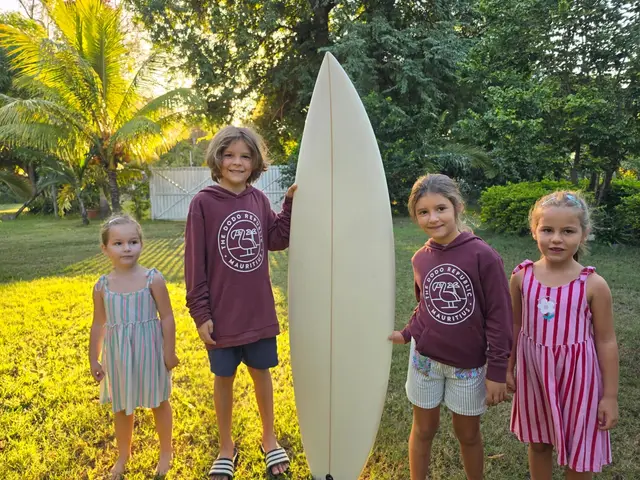
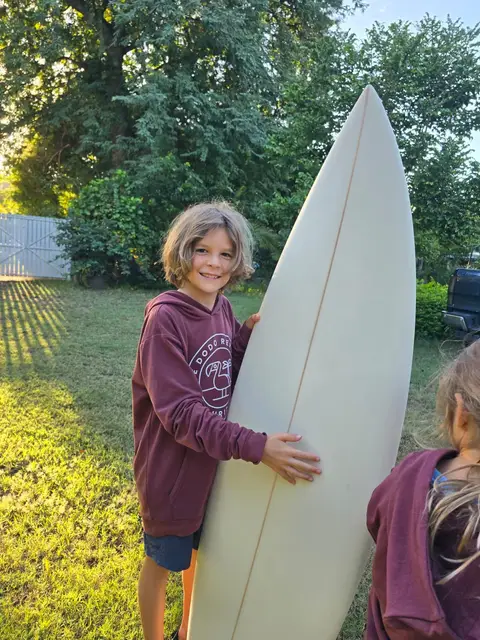
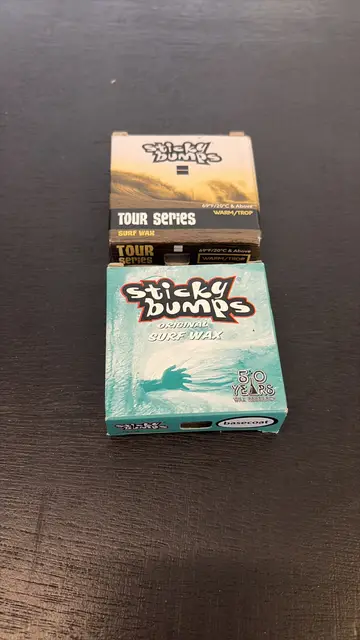
And then, one day, it was just a board. Off the stands, out of the dust, sitting in daylight, still waiting for its fins and its first coat of wax.
The whole roll
Every other frame from the three months, all 188 of them, mostly as they came off the phone.
The full reel
All 90 clips from the build. They autoplay as you scroll; tap any one to expand it.
Tap a clip to play it large, with sound.
Daniel Kux taught Noah through the whole build and trusted him with more of the work than I expected. Lara, Bron, Mark, Theila, Robyn, and I all helped around the edges. Mostly I held the camera, carried things, and watched Noah find out that a board you make yourself is different from a board someone hands you.
It goes in the water this weekend.
The rest of the story
The duck didn’t stay on the board. That part got stranger than planned.