Article · Field notes
Turning a Balaton Hilltop Cottage into a Year-Round Retreat
02 Apr 2026 9 min read
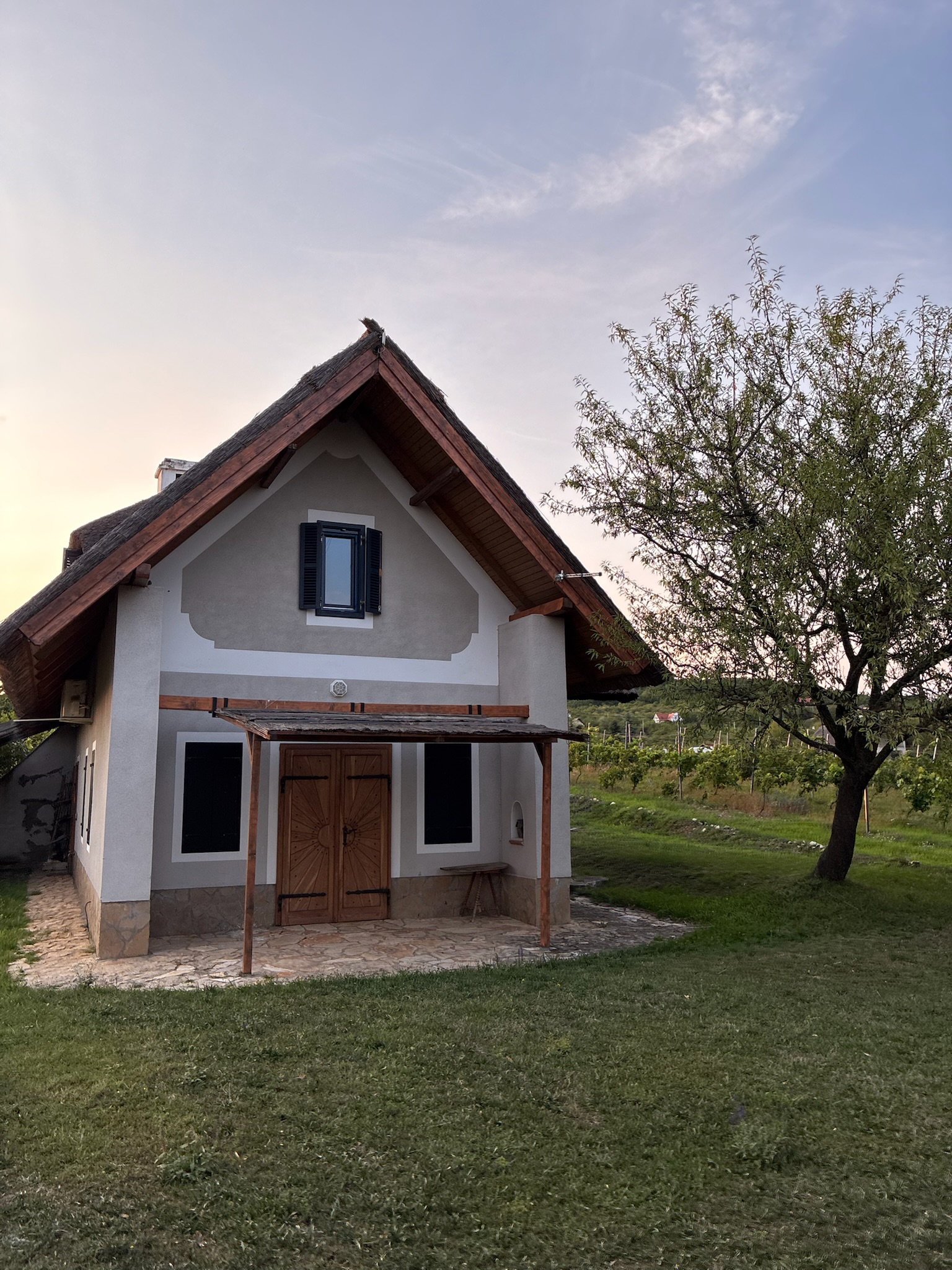
We own a small thatched-roof cottage on a hilltop above Lake Balaton, and right now it only really works in summer. Vineyards around it, old walnut trees, and an unbroken view across the water to the hills on the far shore. We bought it a while back and have been coming up on weekends ever since, lighting the tile stove, grilling outside, and falling for the place a bit more each time.
Now we want it to work in winter too.
The brief
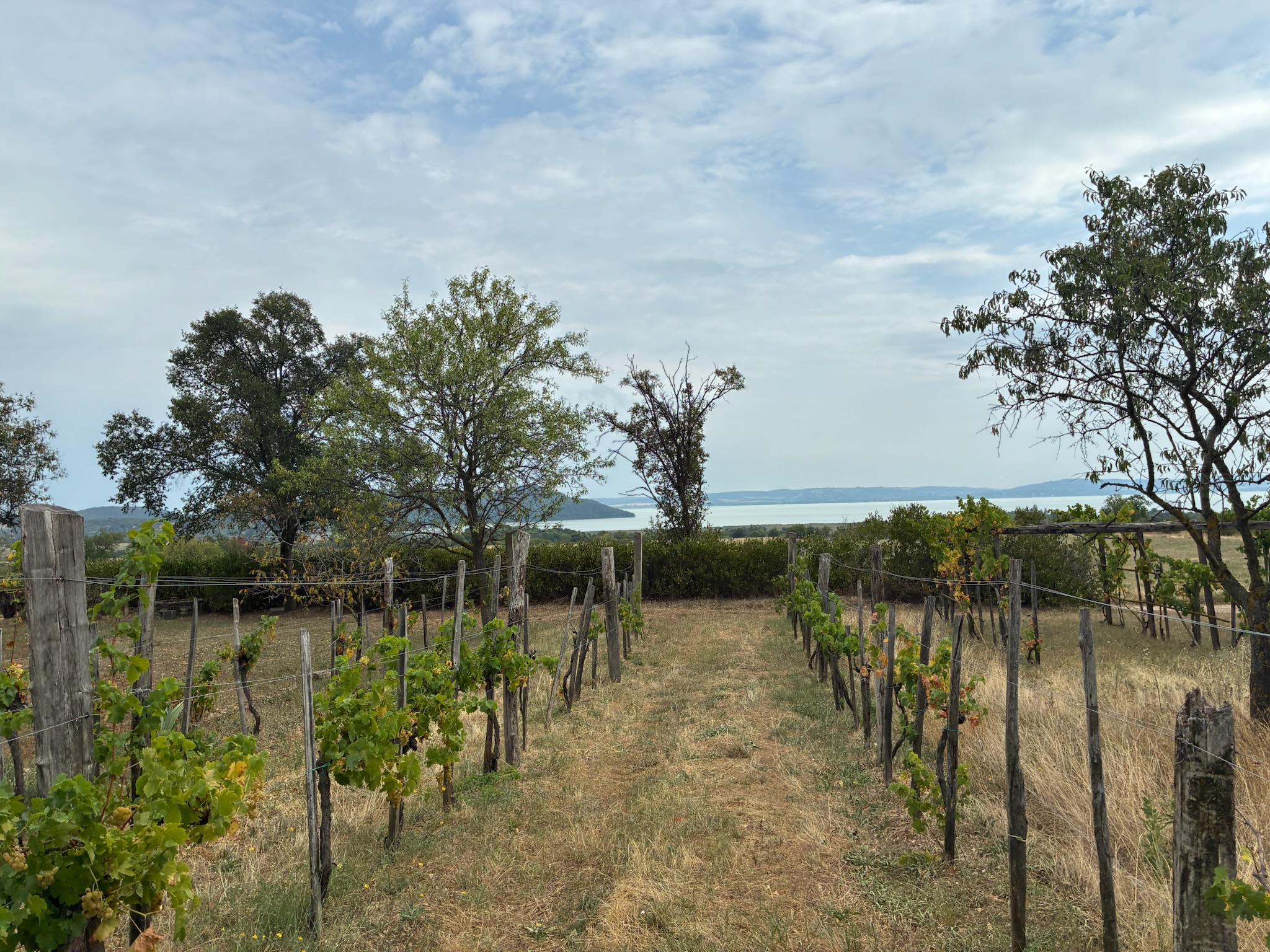
The brief is simple. Build a house where ten people can spend a long weekend without drifting off into separate screens. So no TV and no console. Instead: books, board games, a fireplace, a wine cellar, a sauna, and a garden big enough that the kids vanish for an hour while the adults stay at the table.
Up to ten people should sleep comfortably across three bedrooms: two proper adult rooms (a master with the Balaton panorama, plus a guest room) and a kids’ room with built-in bunks that adults can use too. The outside matters as much as the inside. That means a big terrace with an outdoor kitchen, a fire pit, play zones, and a wellness corner in natural wood with a sauna, hot tub and ice bath.
It should be good for kids without looking like it was designed by a toy catalogue.
Where we are today
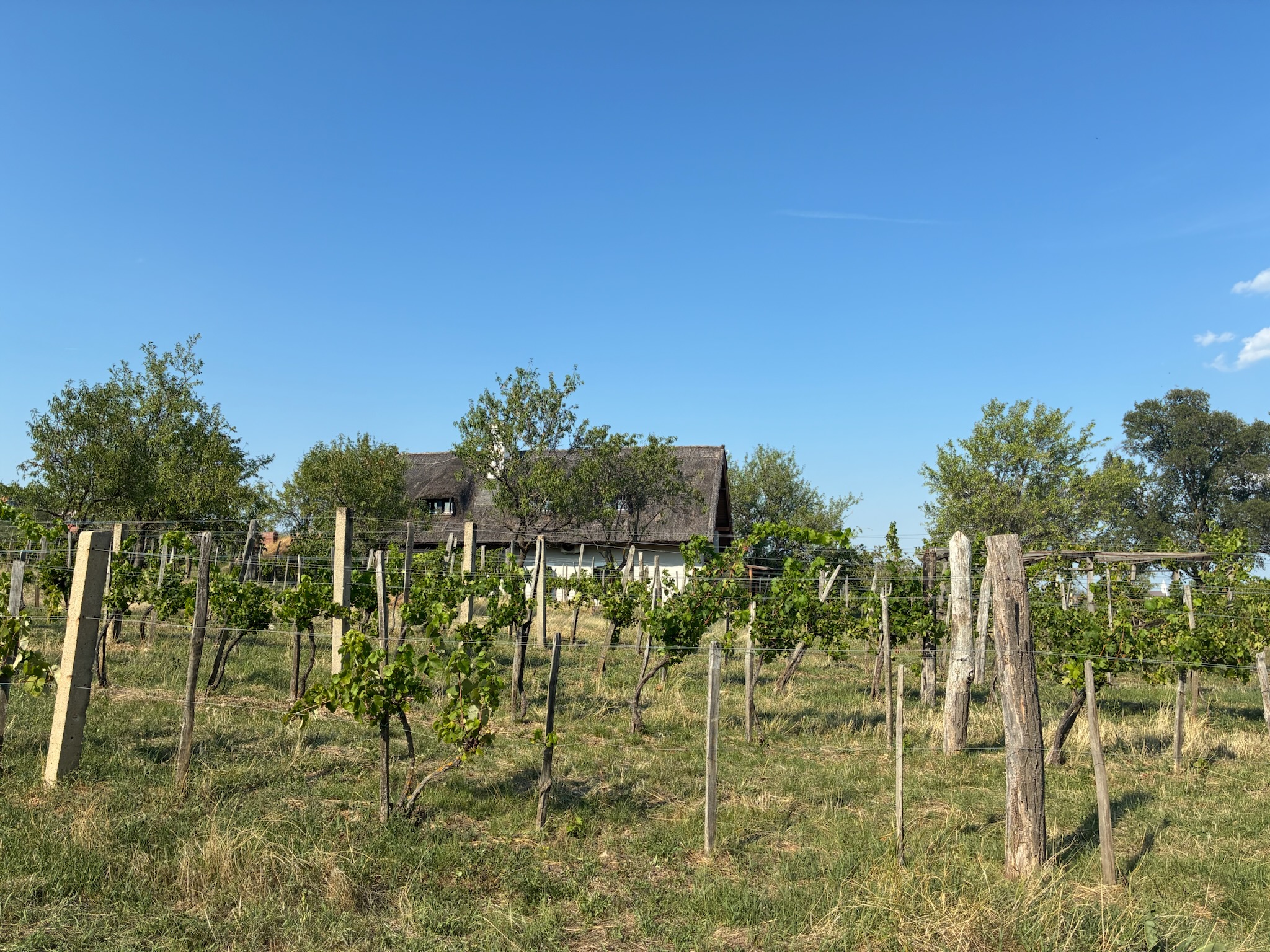
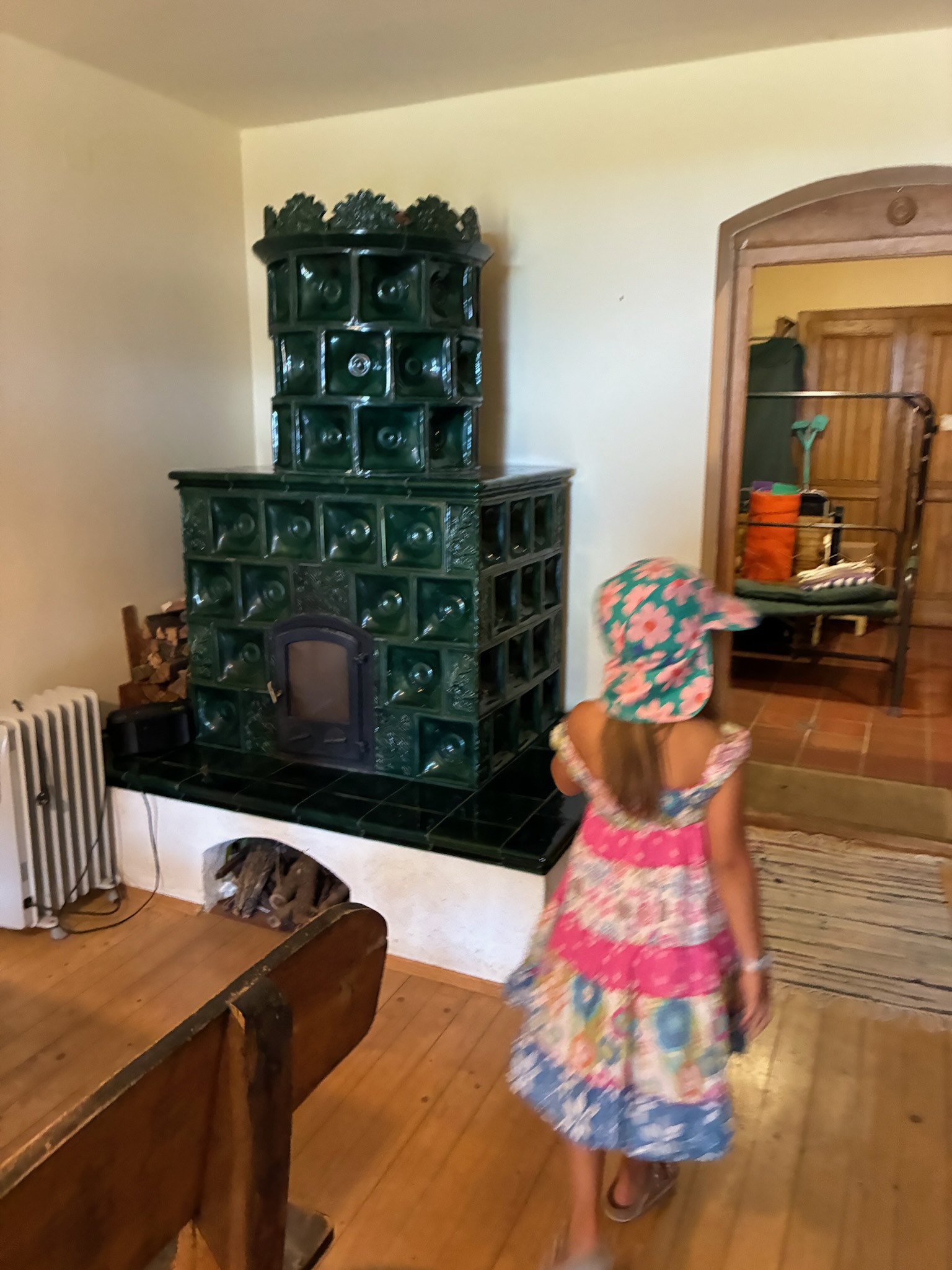
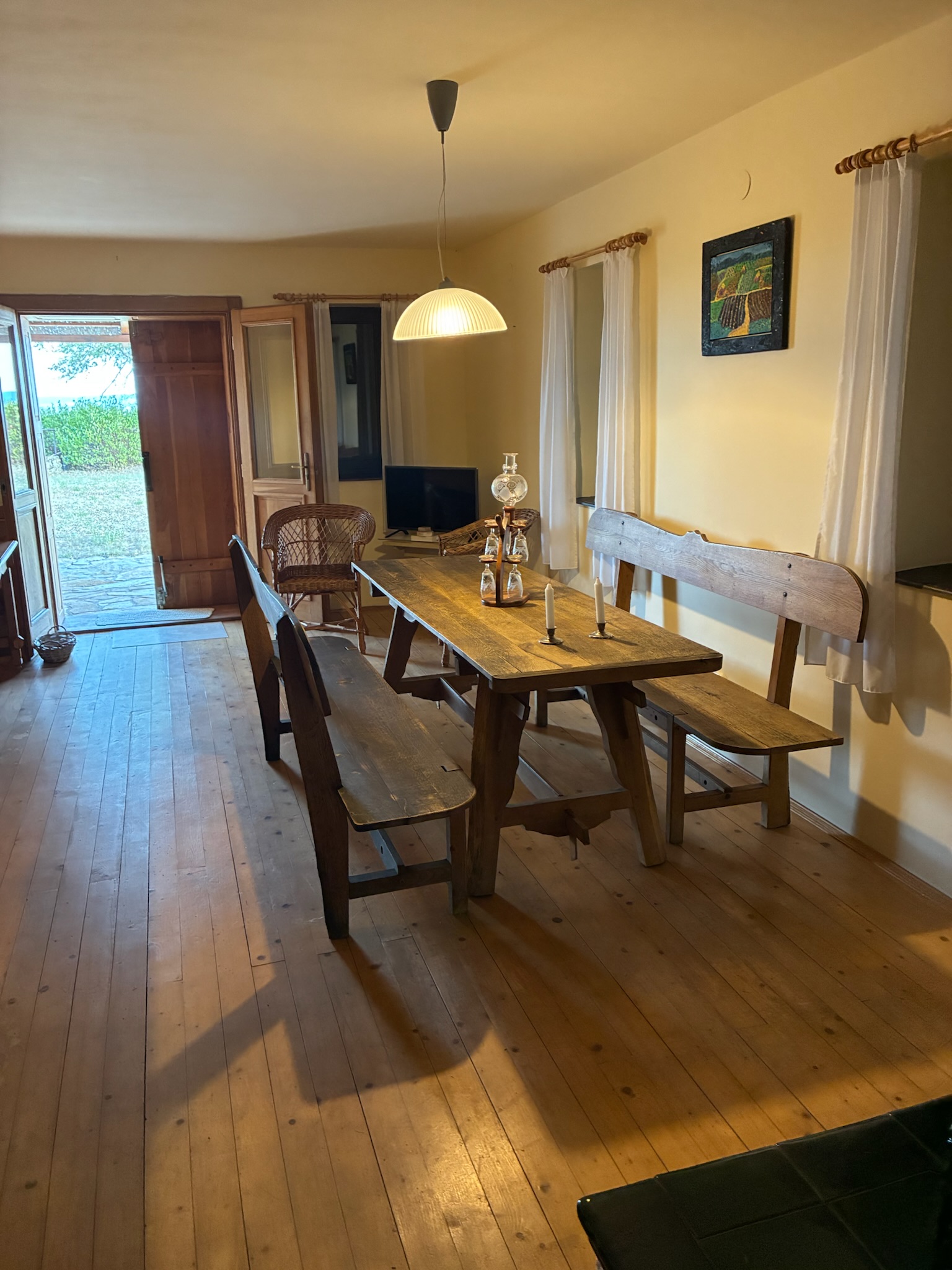
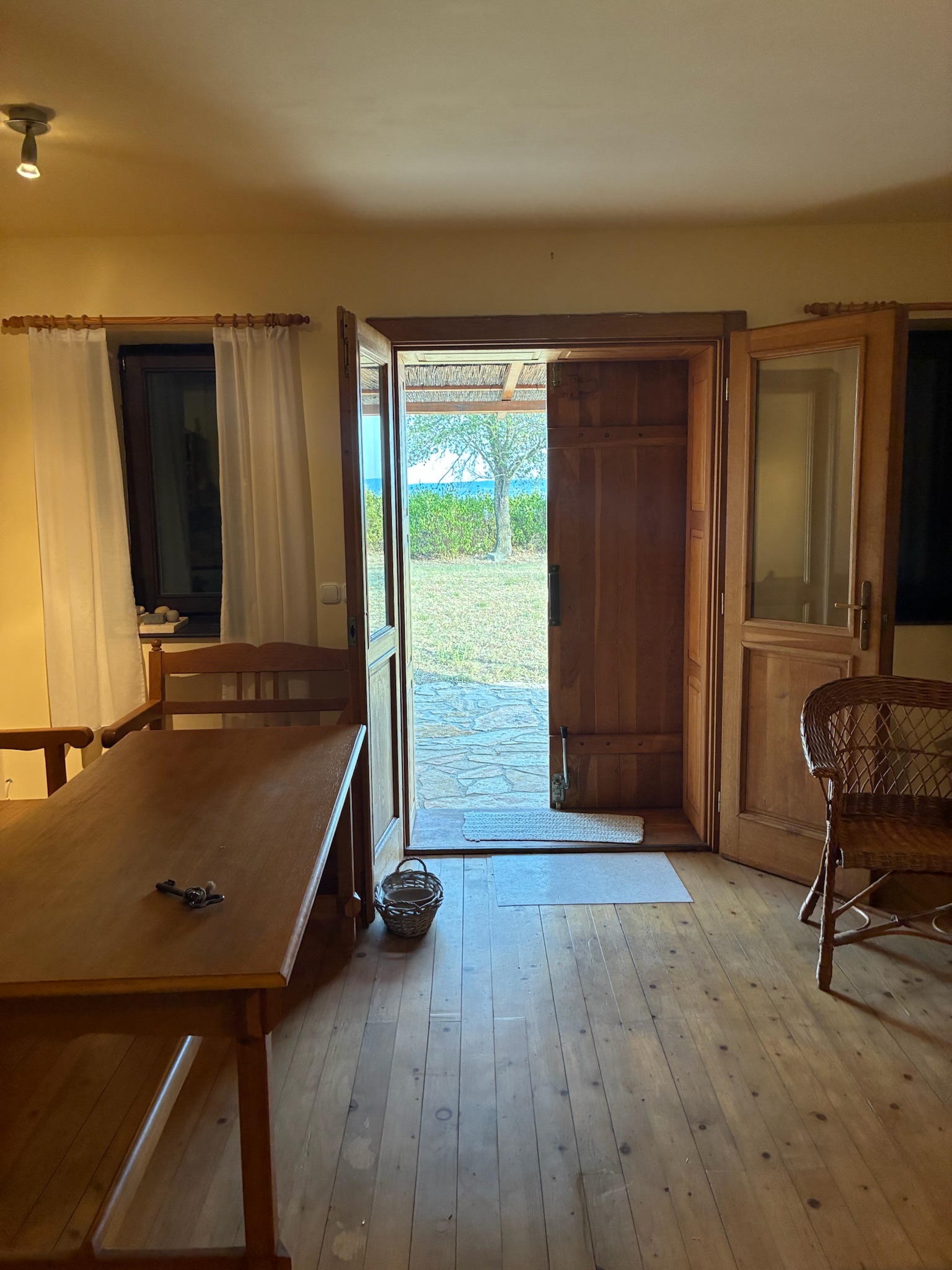
The bones are good. It’s a traditional Hungarian “présház” (press house) with thick walls, a thatched roof, and a beautiful vaulted brick wine cellar underneath. Downstairs there’s a living room with a green tile stove, a small kitchen and a storage room. Upstairs, three rooms under exposed wooden beams, currently a master bedroom, a guest room and a kids’ room. Outside: a covered terrace, a stone pergola, and a large garden with mature trees and a vineyard.
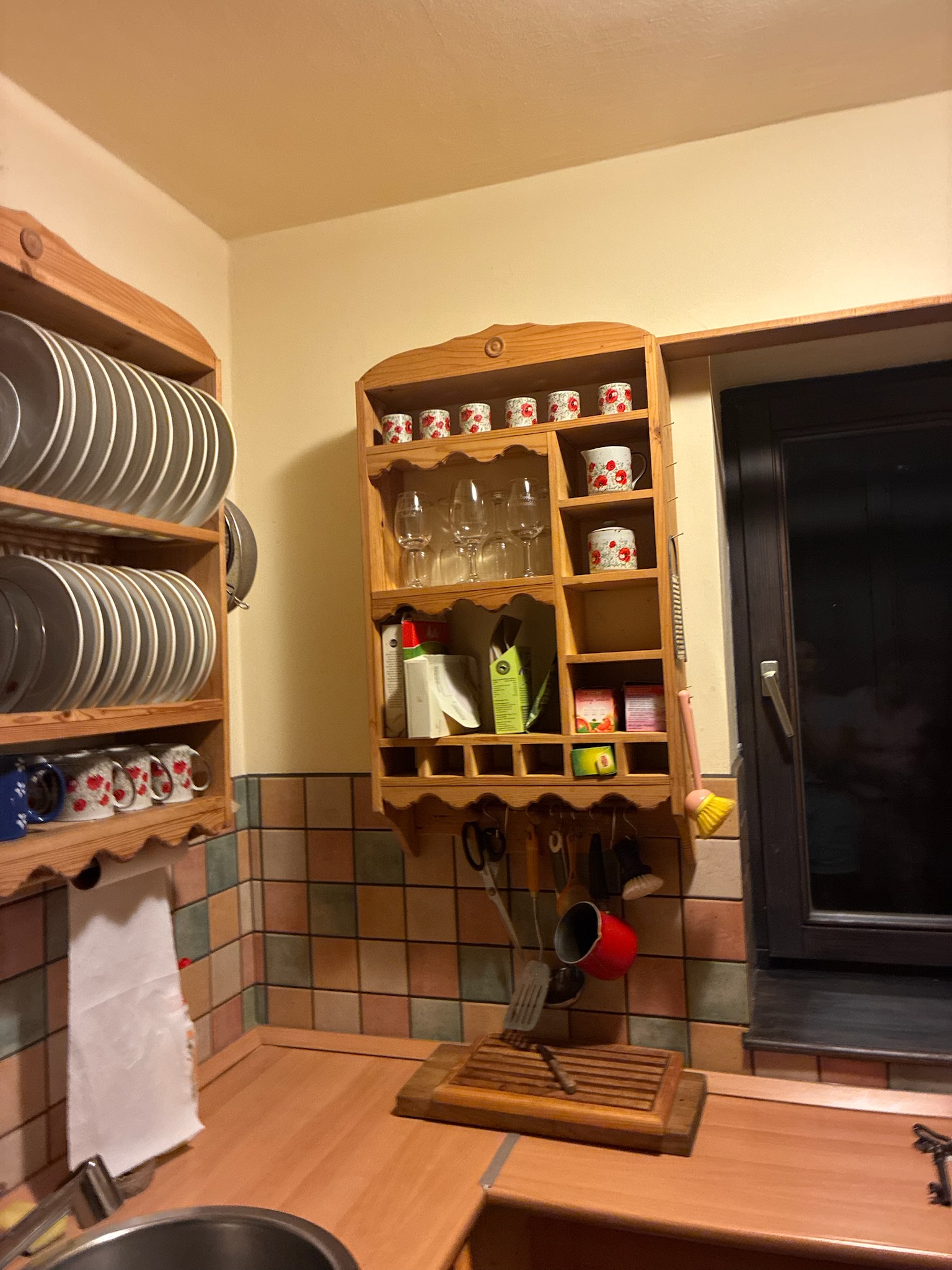
It’s still a summer house, though, and it shows. There’s no proper electricity for heating. The kitchen is closed off and dark. The rooms upstairs are beautiful but basic, and the master bedroom has a small window exactly where a floor-to-ceiling panorama should be. The wine cellar is used for storage instead of being shown off. And the outdoor space, easily the biggest asset we have, has nothing set up for cooking, playing or lounging around.
Here’s the inside as it stands:
Making it year-round
The first change is the boring one that makes everything else possible: proper electricity. We’re upgrading to 32A, which lets us heat with air conditioning units and keep the house above 5 degrees through the winter. Smart thermostats let us steer the heating remotely, and they lean on the cheaper overnight hours. Skip this and the rest of this post is summer-house daydreaming.
New wood flooring goes in throughout, which makes the whole house feel warmer whatever the season.
The design language
Wabi-sabi crossed with Japandi. I say that a little nervously, because those two words turn into Pinterest fog very quickly. In practice it means warm neutrals, honey wood, sage green, terracotta, reclaimed timber, linen, lime plaster, rattan, natural stone. Built-ins where they make sense. Nothing too precious to touch.
The one rule: every material should look like it belongs on this hill. The cottage sits among vineyards and old trees, and the inside should feel like it grew out of the same ground.
Ground floor: opening up
Most of the structural work happens downstairs. Two new openings in the wall (a larger window and a pass-through) connect the kitchen to the living room, and both of them to the outside. The kitchen gets a complete renovation and turns around to face the terrace and garden. If you’re cooking, you should be looking at trees and sky, not at a wall.
The green tile stove stays. It’s the heart of the house. A built-in bench wraps around it and keeps going, tying the entry, kitchen and living area into one room where people actually gather. The dining table seats 8–10. Two armchairs in the corner make a quieter reading nook, and bookshelves line the walls.
That one room has a lot of moods to cover: loud dinner parties, quiet morning coffee, kids sprawled on the floor over board games. A showcase fireplace adds some drama and more warmth. The lighting is indirect, layered and cottage-warm. No harsh overheads.
The wine cellar
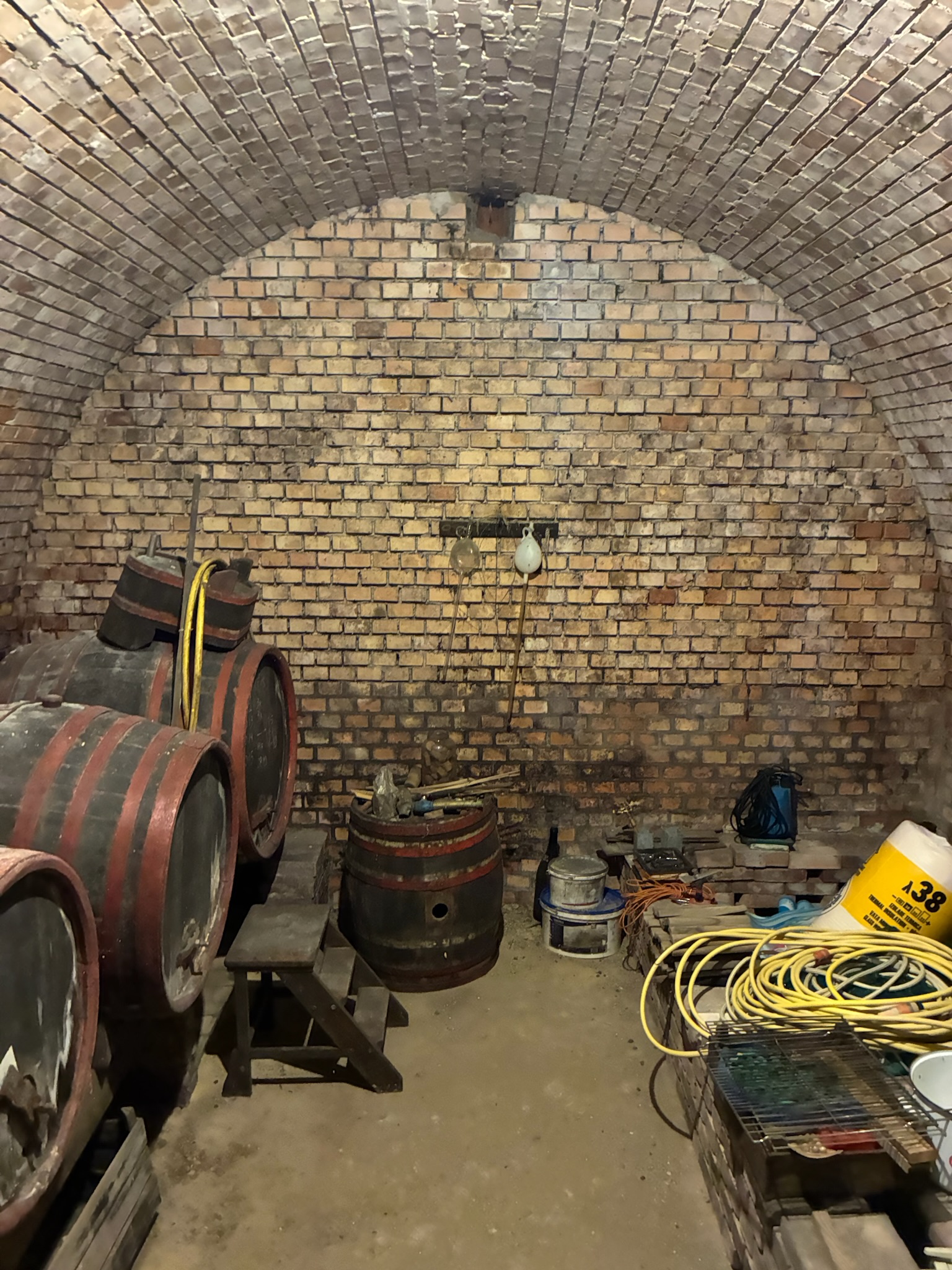
Under the house is a vaulted brick cellar that currently stores odds and ends. It deserves better. It’s becoming a proper showcase wine cellar, with ambient lighting, real storage, and enough atmosphere that you want to grab a bottle and open it upstairs immediately.
The vault already looks stunning. It just needs light and furniture: warm LEDs hidden in the curves of the vault, a small tasting area, and the same indirect lighting as the rest of the house. Walking down there should feel like you’ve found something.
Upstairs: three bedrooms, one panorama
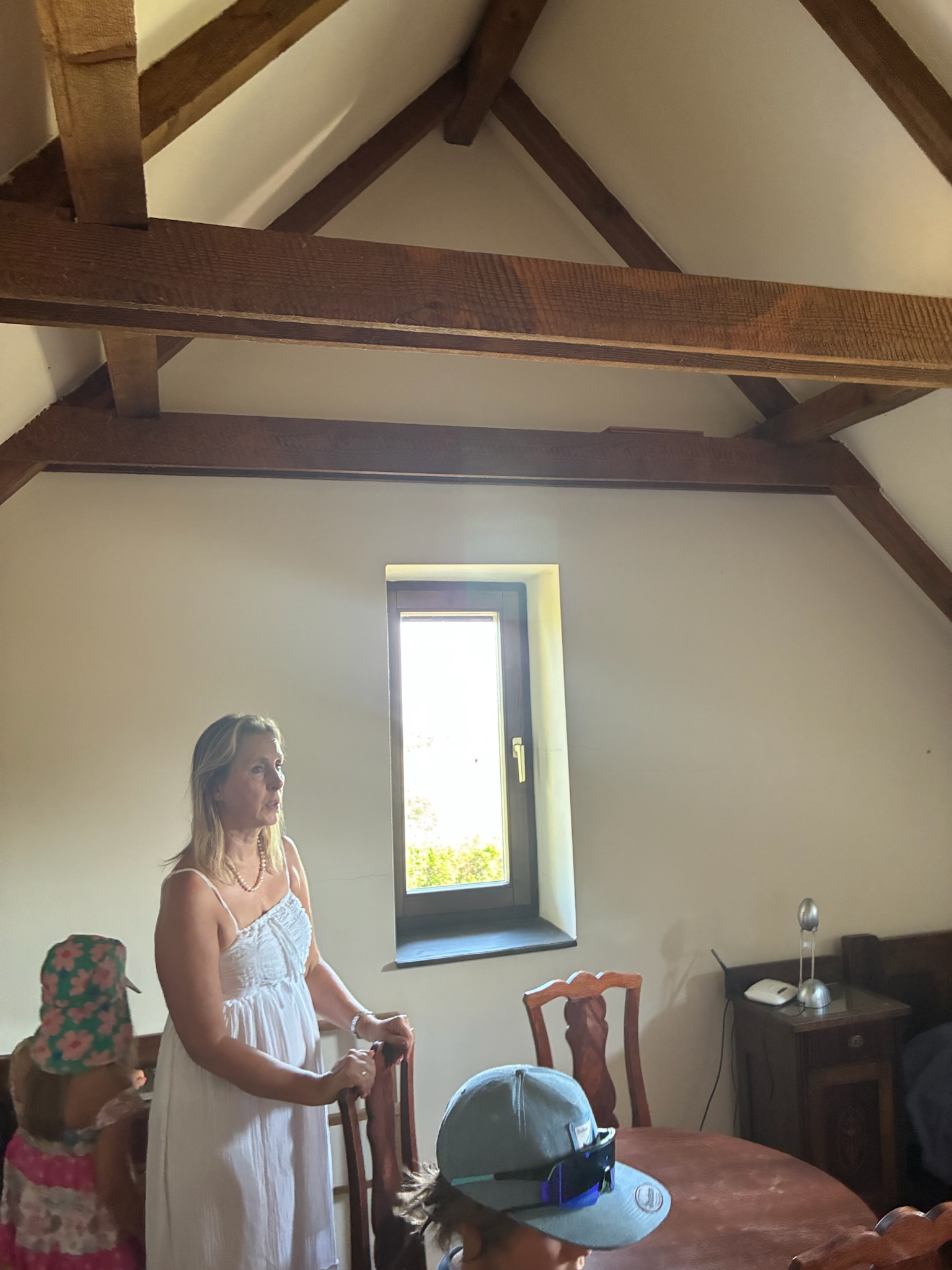
The master bedroom gets the most dramatic change. The wall facing Balaton gets cut open for a floor-to-ceiling window, so you wake up and see the lake from your bed. It’s also the quiet workspace: a floating desk in the corner, a reading chair, good light. It’s the only room in the house where you might open a laptop, and even then not for long.
The guest bedroom gets tongue-and-groove panelling painted sage green, a rattan headboard, linen bedding, and enough character to feel like its own little world.
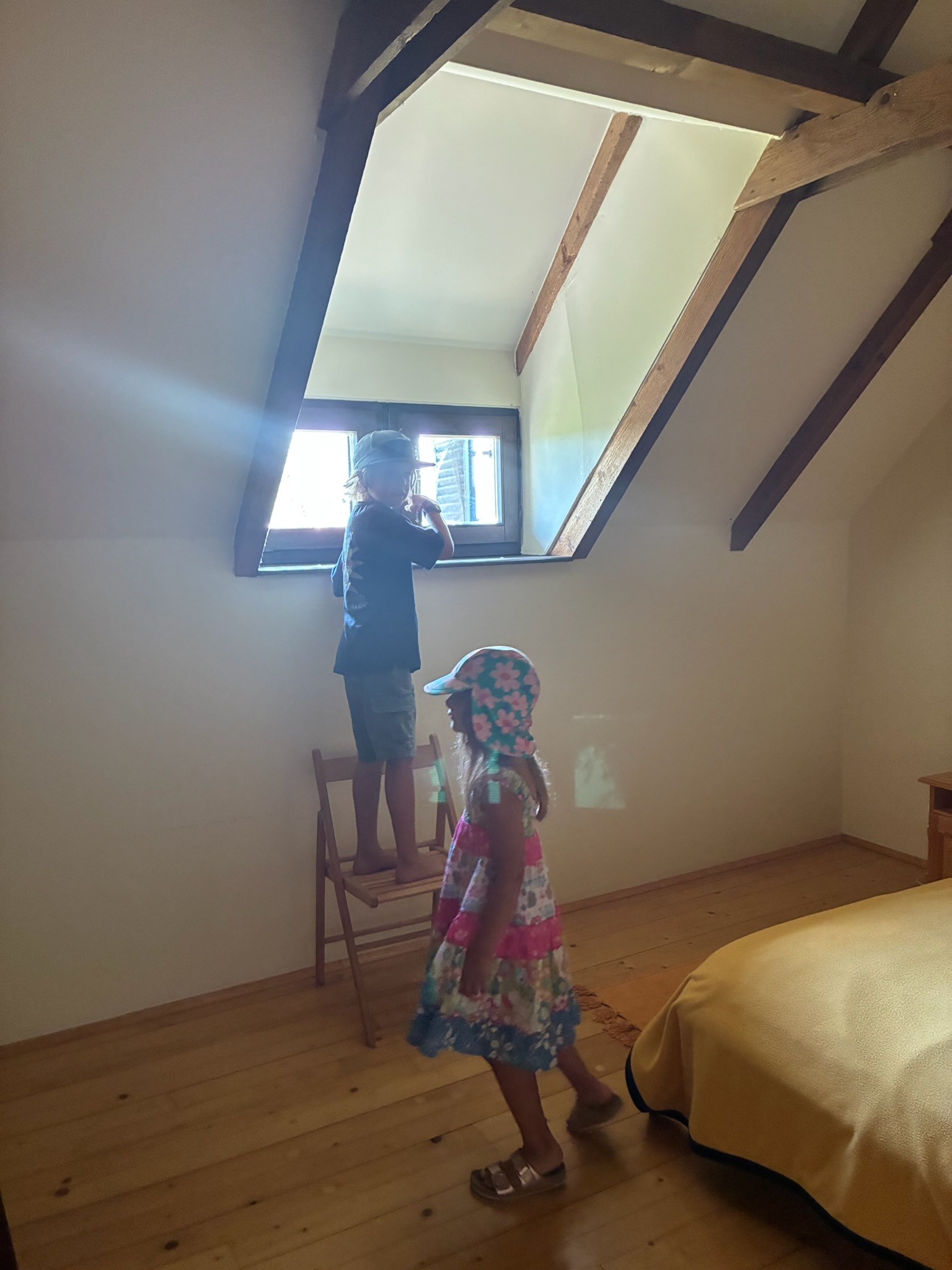
The kids’ room is where we get to play. Six built-in beds in a creative bunk arrangement, somewhere between a sleeper train and a treehouse. Every bunk gets its own reading light, a small shelf and a privacy curtain, with storage drawers underneath. It sleeps six kids or, at a push, adults who don’t mind an adventure. The rest of the room stays open floor for books, toys and floor cushions.
Some walls around the house get writable or paintable finishes, so kids (and adults) can draw, leave messages, and make the place their own. Nobody should have to tiptoe around this house.
Outside: the social centre
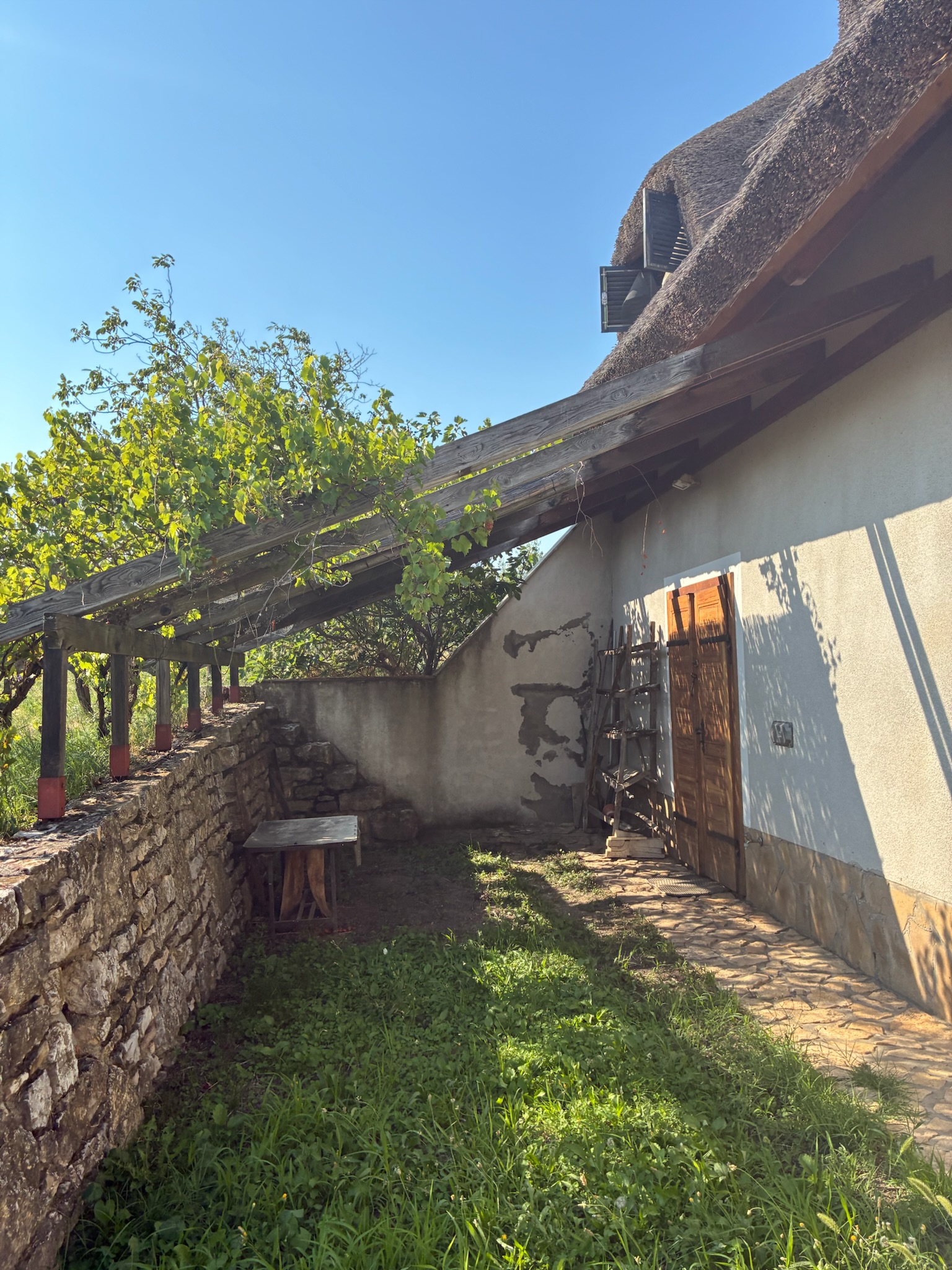
The terrace and garden are where this place really comes alive. The covered terrace runs into an outdoor kitchen with a built-in grill, maybe a pizza oven, and bar-height seating, so one person can cook while everyone else hangs around with a drink. A long outdoor table seats the whole group.
The garden splits into zones: a fire pit with L-shaped benches for the evenings, a kids’ play area built from natural wood, and seating platforms around the existing trees. Then hammocks, hanging chairs, and string lights over the lot.
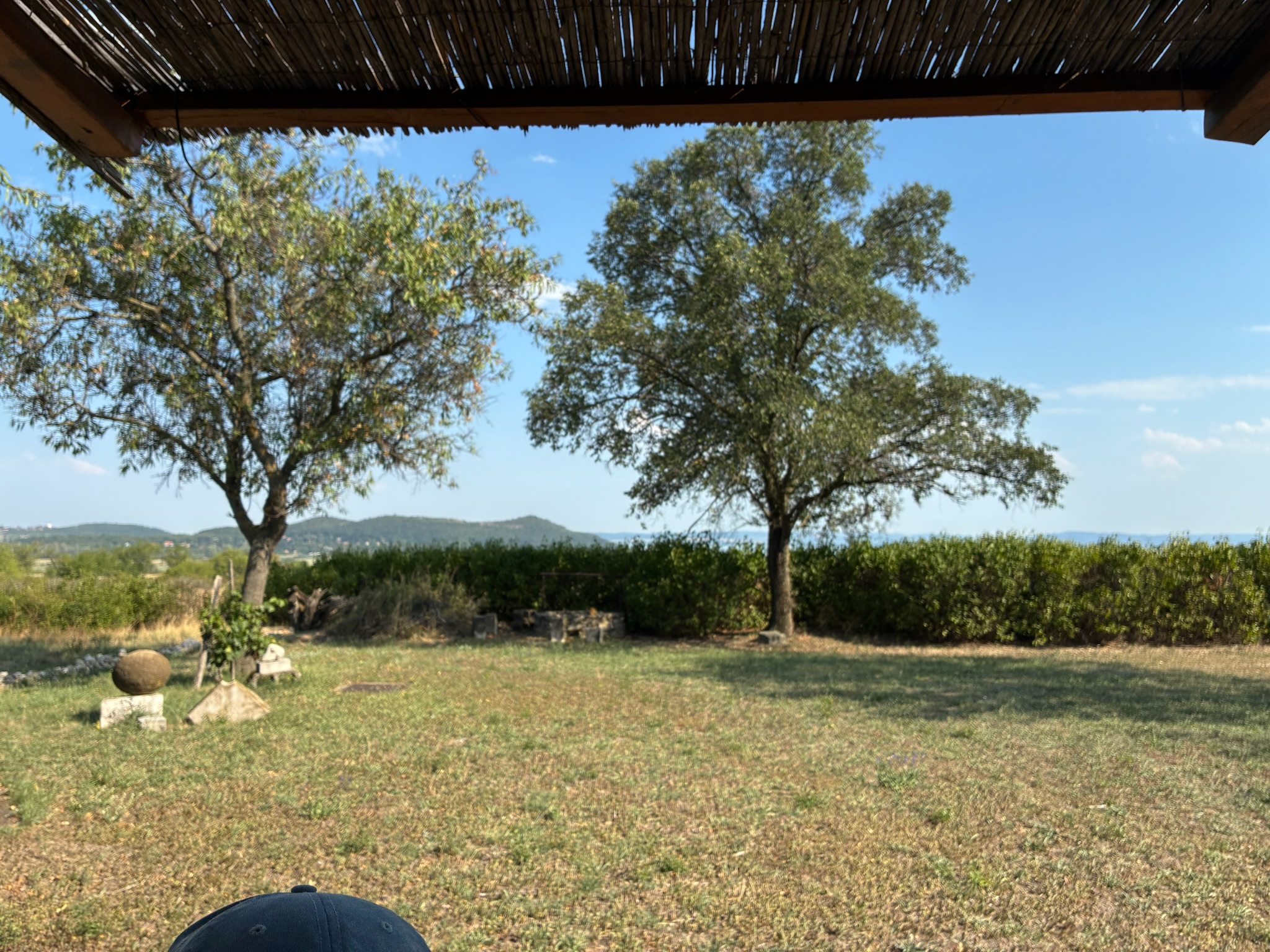
Off to one side of the garden goes the wellness area: a small wooden sauna cabin, a wood-fired barrel hot tub, an outdoor shower and an ice bath, all on a wooden deck and all built from natural materials. Wood and stone, nothing that looks factory-made or out of place. The kids will treat the hot tub as a pool, the adults will climb in after the sauna, and everyone’s happy.
No electronics, on purpose
There’s no TV in this house and no games console. Instead there’s a library wall, a stack of board games, art supplies, walls you’re allowed to draw on, and plenty of places that make you want to talk to each other. The fire. The terrace. The wine cellar. A long dinner.
My hypothesis is that the best rental stays come from being fully where you are, with the people you came with. The Balaton hilltop, the vineyard, the view: that’s the entertainment.
Floor plans & resources
The current floor plans are interactive, if you want to poke around:
View floor plans on Rayon Design
Every current “as is” photo of the property, every room and every angle:
Browse all current photos on OneDrive
And the full design ideas document, with mood boards and inspiration images for every room:
View complete design ideas on OneDrive
We're looking for an architect / interior designer
We’ve got a clear brief, detailed mood boards, and a house worth the effort. What we don’t have yet is the right architect or interior designer to turn it into rooms people want to stay in.
We want a sparring partner: someone who gets this aesthetic, has done renovation projects (ideally rural, cottage or hospitality), and will push our ideas further. Someone who can look at this house and make sharper calls than we can.
We can share:
- Detailed design concept document with mood boards for every room
- Full “as is” photo documentation of the property
- Interactive floor plans on Rayon Design
- Clear brief on capacity, use case (luxury rental), and design philosophy
If this sounds like your kind of project, or you know someone it would suit, get in touch. Please include references or a portfolio link.
What’s next
The 32A electrical upgrade is underway and the brief is written down. What we need now is the right designer: someone who’ll challenge our ideas and bring their own. After that it’s on us to stop the house from becoming a nice moodboard pasted onto old walls.
I want it ready for friends and family by next summer. Maybe guests after that. But first: one room that actually feels like the place we keep describing.