Article · Field notes
The Moodboard: Sage, Terracotta and Six Bunk Beds
03 Apr 2026 16 min read
This is the messy reference file behind our Balaton cottage plan, tidied up just enough to show other people.
Not everything here should survive. Some of these pictures earned their place with one detail, and everything else in the frame is wrong.
Overall design concept
A warm cottage interior leaning Japanese-Scandinavian, as long as we can stop it turning into beige theatre. Natural imperfections are good. Fake rustic is not.
Guiding principles
- Comfortable, airy rooms, with indoors and outdoors running into each other.
- Natural materials you want to touch, in a warm neutral palette with sage and terracotta accents.
- Built-in furniture wherever possible, tough washable fabrics, and the tile-stove bench stitching the zones together.
Key materials & textures
- Reclaimed and natural wood (oak, pine) for floors, beams and furniture; linen and heavy cotton in undyed tones.
- Lime plaster or clay walls; rattan and woven cane for panels and headboards.
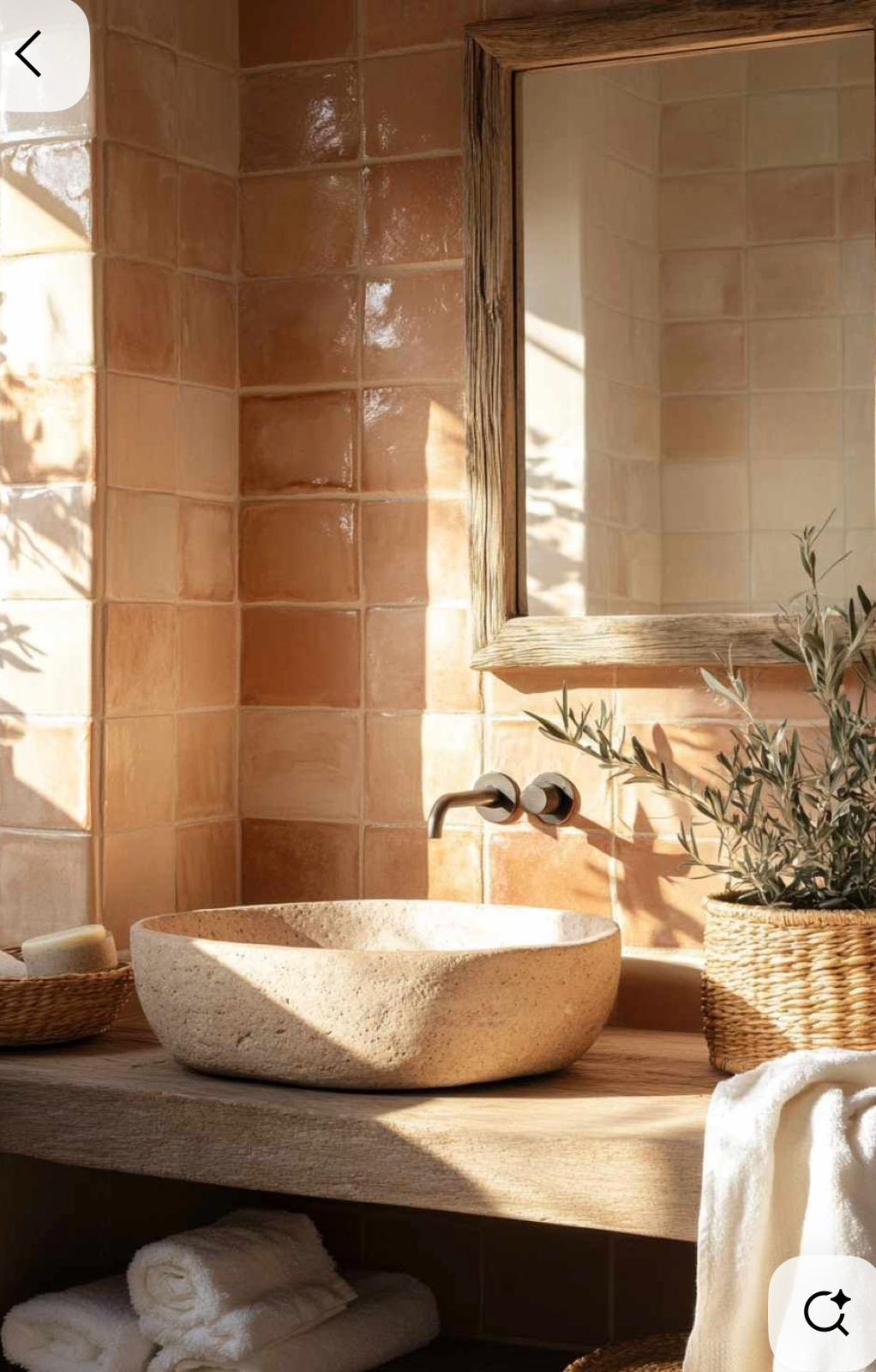
- Natural stone and ceramic for counters and tile-stove details; matte sage and terracotta zellige in the bathrooms.
Colour palette
- Base: cream, warm white, sand, natural plaster; woods in honey oak, warm pine, reclaimed timber.
- Accents: sage green and olive (Bathroom A, guest bedroom); terracotta and burnt sienna (Bathroom B).
- Metals: aged brass, matte black, brushed copper.
Entry
- A bench wraps the tile stove, with built-in shelves above and baskets underneath. Maybe a second fireplace element on this side.
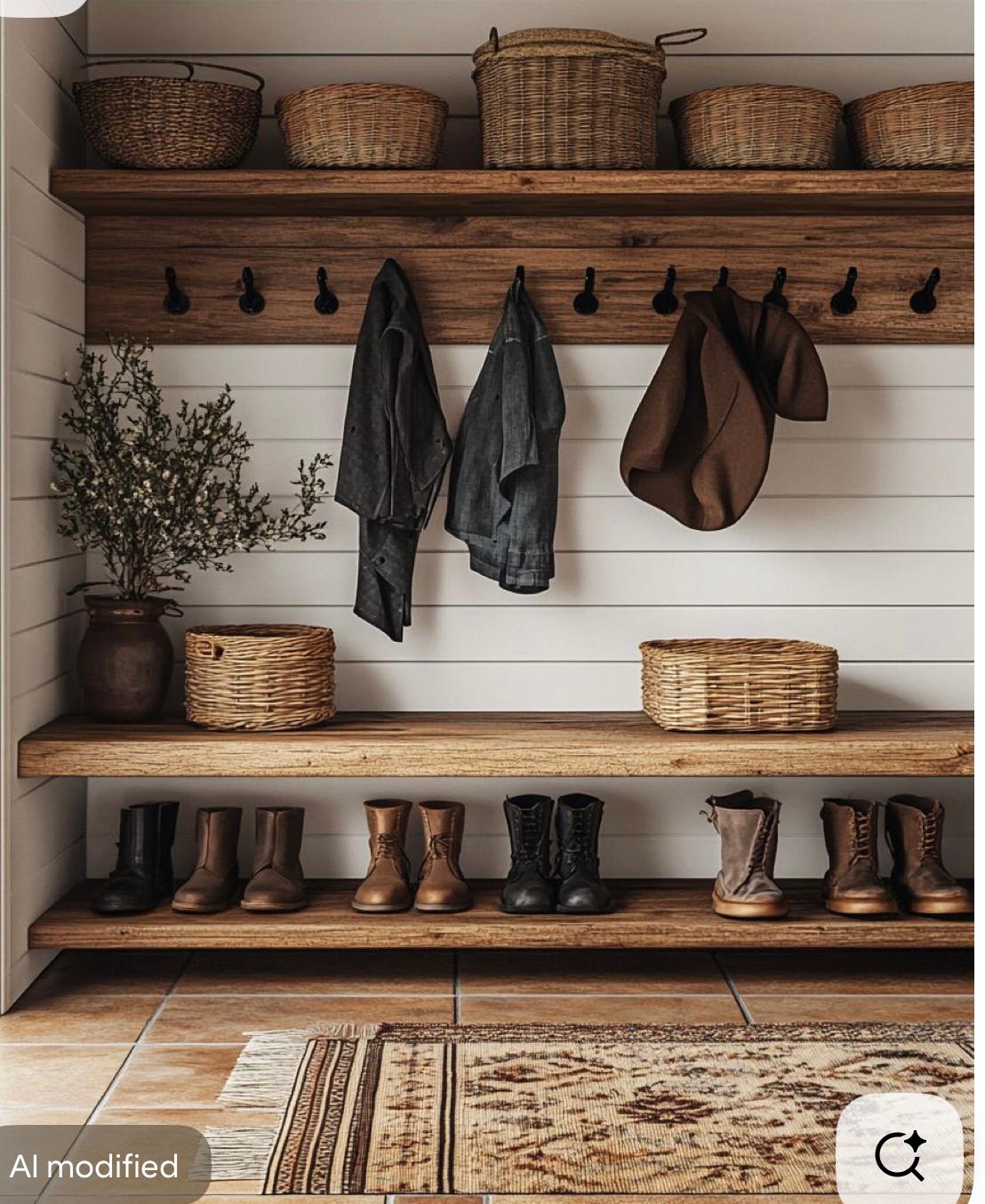
- Across from it: wood or wrought-iron coat hooks, open shelves, low shoe storage, and a built-in cupboard for coats and seasonal gear.
- The bench keeps going into the kitchen and living area, which ties the whole ground floor together.
(No inspiration images for the entry yet. We’re still working this one out with the architect.)
Kitchen
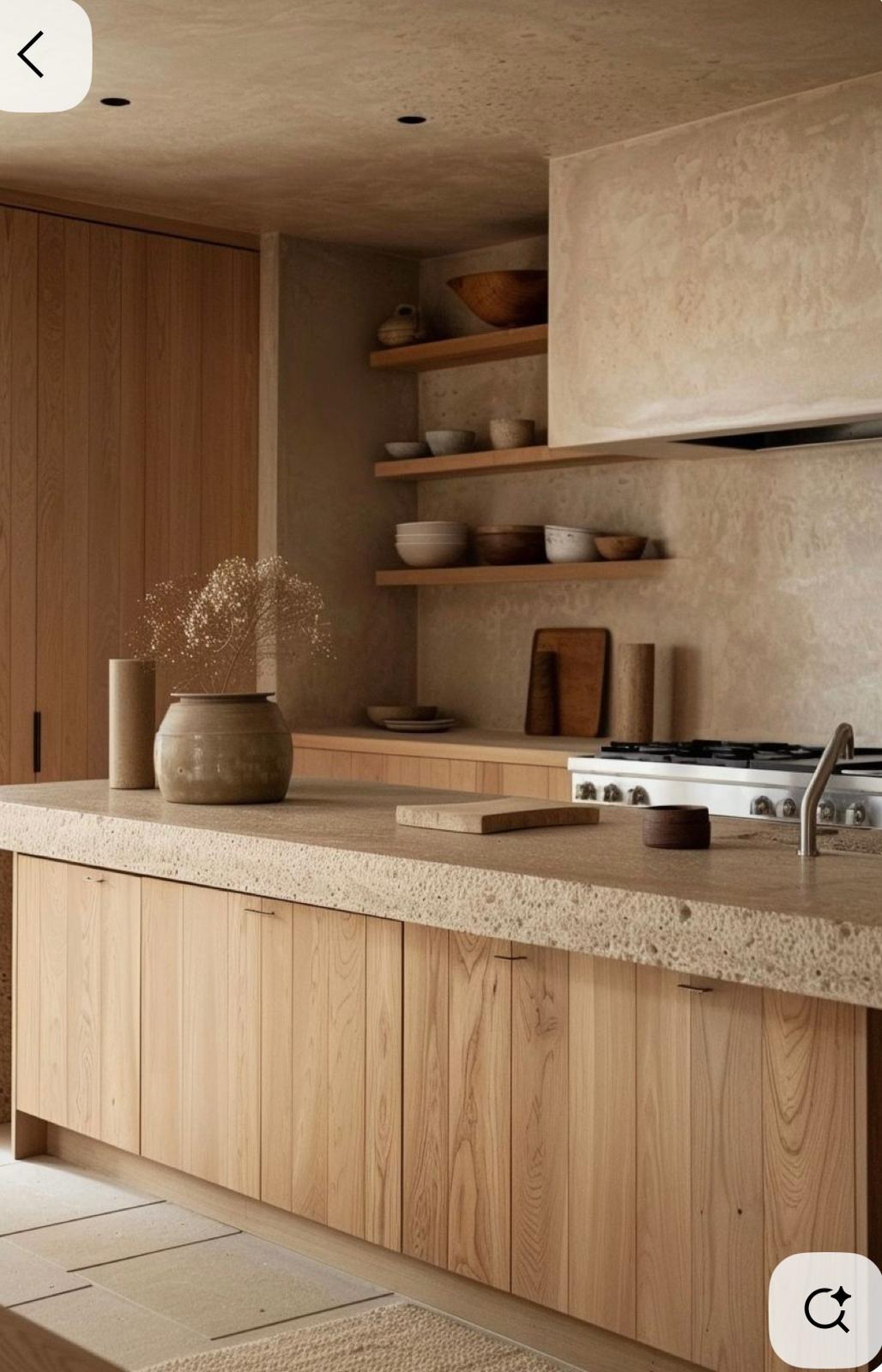
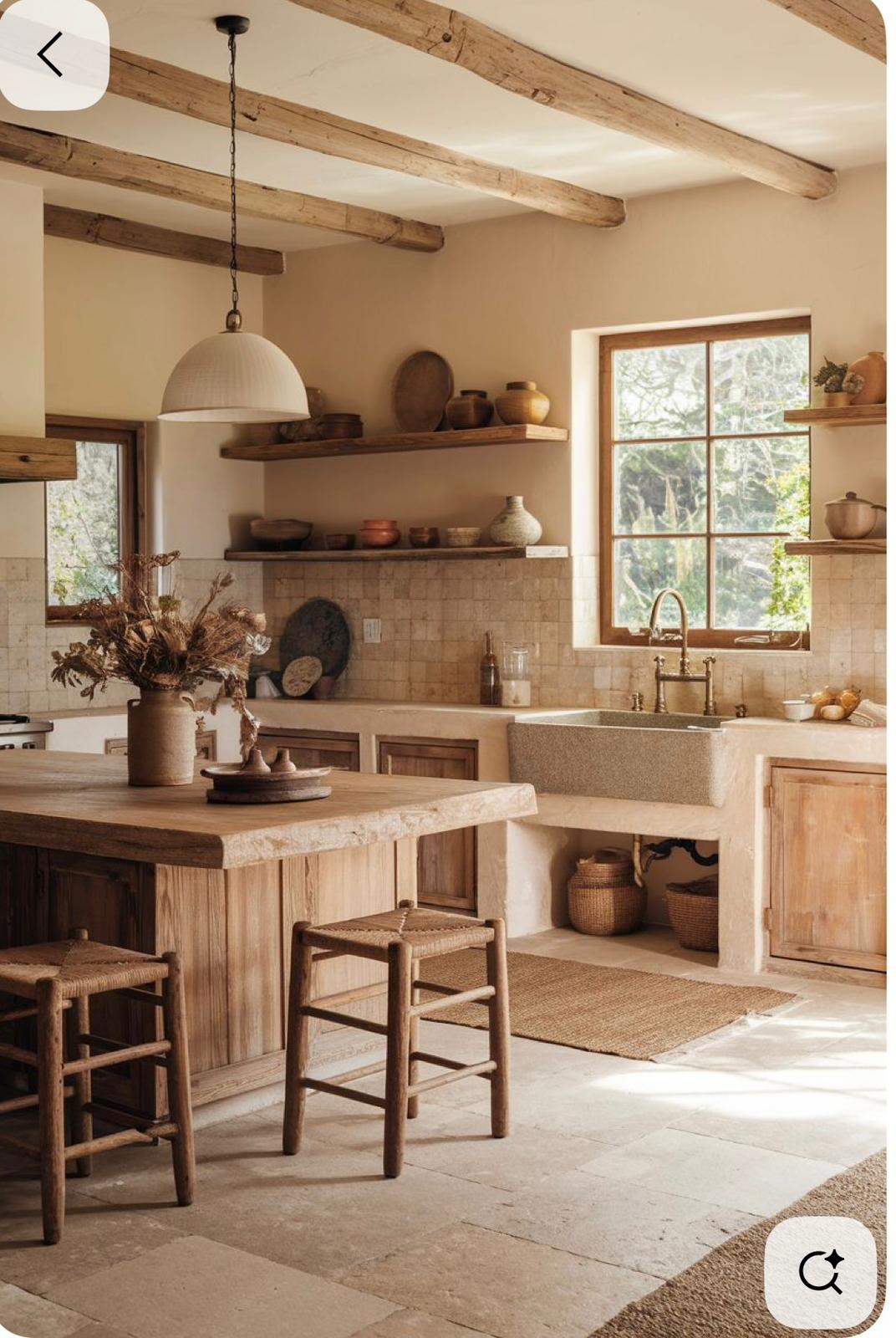
- Airy and practical, with plenty of counter space and a strong connection to the outside.
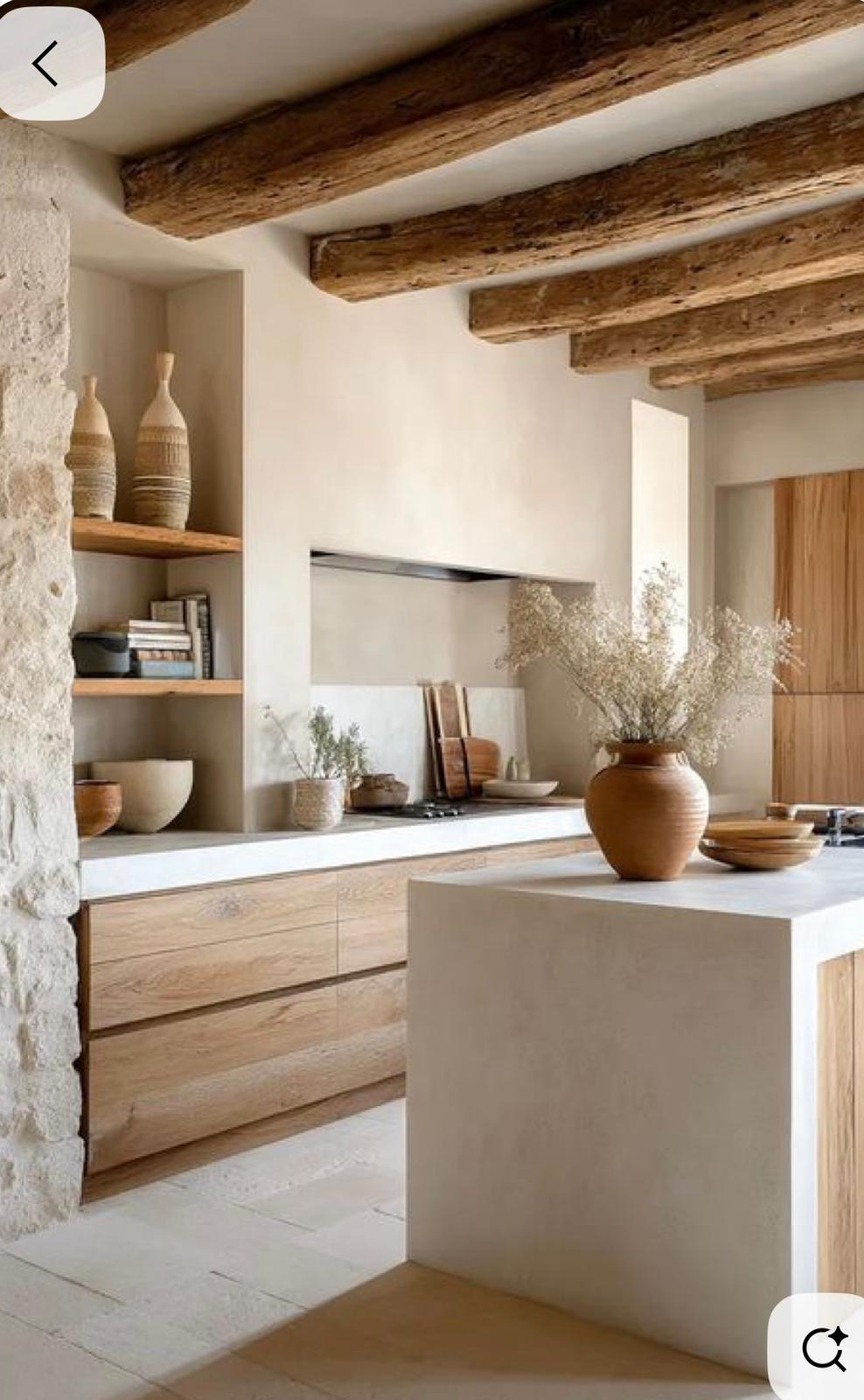
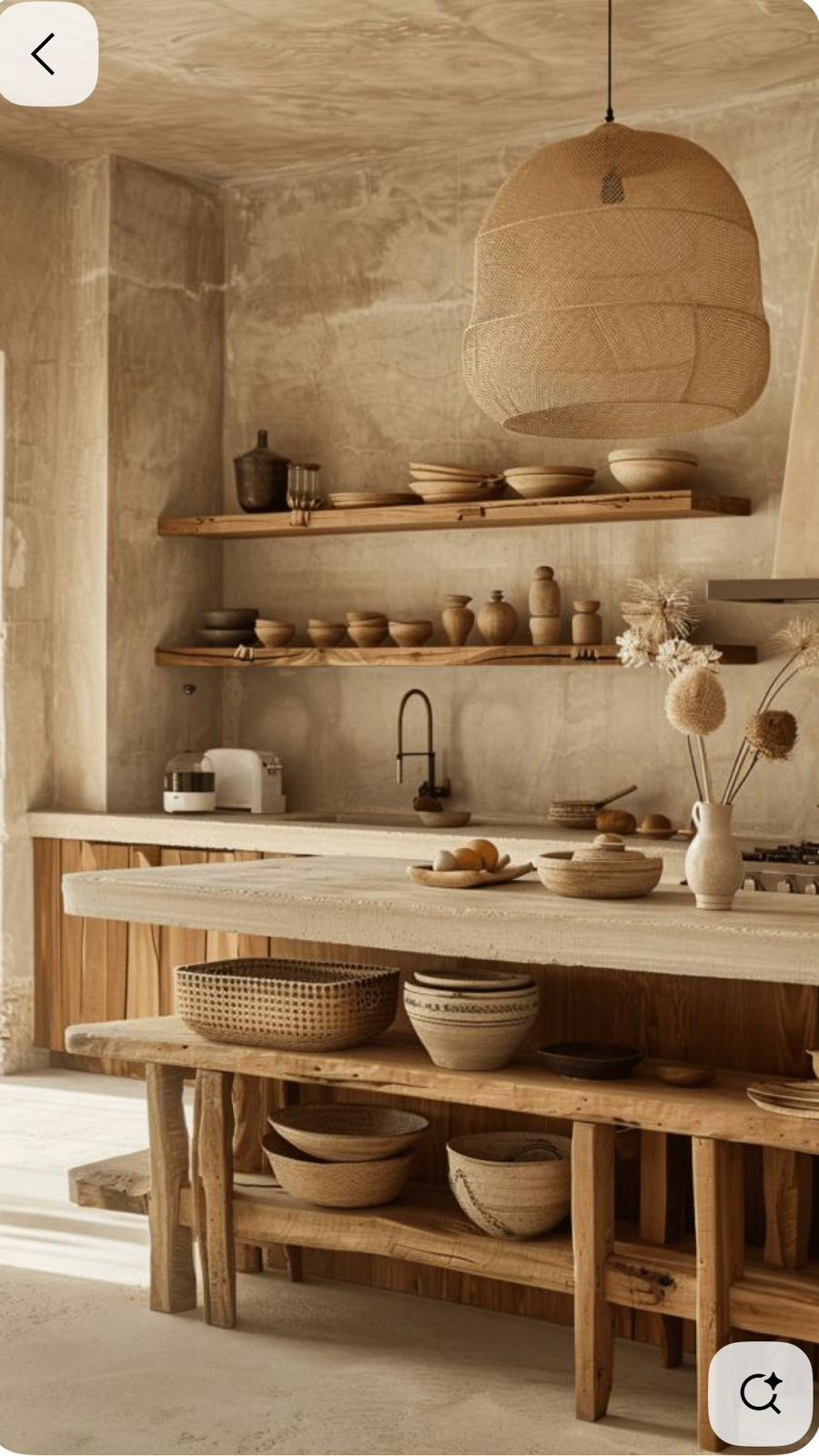
- A big island with the cooking stove built in, a dishwasher raised to working height, and open shelves either side of the window.
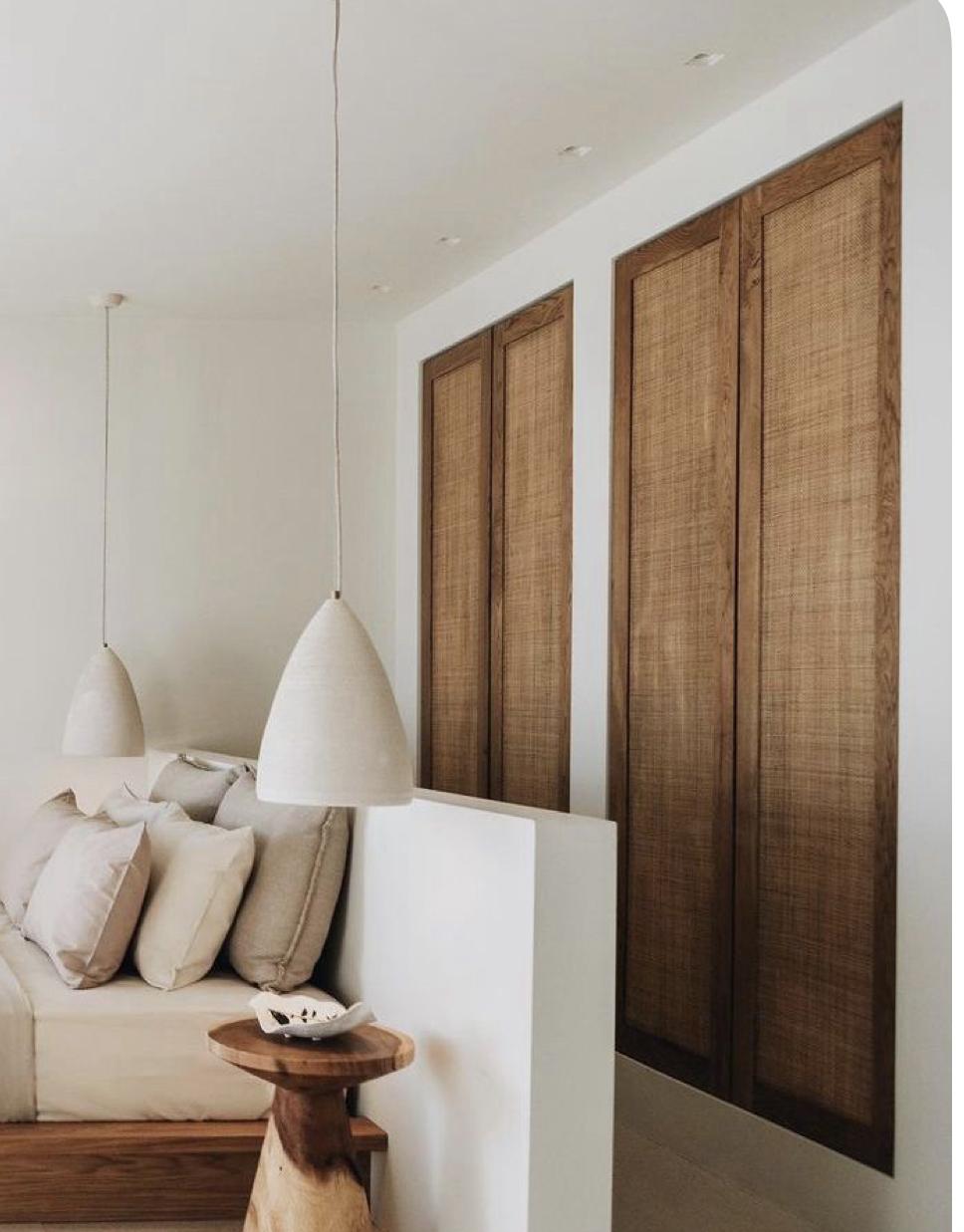
- Rattan or cane-panelled cabinet doors. The tile-stove bench carries on through, so kitchen and living space read as one.
Living room
- Three connected zones, each with its own character, all sharing one warm palette.
- One big room that has to handle lounging, reading, talking and eating.
Couch & window seat area
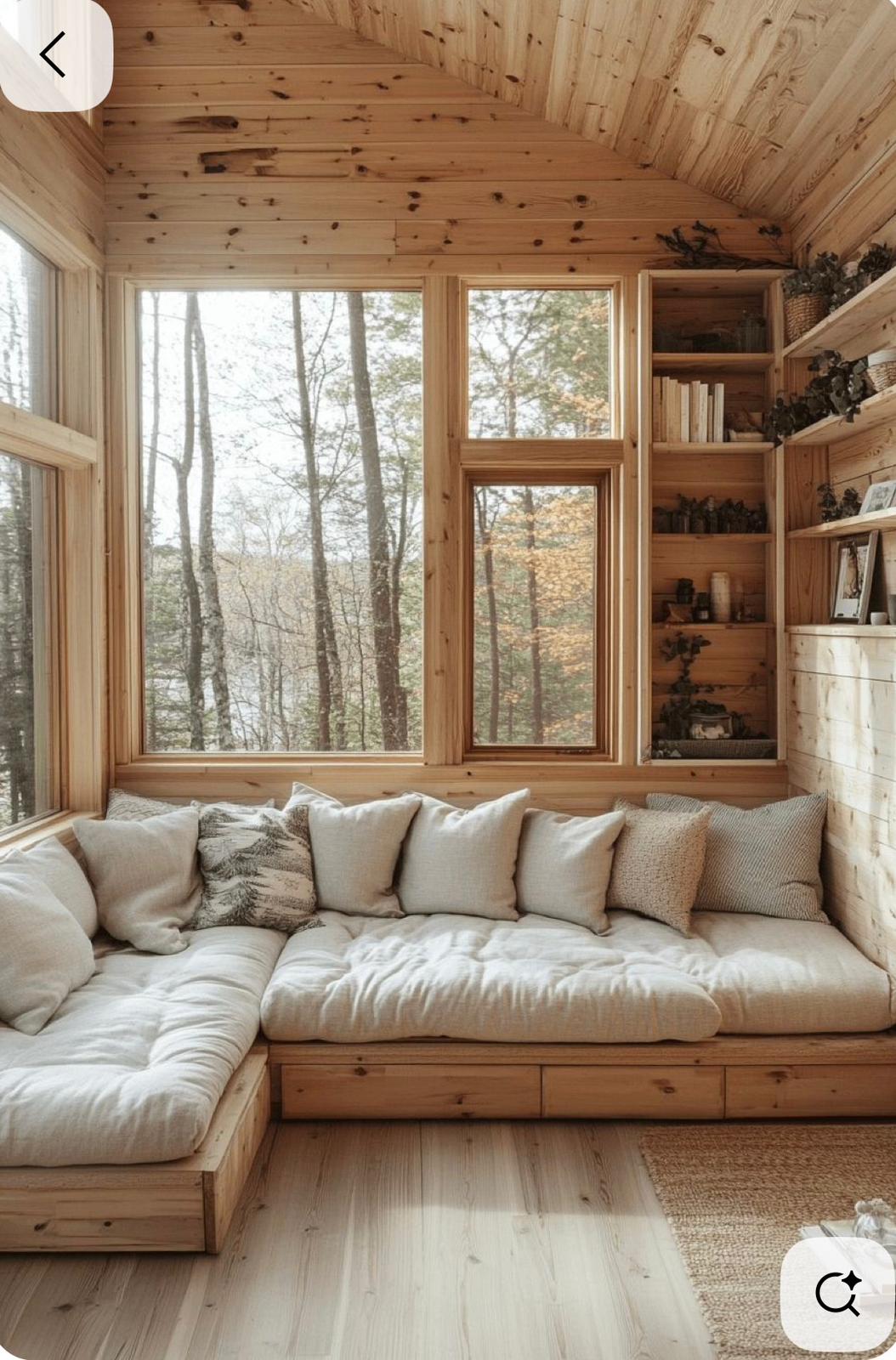
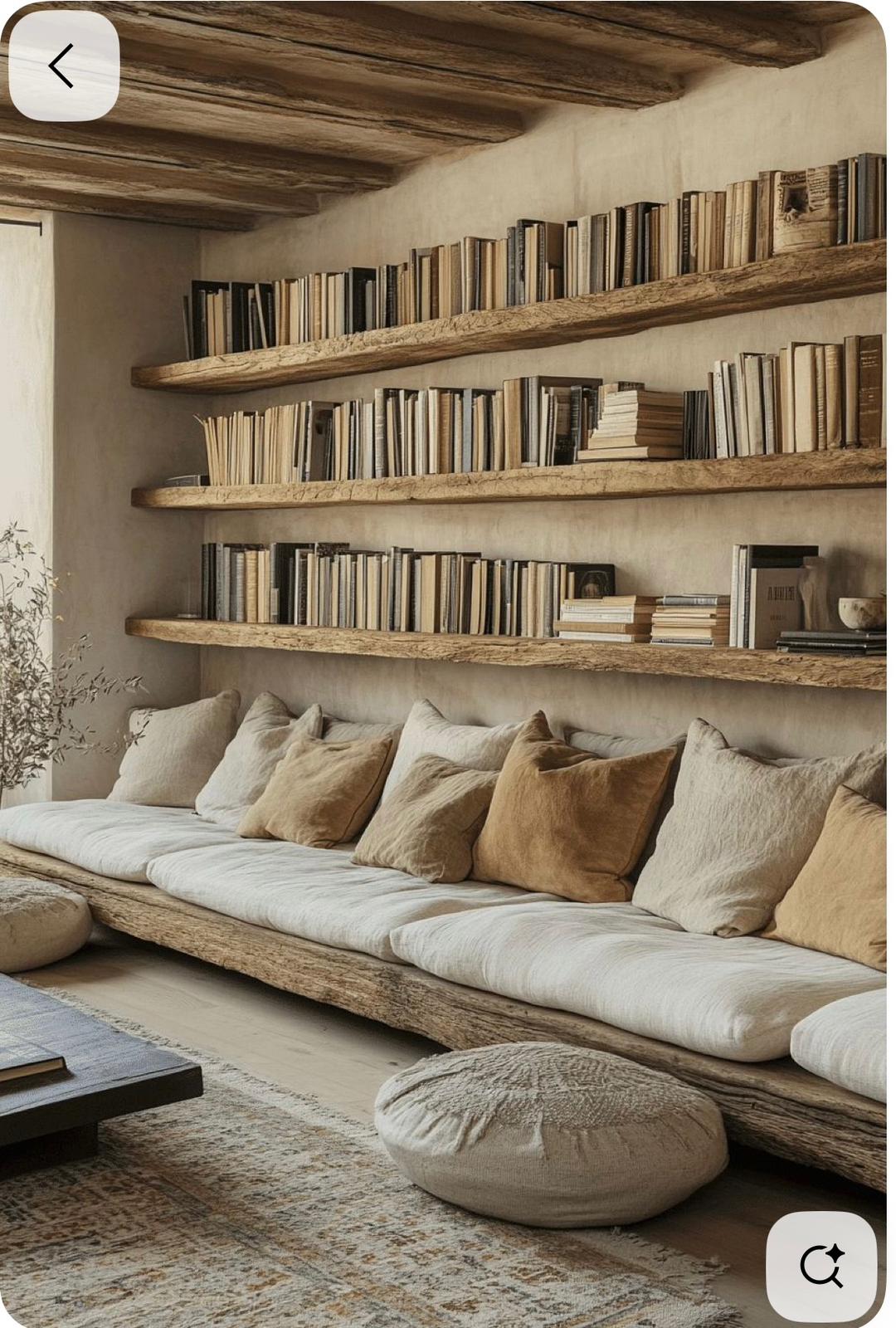
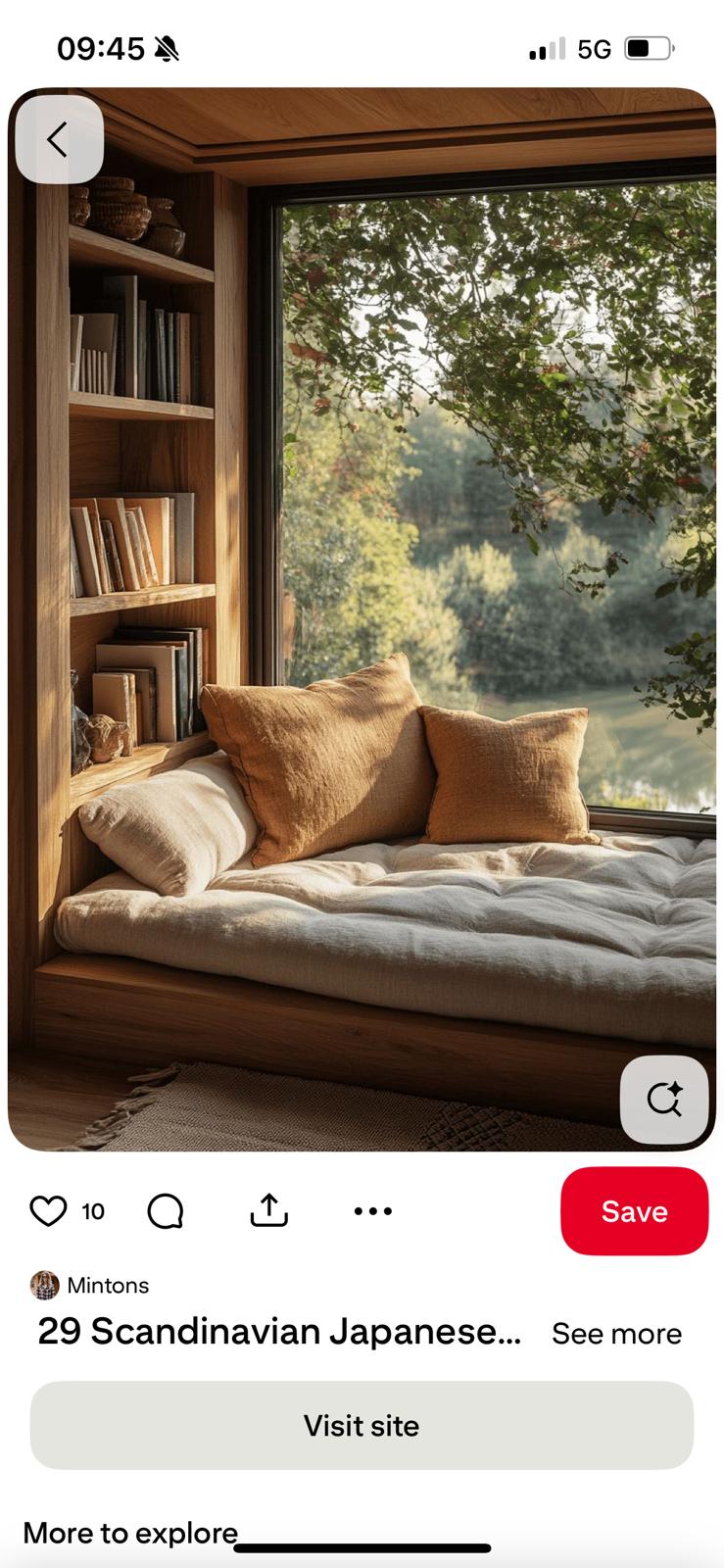
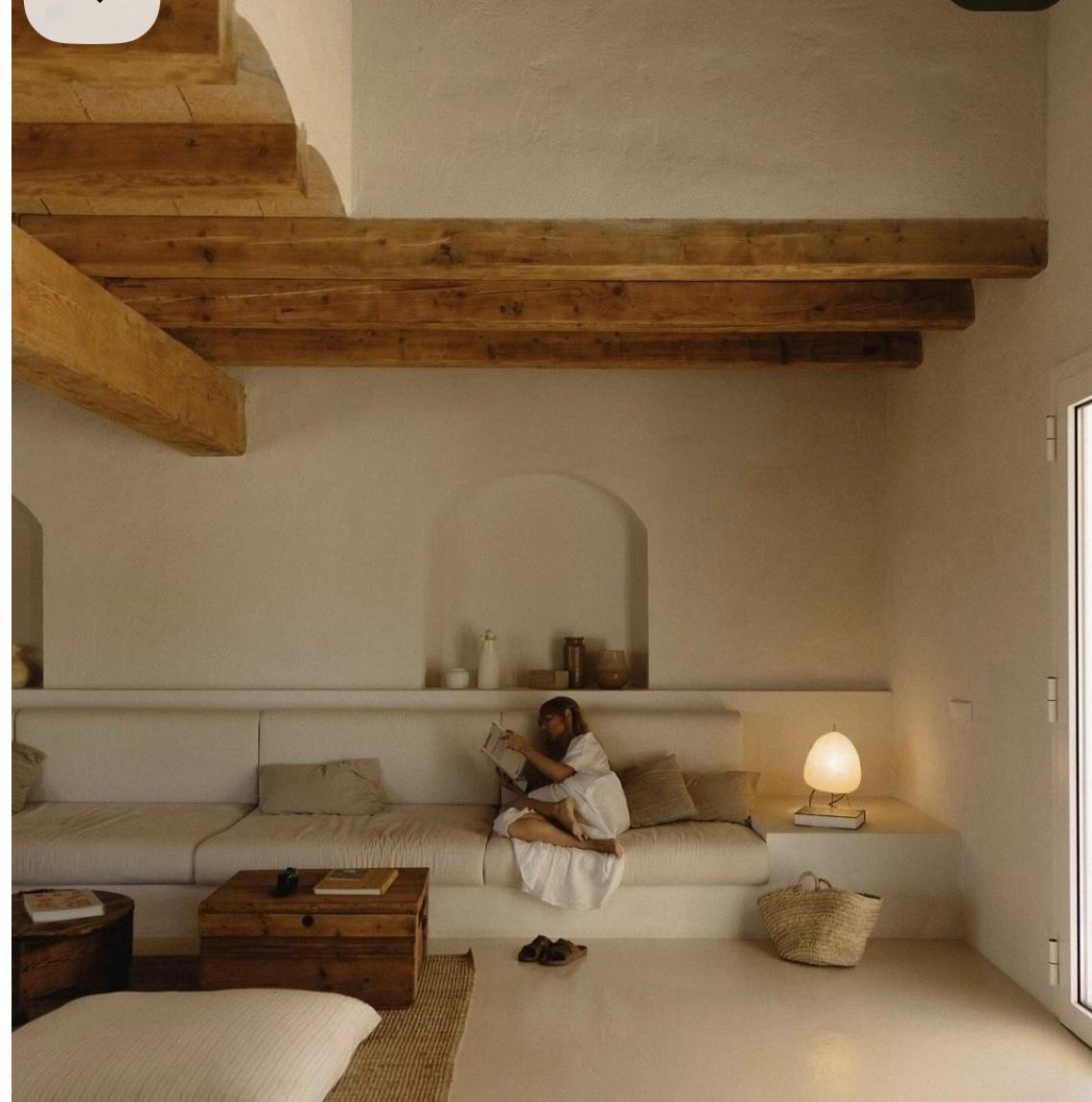
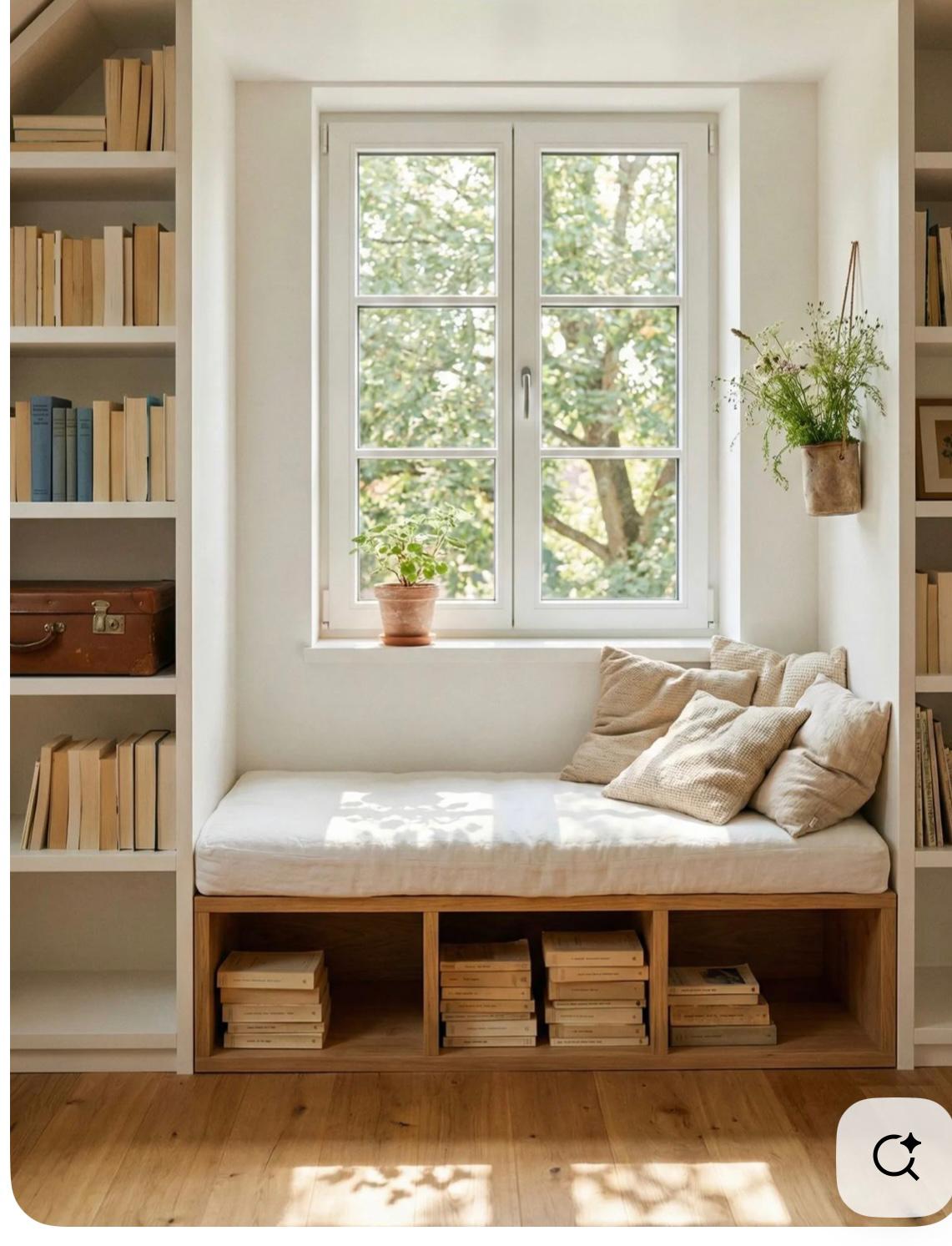
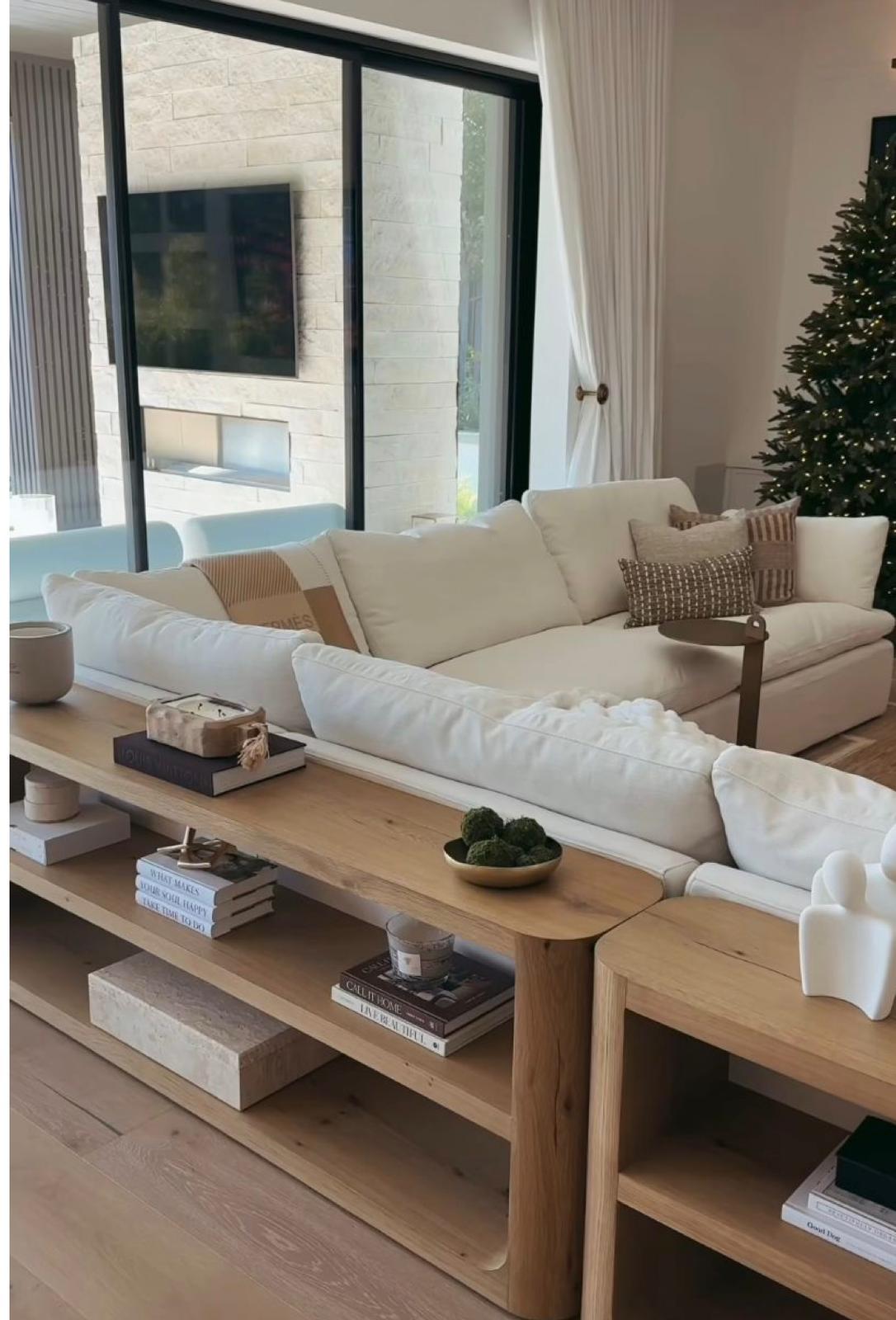
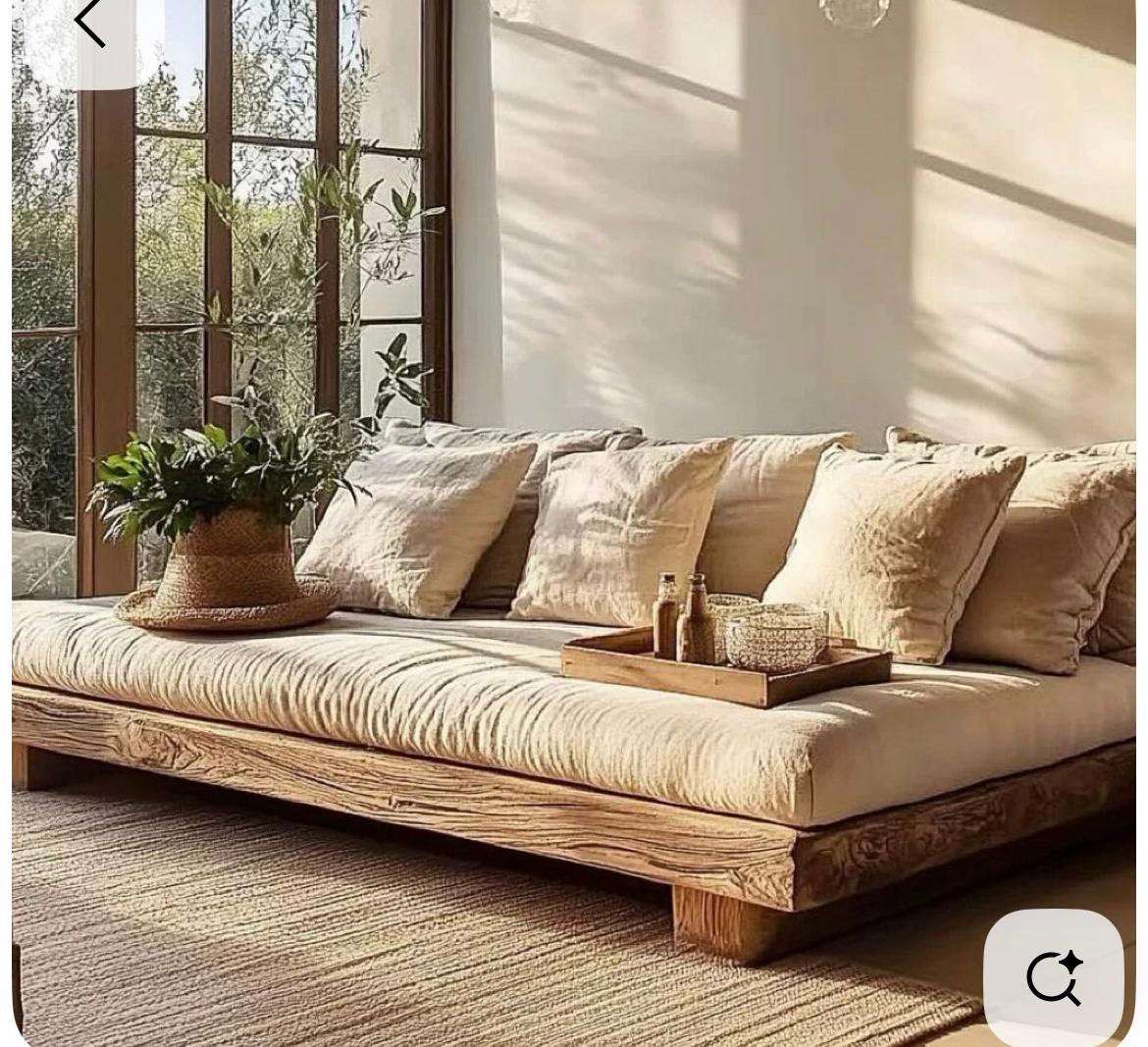
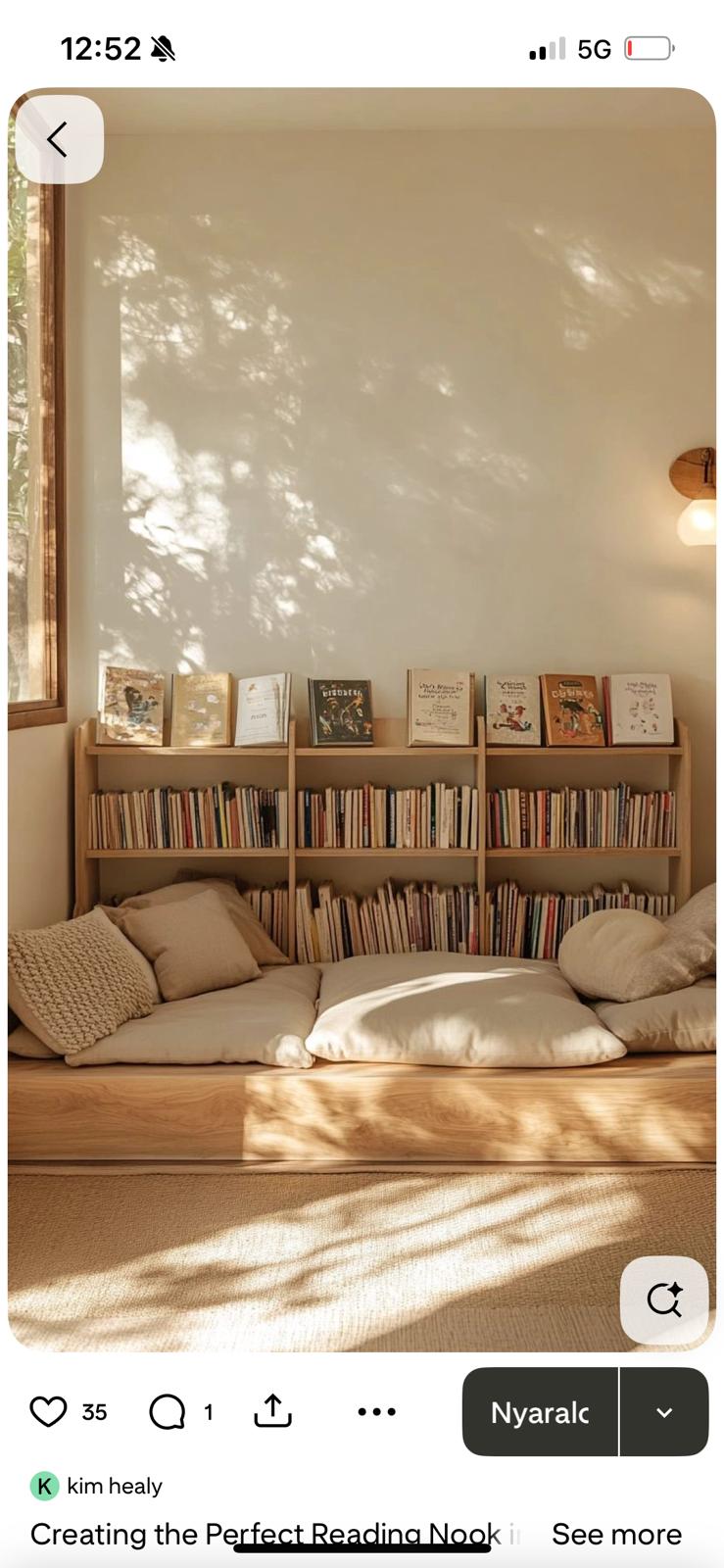
- The main lounging zone: a window seat or built-in daybed stepping down to a lower sofa, with bookshelves built into the walls around it.
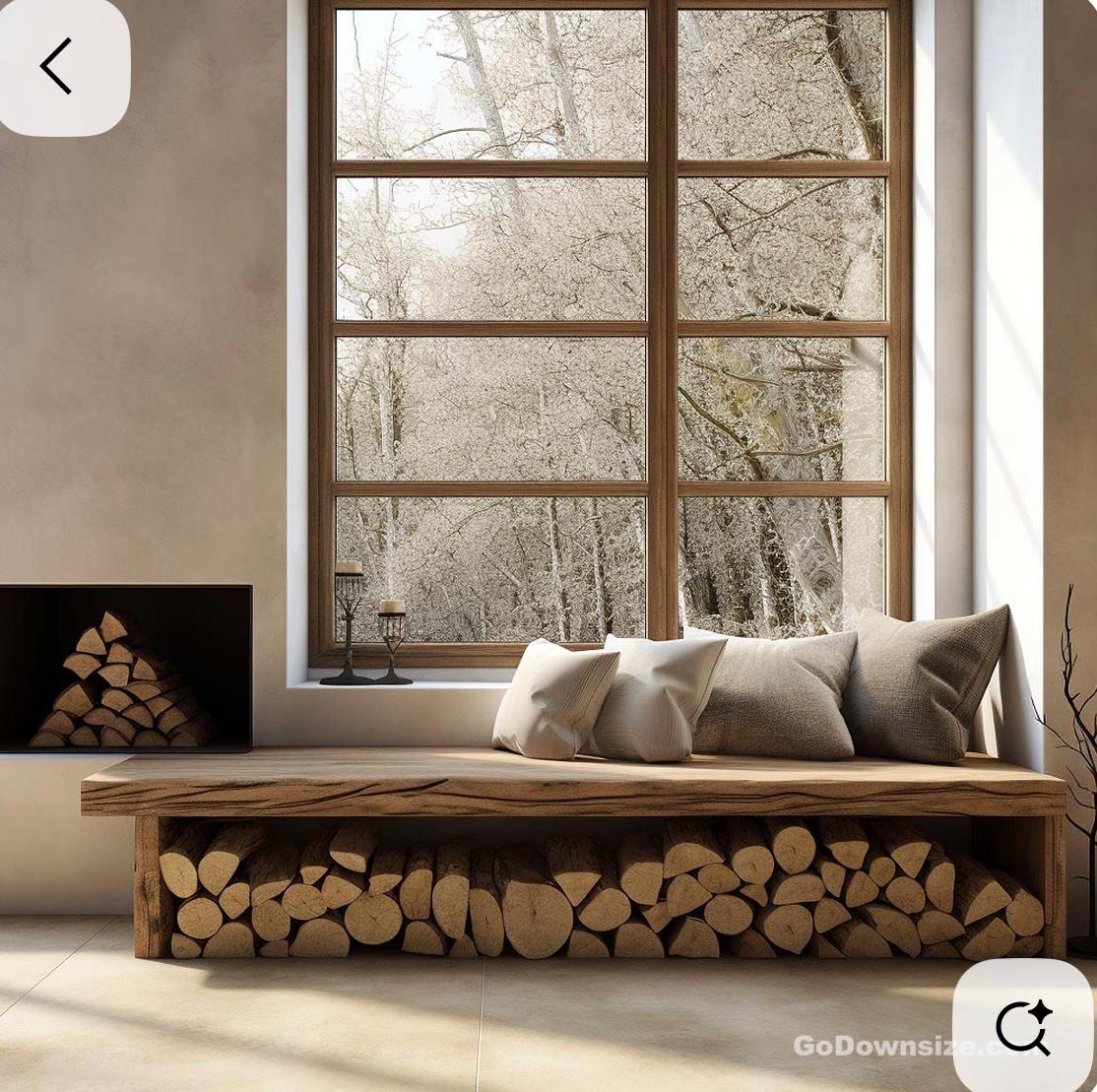
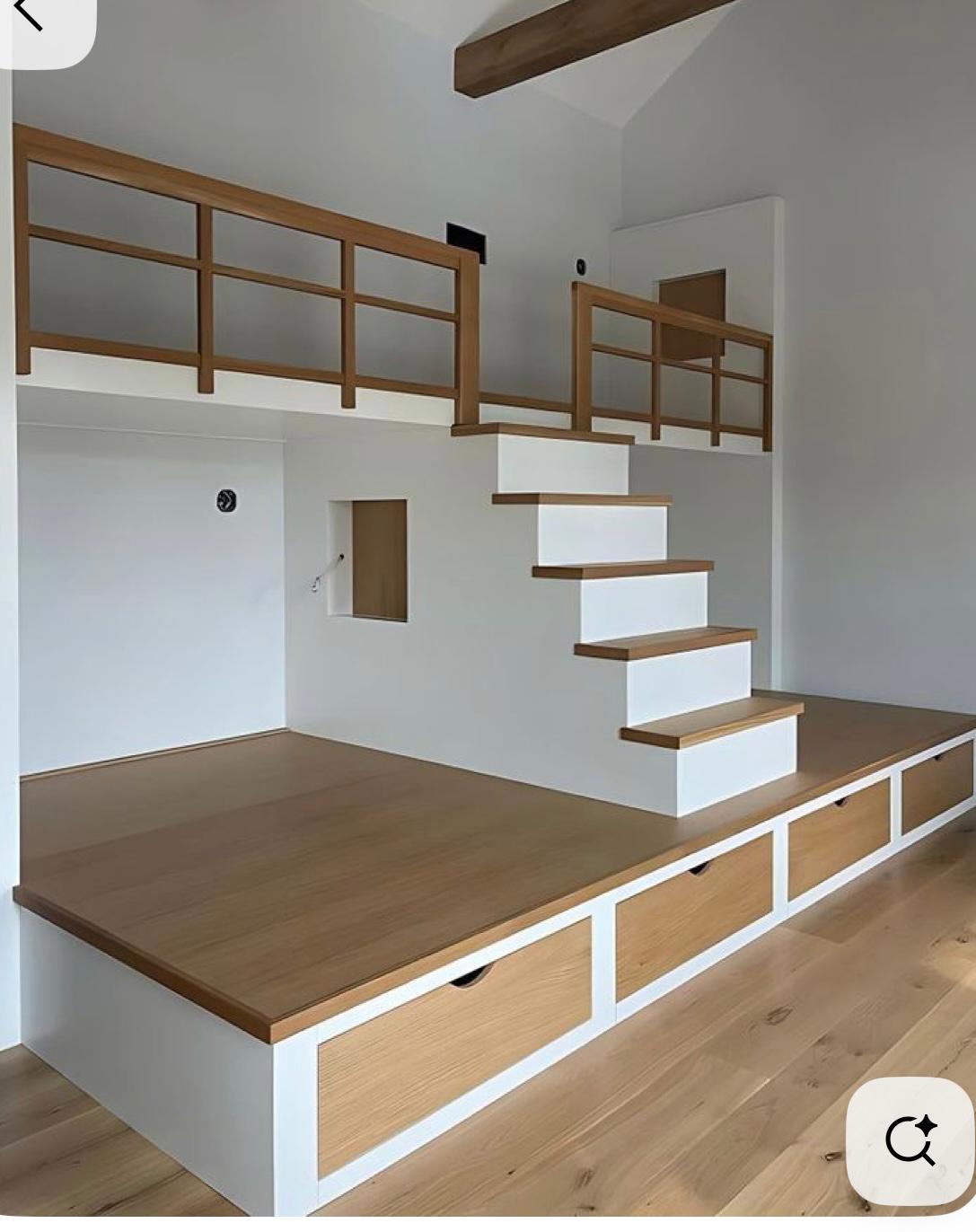
- Alternative: raise the whole corner into a platform (“dobogó”) with hidden storage underneath, and let a low shelf or console behind the sofa mark out the zone.
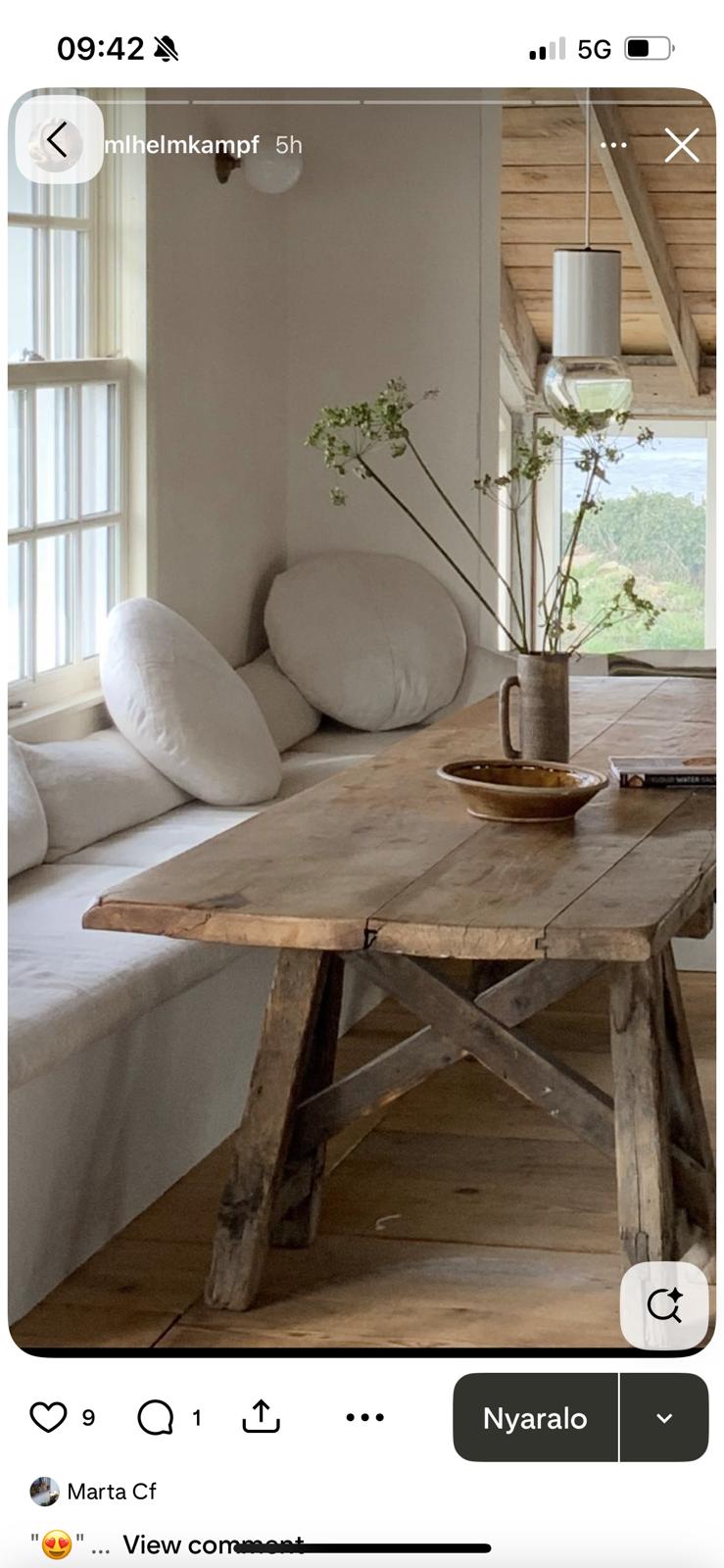
- Firm fixed cushions in tough, washable fabric (heavy linen, cotton canvas). Our actual window is smaller than the ones in some of these pictures, but the idea still works at a smaller scale.
Armchair corner
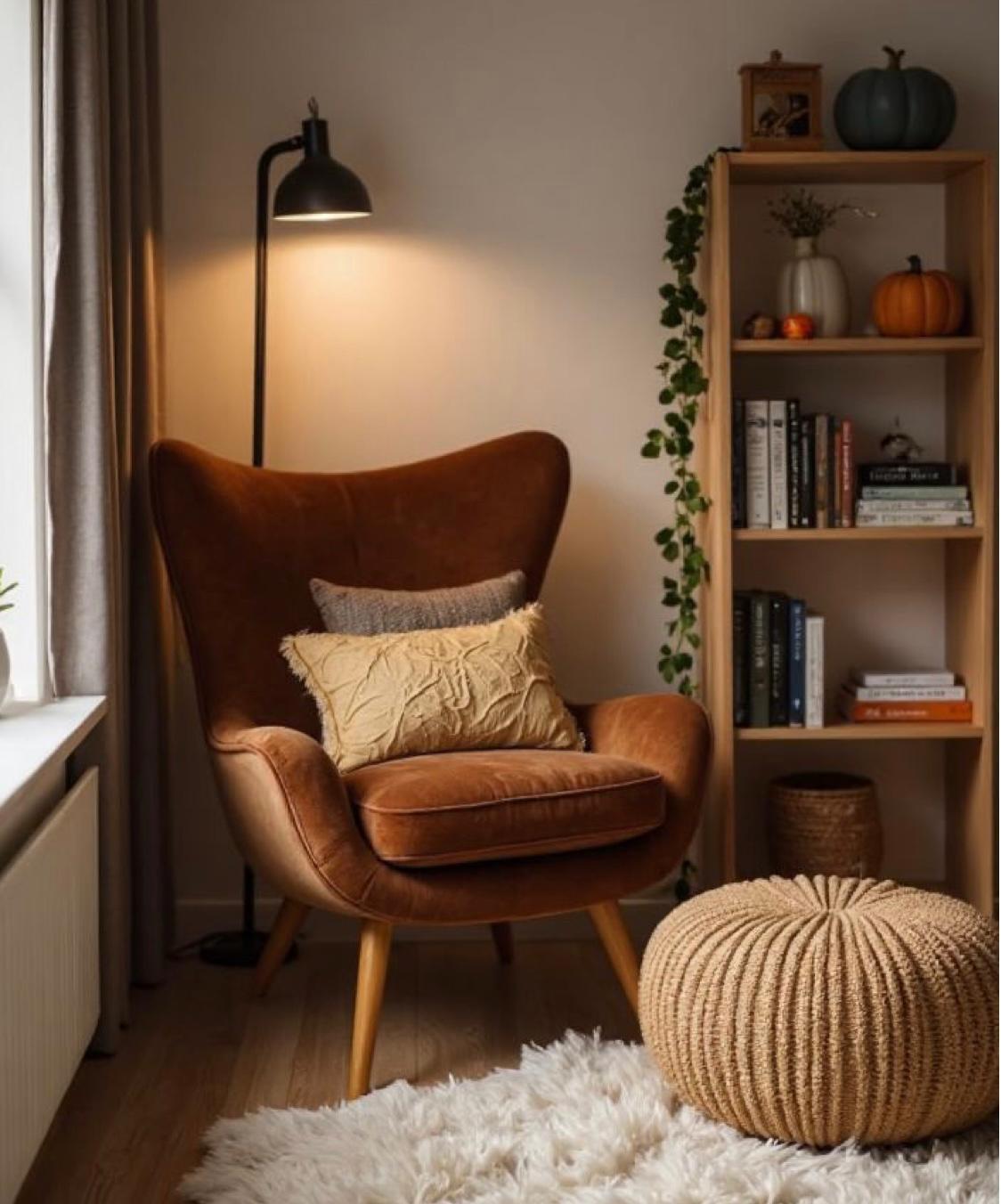
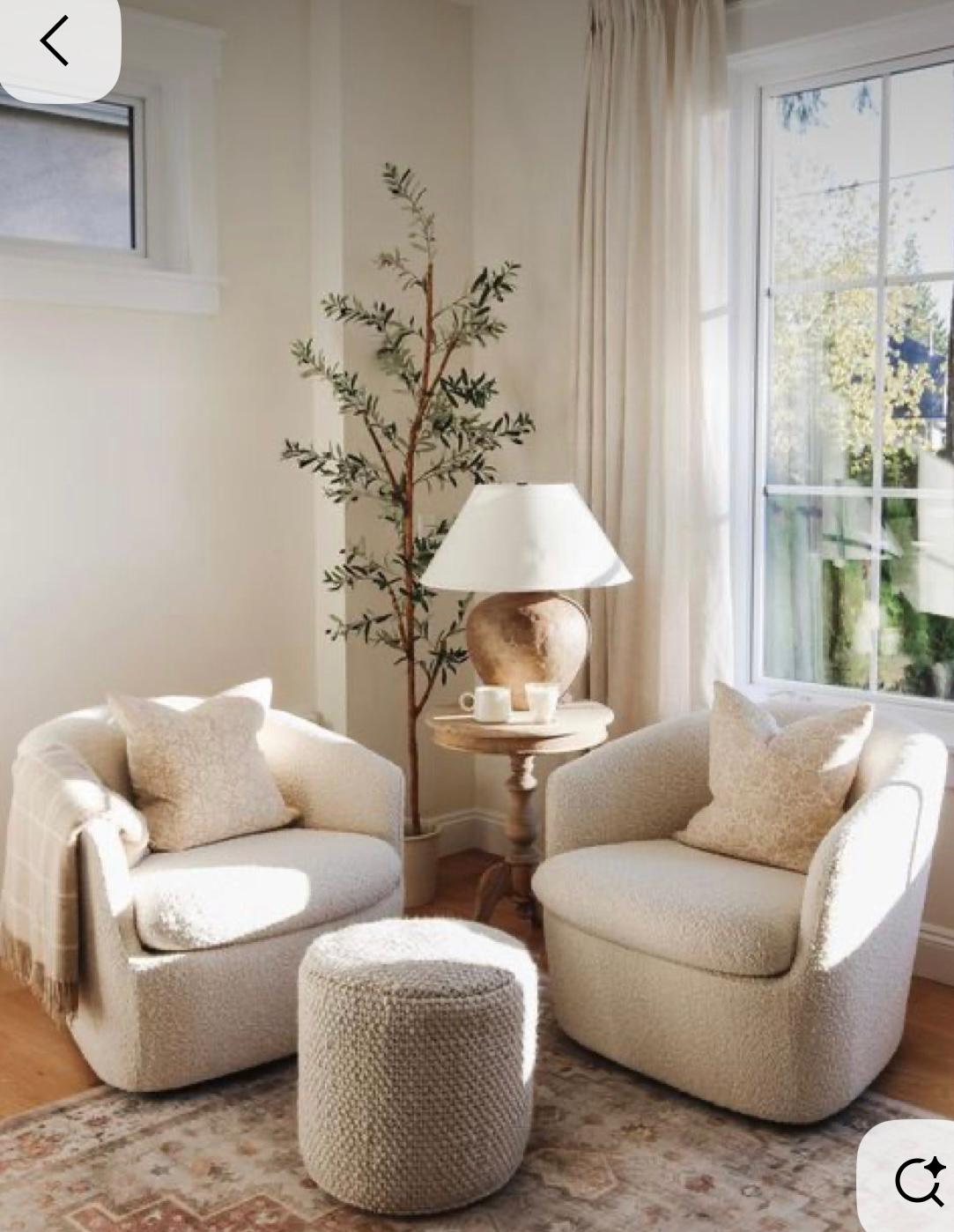
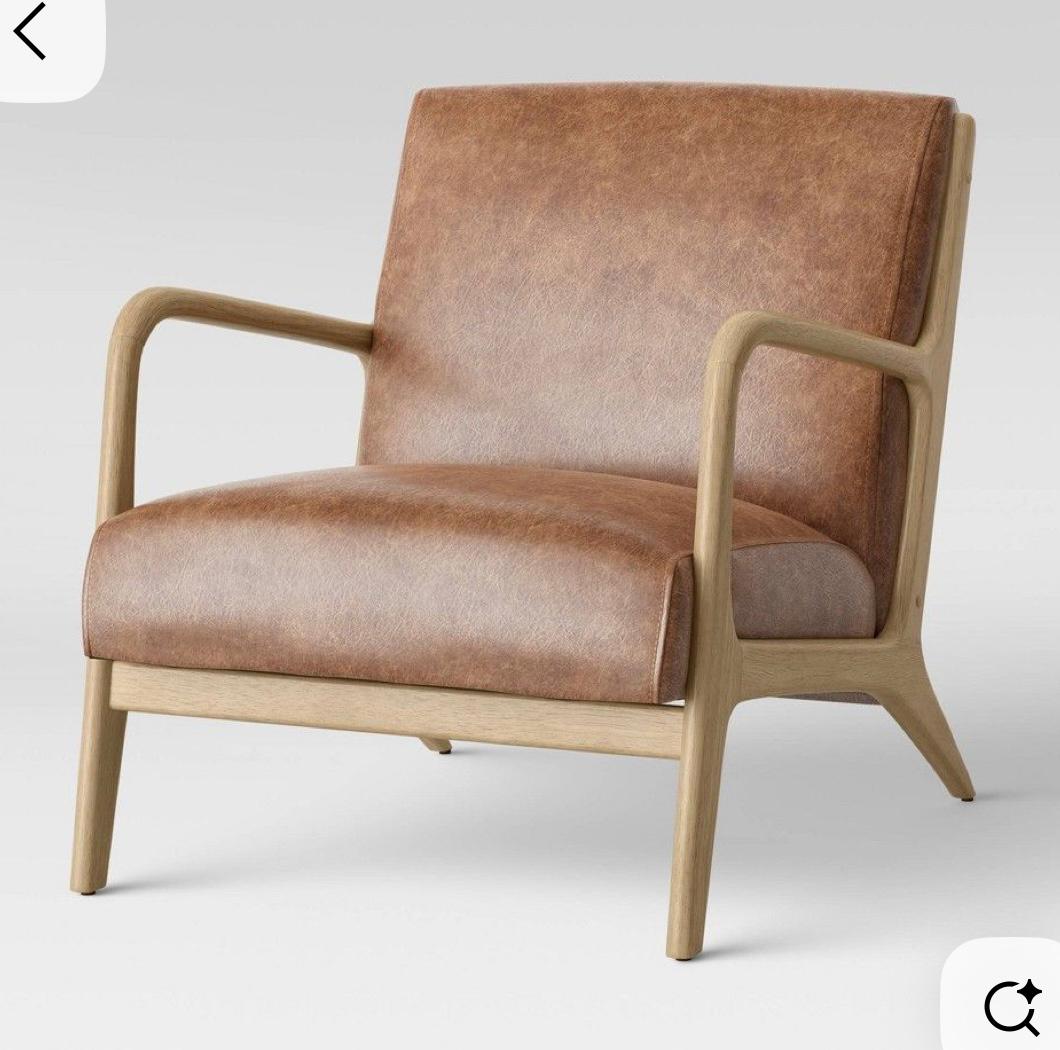
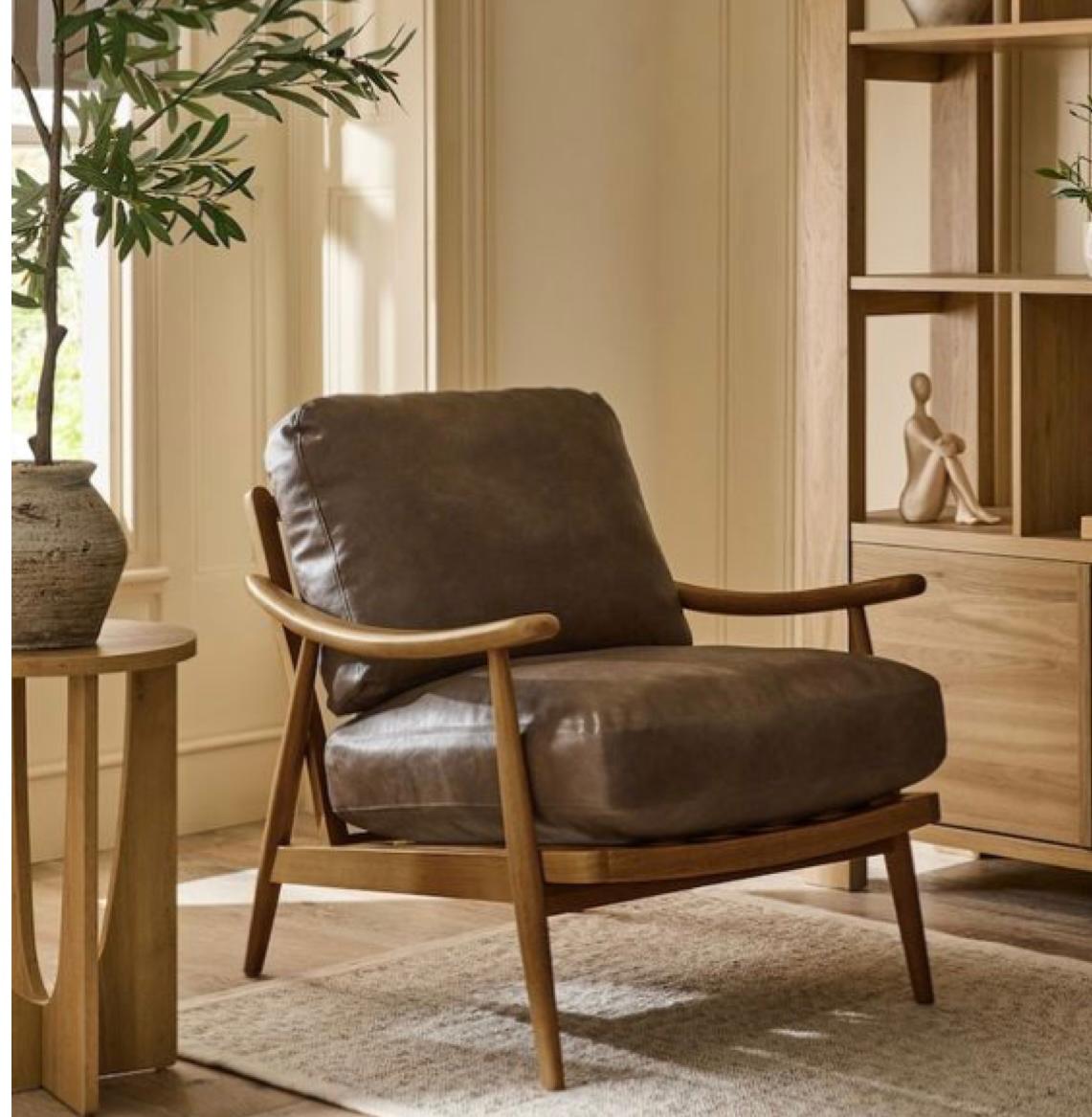
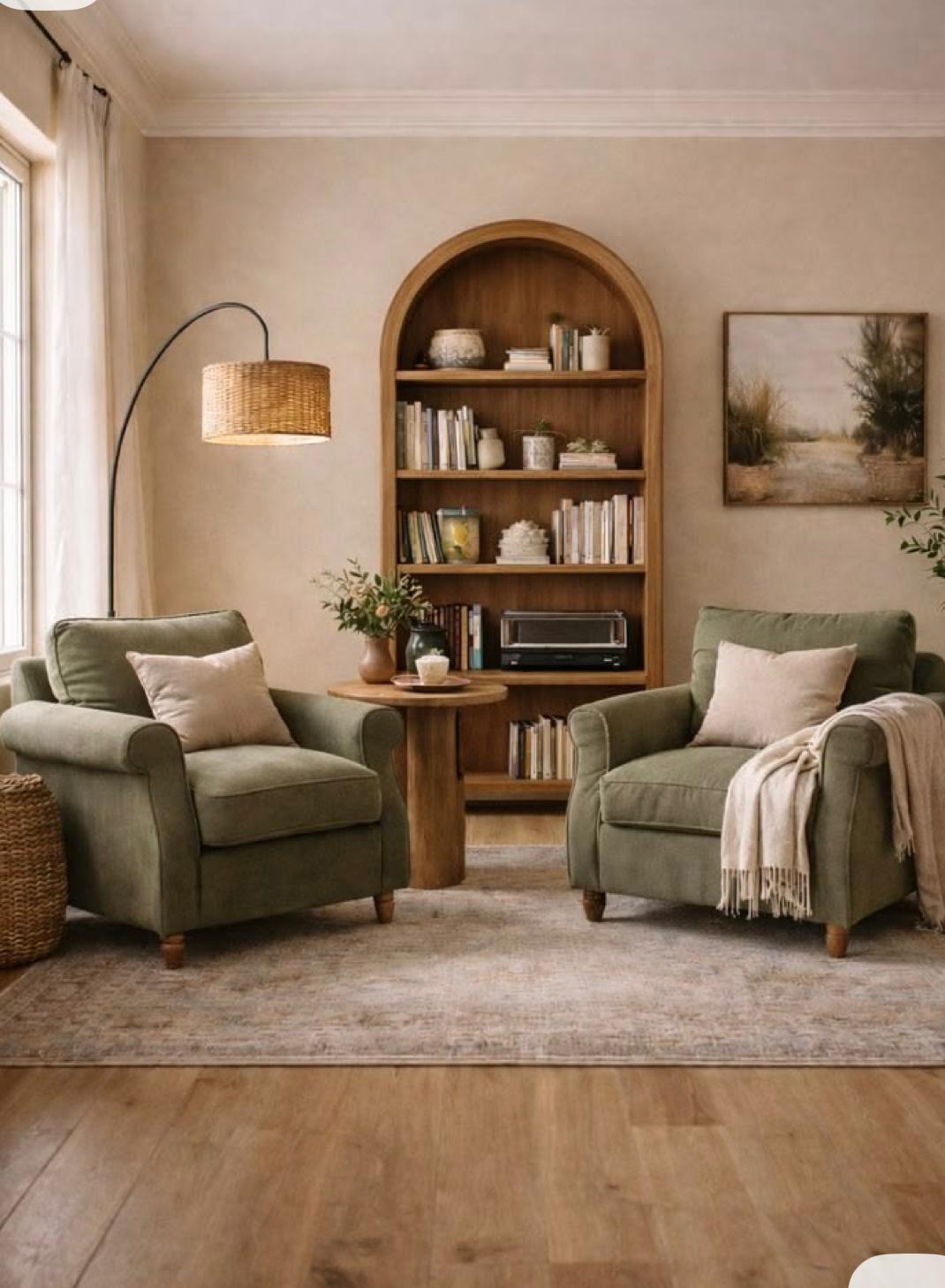
- Two generous armchairs facing each other with a small table between them. Mid-century wood frames, in leather or warm upholstery.
- Shelving behind the chairs, or a narrow shelf carrying on from the dining bench along the wall.
- A floor or reading lamp, a soft rug, and a knitted pouf.
Dining area with tile stove
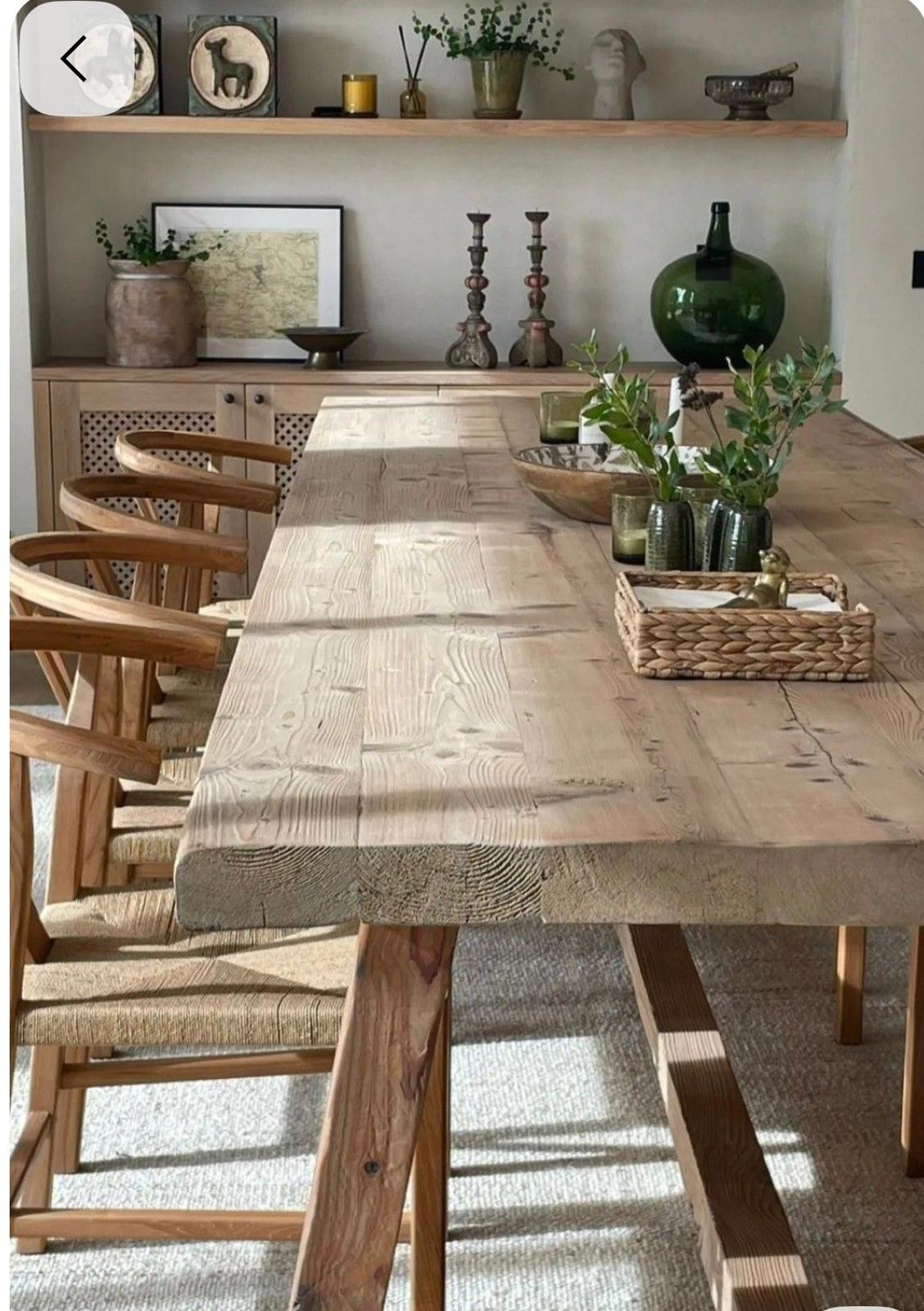
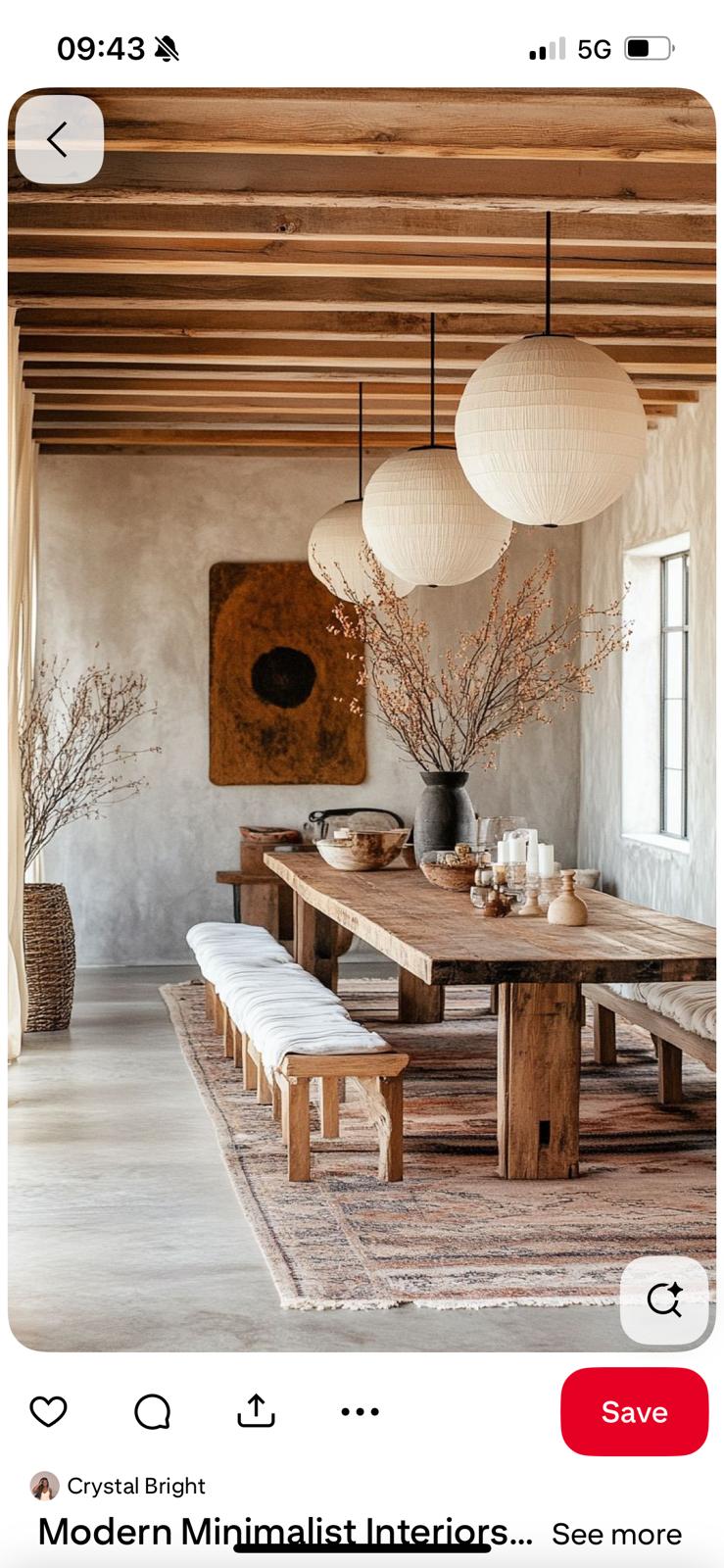
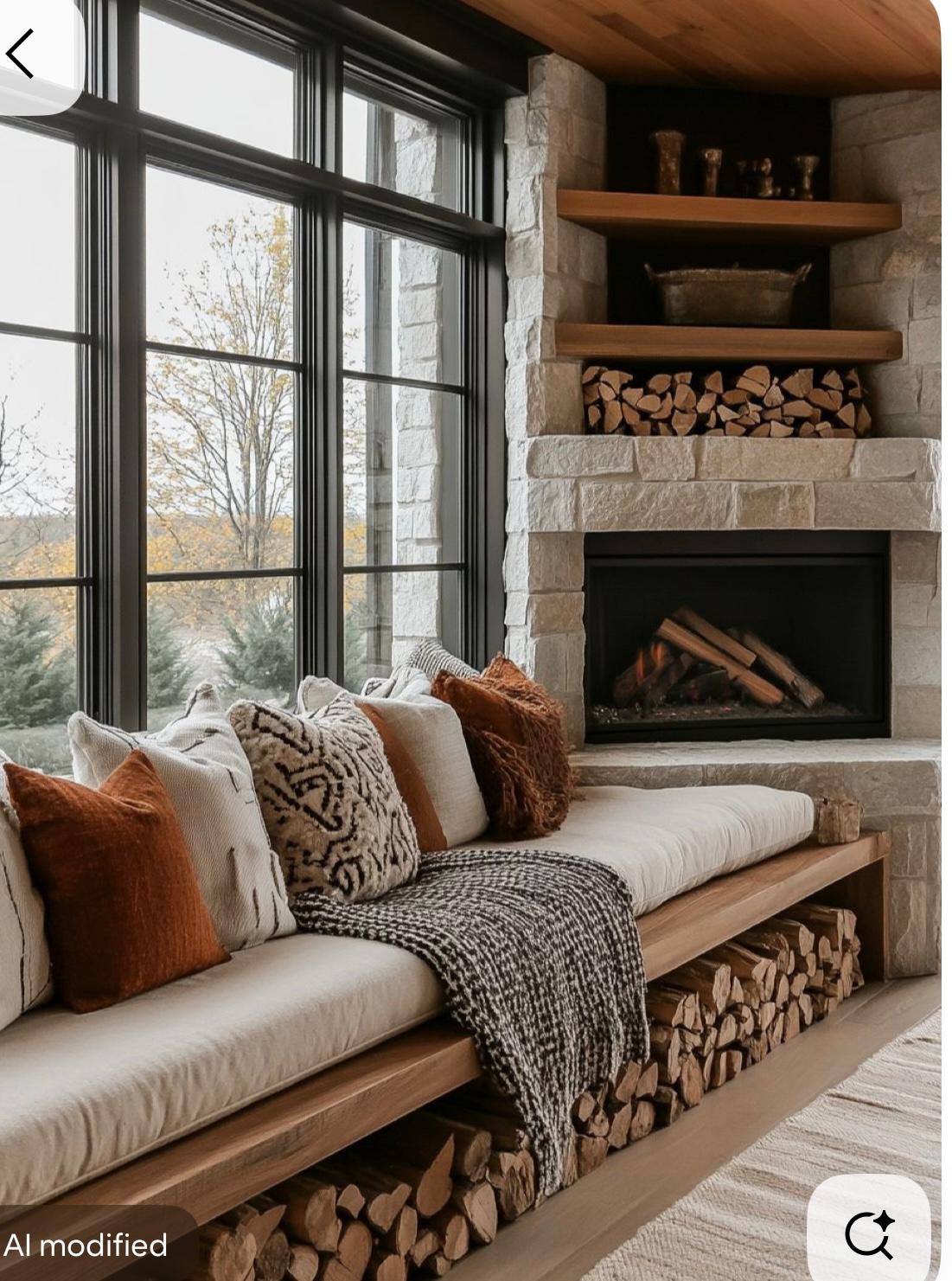
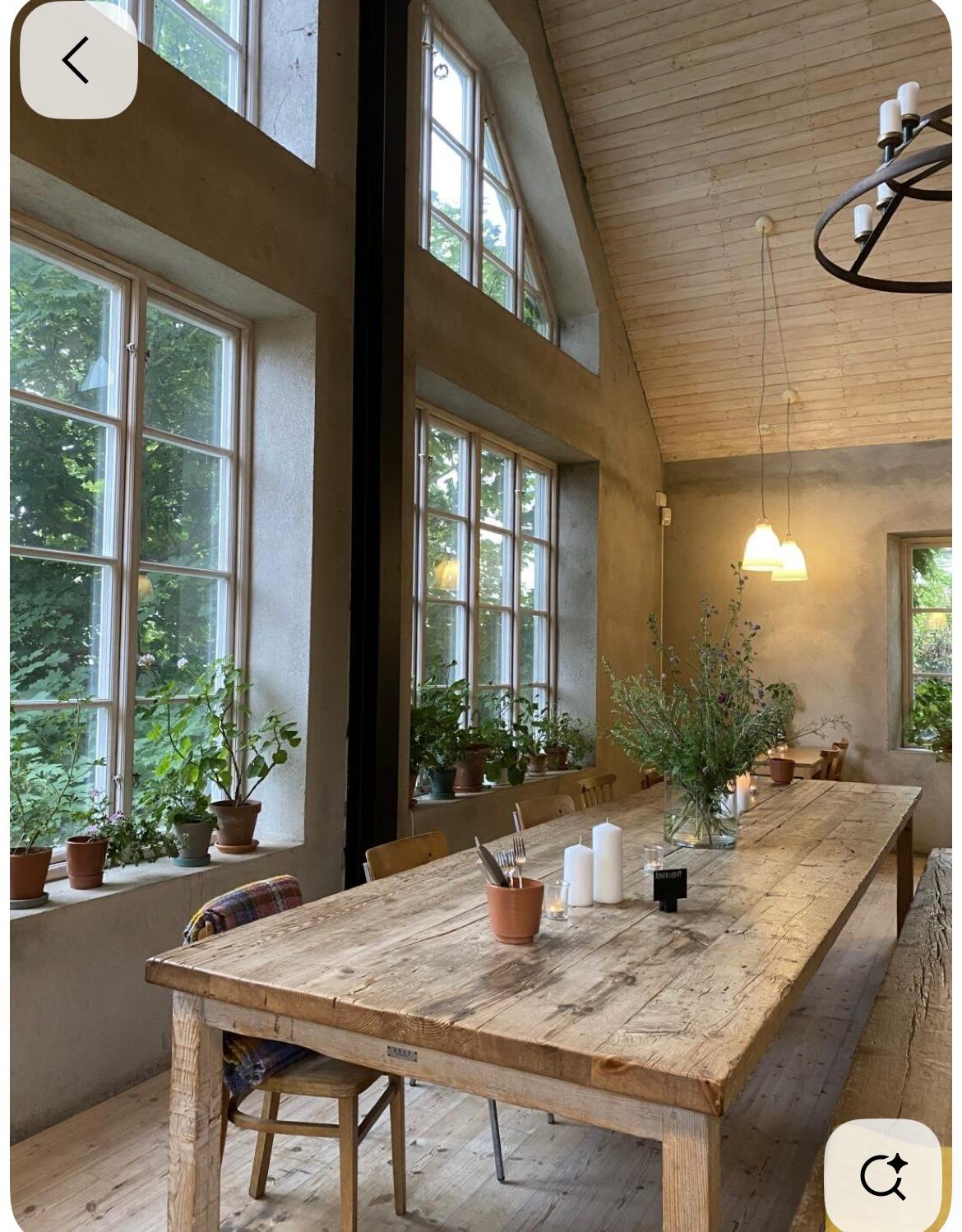
- A long reclaimed-wood trestle or farmhouse table for 8–10, with a built-in bench wrapping the tile stove and firewood stored underneath.
- Wishbone or woven-seat chairs on the open side; paper-globe or ceramic pendants overhead.
- A showcase fireplace as the focal point, which gives the ground floor two fires.
Bathrooms
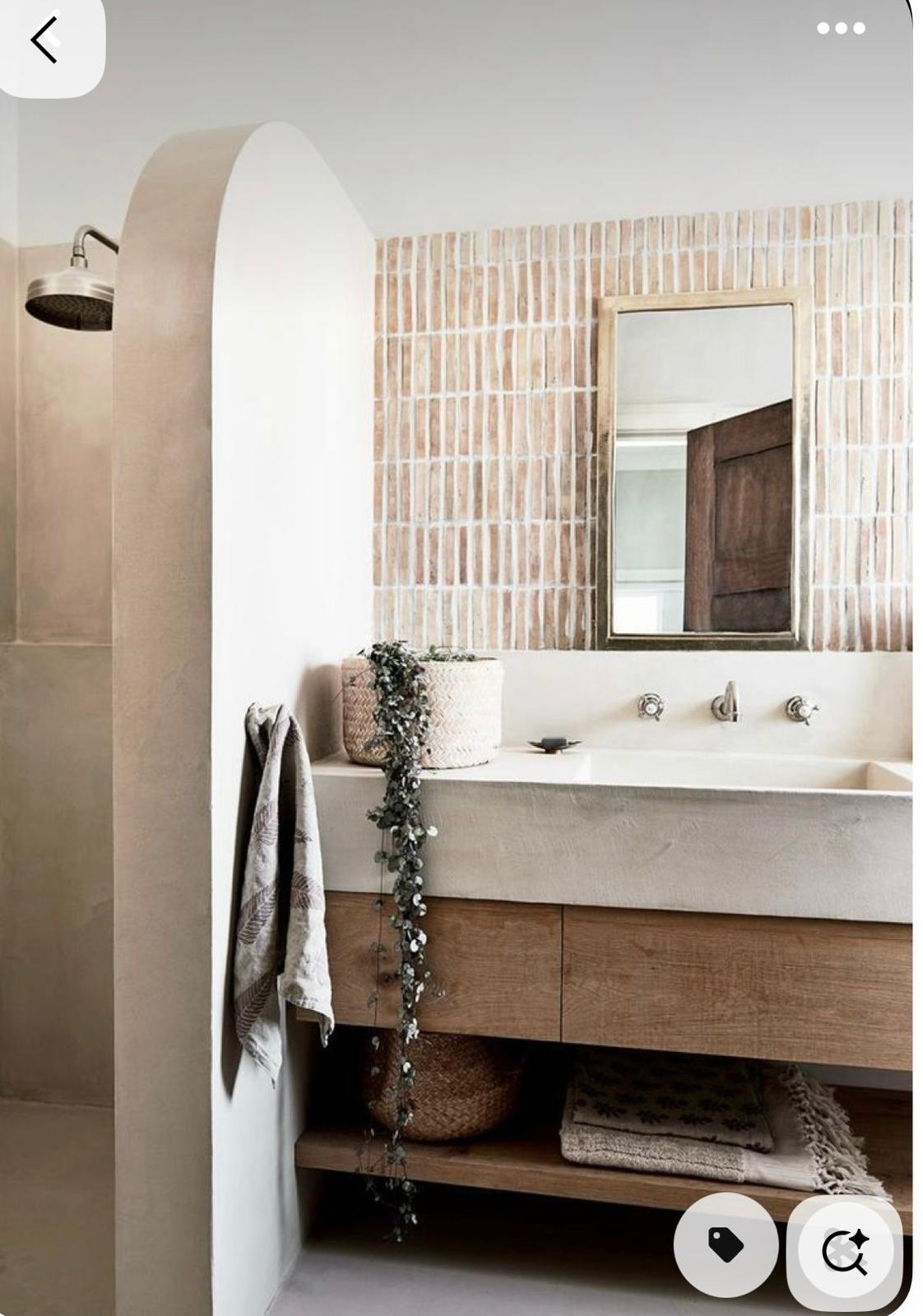
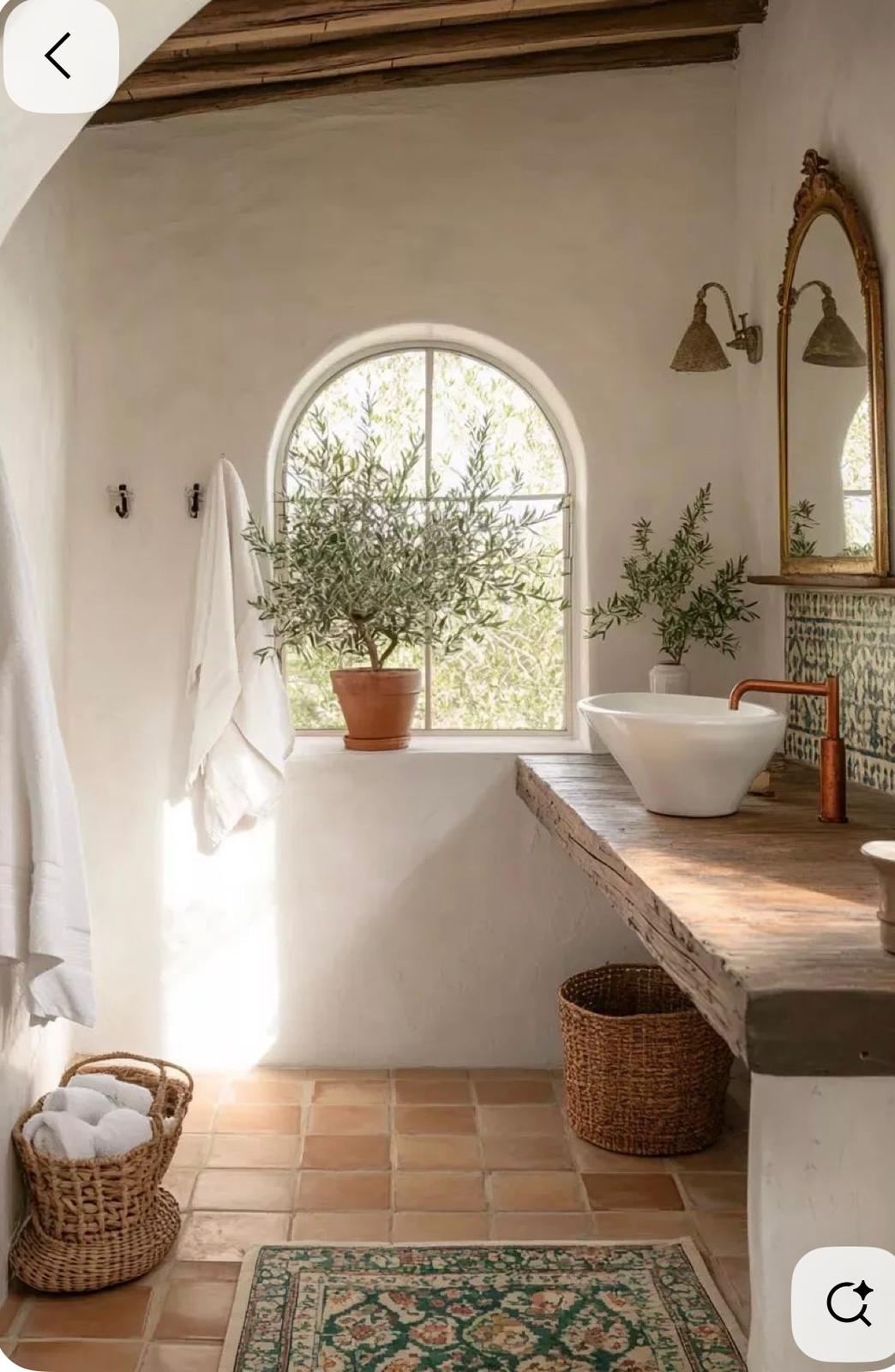
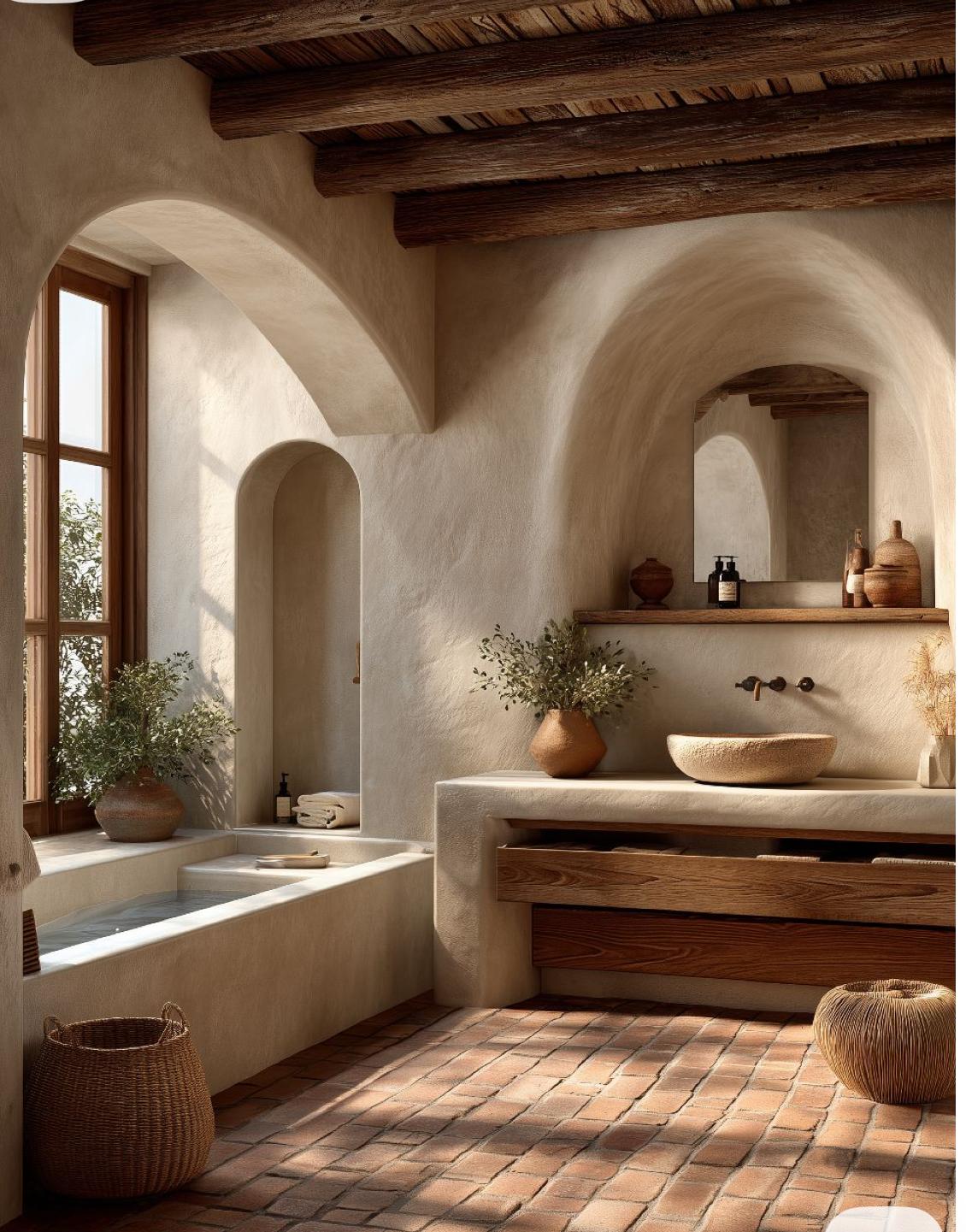
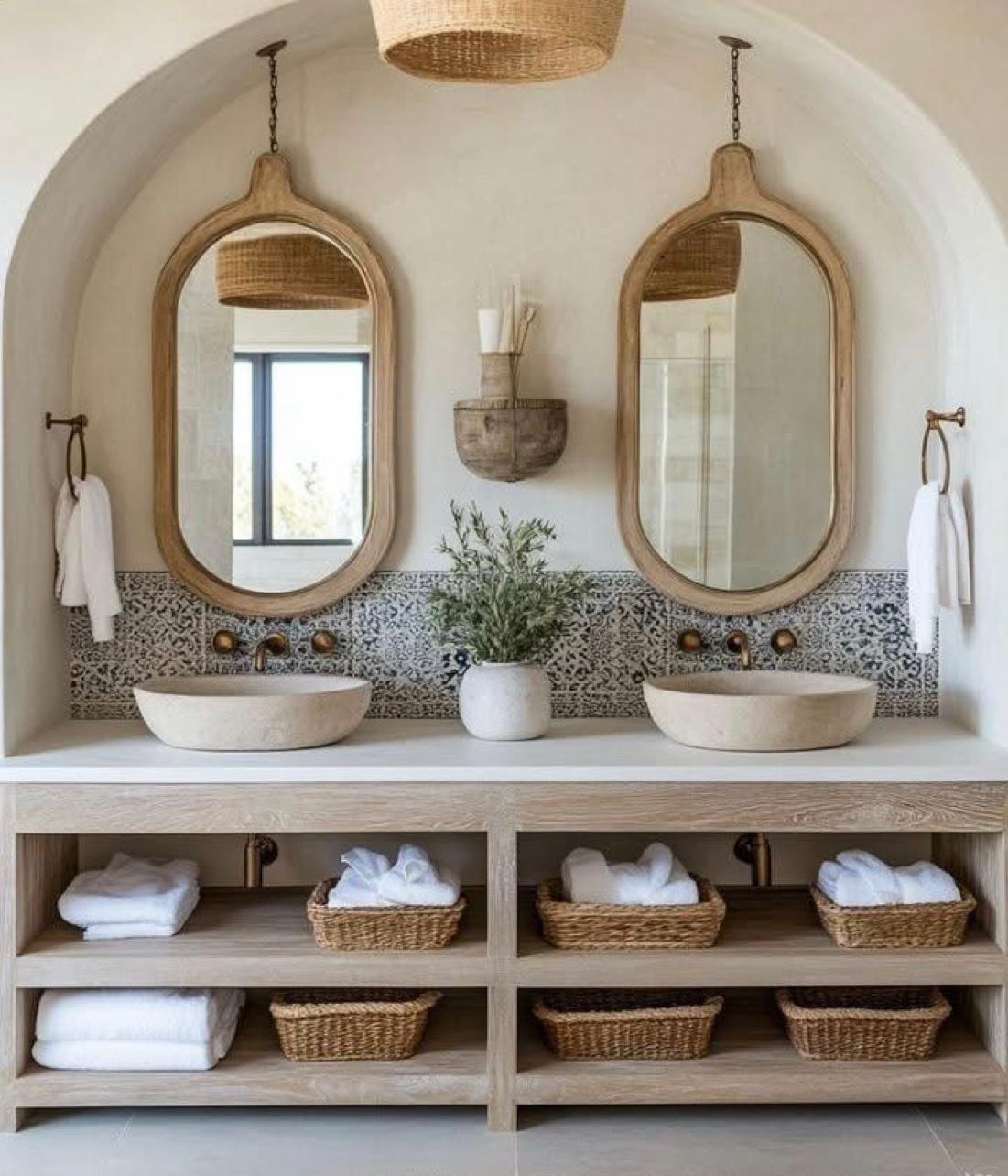
- Both share a wabi-sabi base: plaster walls, wooden details, stone or ceramic vessel sinks, matte zellige or handmade-look tiles, “washed” paint on the walls.
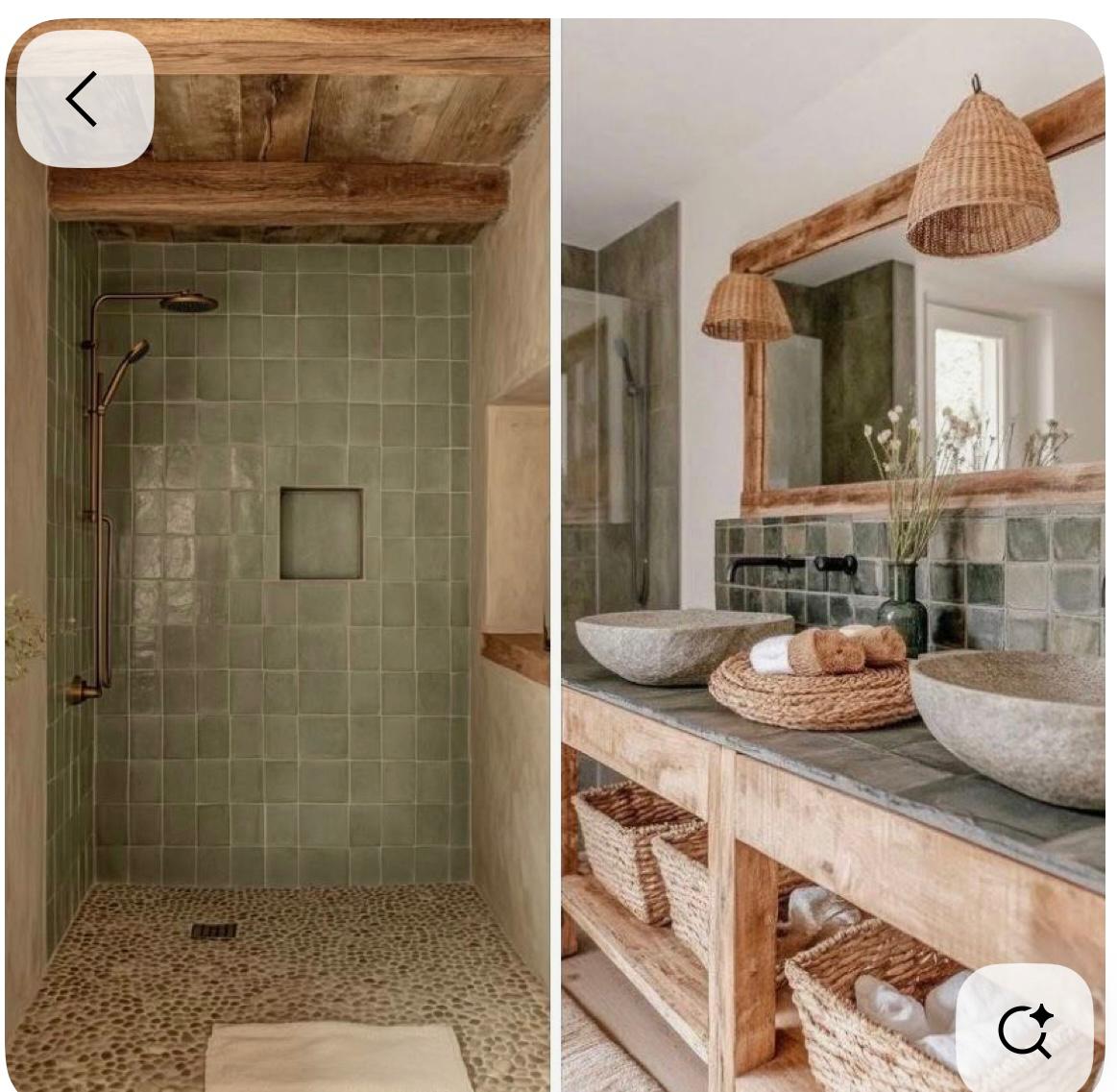
- A generous vanity with one or two vessel sinks, a wooden drawer and an open towel shelf underneath, and wall-mounted taps in aged brass or matte black.
- The accent colour tells them apart: one sage green, one terracotta.
Sage green bathroom
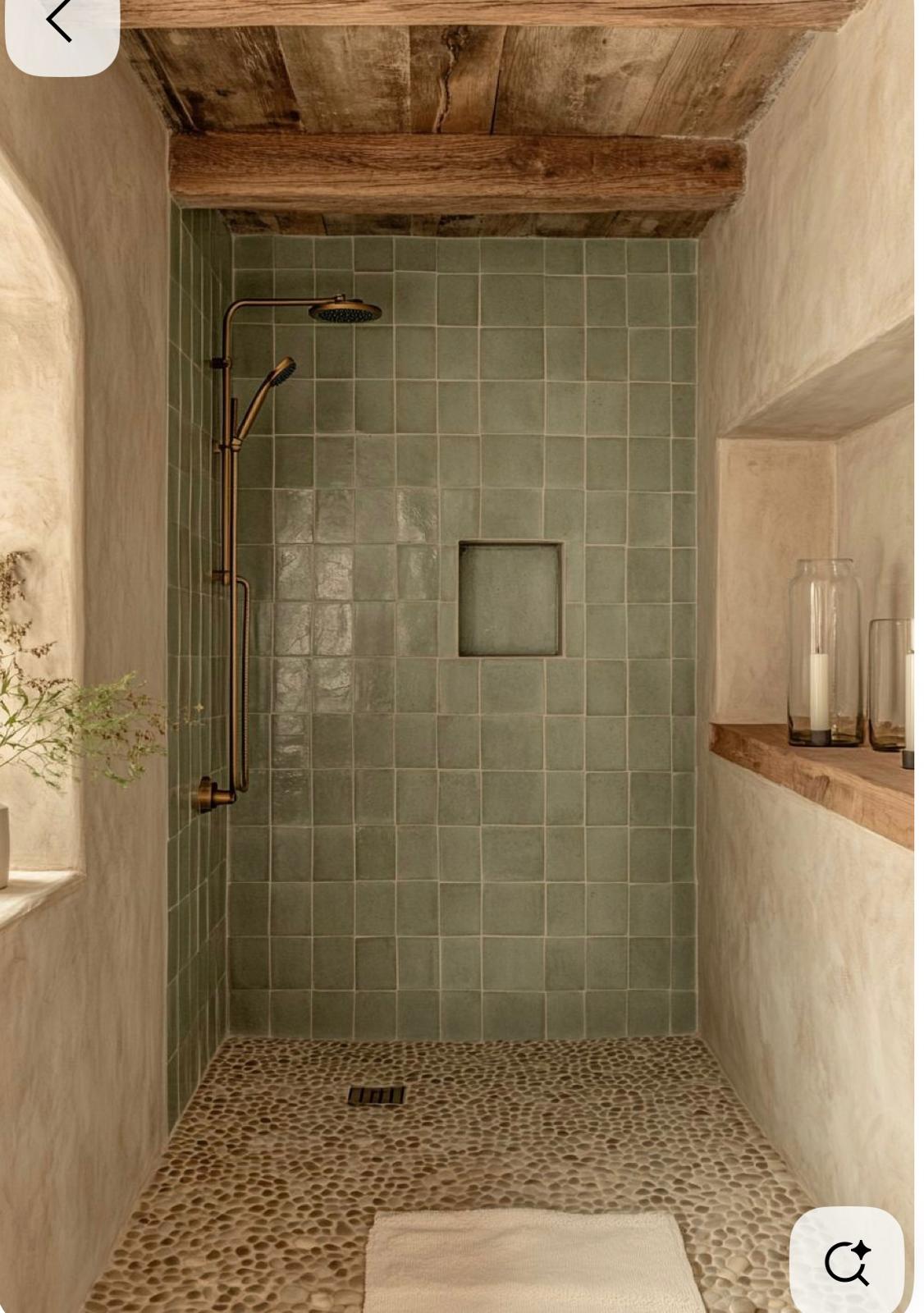
- Matte sage green zellige in the shower and as a backsplash.
- Pebble stone shower floor, brass or copper fixtures.
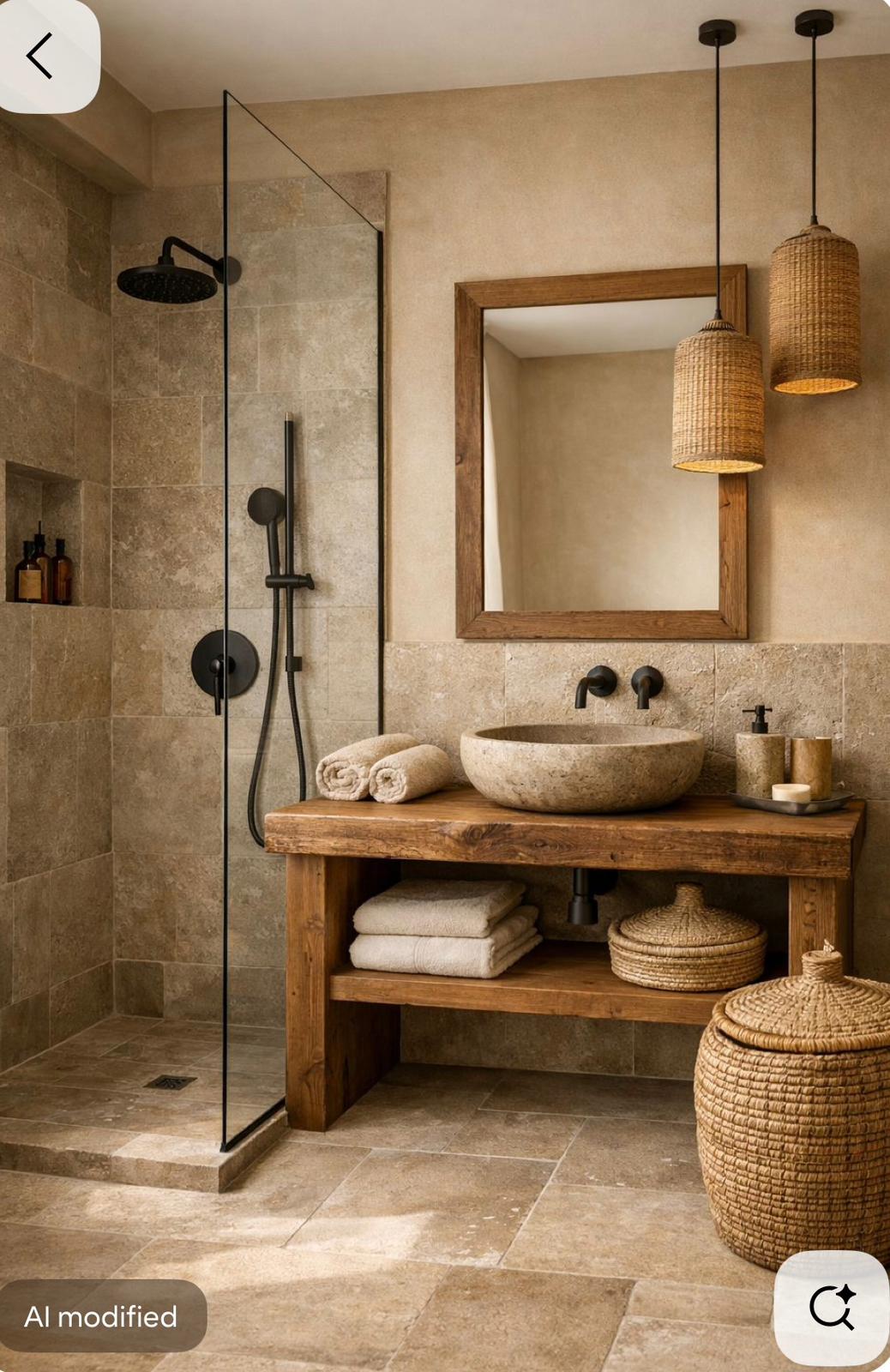
Terracotta bathroom
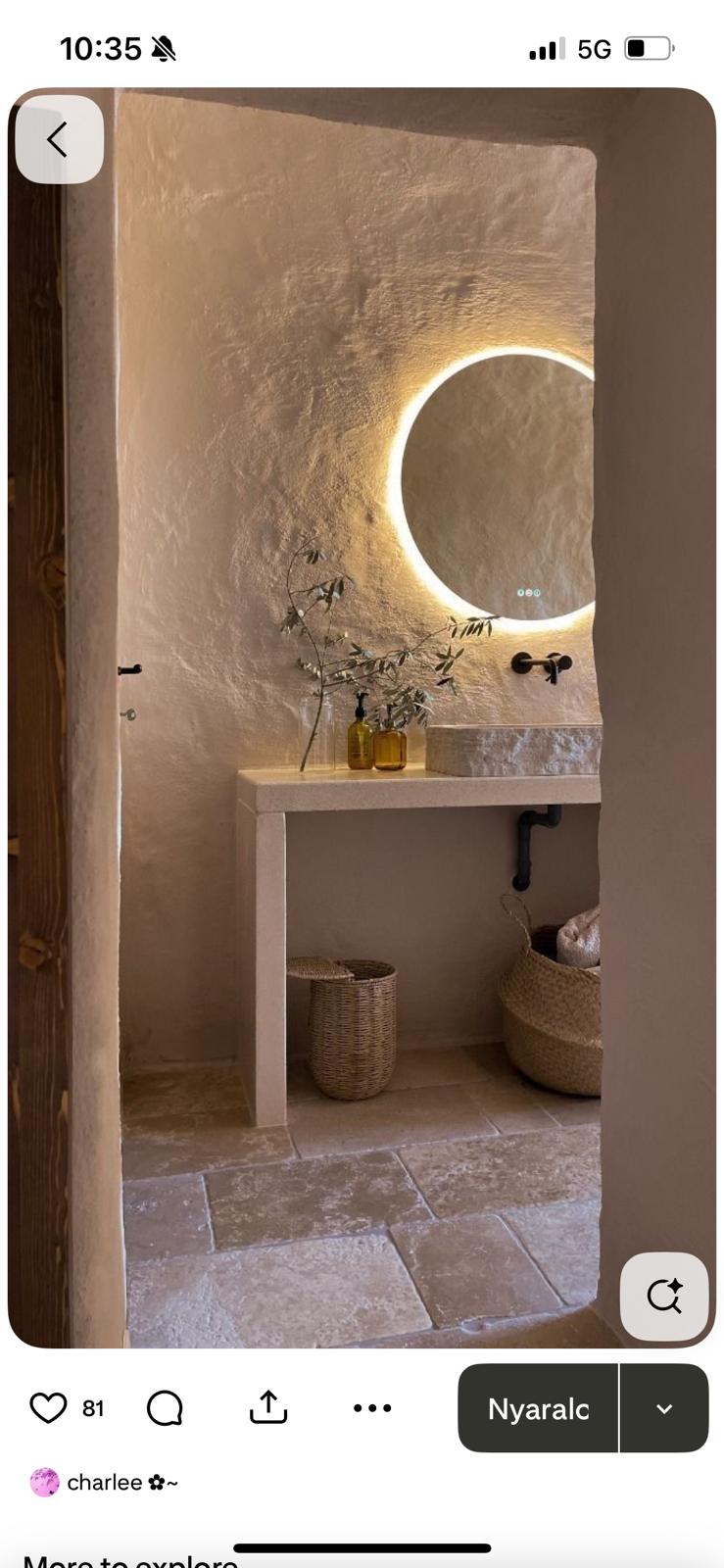
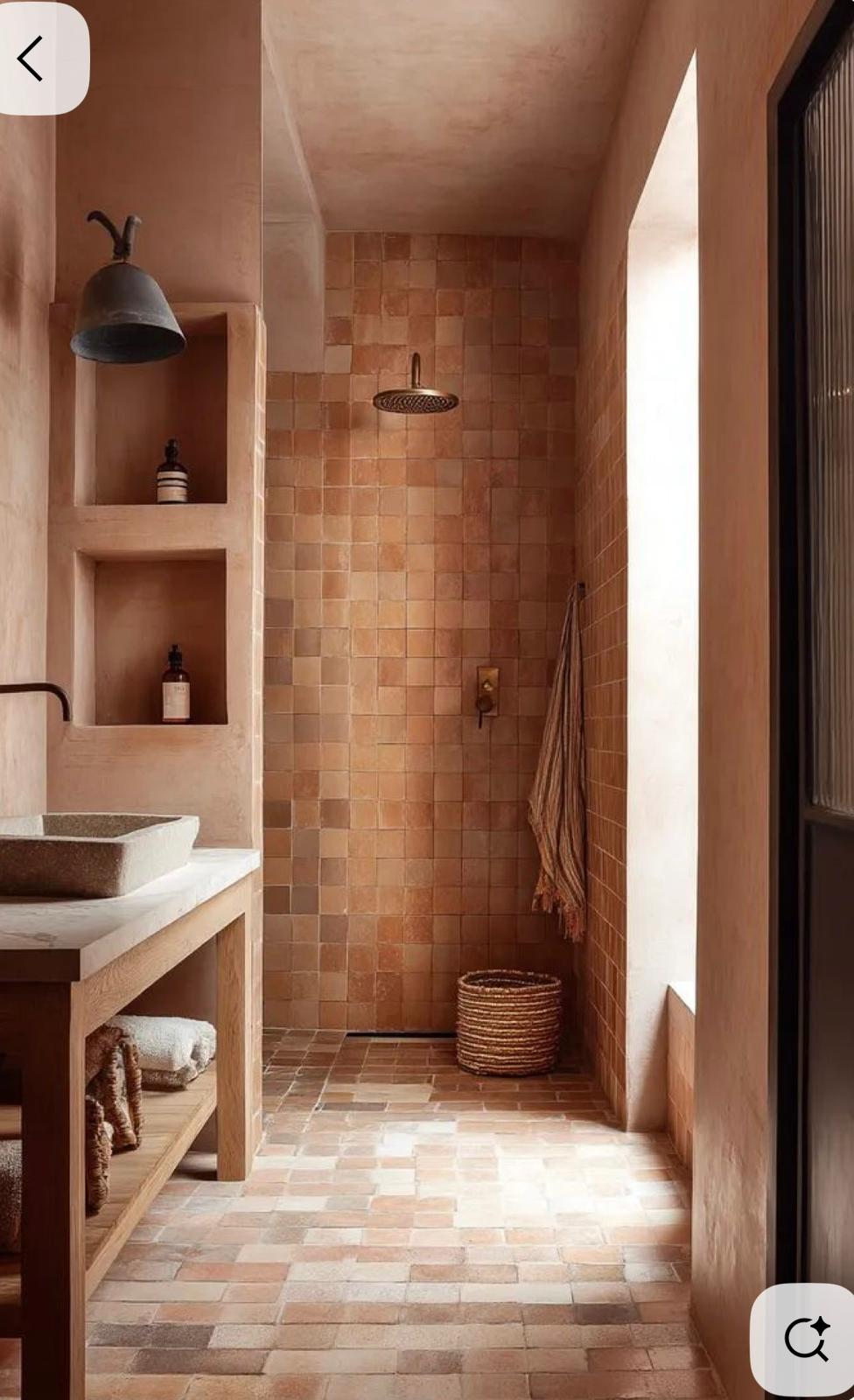
- Warm terracotta or clay-toned matte tiles in the shower and on the floors.
- Washed-plaster accent walls in a warm pink-terracotta, brass fixtures.
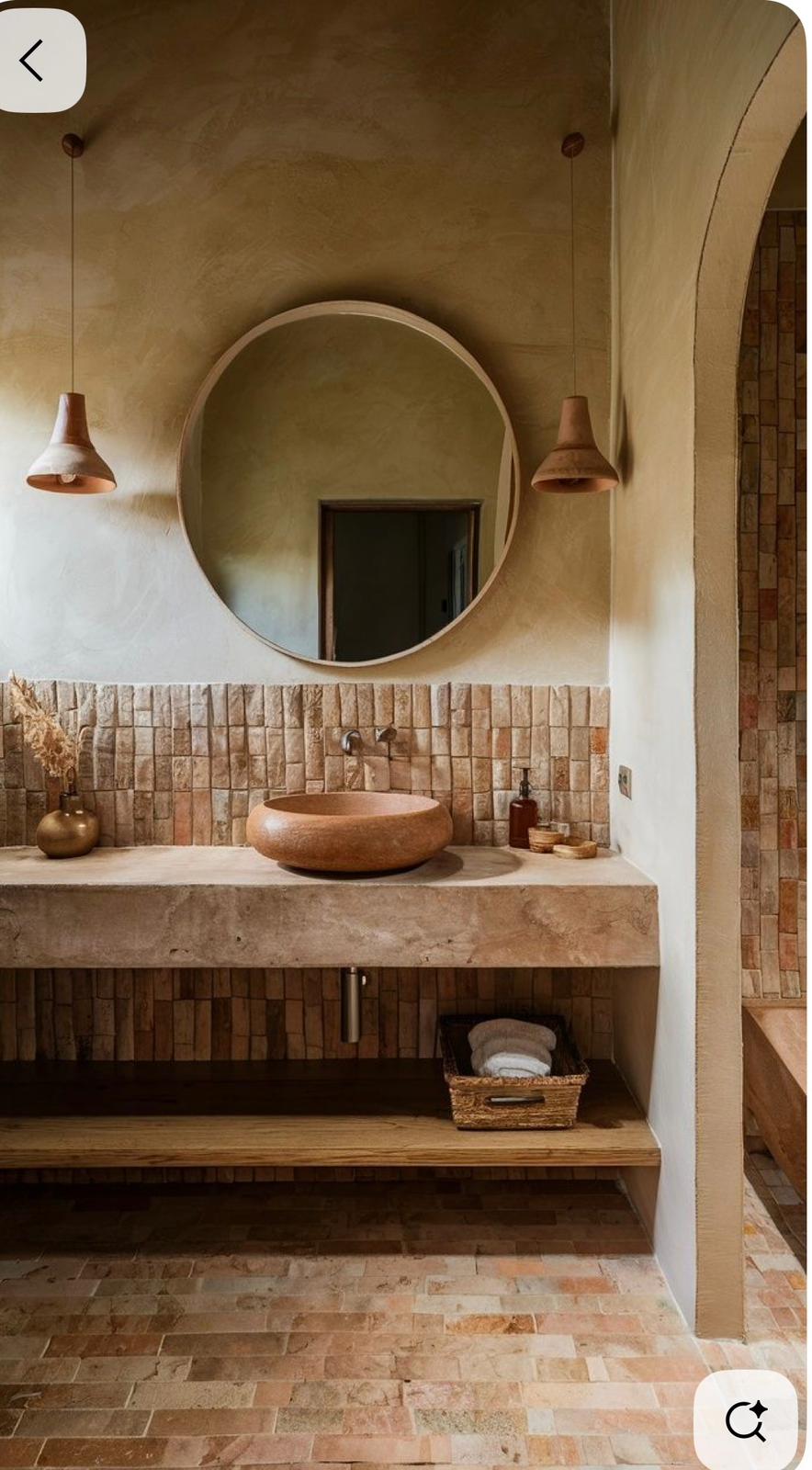
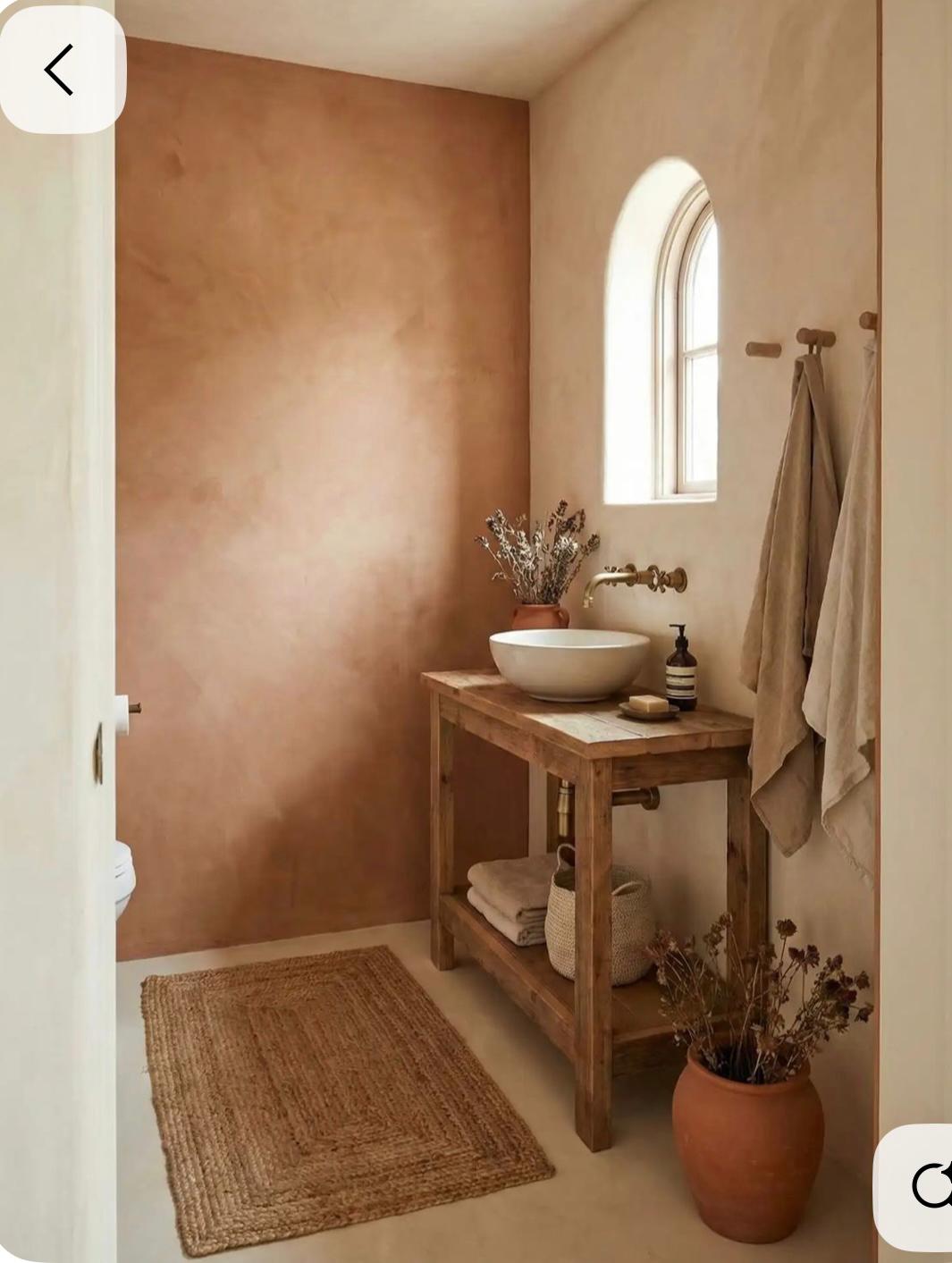
General bathroom inspiration
Master bedroom
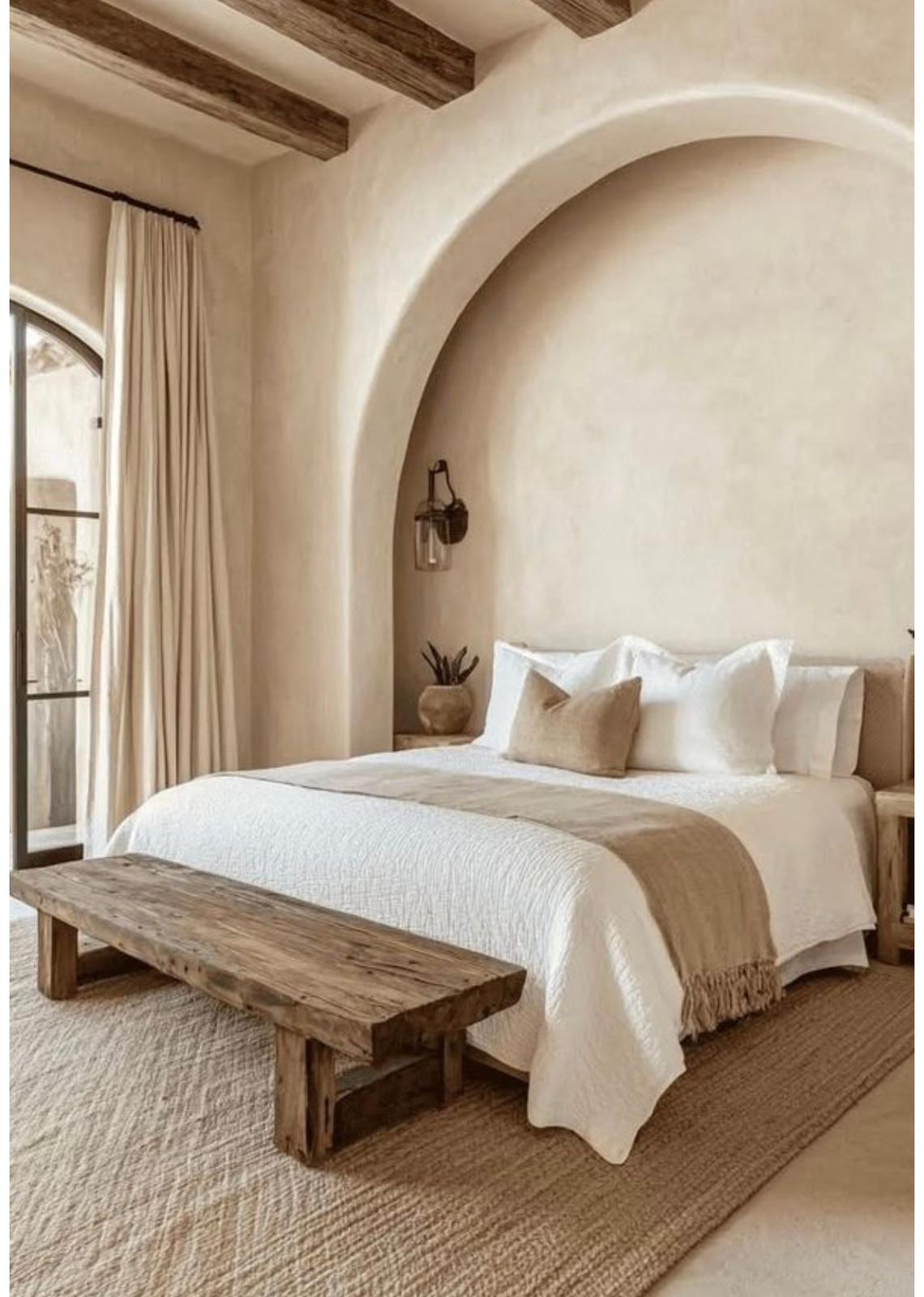
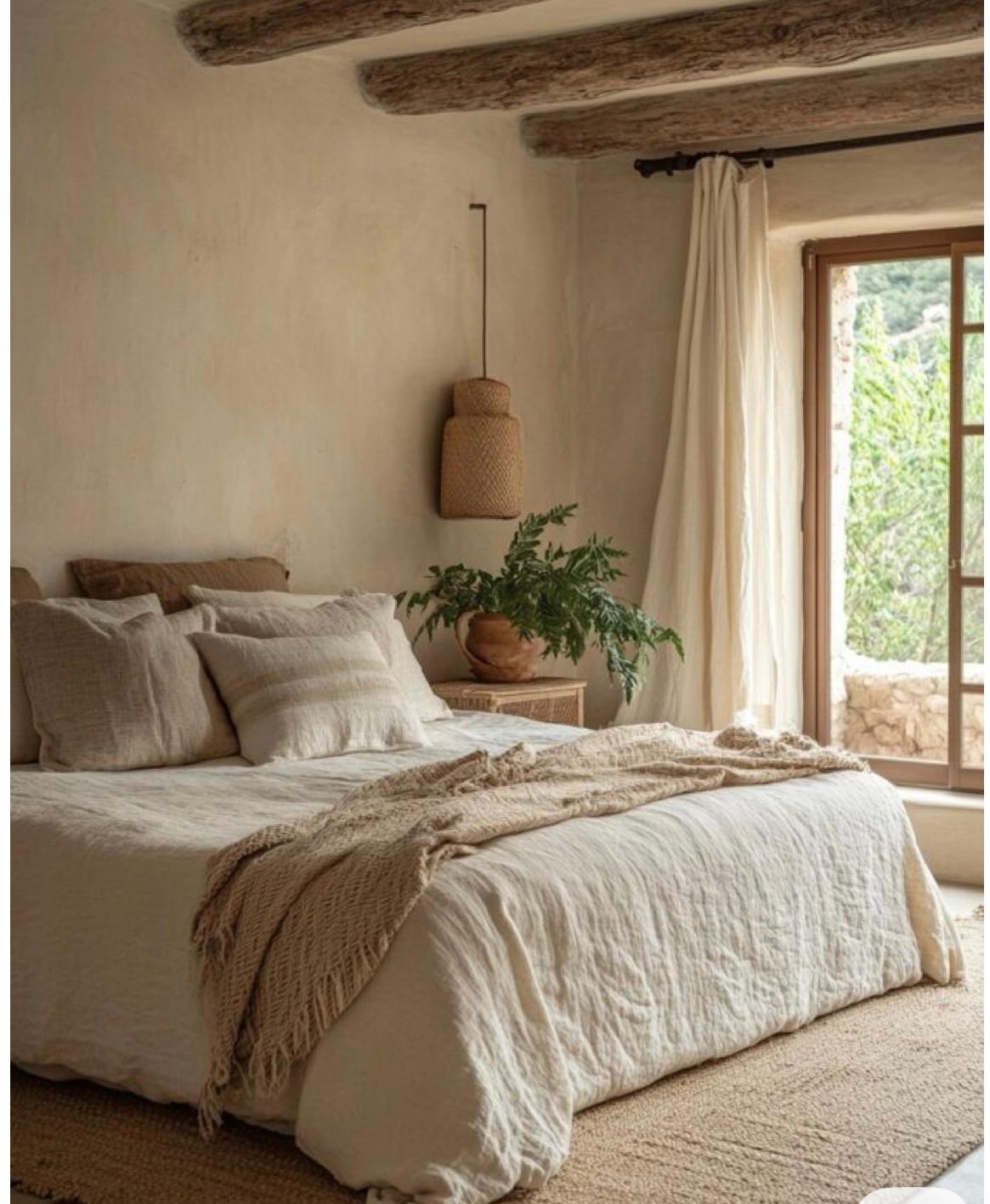
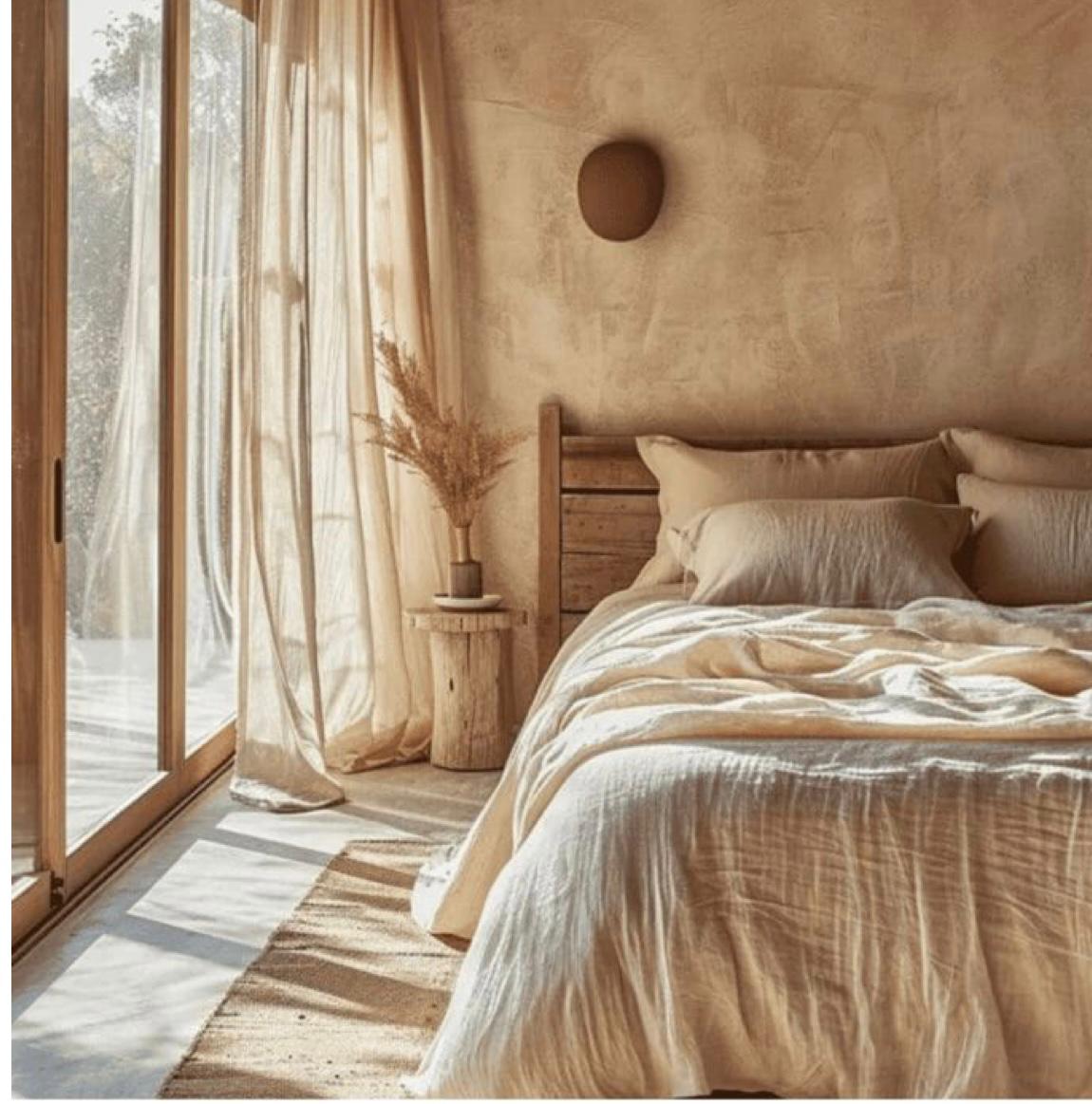
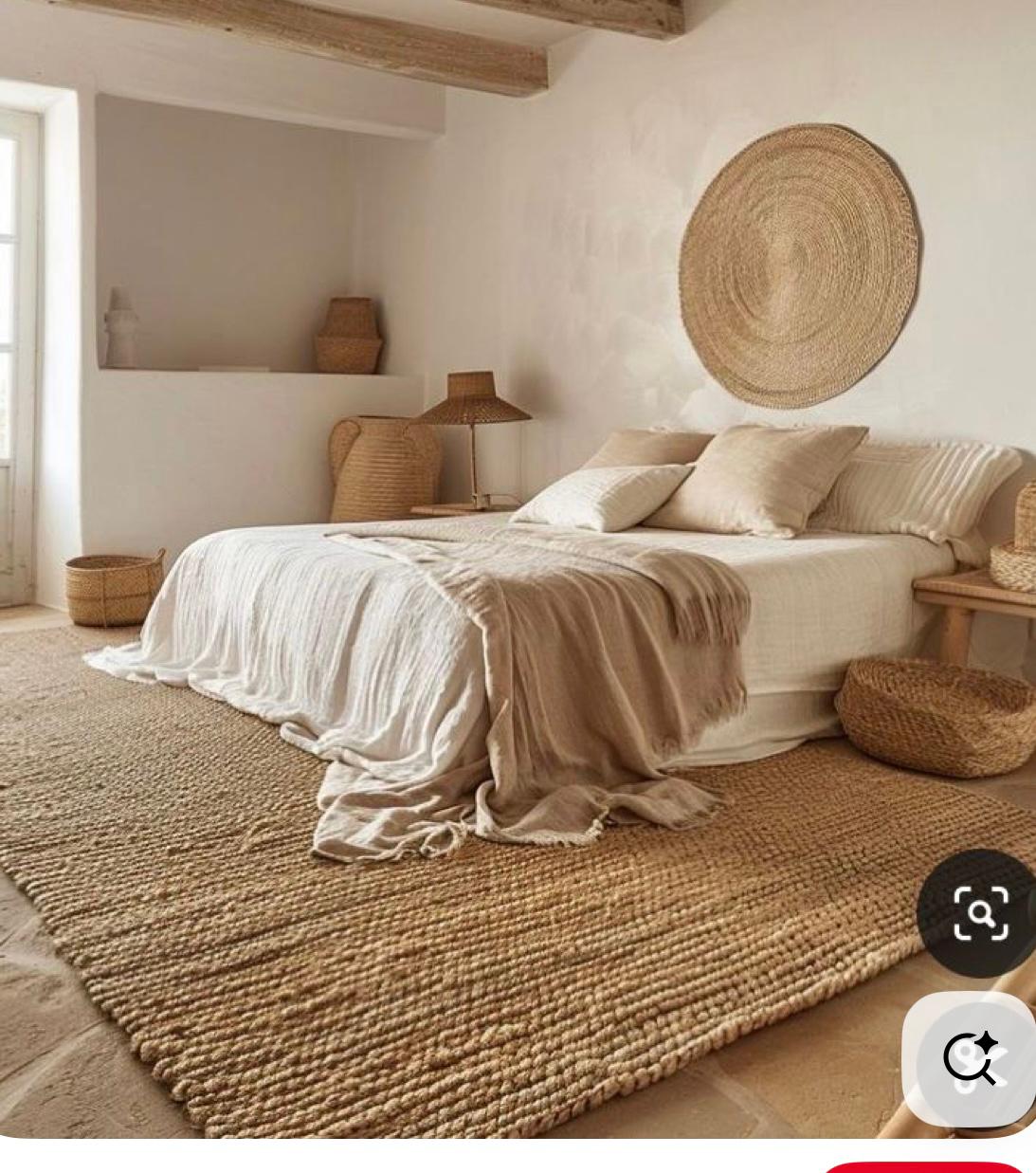
- Wabi-sabi calm: natural fabrics, plaster walls, nothing cluttered, with a reading corner and a small workspace.
- The headline act: the Balaton-facing wall opened up into a floor-to-ceiling panoramic window, so you see the lake from bed.
Sleeping area
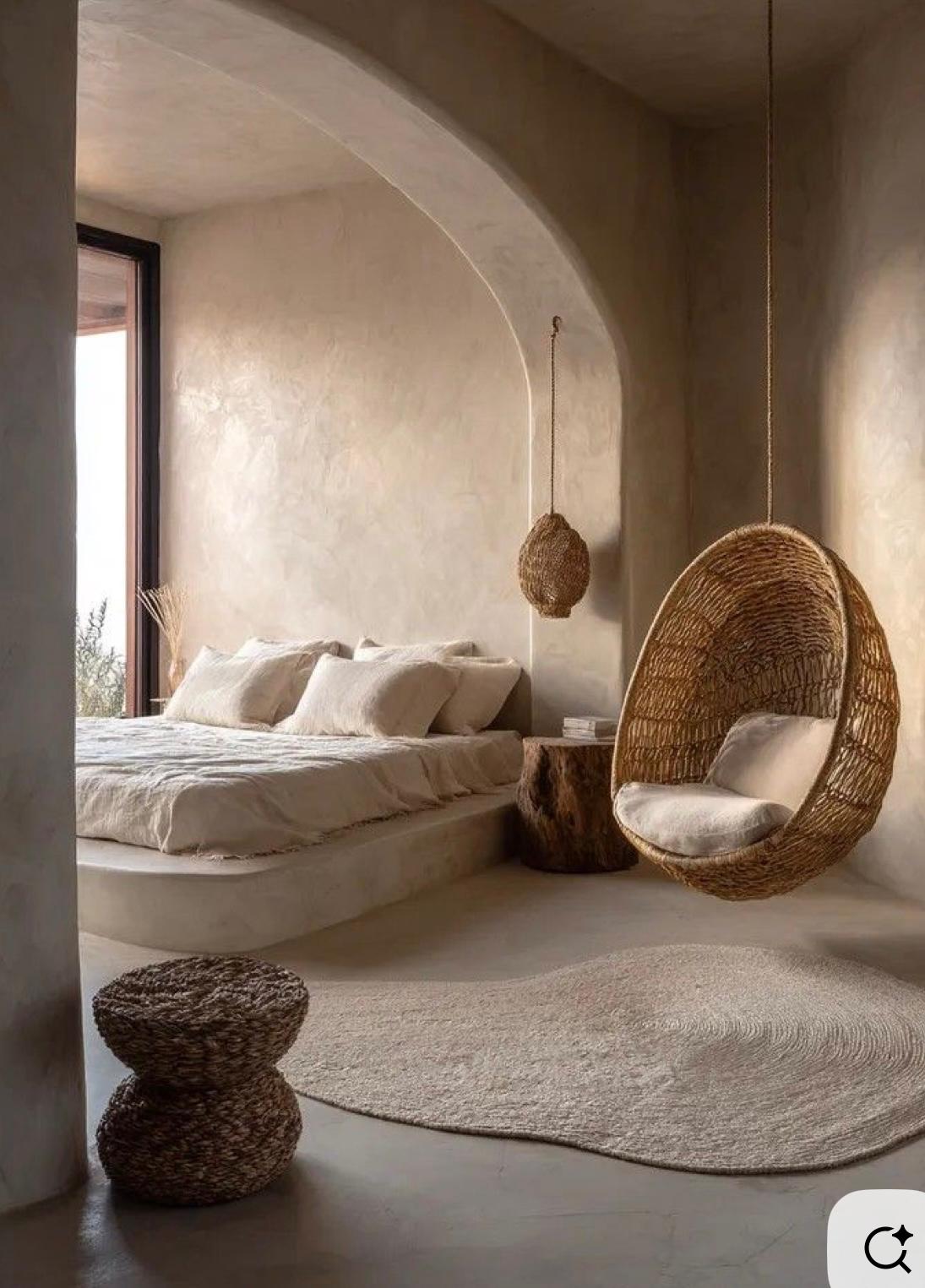
- Natural linen on a low platform or wood-frame bed. Twin beds that push together for couples.
- Plaster walls, possibly with an arched alcove behind the bed.
- A swing chair or daybed for reading, and rattan or woven bedside lights.
Workspace
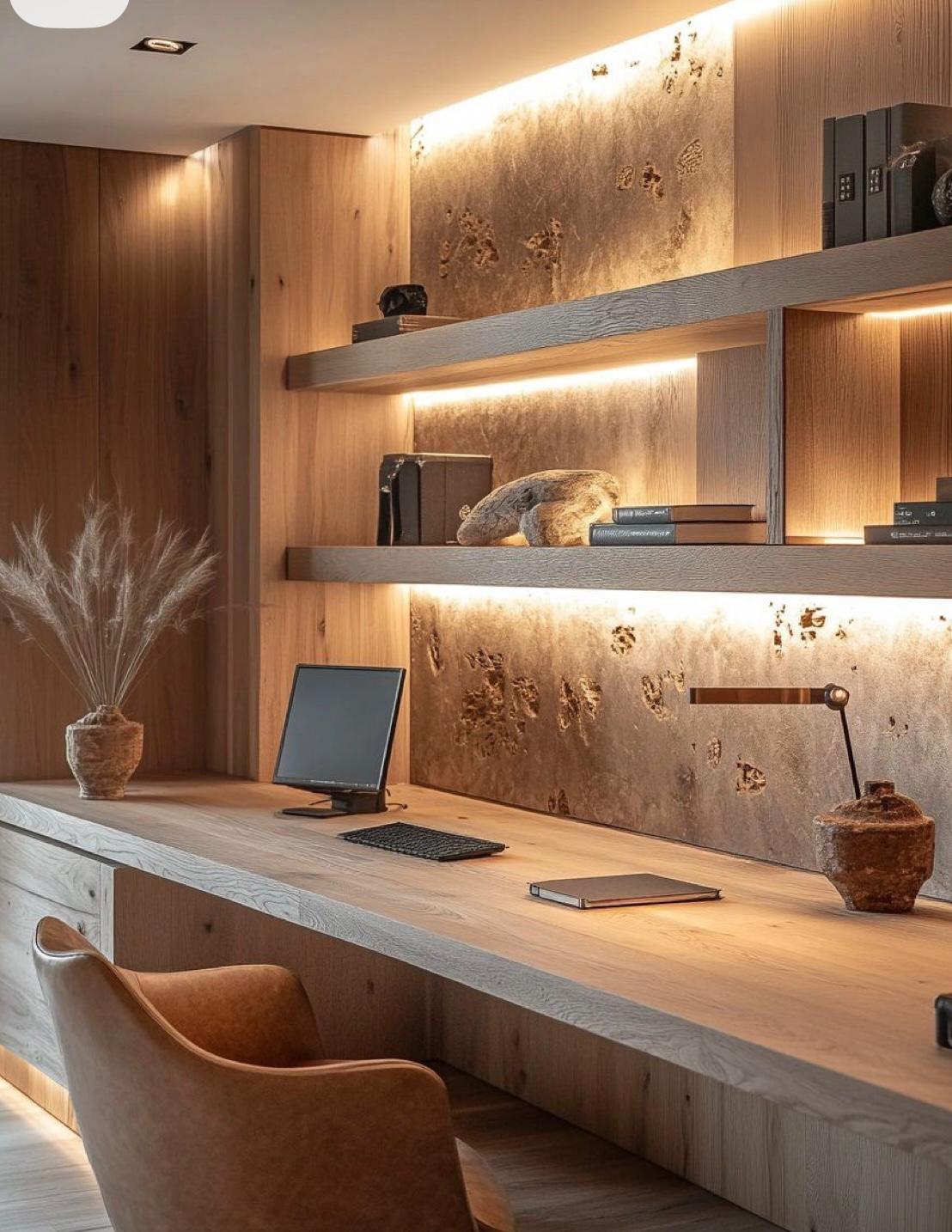
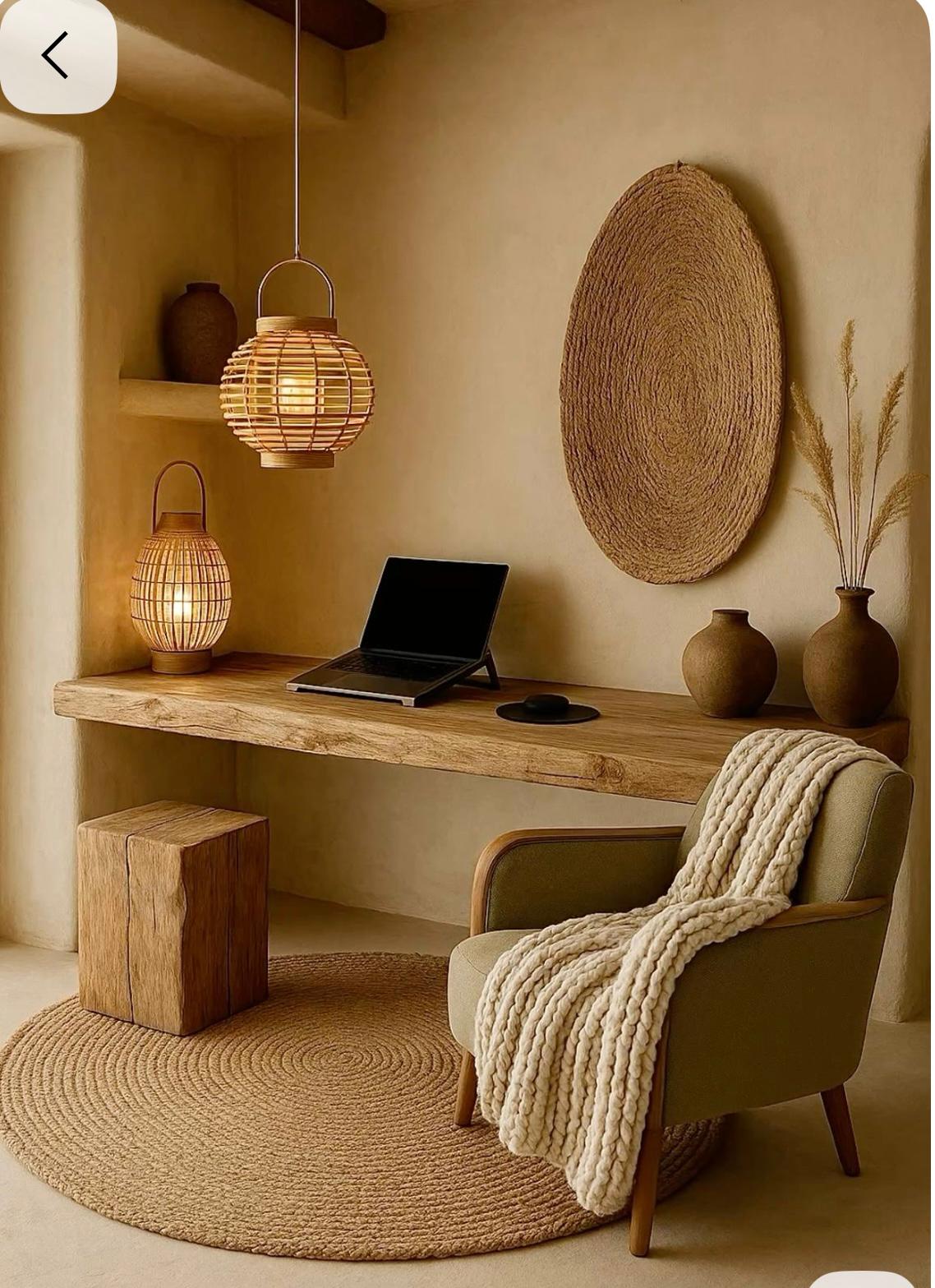
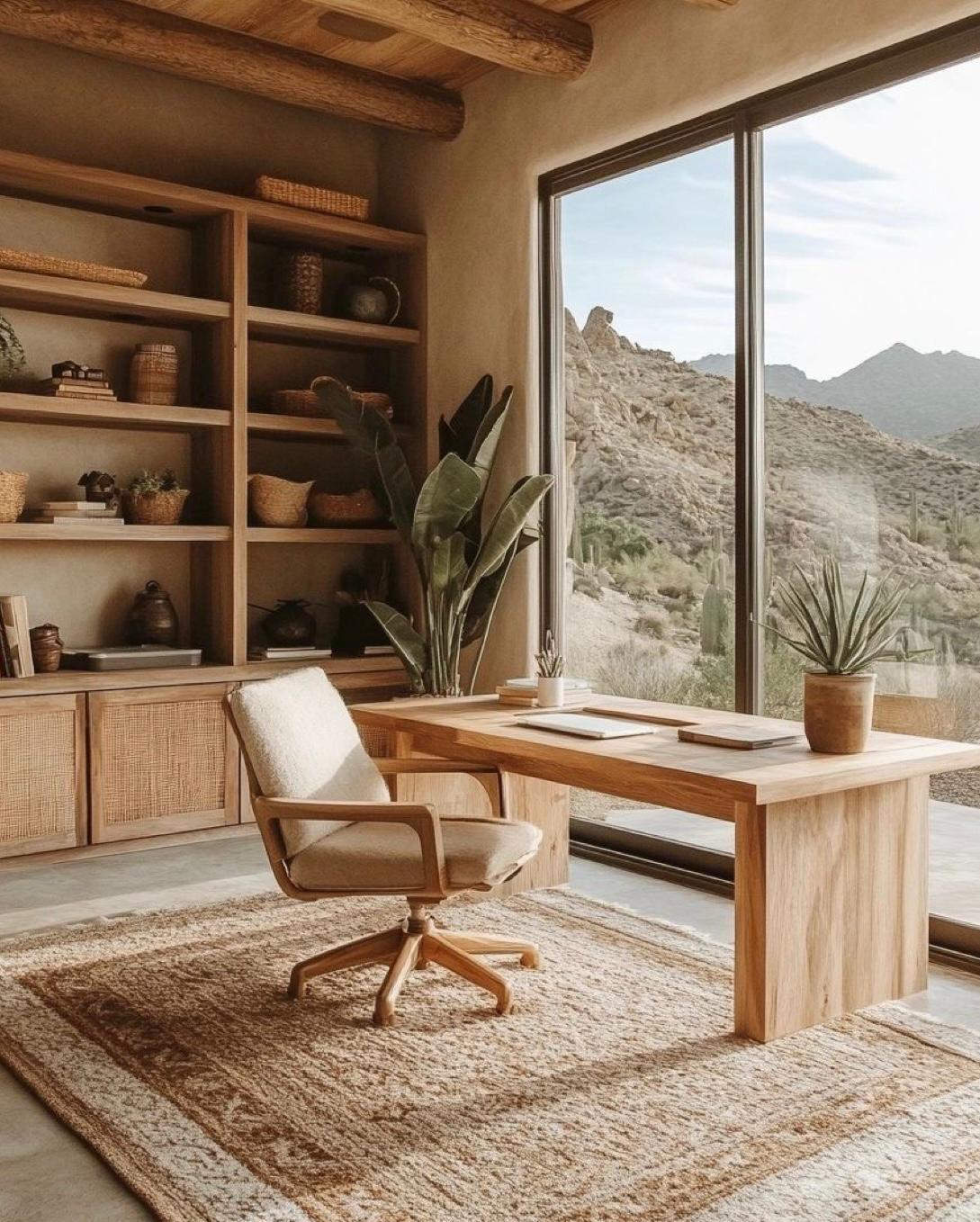
- This is also the only quiet workspace in the house, for a quick check-in or an hour with a view.
- A floating wooden or built-in desk, a comfortable mid-century chair, a shelf or two above.
- Warm task lighting: a pendant or a wall-mounted reading lamp.
Wardrobe
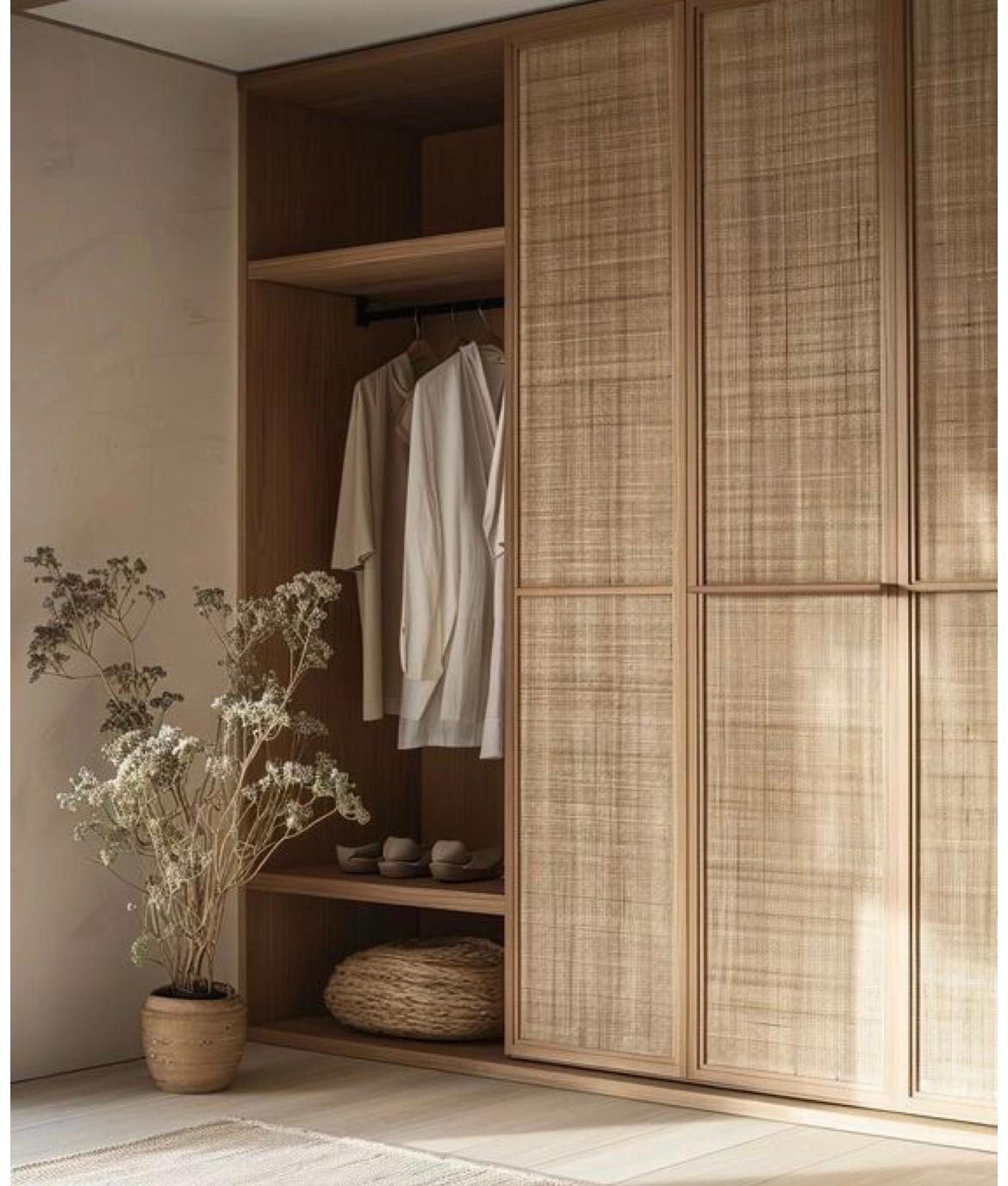
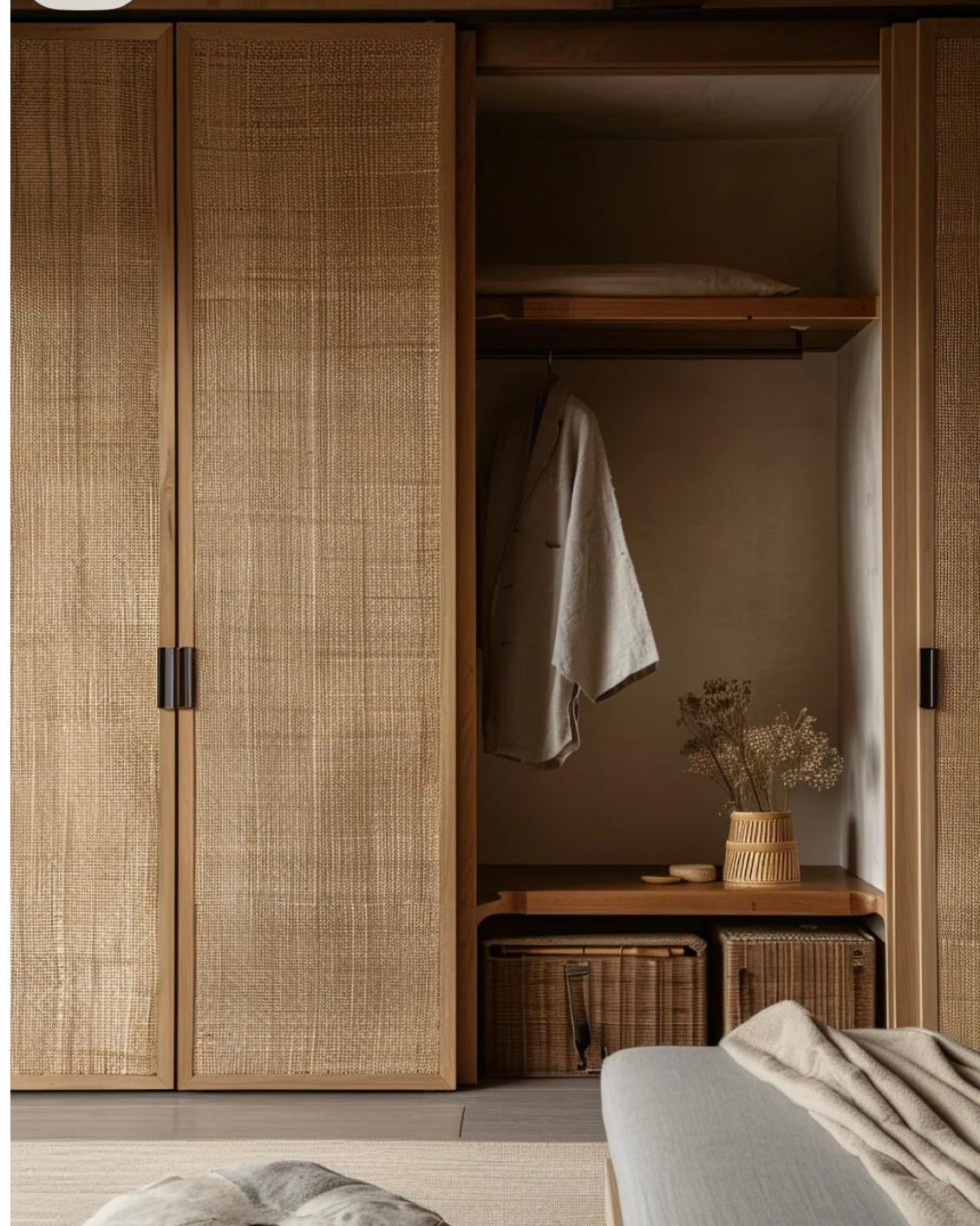
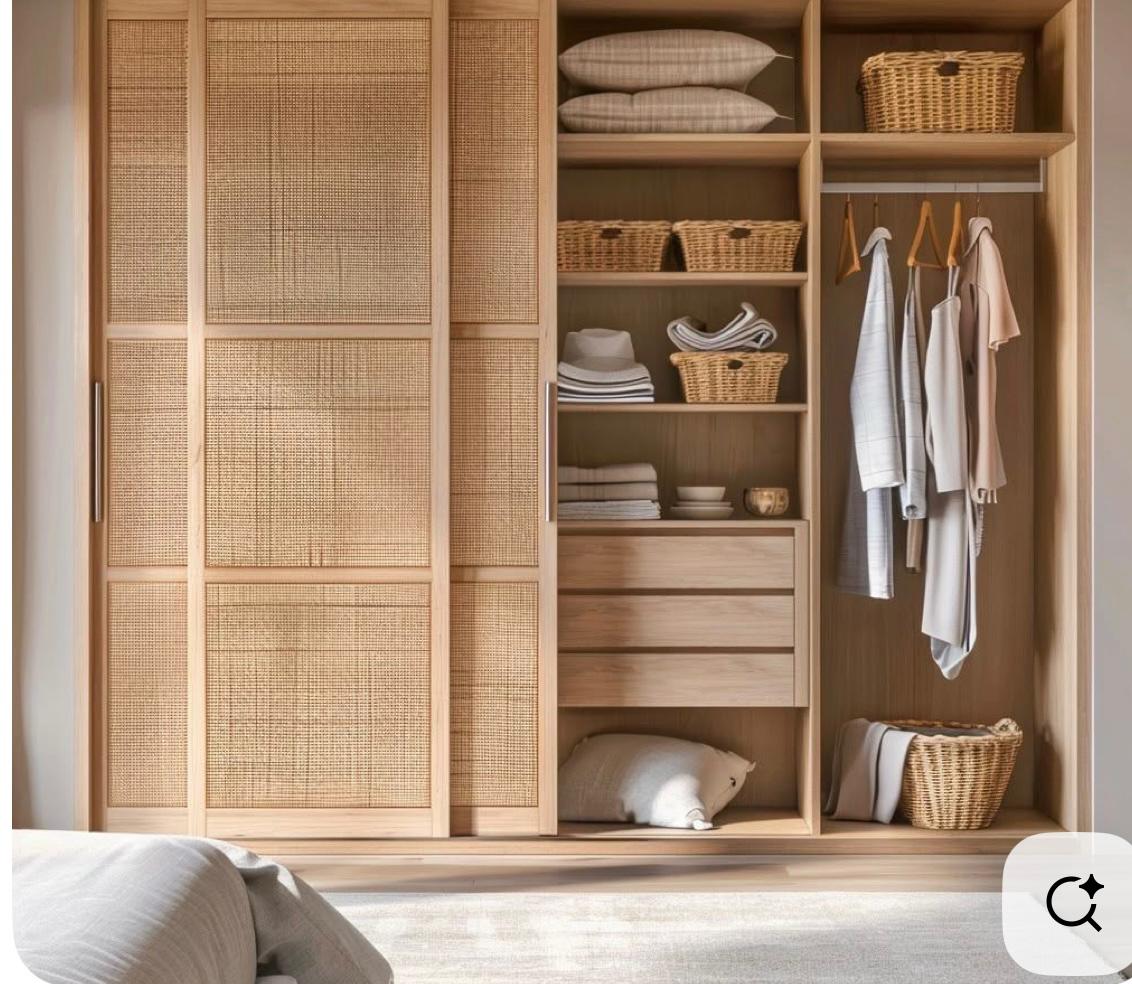
- A full built-in wardrobe along the left wall, with rattan or cane-panel sliding doors.
- Inside: hanging rail, shelves, drawers and baskets.
- Some sections lock, so the Airbnb supplies stay separate from everything guests can reach.
Guest bedroom
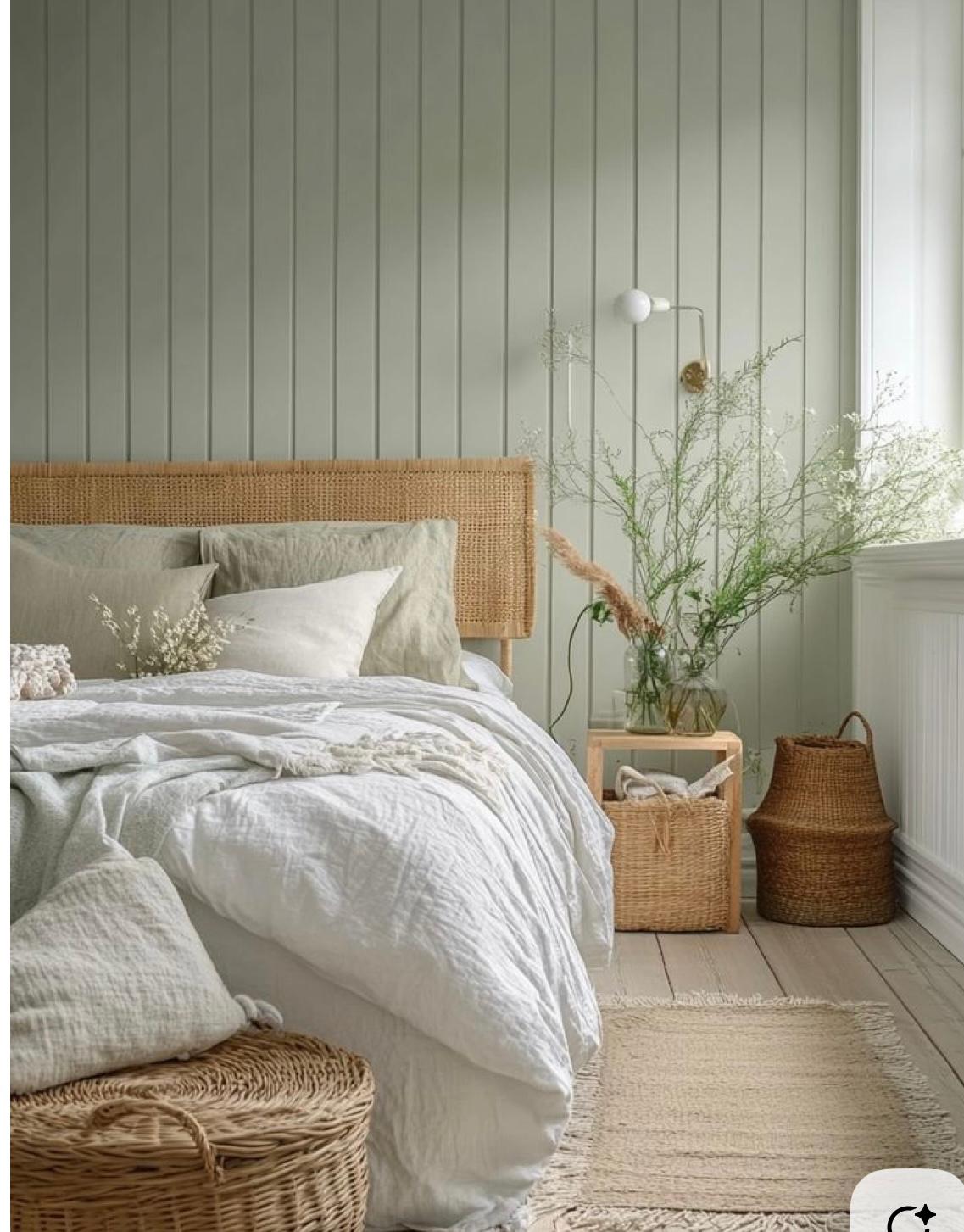
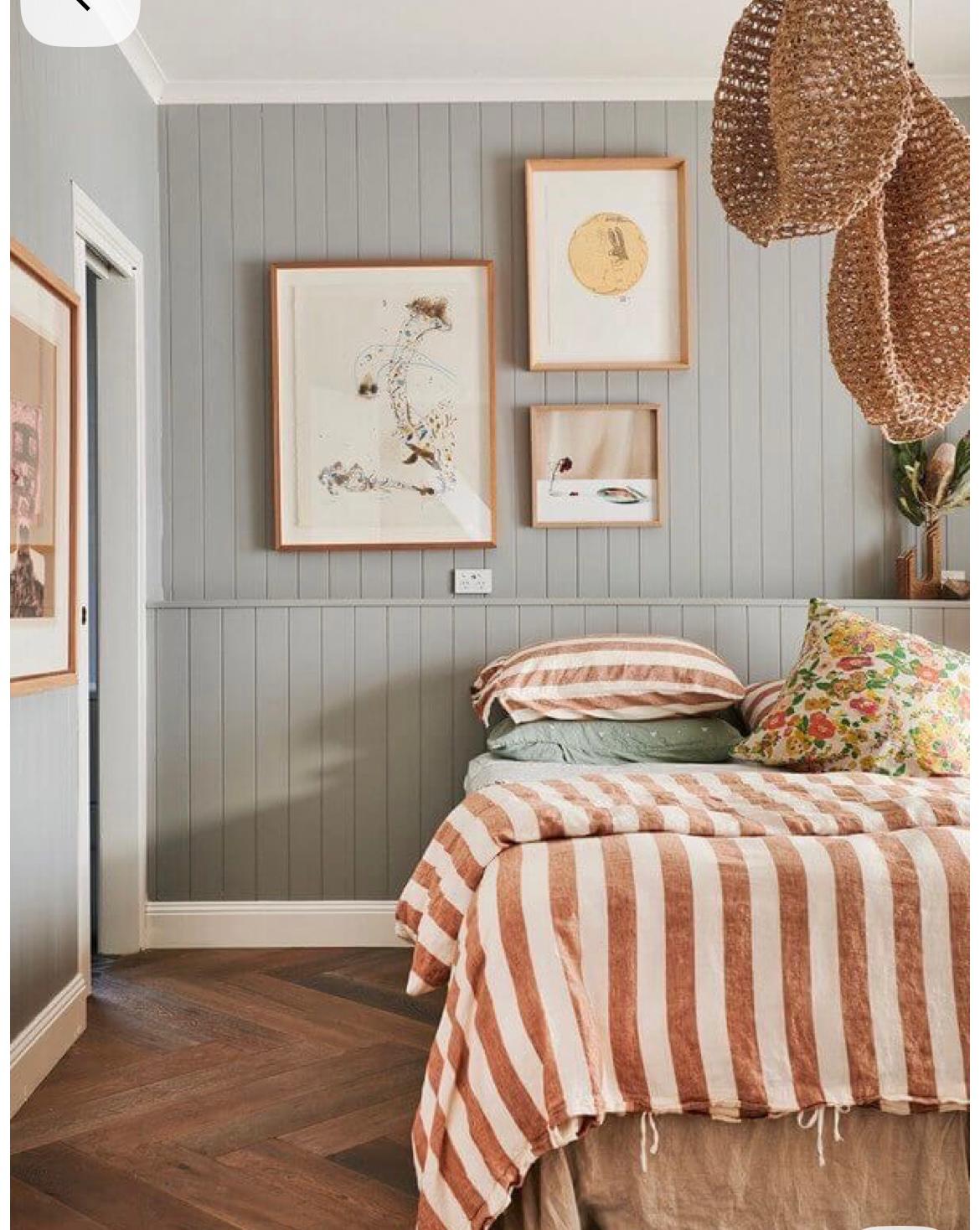
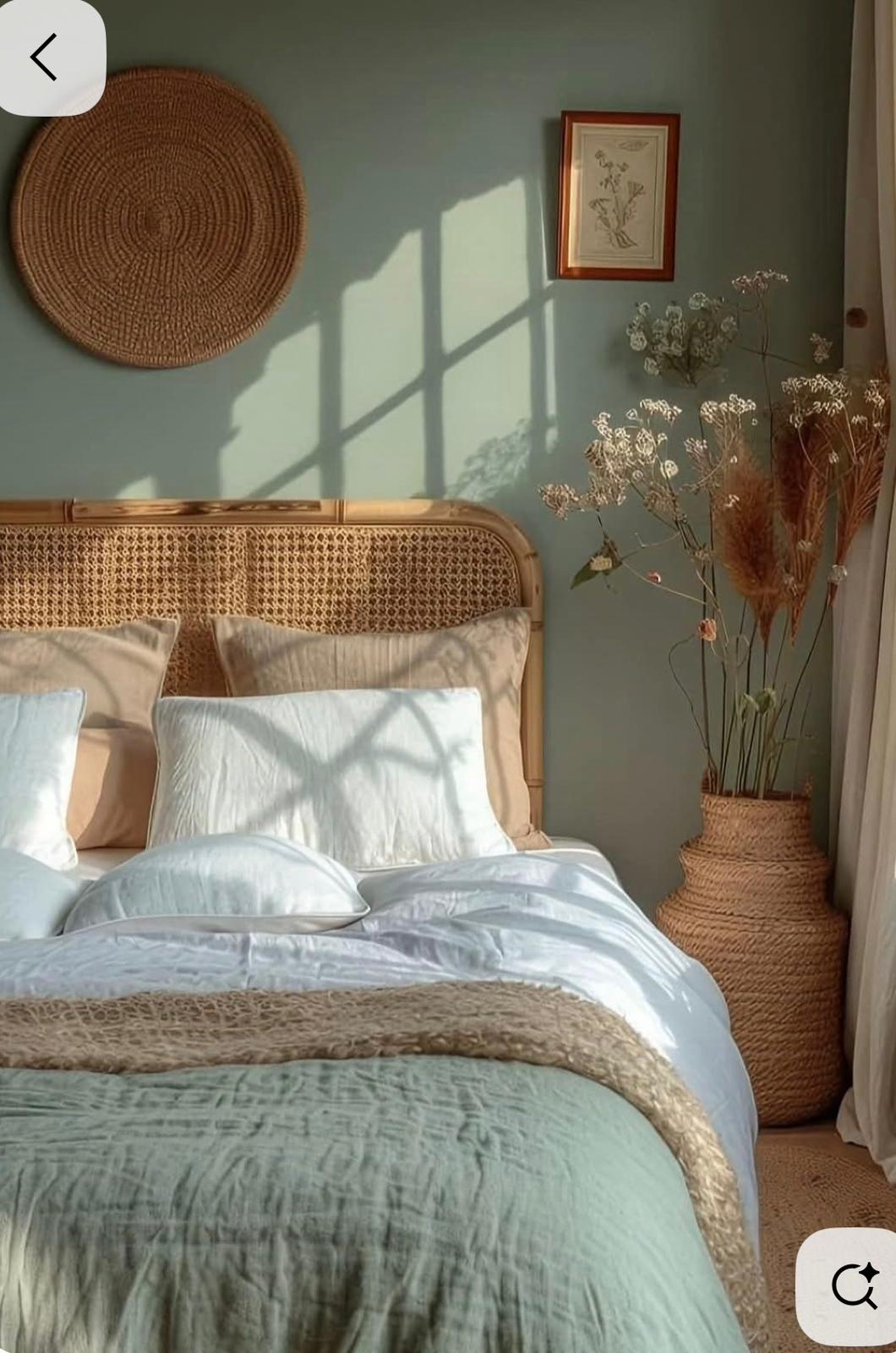
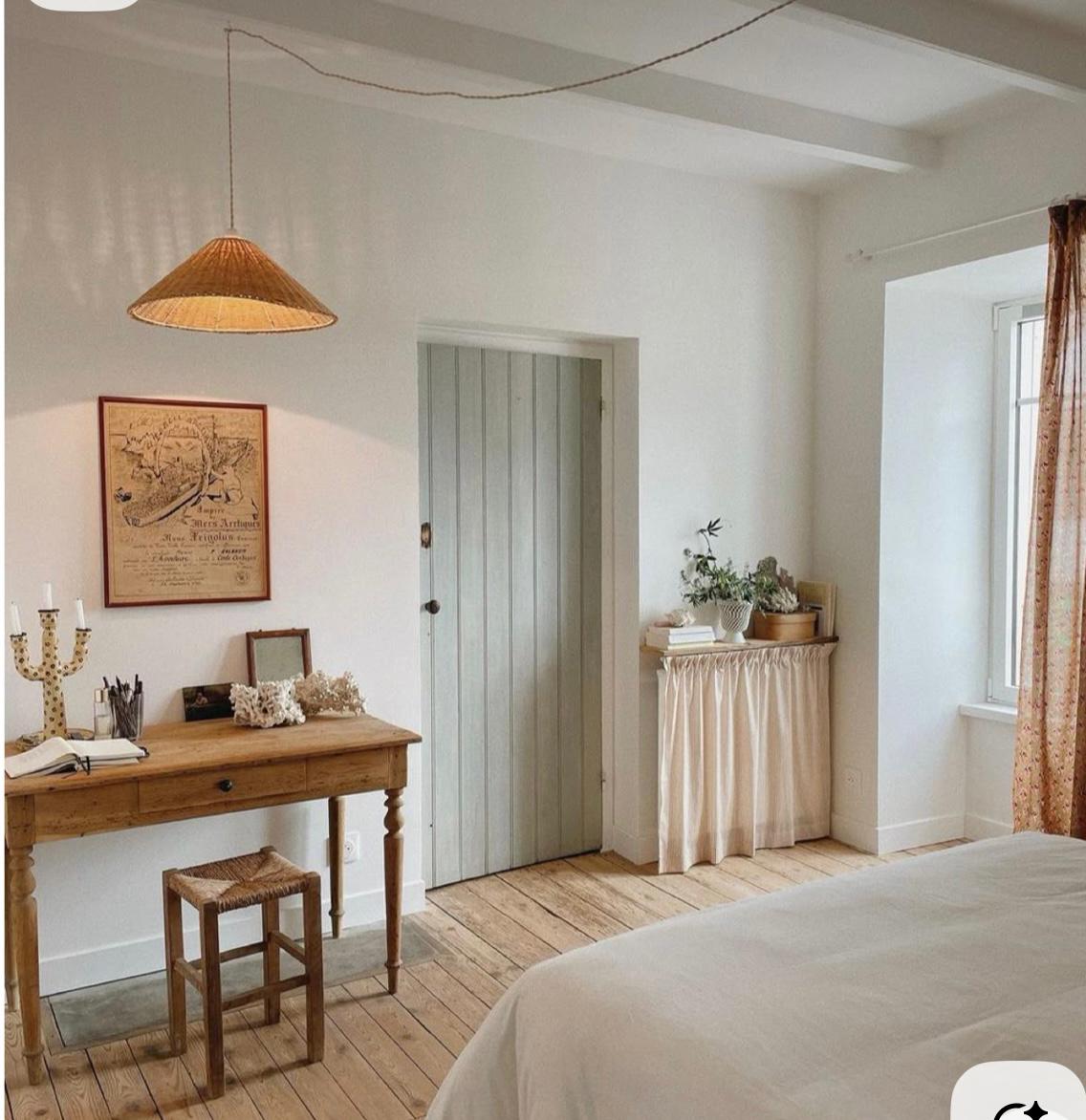
- Same natural base as the rest of the house, with more colour and personality. The sage green carries over from one of the bathrooms.
- Sage or olive tongue-and-groove panelling, a rattan or cane headboard, natural linen bedding with striped or patterned accents.
- A woven pendant, simple wooden furniture, botanical prints and a natural-fibre rug.
Kids room
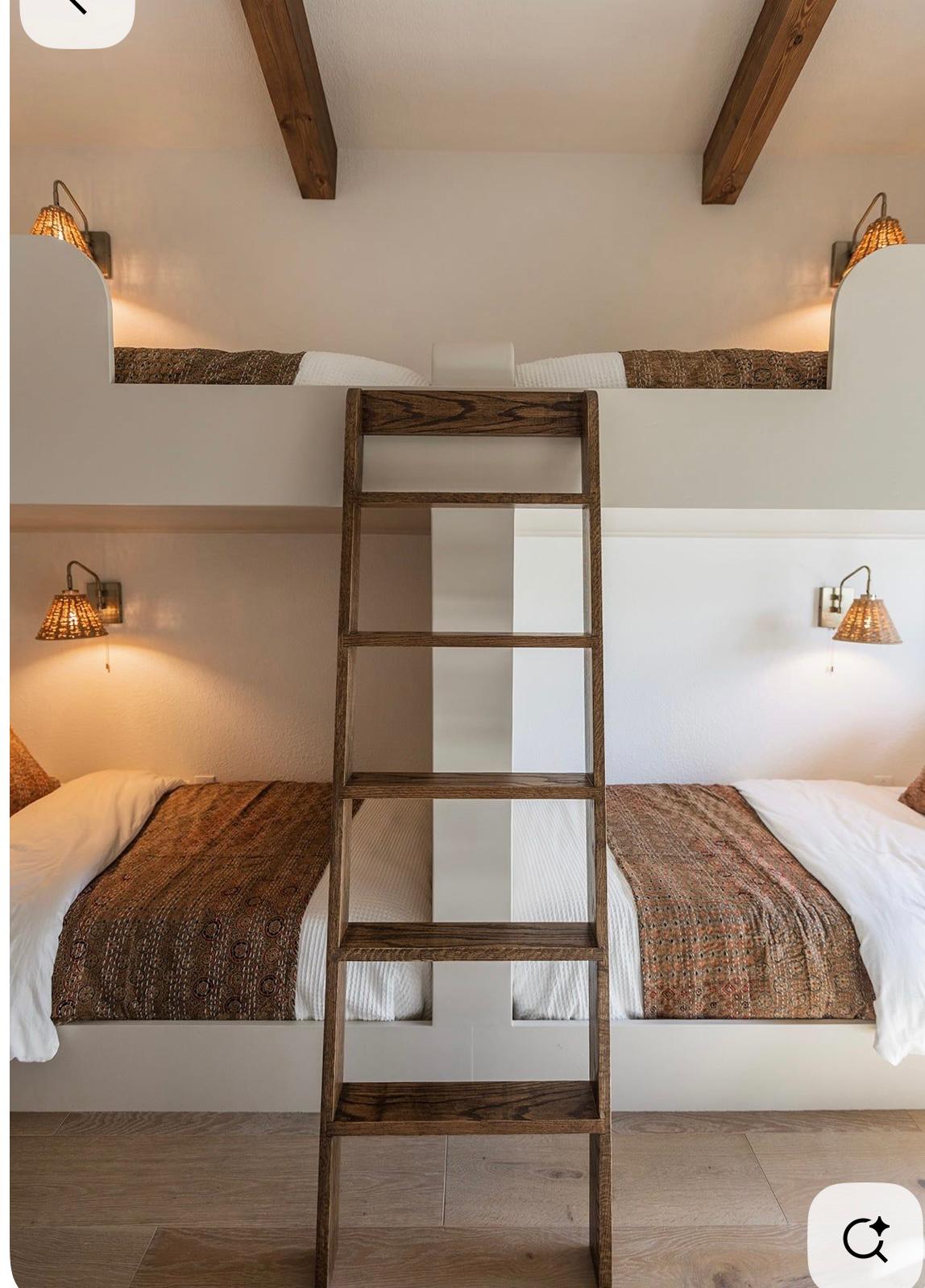
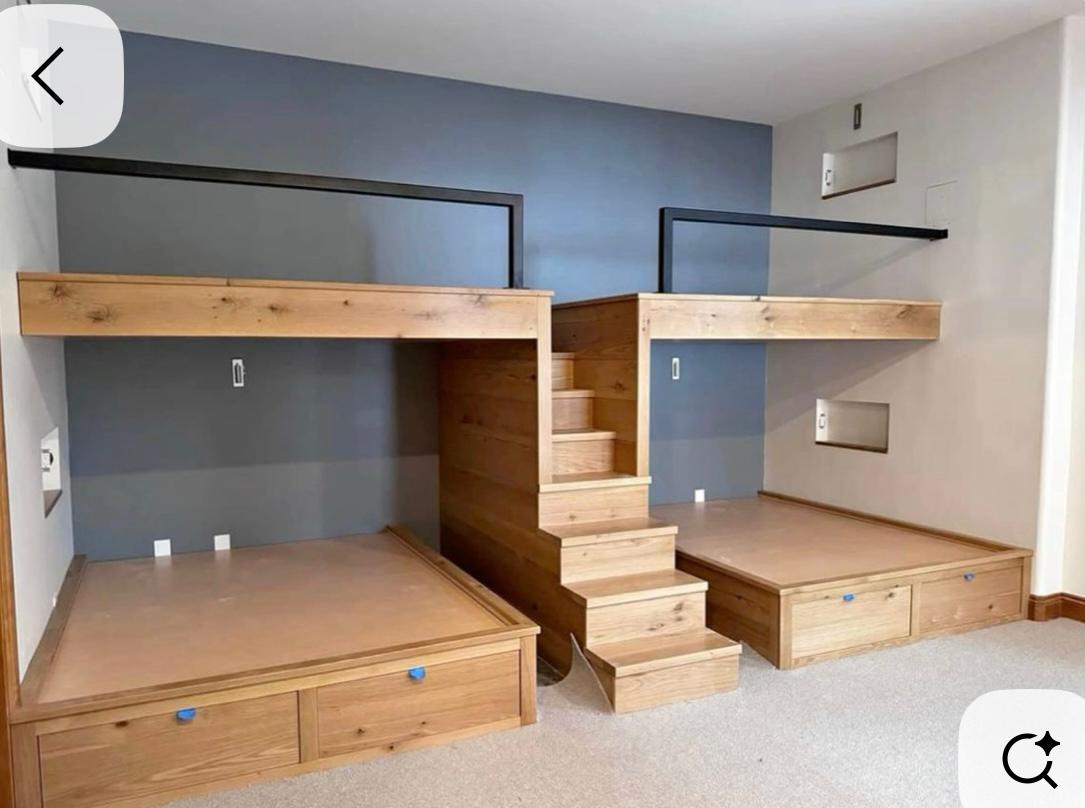
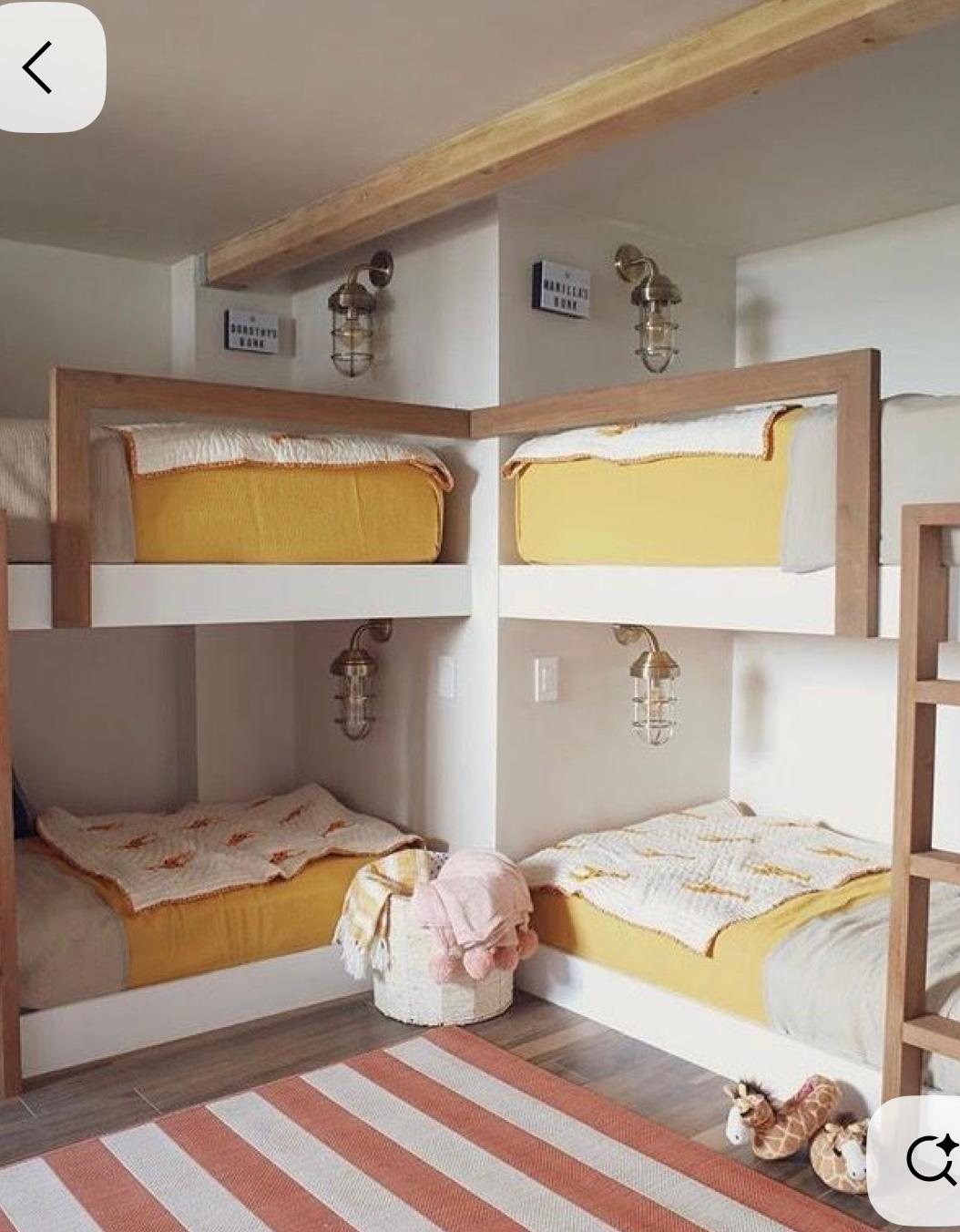
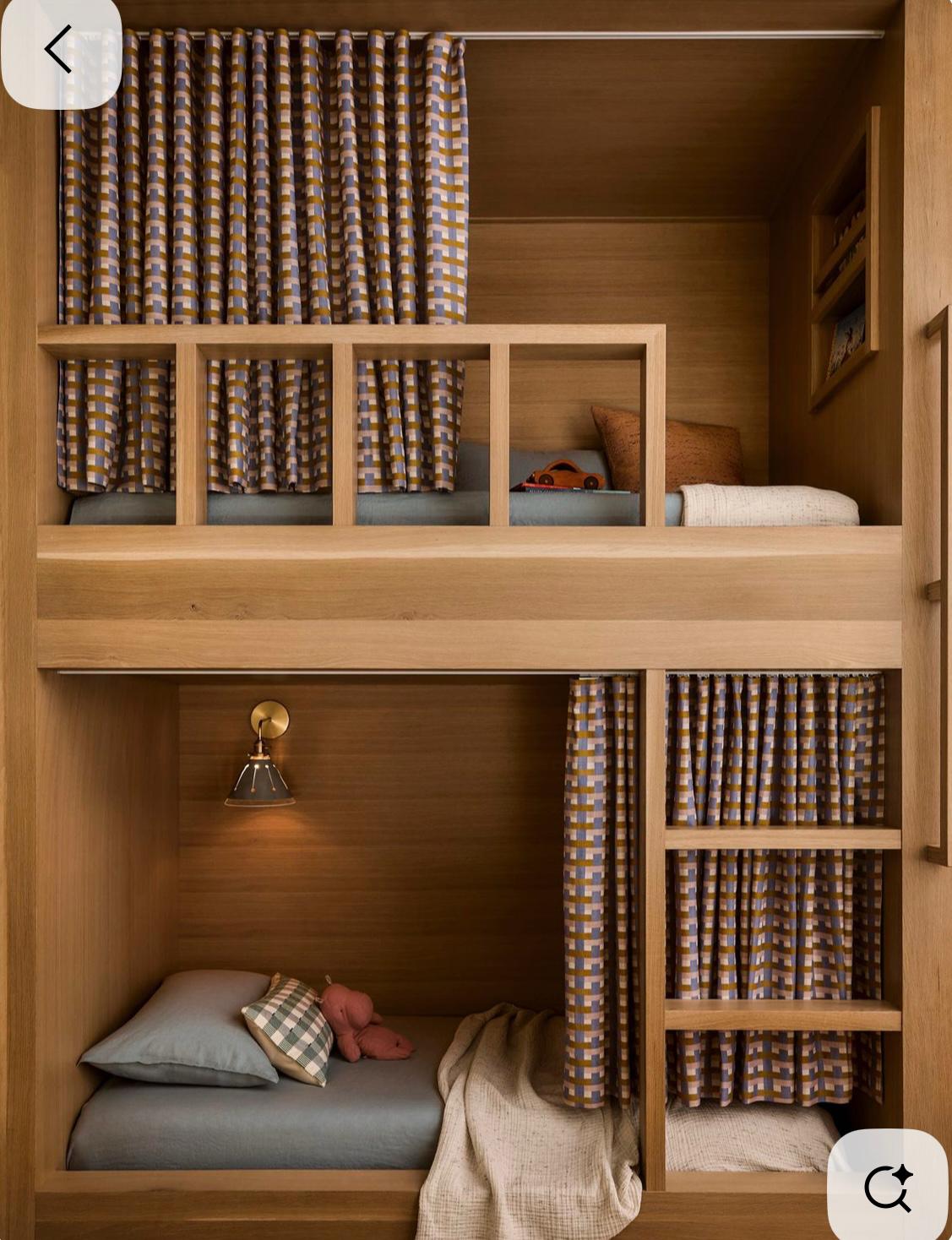
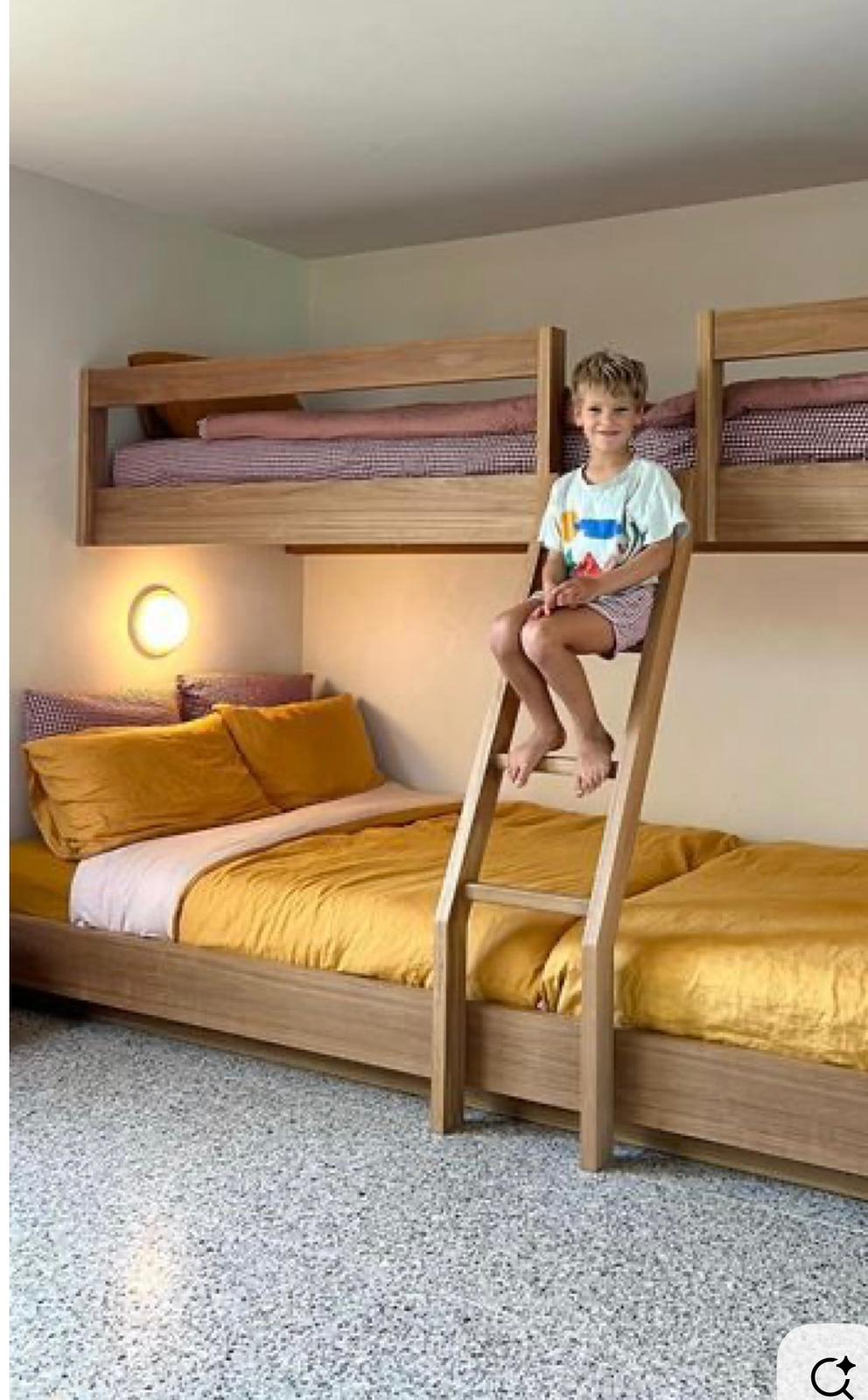
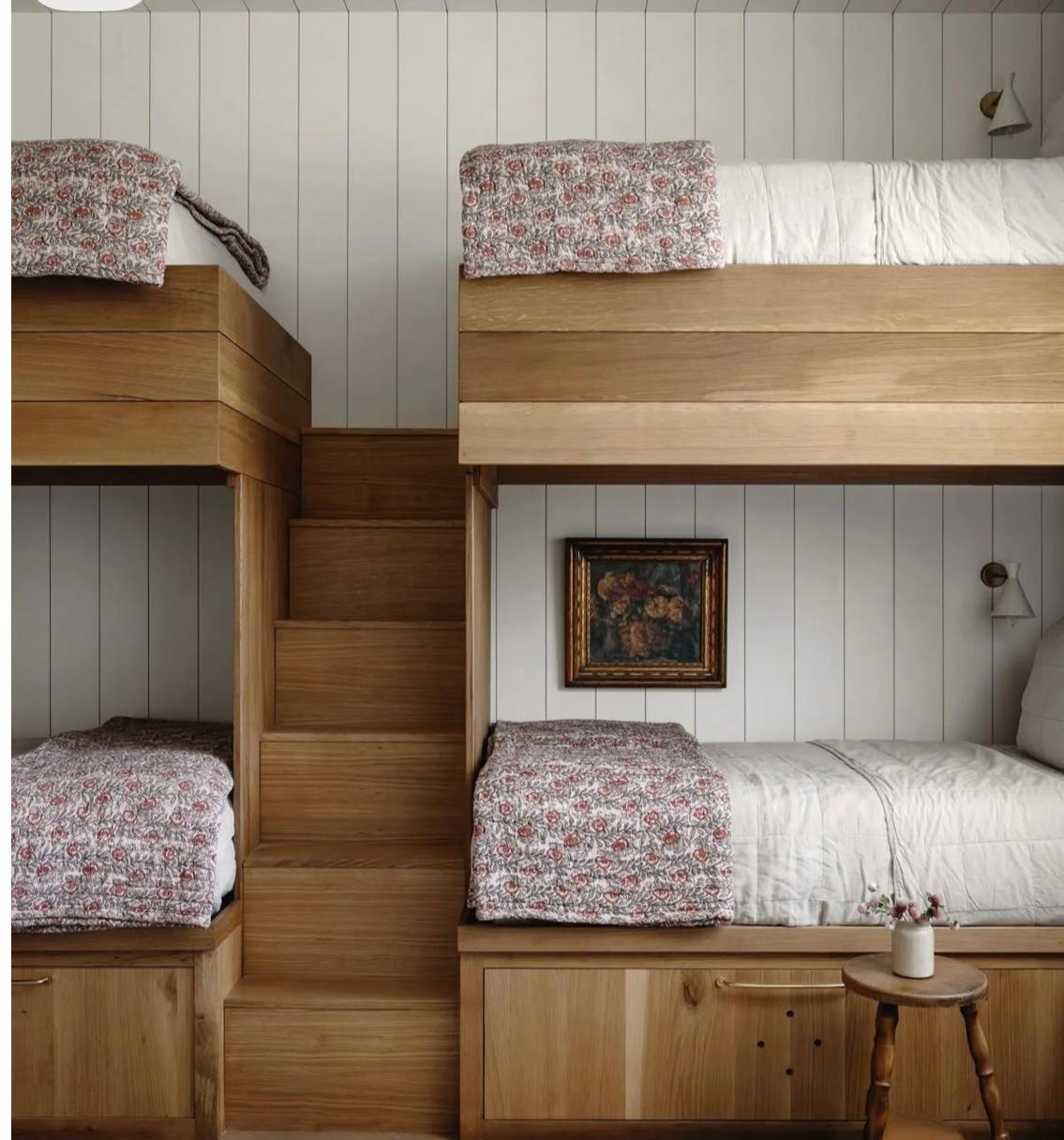
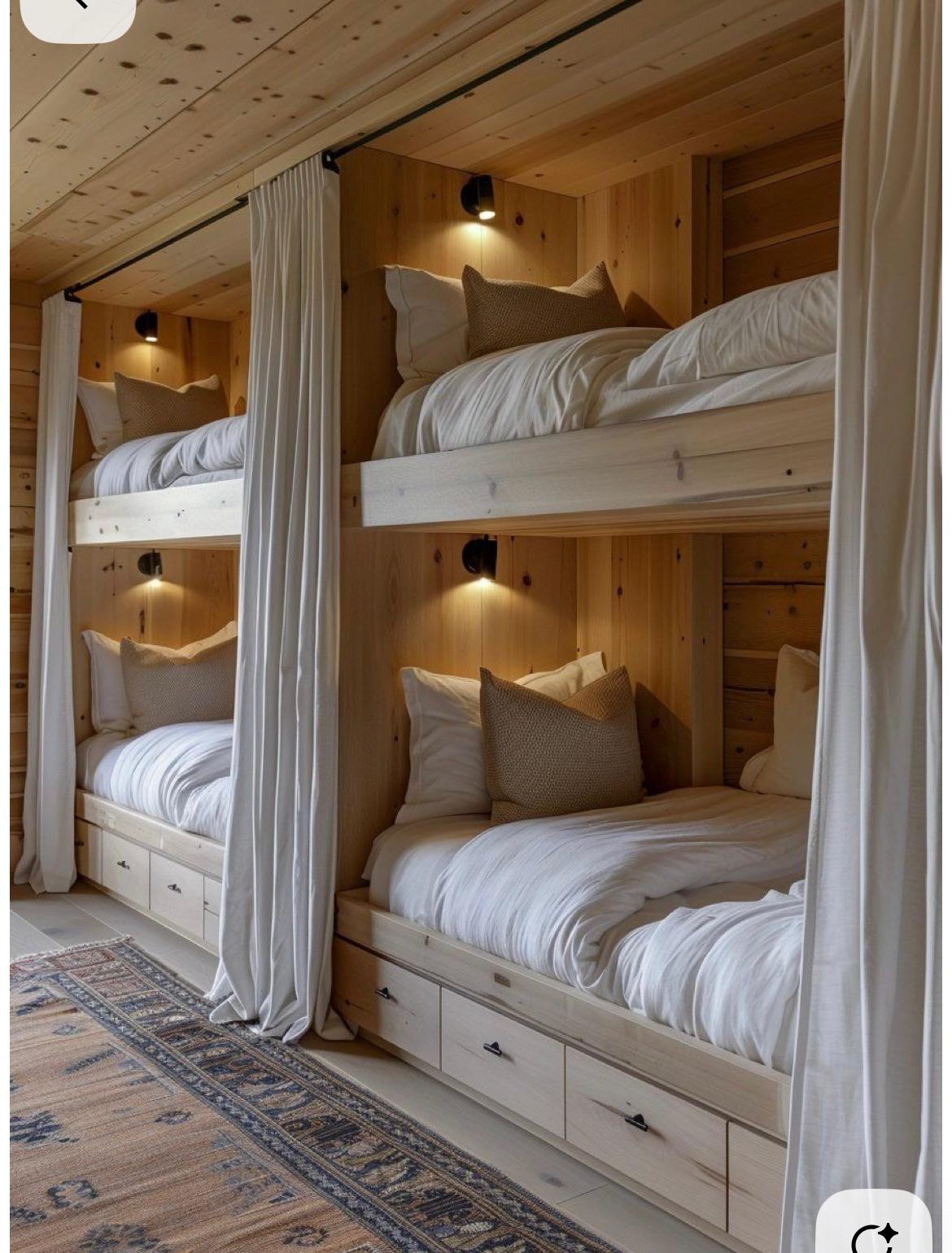
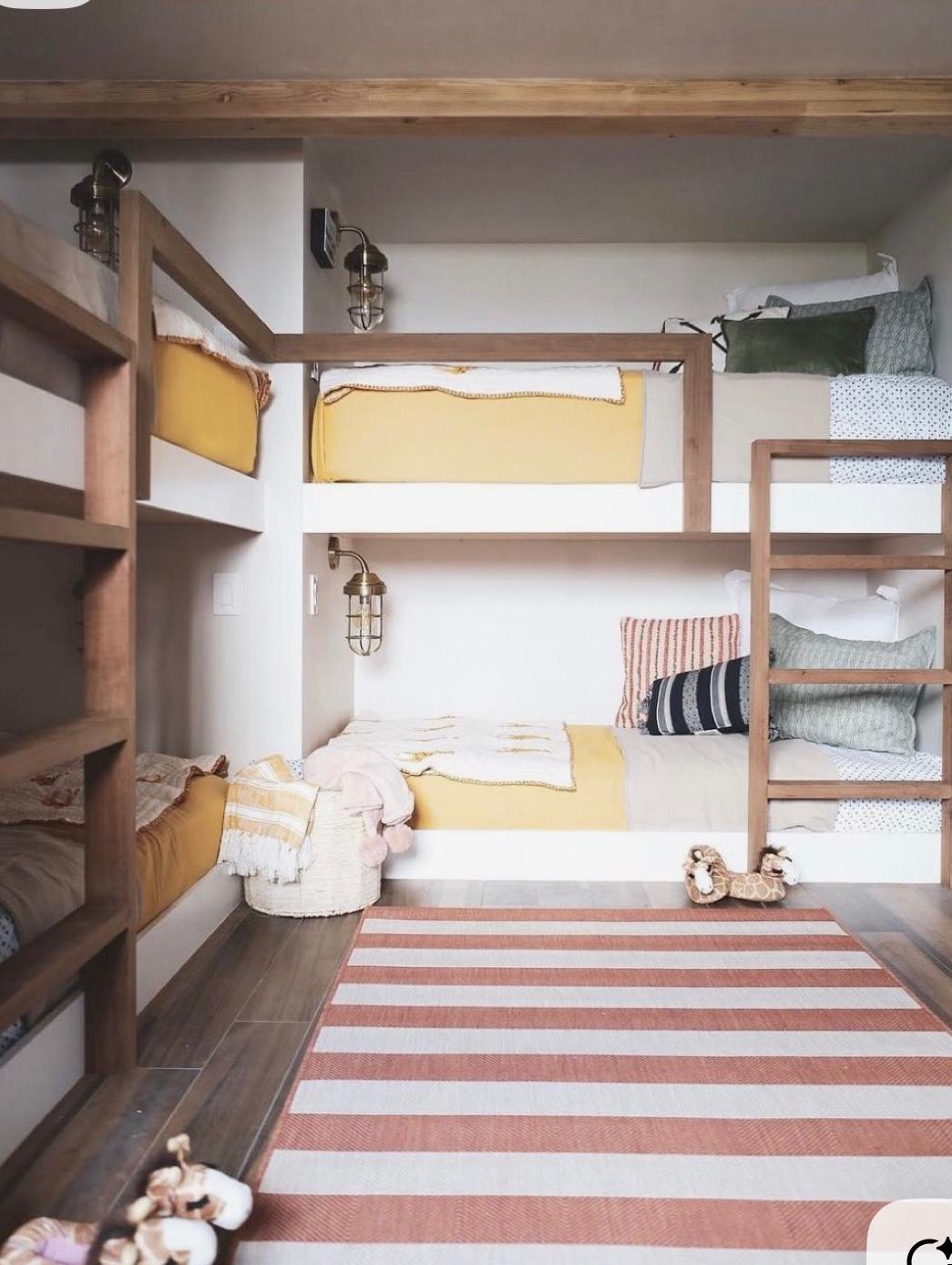
- Six built-in beds, plenty of storage, a reading nook, and floor space to play.
- Simple but fun.
Sleeping: 6 built-in beds
- Six beds built into the walls in a creative bunk arrangement: L-shaped corners, stacked pairs with central stairs, or triple bunks.
- Every bunk gets its own reading light, a shelf or cubby, a privacy curtain, and a storage drawer in the base.
- Natural wood and white paint for the structure. Most of the colour comes from bedding, quilts and cushions.
Play & reading area
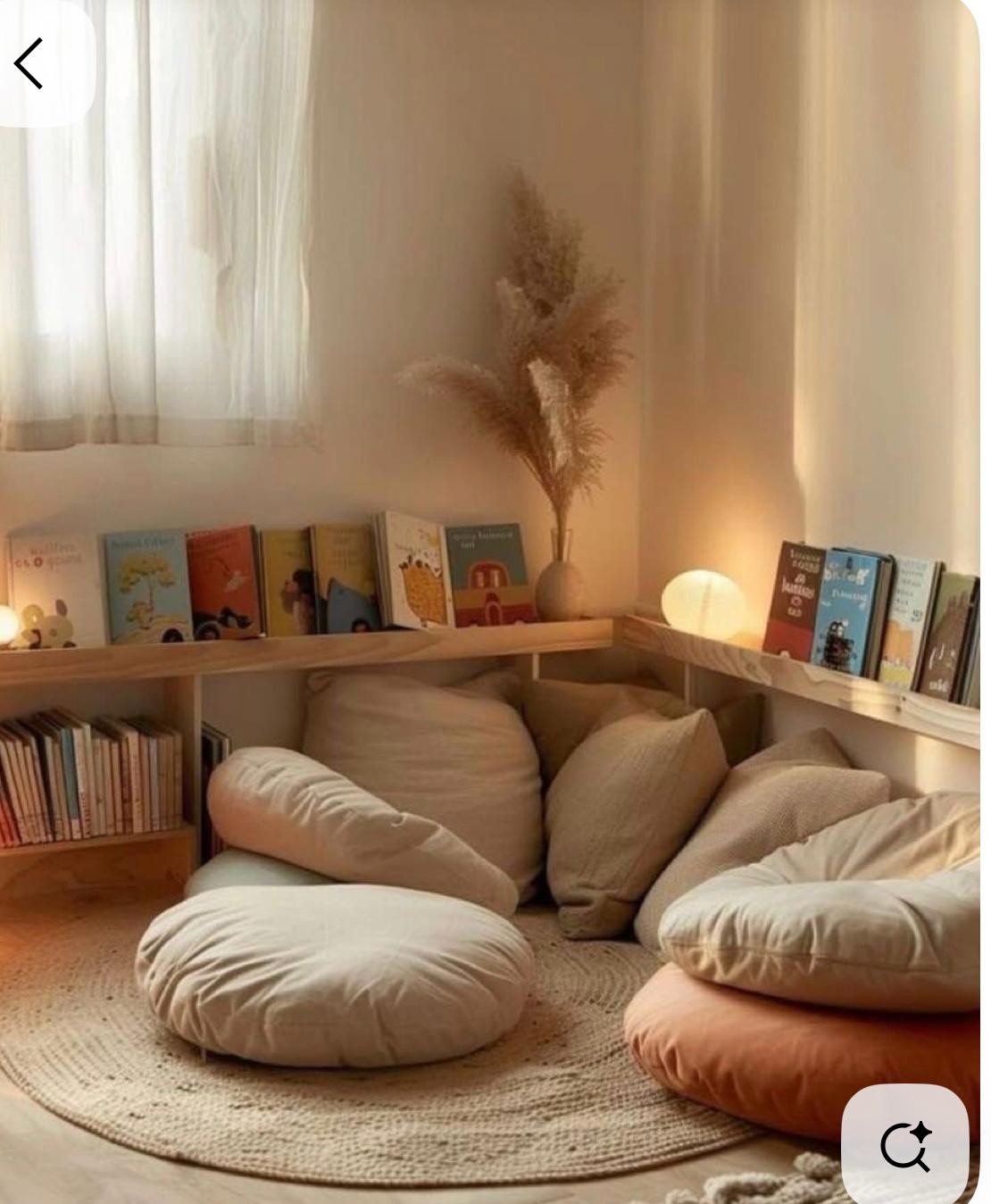
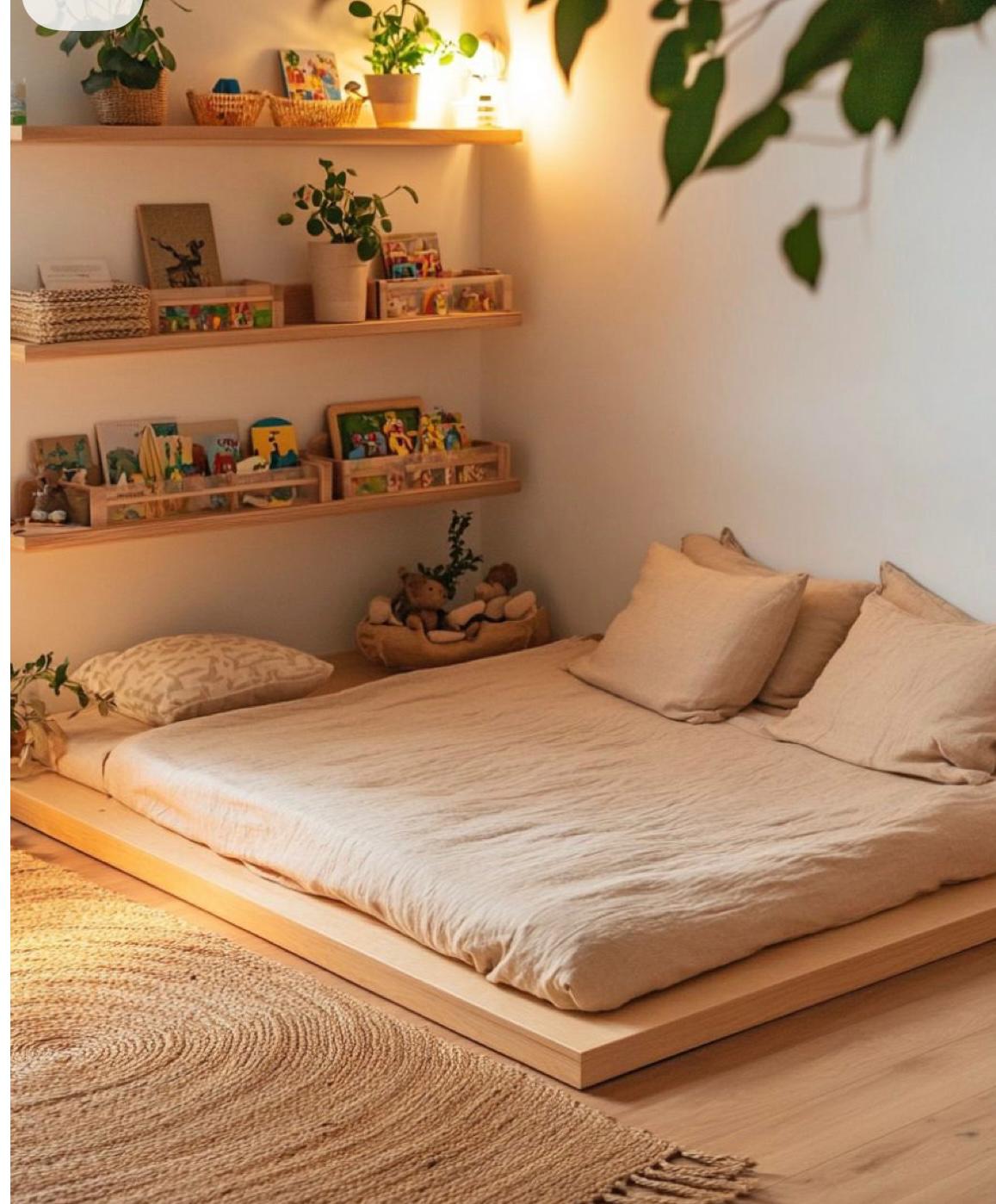
- Shelves for toys, and books displayed front-facing at child height.
- Floor cushions, poufs and a soft rug for a cosy corner to read and play in.
Terrace
- The living space carries on outside, bridging the kitchen and the garden.
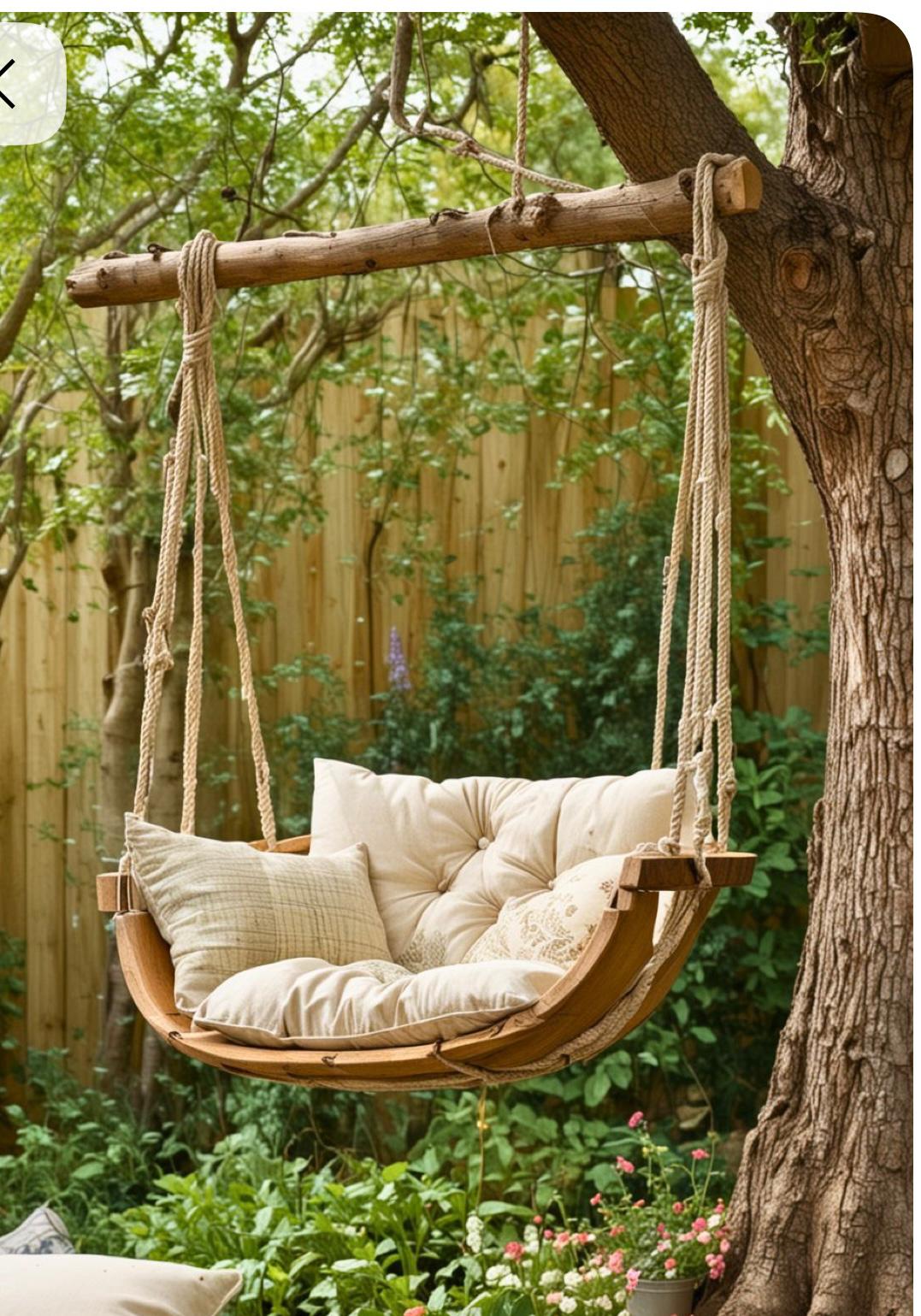
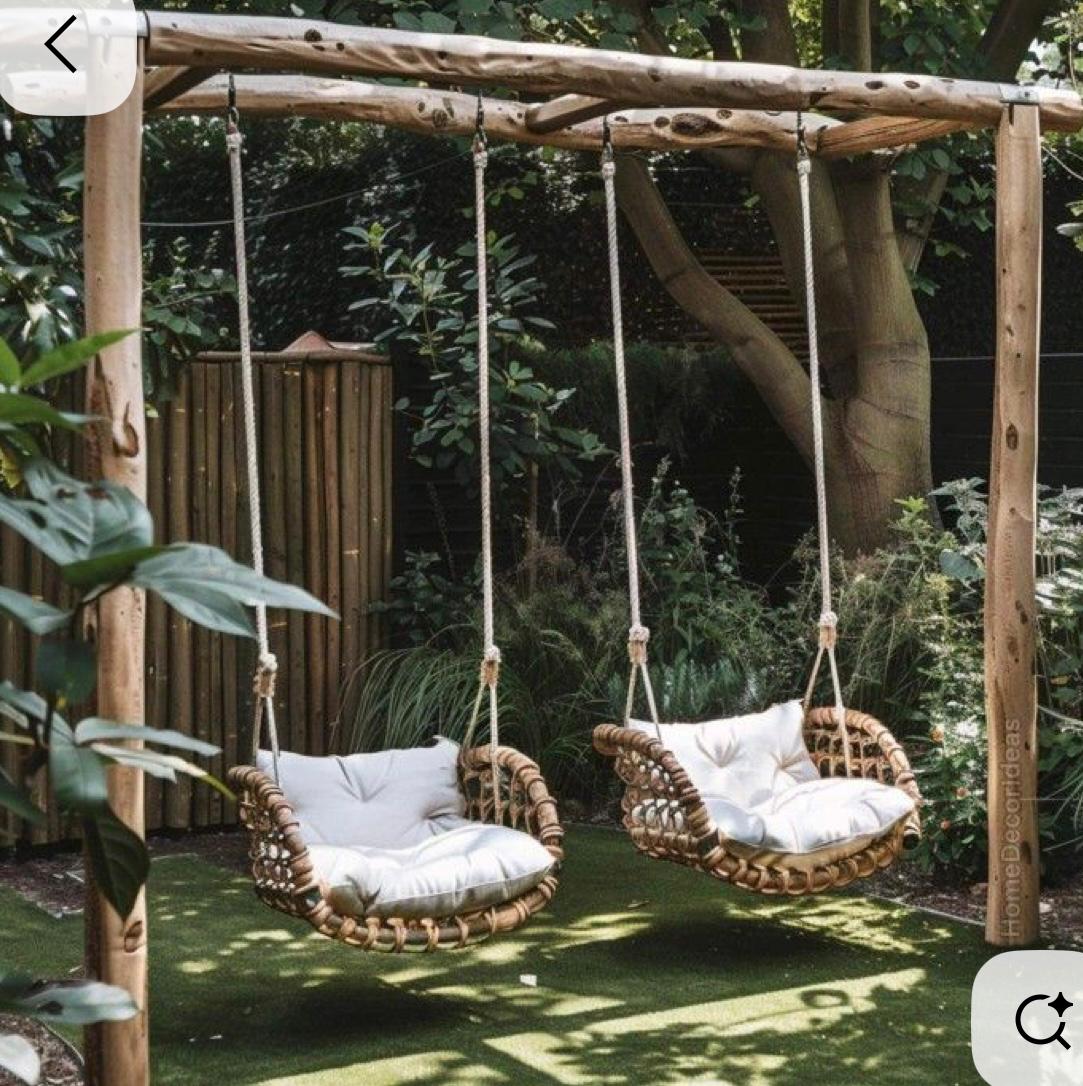
- An outdoor cooking area, a lounge corner, and hanging swings.
- Simple, practical, and tied to the hill and the garden.
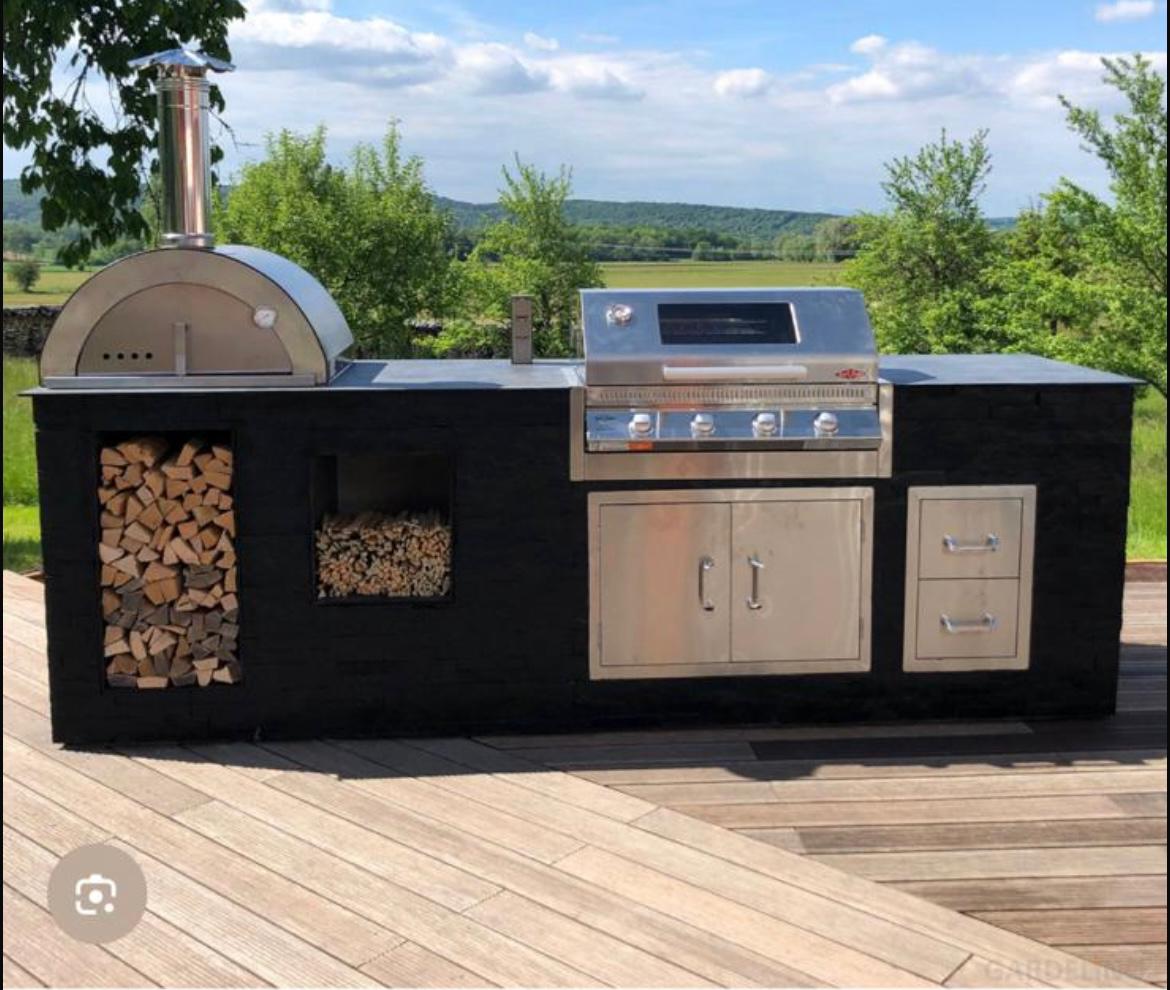
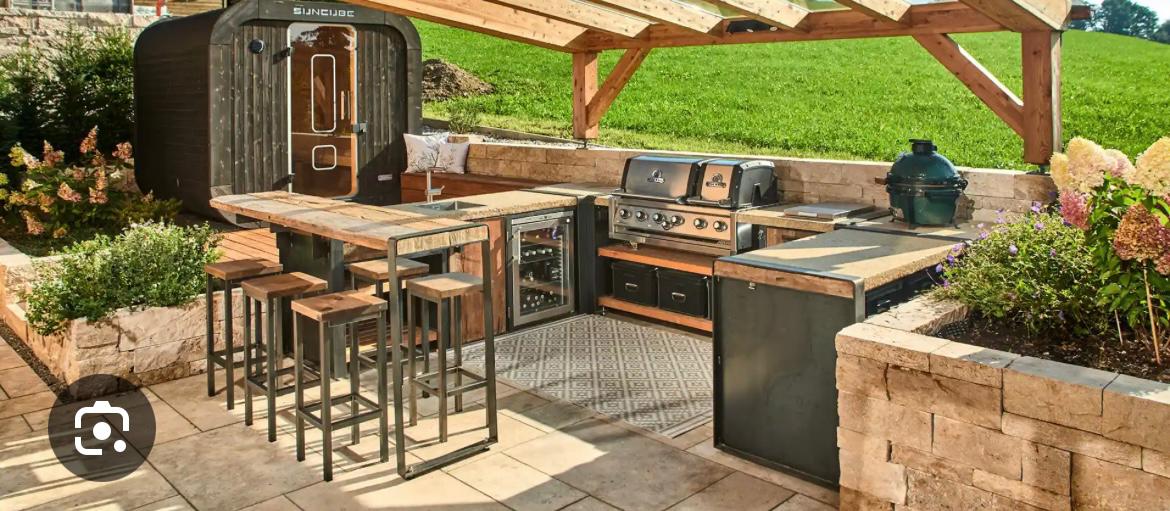
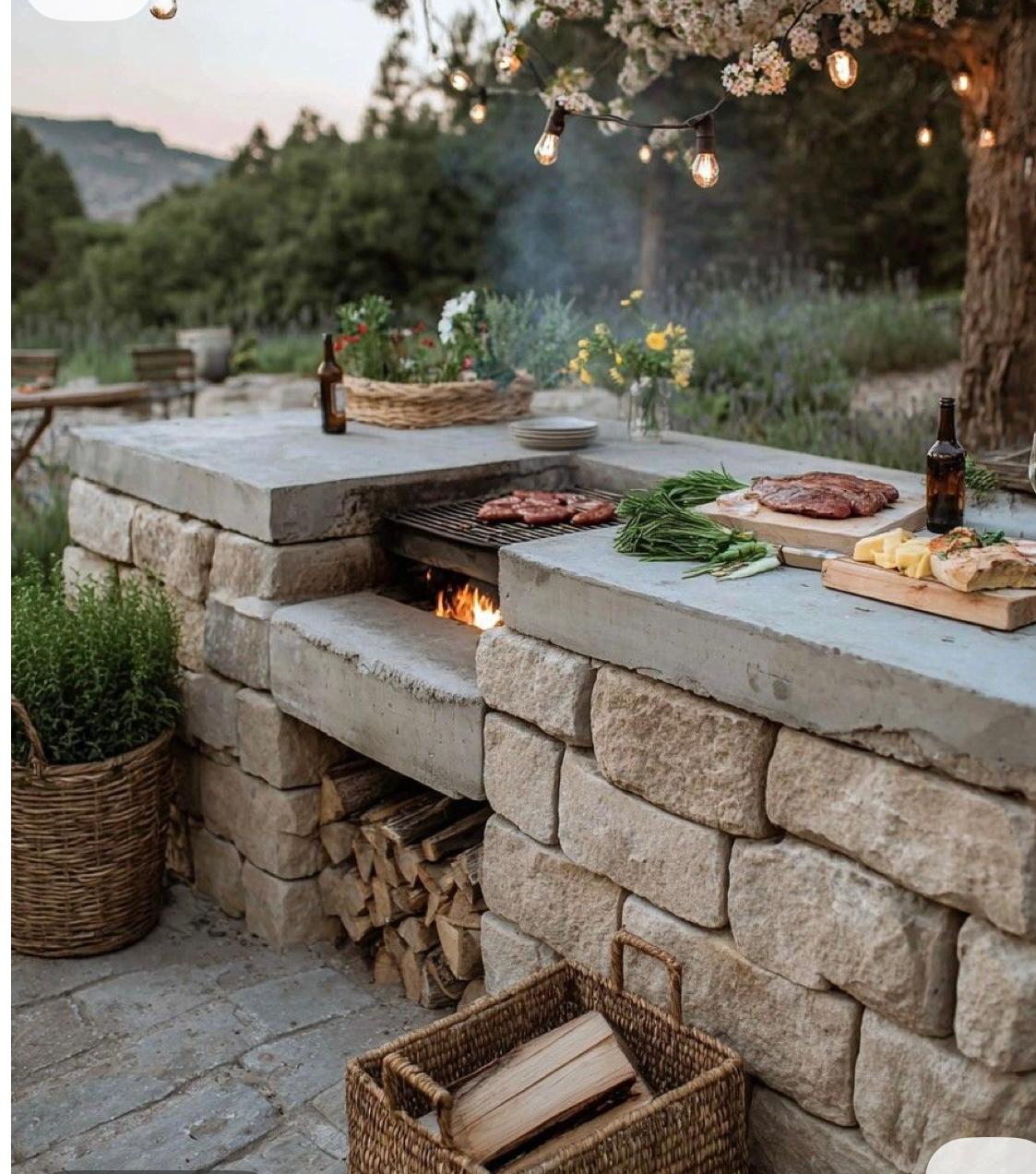
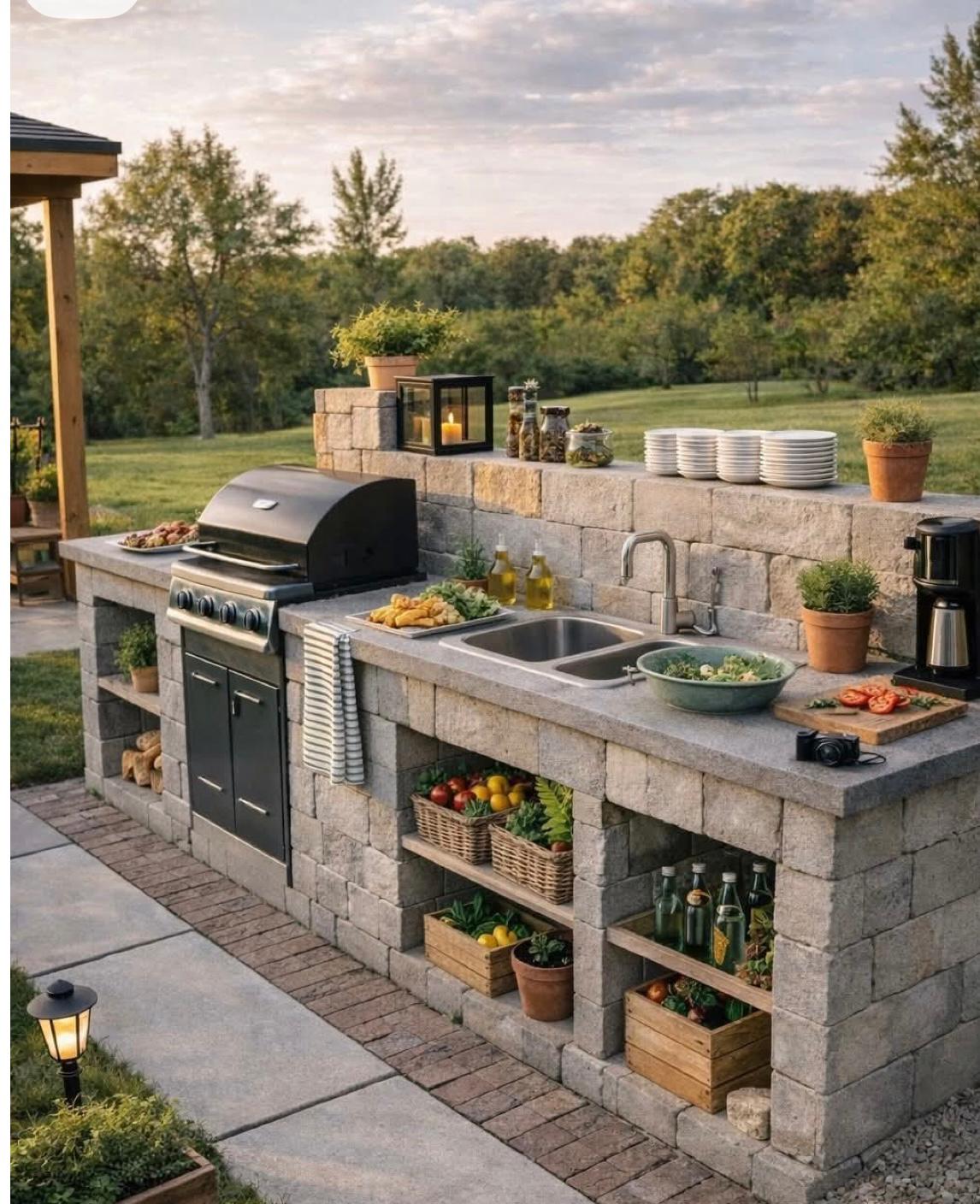
Outdoor kitchen
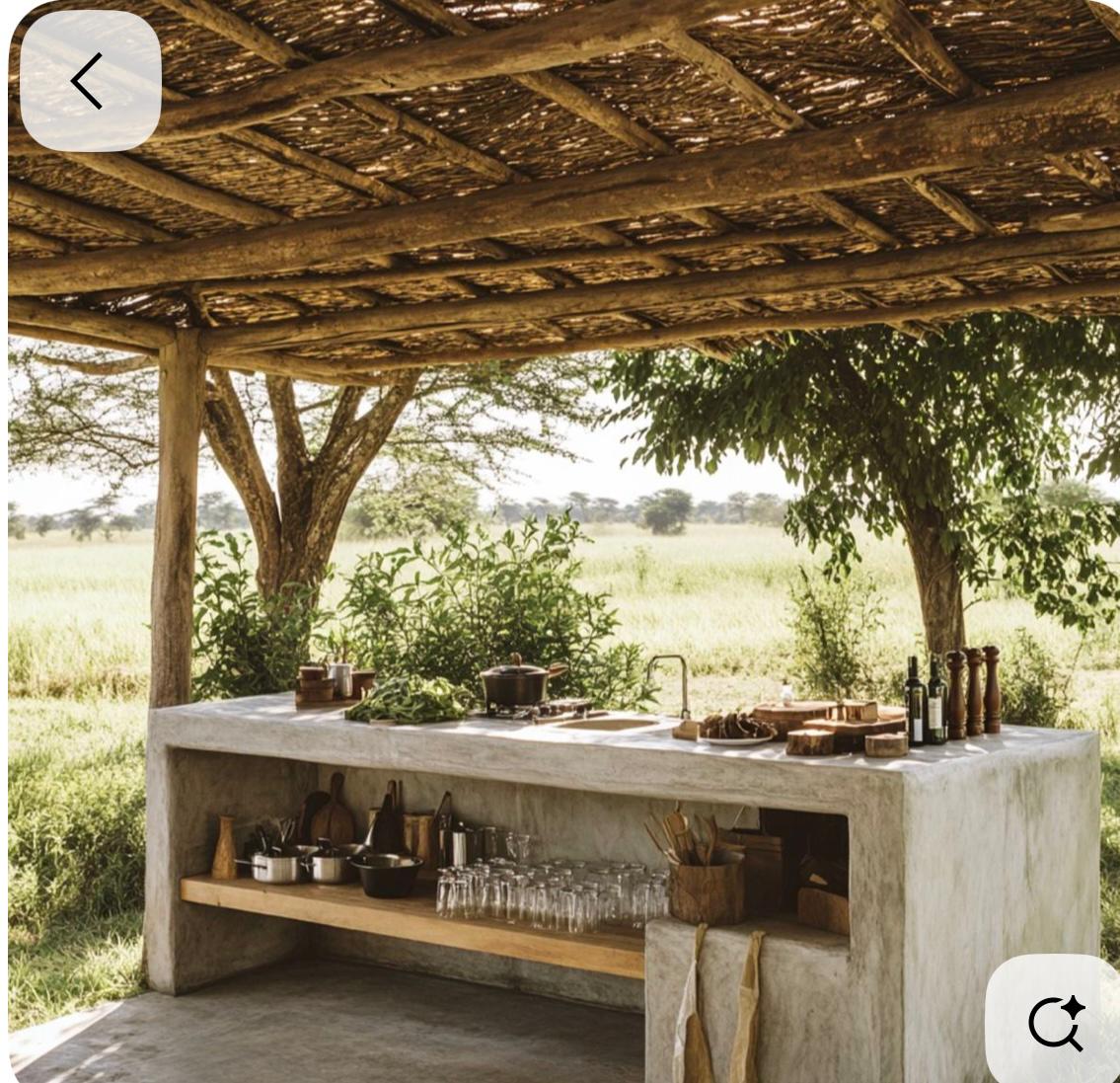
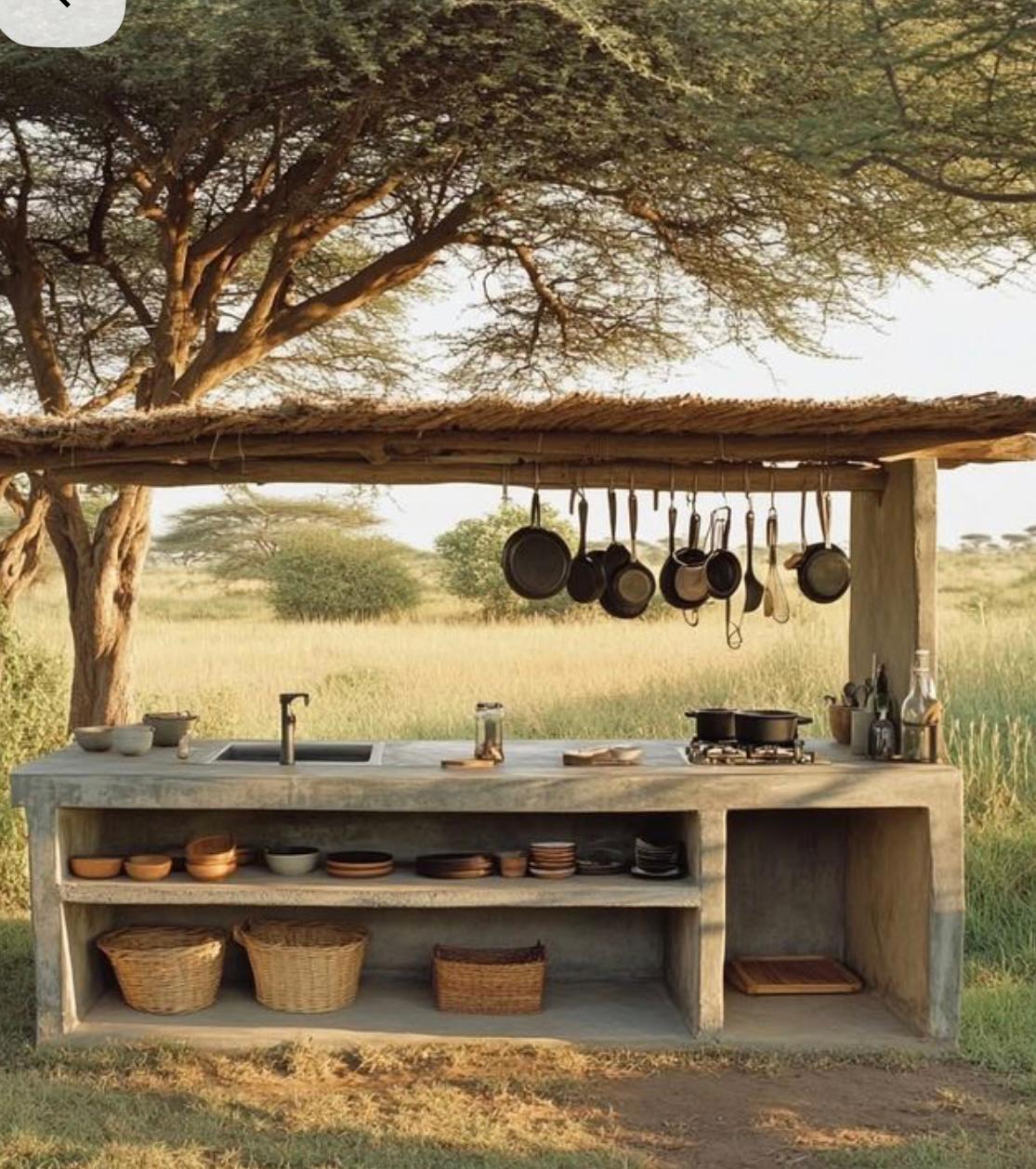
- At the far end of the terrace, almost merging with the garden, so whoever’s cooking faces the view.
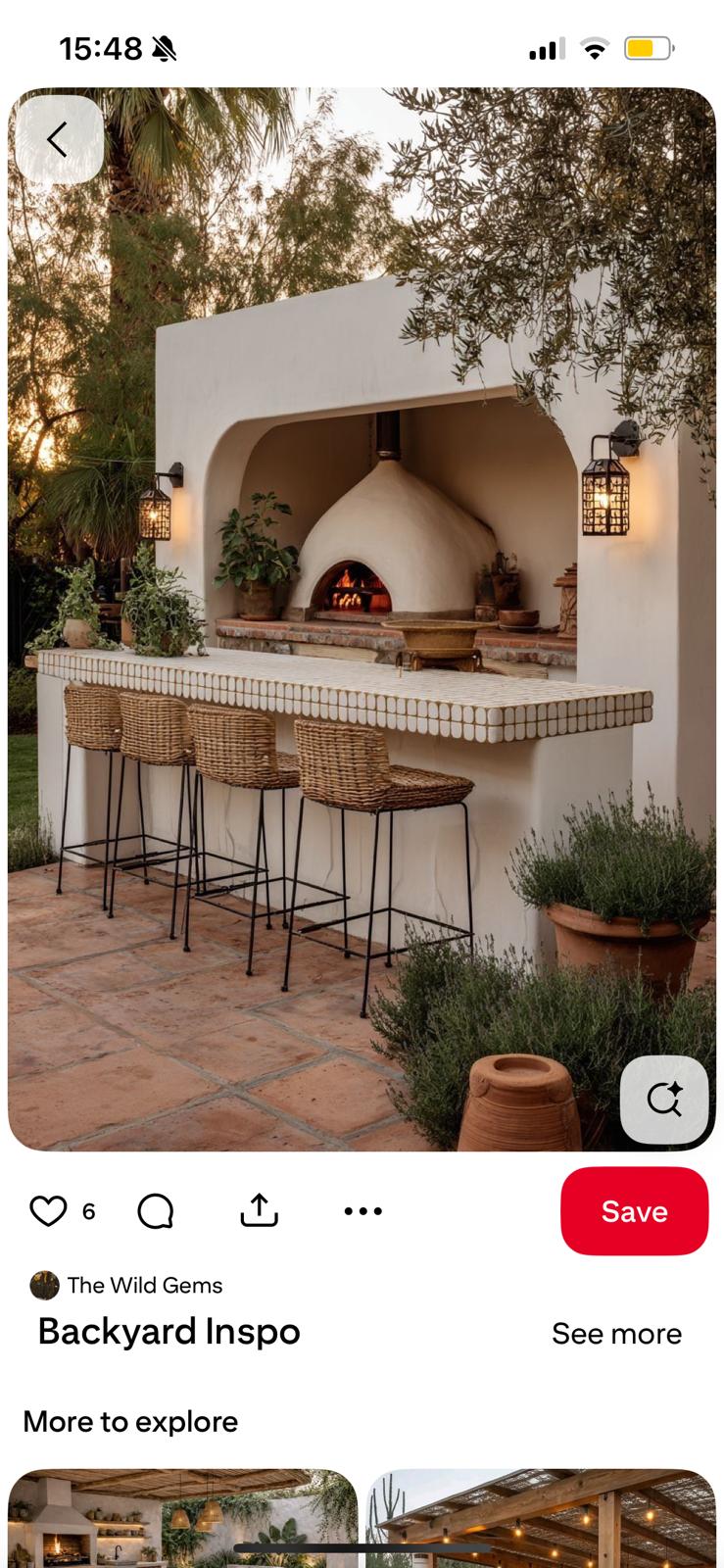
- L-shaped: a cooking station (gas grill, wood fire, maybe a pizza oven) with bar-height seating alongside and a stone sink. It may need a light shade structure, as long as it never blocks the entrance.
- Rustic stone, concrete and reclaimed wood; a thatched or woven canopy for shade; rattan stools or wine-barrel seats.
Lounge, dining & storage
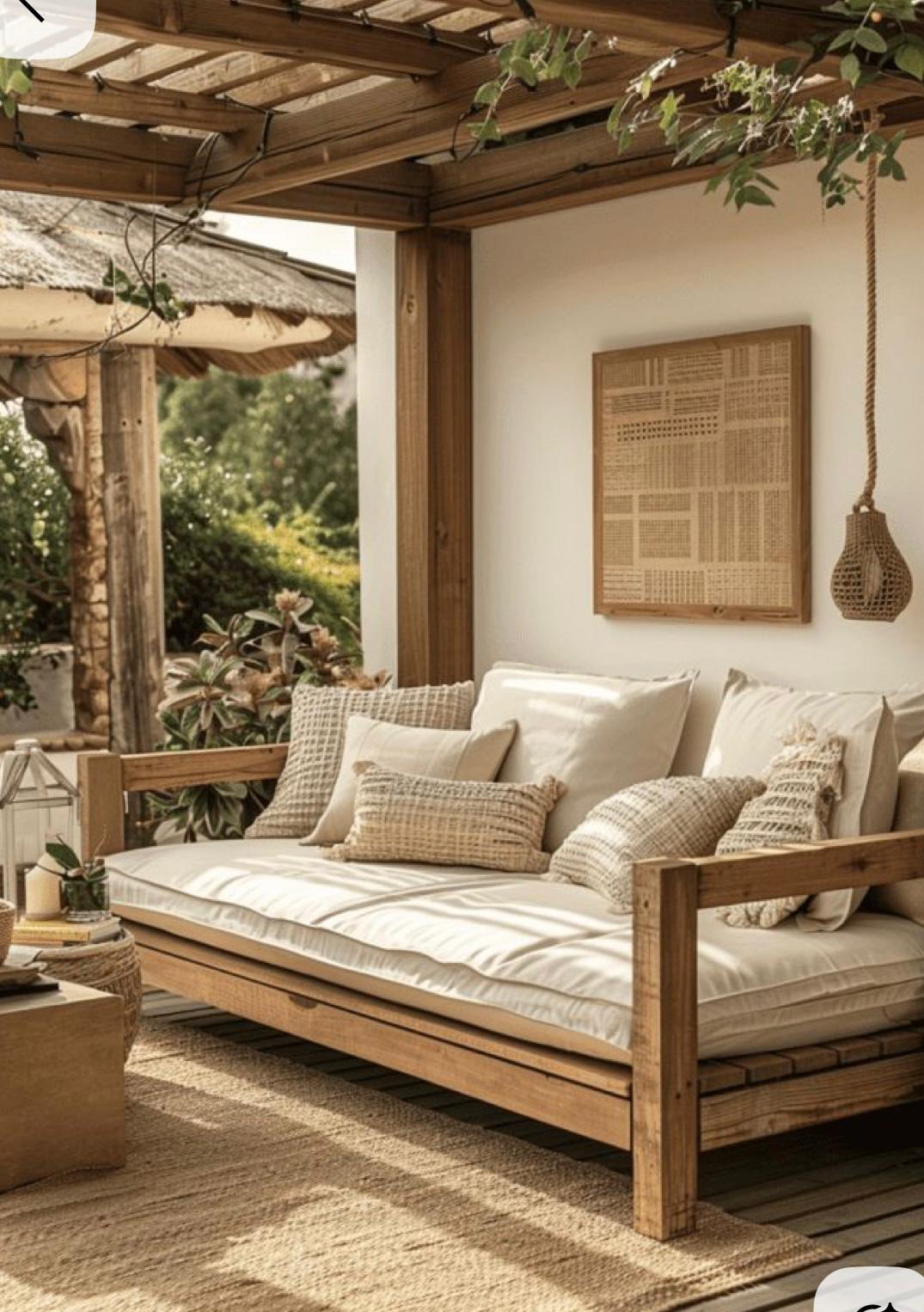
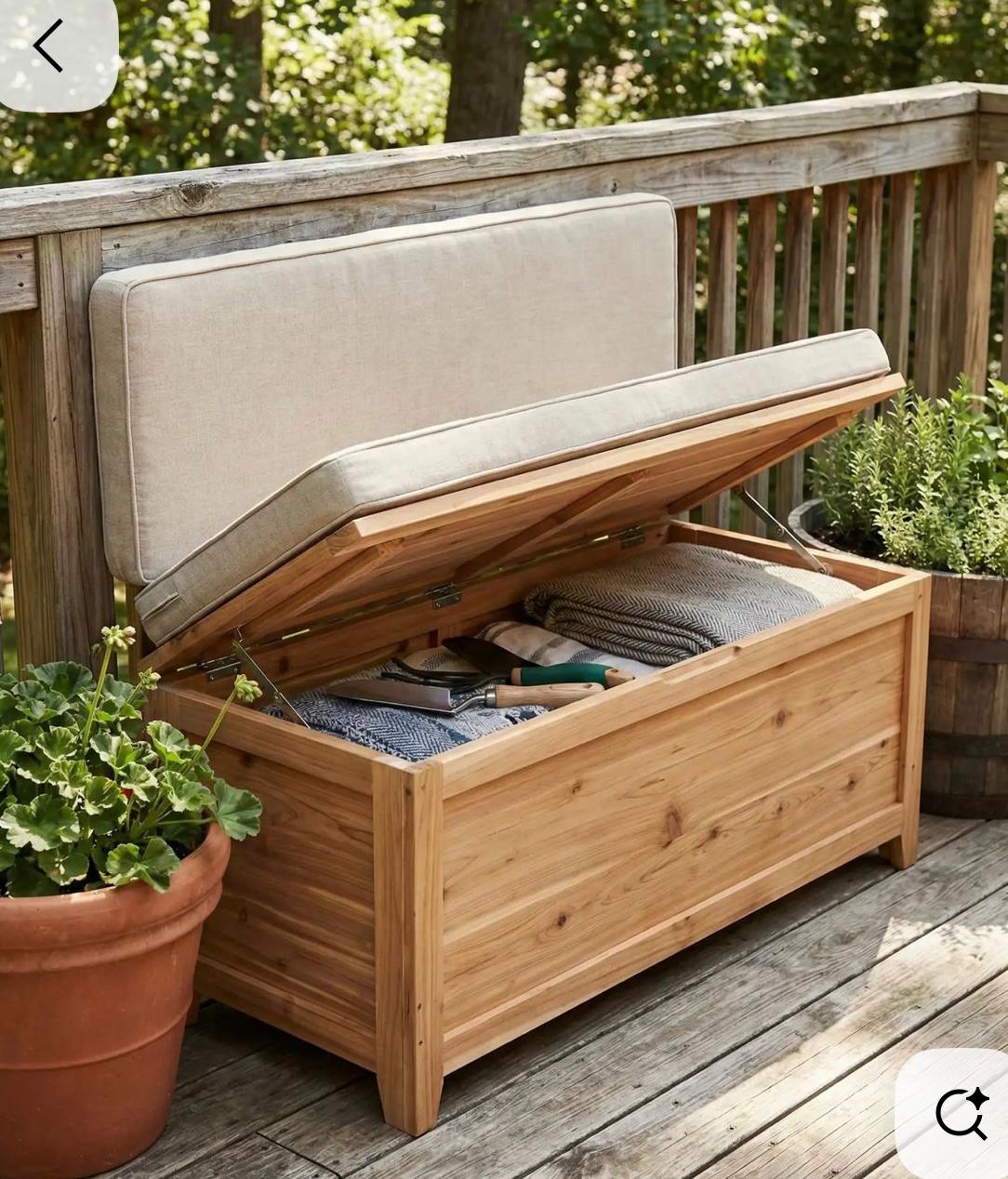
- A bench with cushion storage inside doubles as a small lounge by the kitchen entrance.
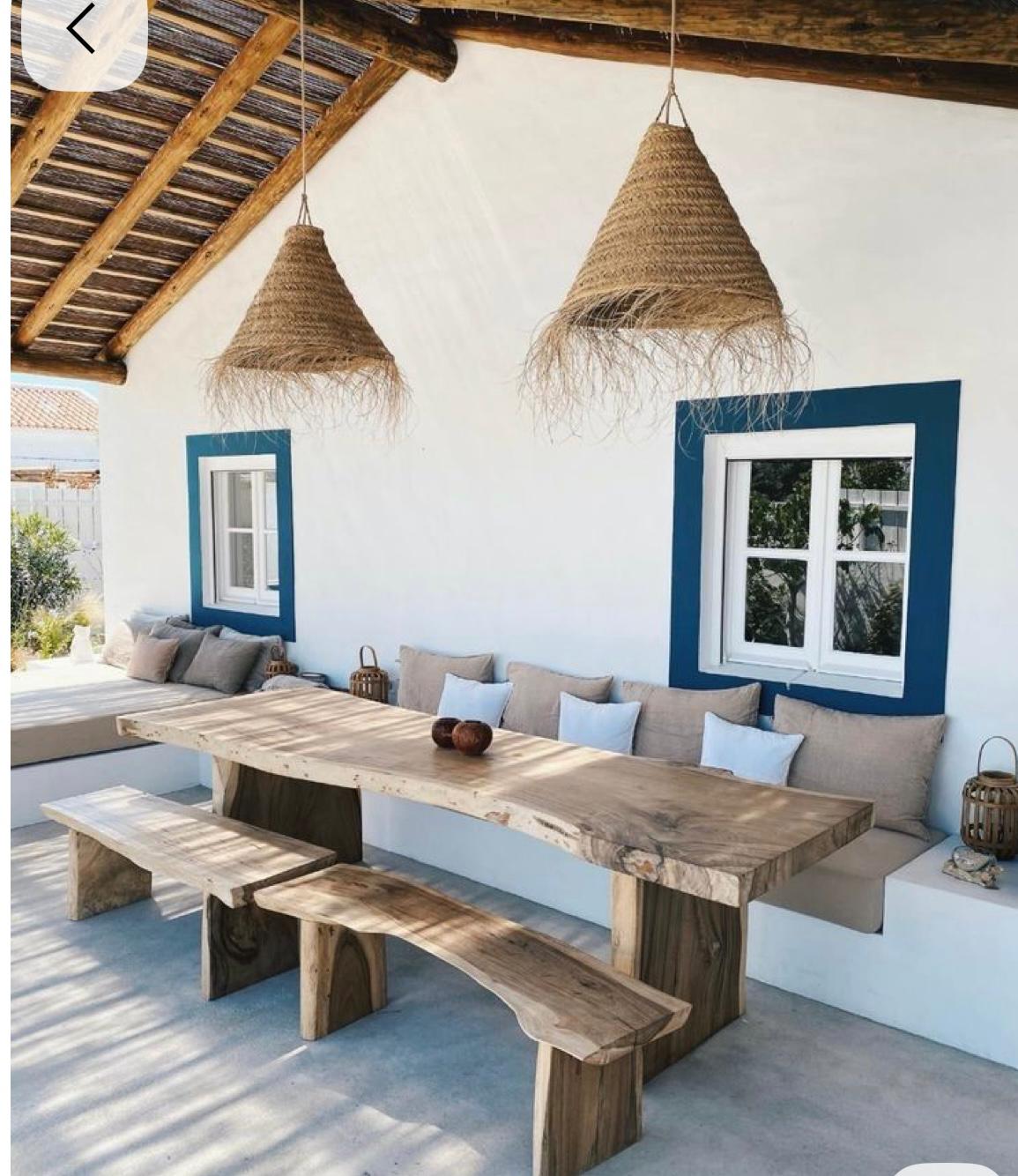
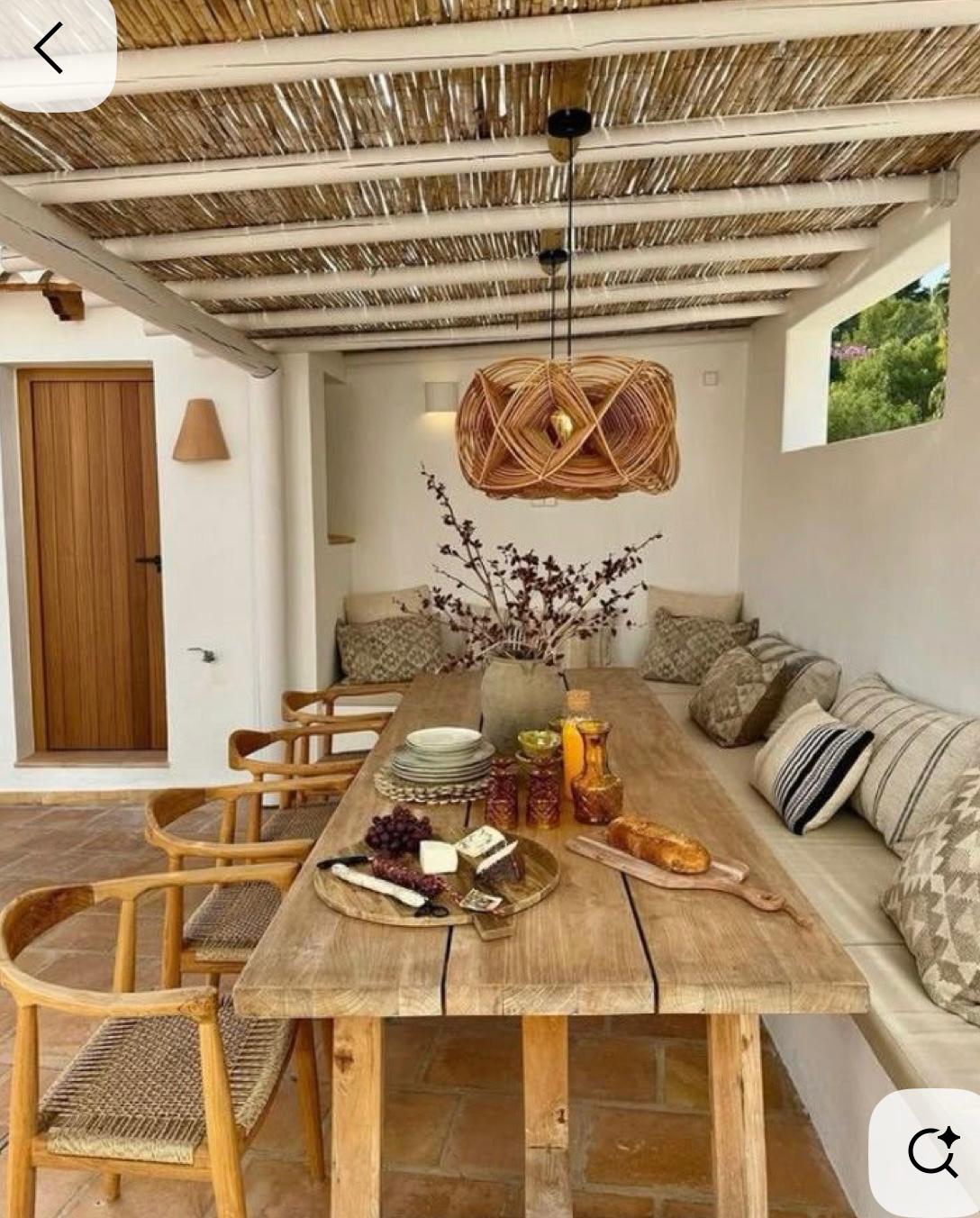
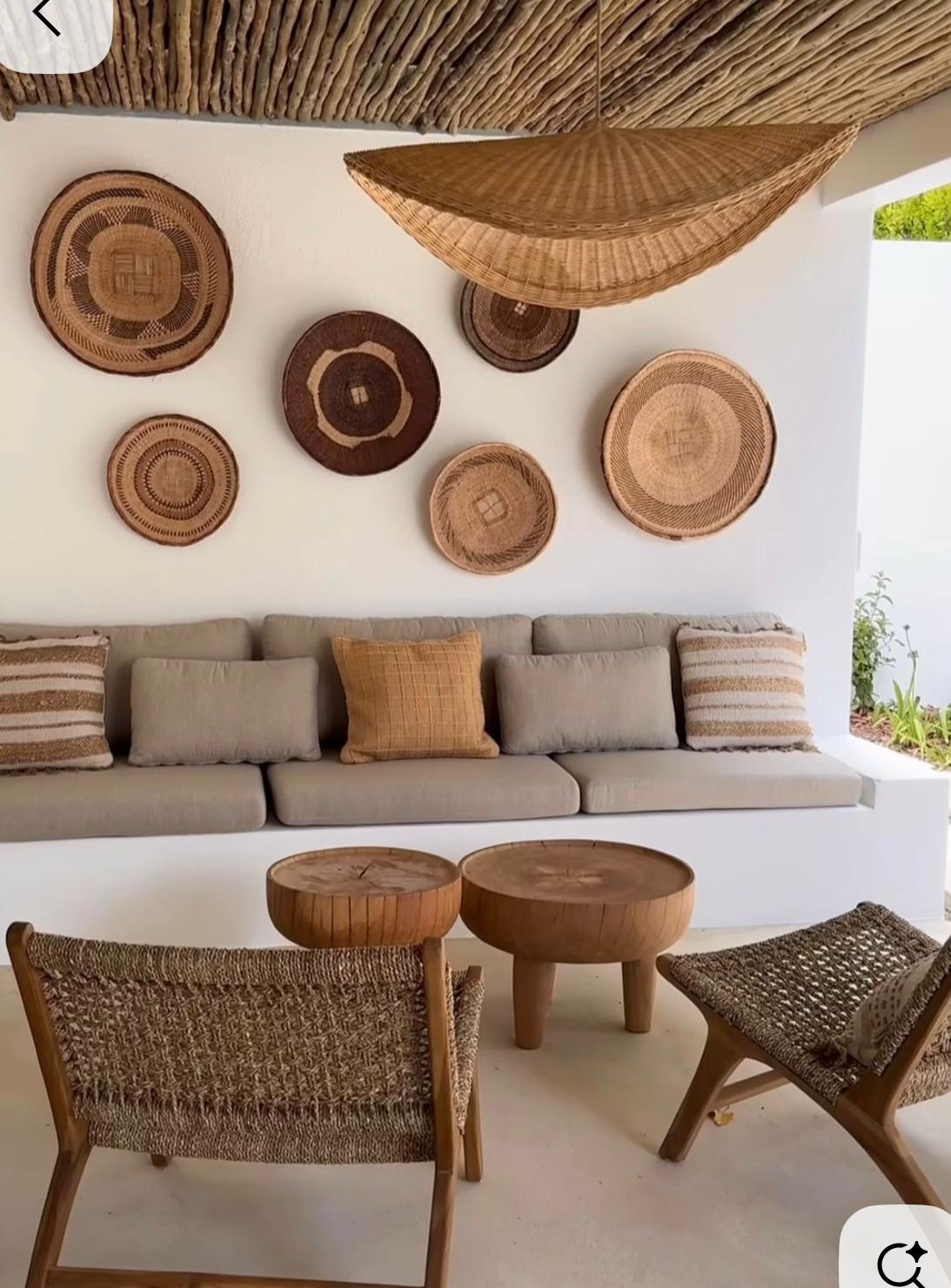
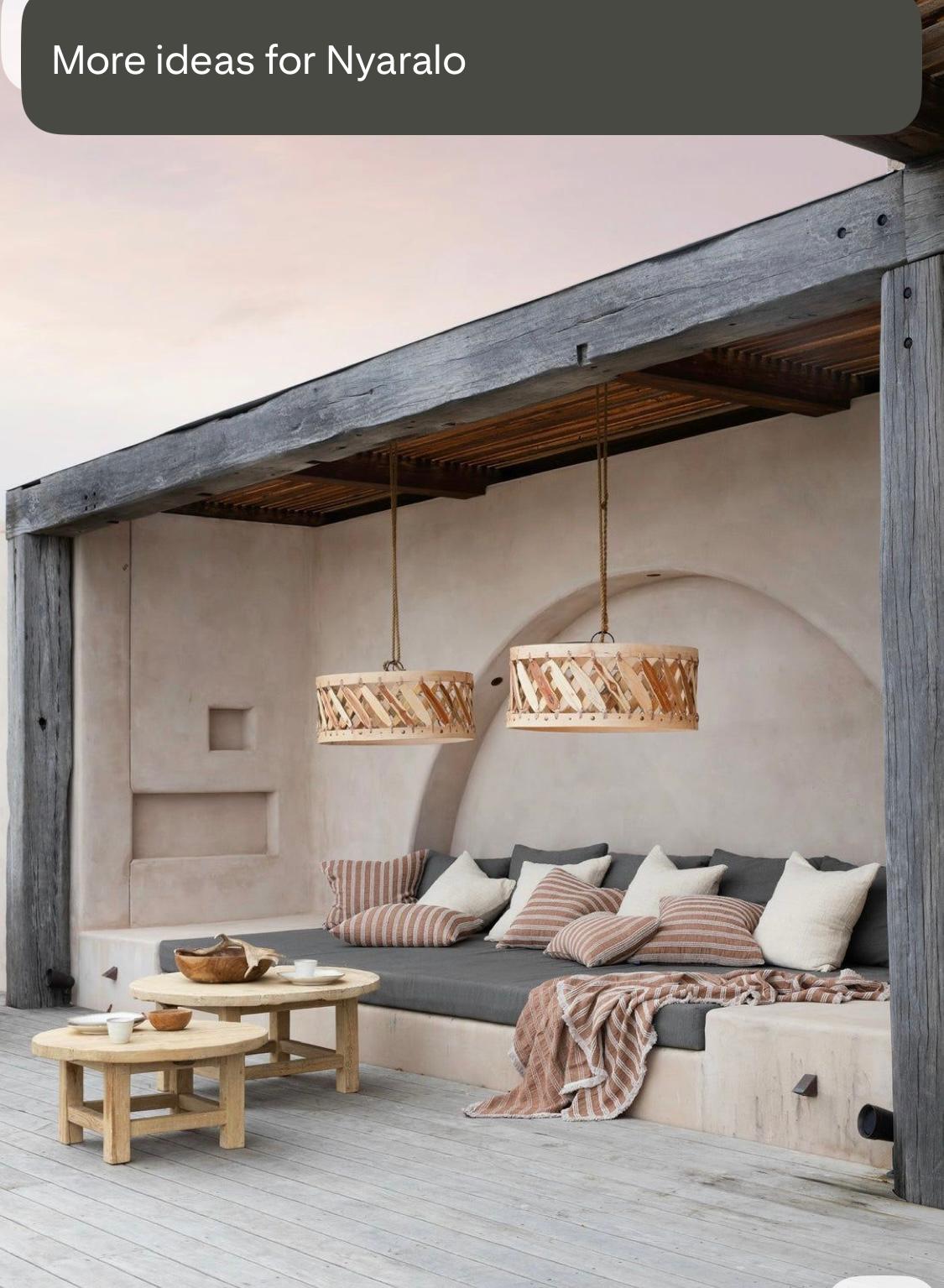
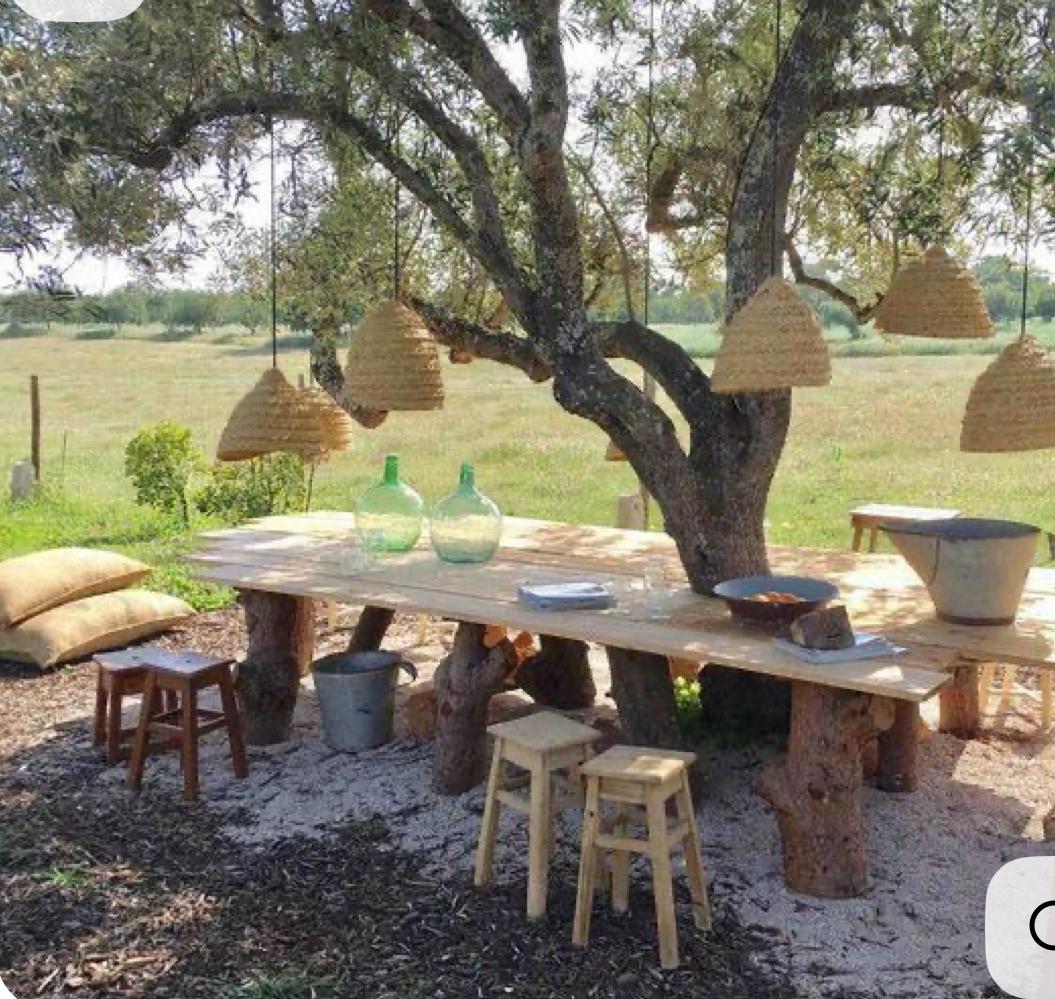
- Covered Mediterranean dining: a raw wood table with built-in bench seating, woven pendants, and a plaster-arch daybed lounge in the corner.
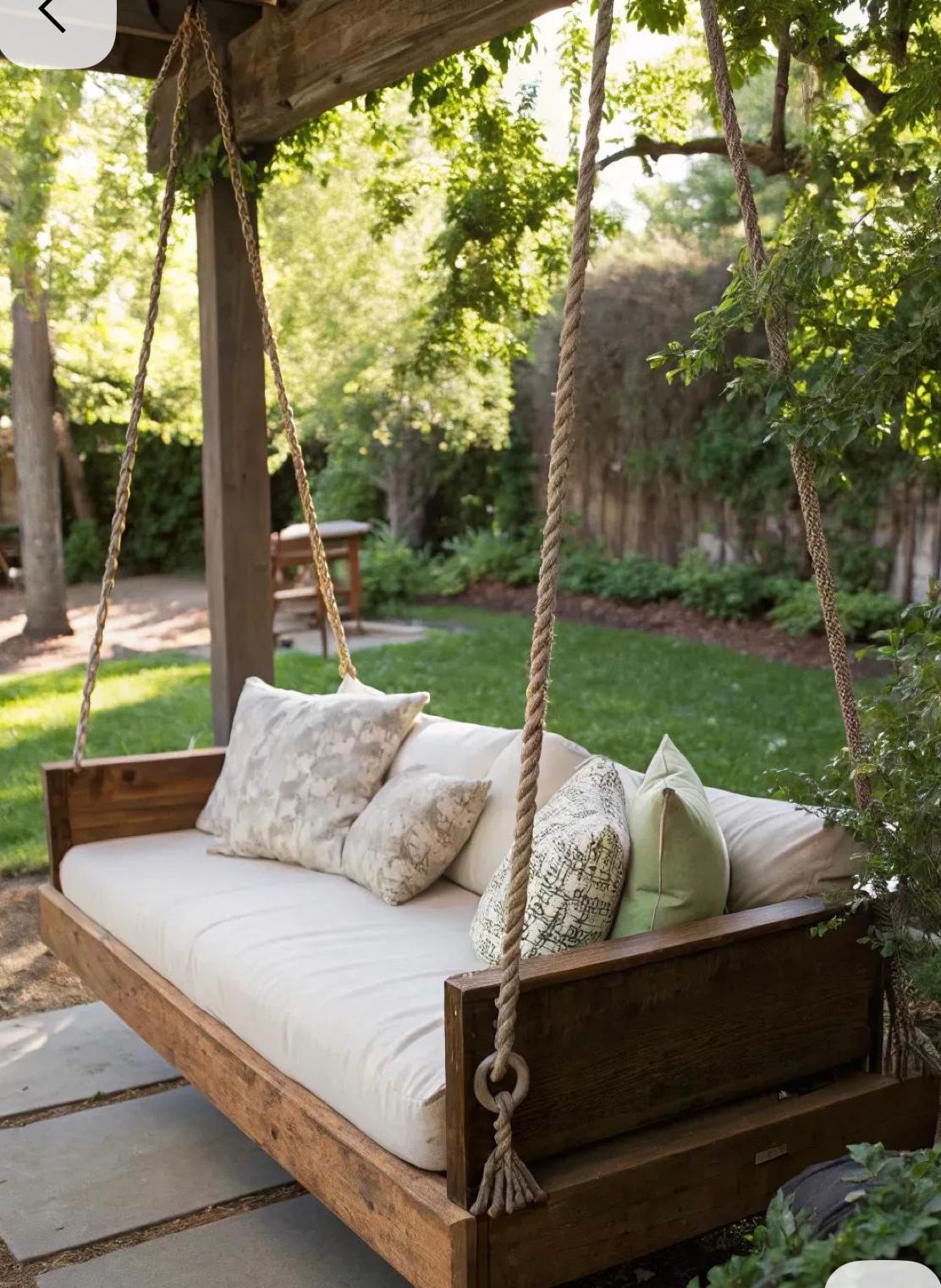
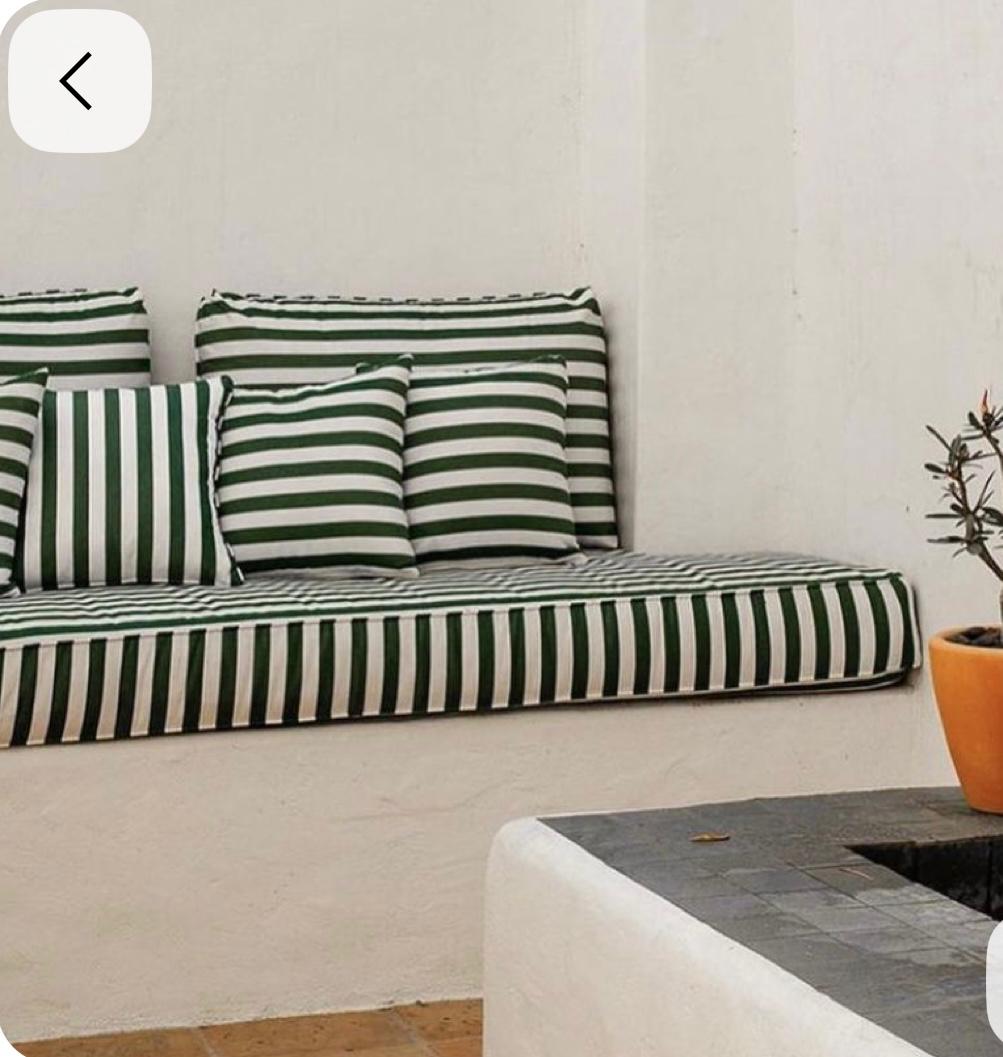
- Hanging swings on the front balcony (one large, one or two small, easy to take down), plus striped floor cushions and string lights for the evenings.
Swings, cushions & details

Garden
- Organised around the existing trees and fireplace.
- Separate zones for lounging, kids’ play and gathering, linked by natural paths.
- One palette throughout: reclaimed wood, stone and greenery.
Tree seating areas
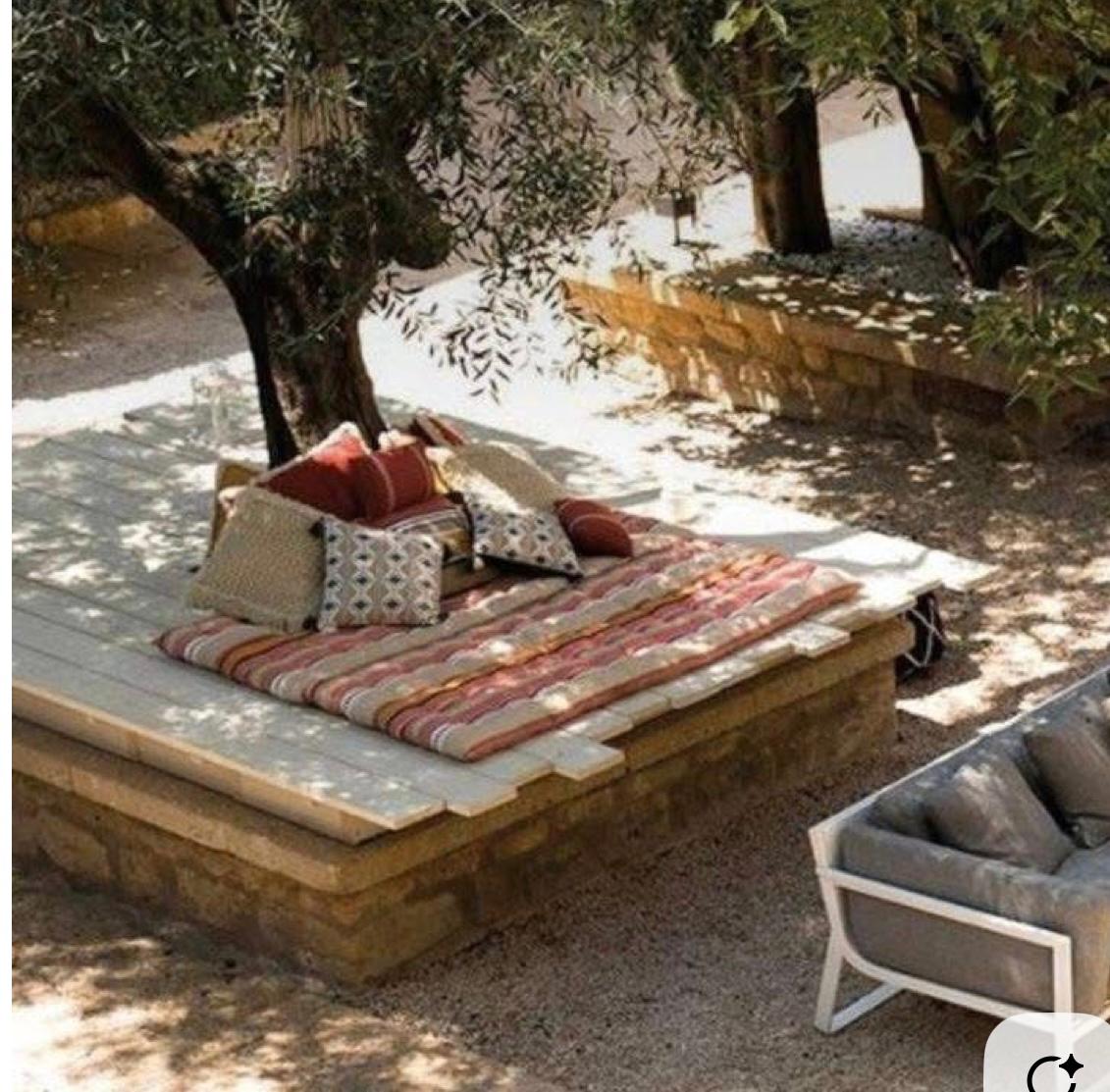
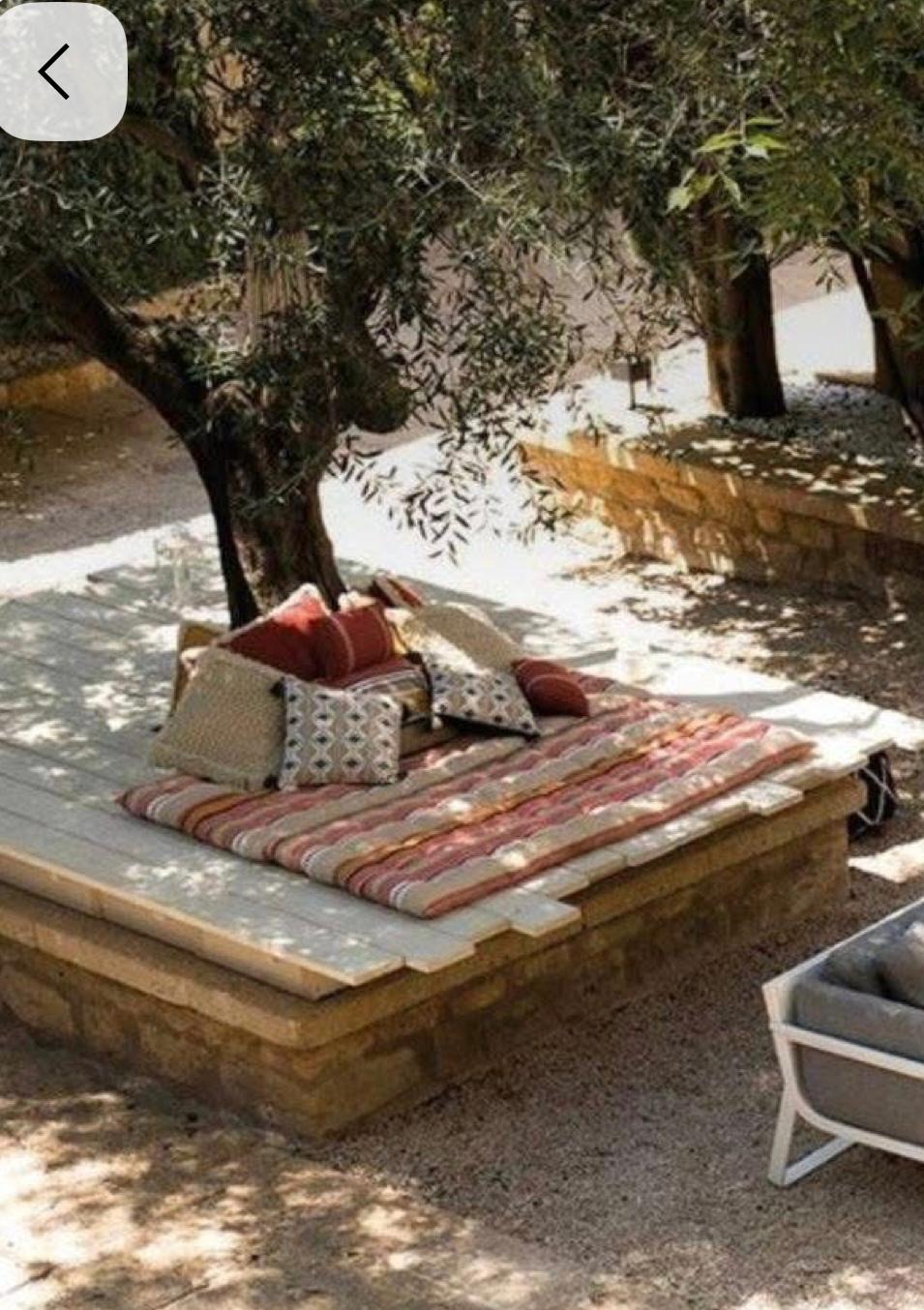
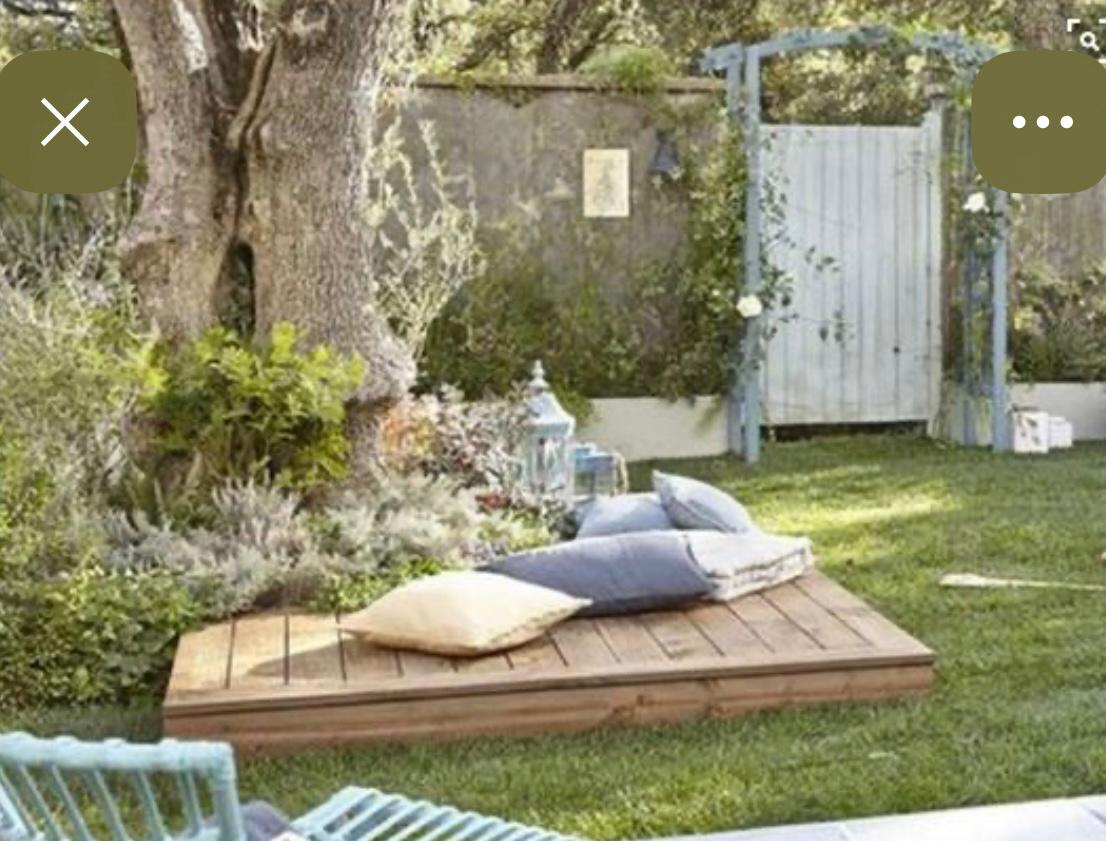
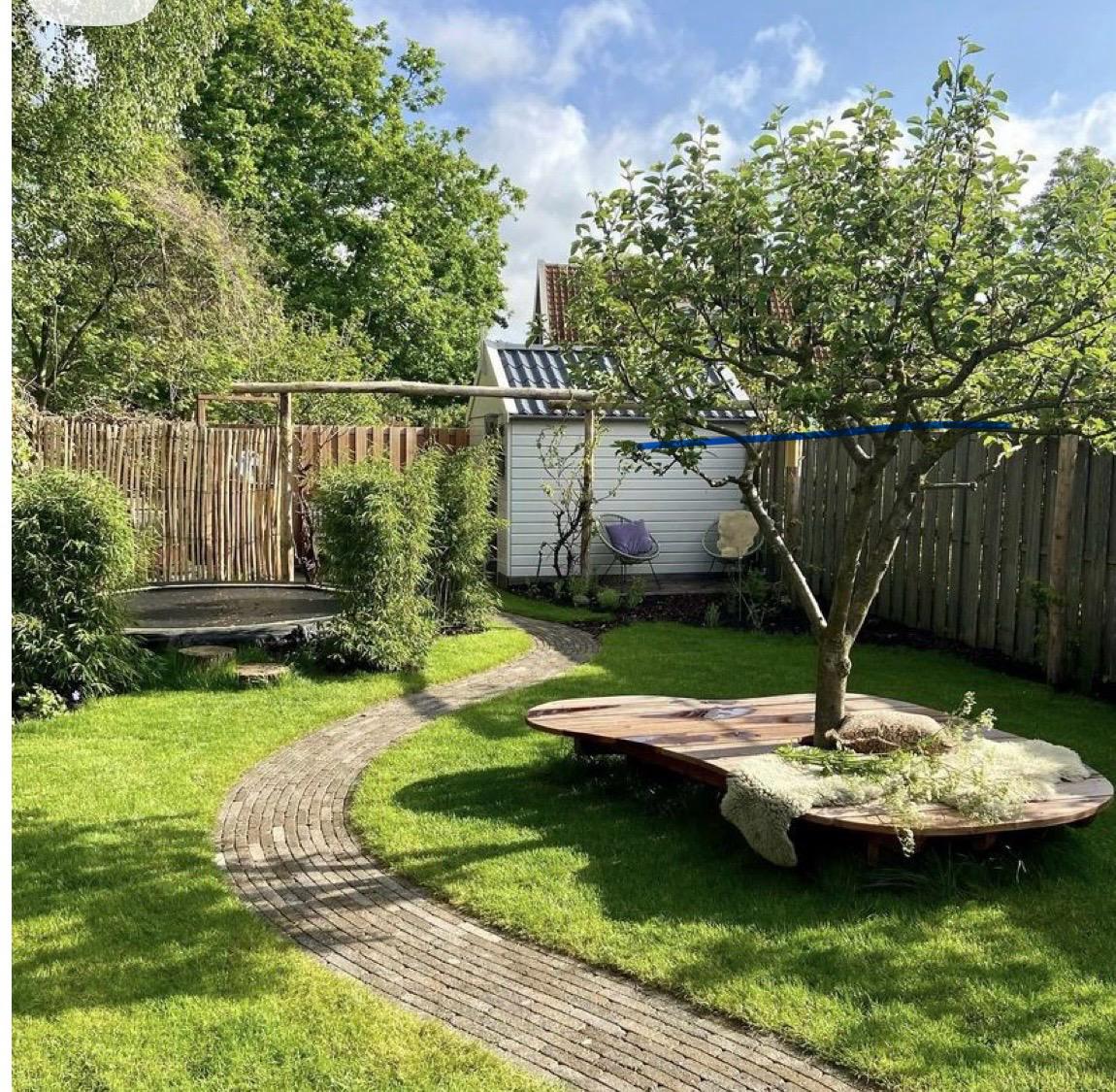
- A wooden seating and lounging area wraps the tree on the right side of the garden (as you face the house).
- Options run from a raised stone platform daybed with striped cushions to a simple wooden deck with pillows under the branches.
- Somewhere to read, lie around, and keep an eye on the kids.
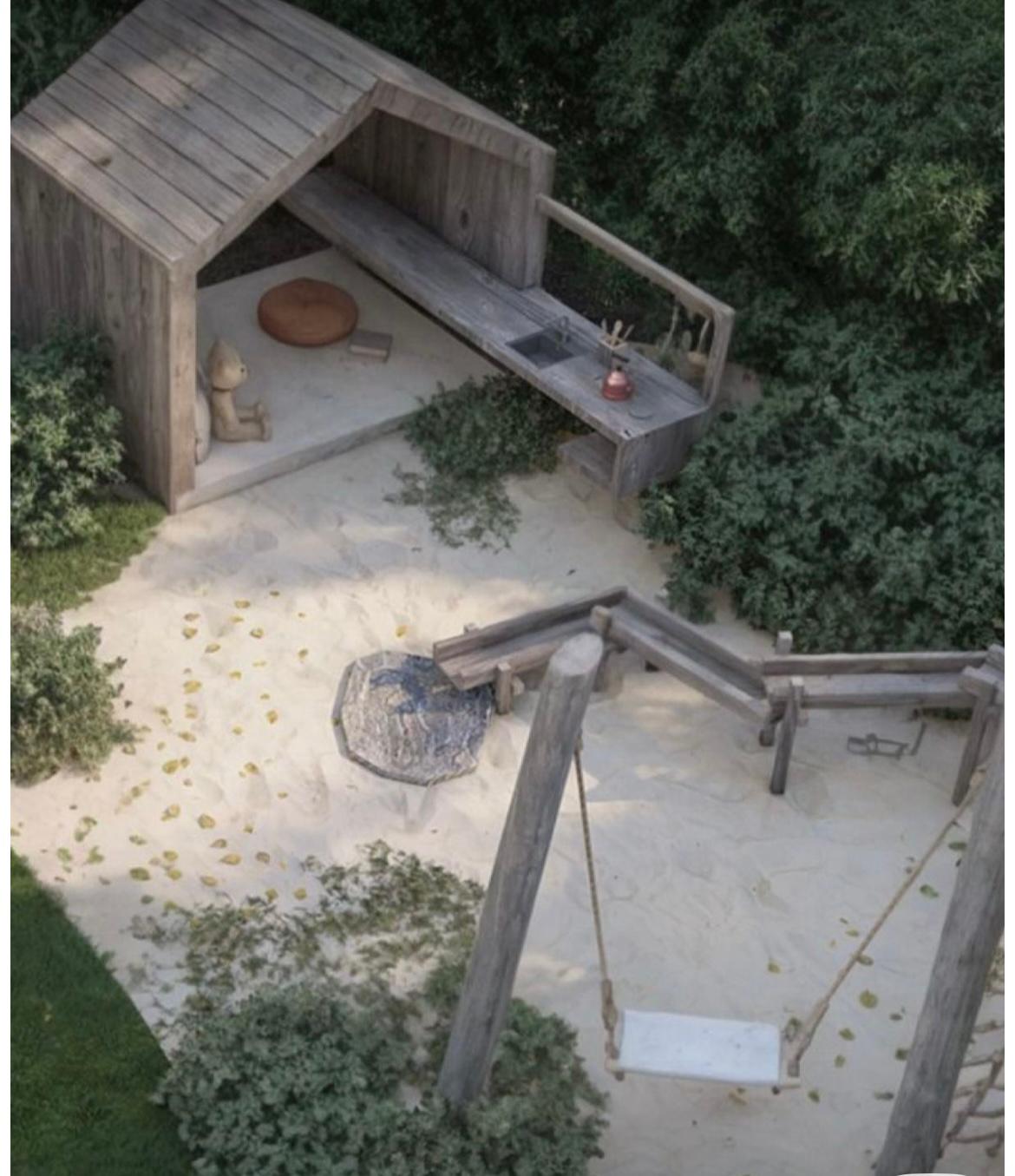
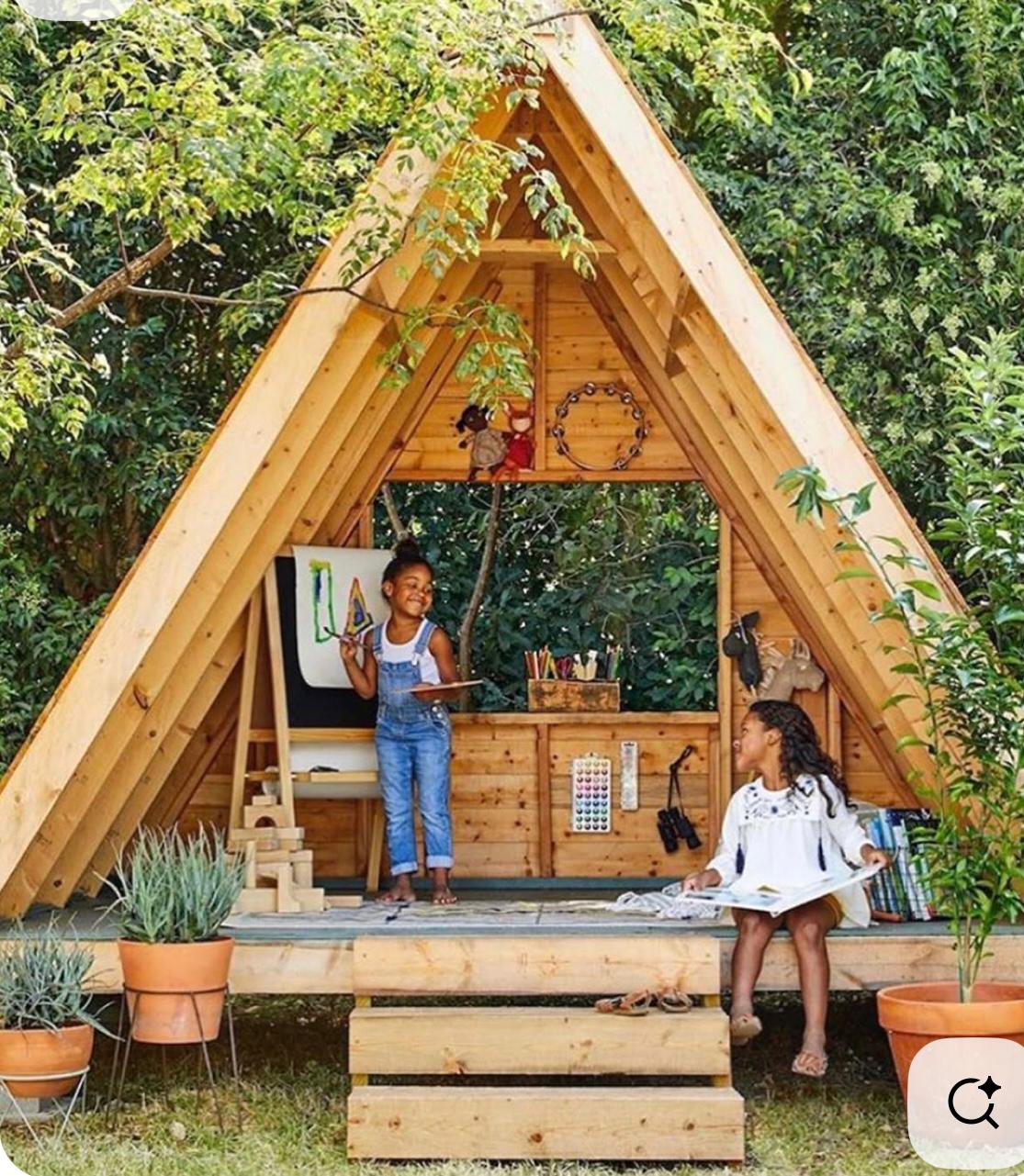
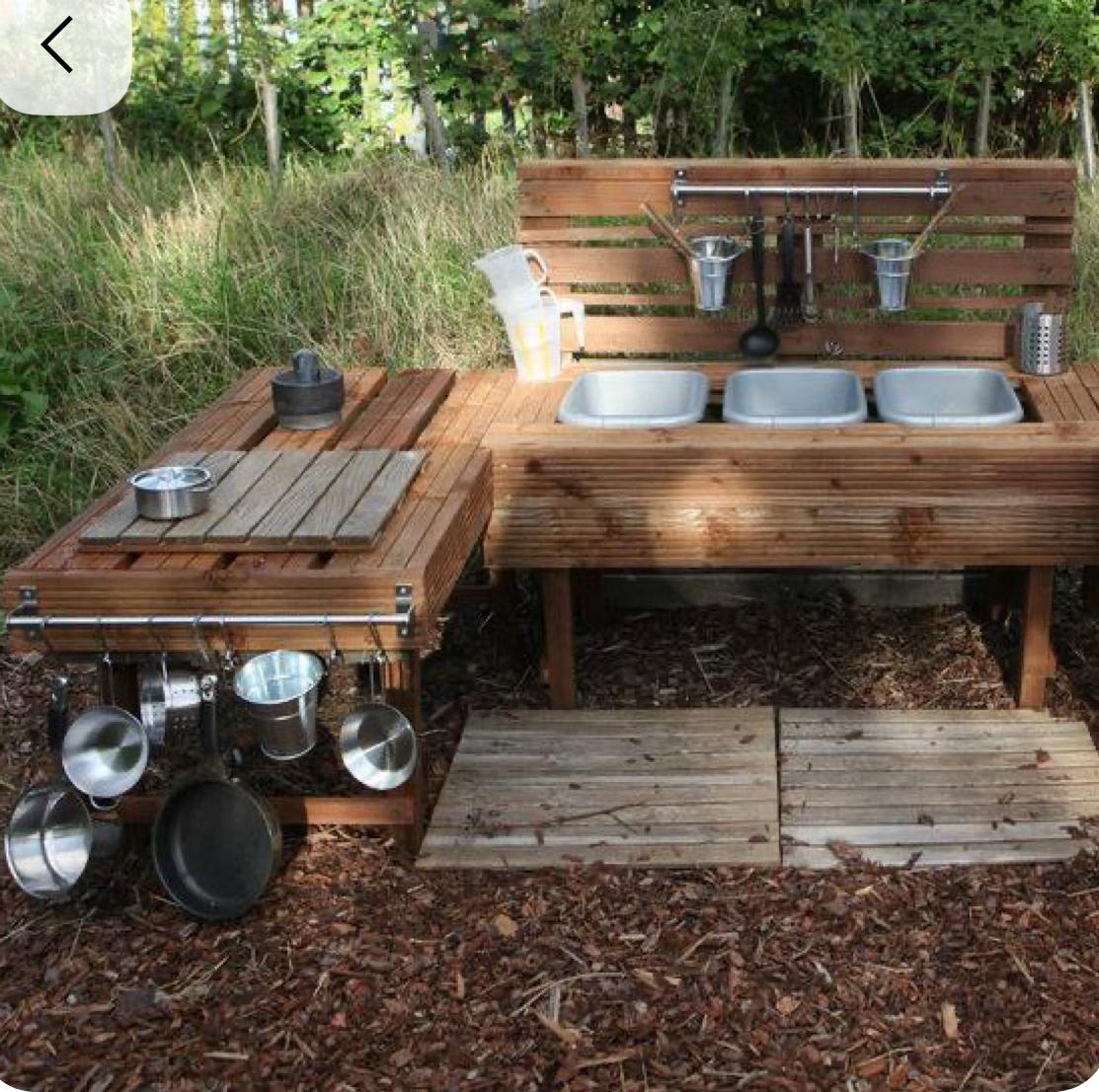
Kids’ play area
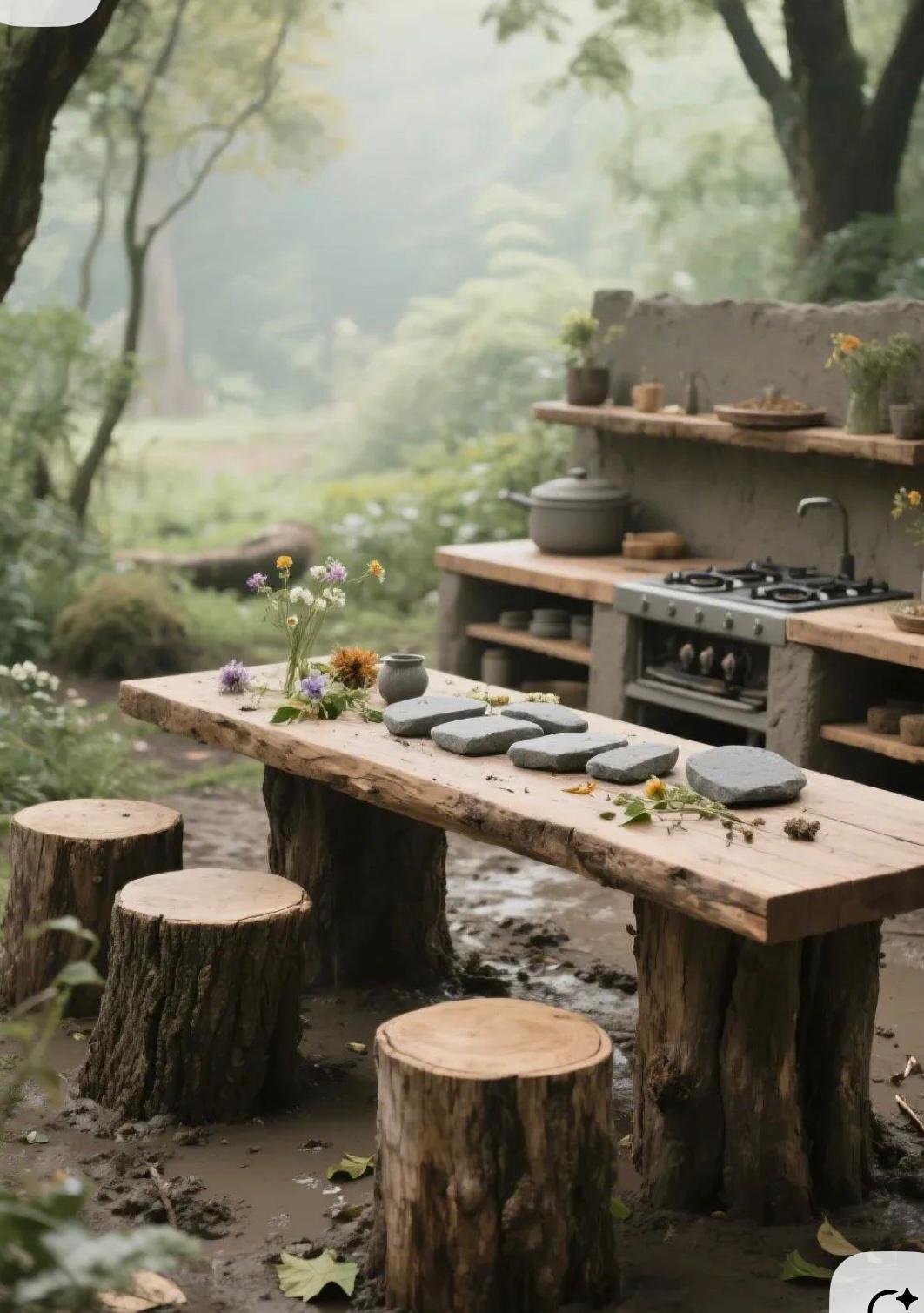
- Near the second tree: a big play table on tree-trunk legs, with small stumps for seats.
- A sandbox/mud kitchen with an A-frame wooden play structure.
- Maybe also a swing, a trampoline and water play, all in natural materials that blend into the garden.
Fire pit & gathering
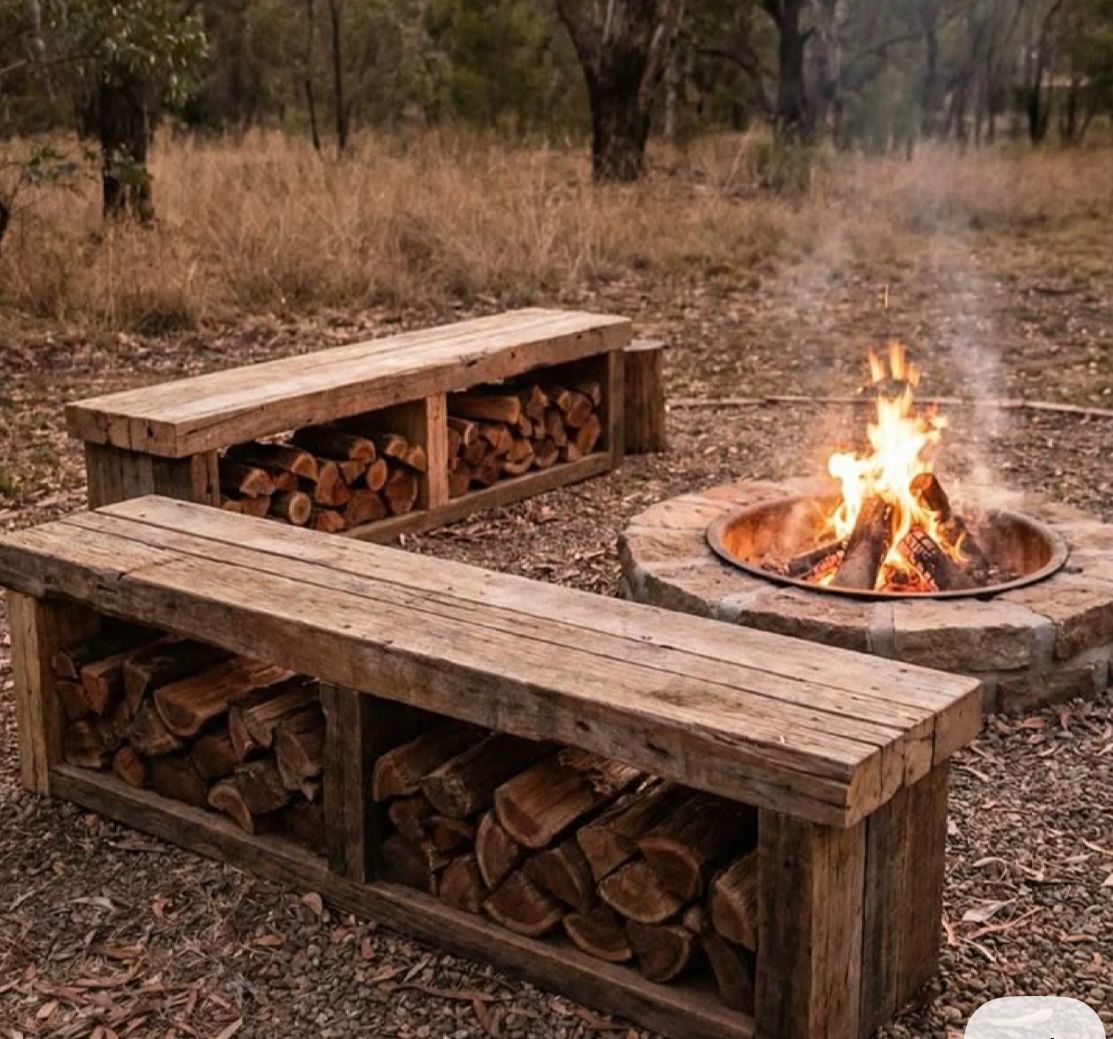
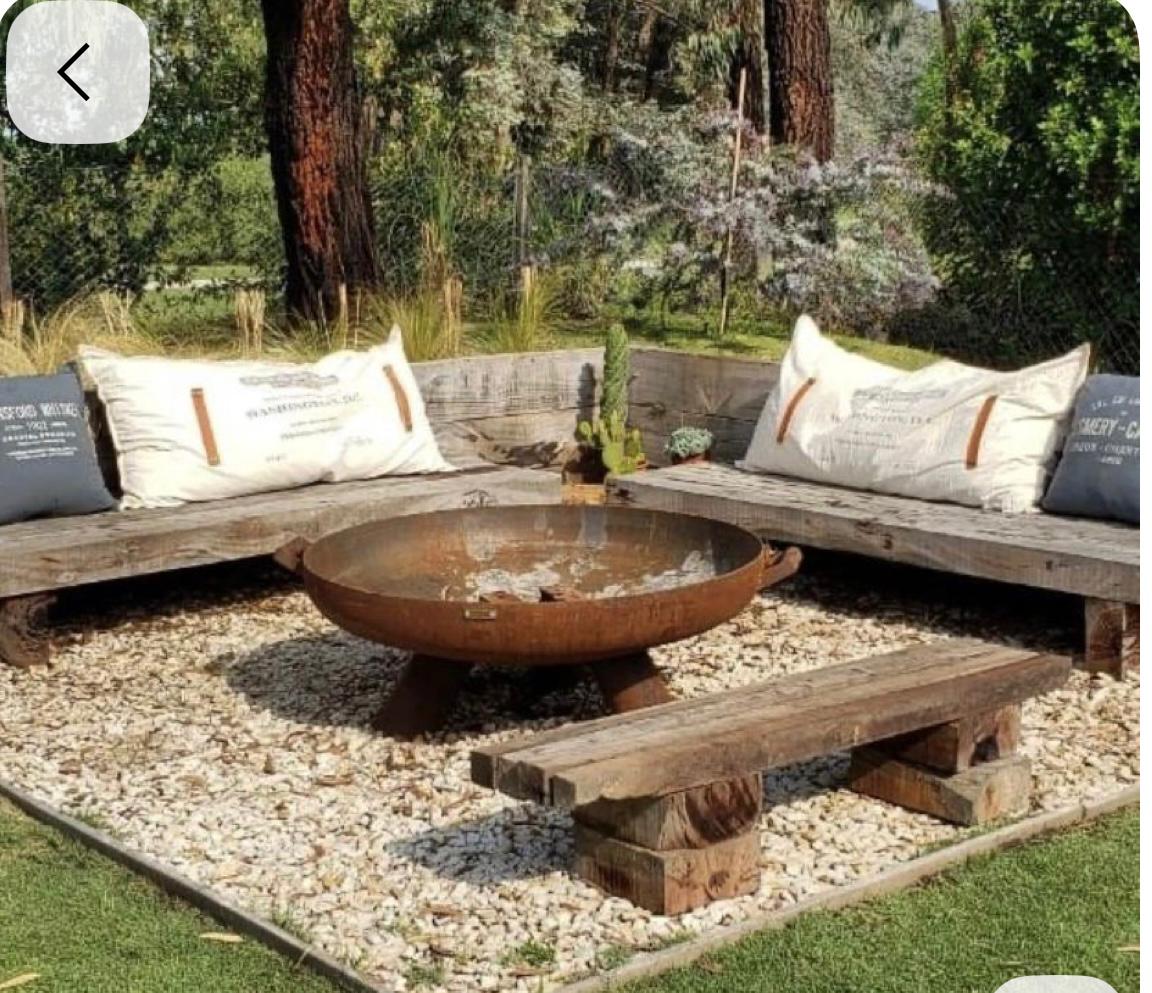
- The existing fireplace stays, with L-shaped reclaimed-wood benches and built-in log storage wrapped around the fire bowl.
- A rustic table nearby, under hanging woven pendants, for eating outside.
- Reclaimed wood and stone throughout; tree seating built around the trees, not against them; play elements worked into the garden.
Wellness
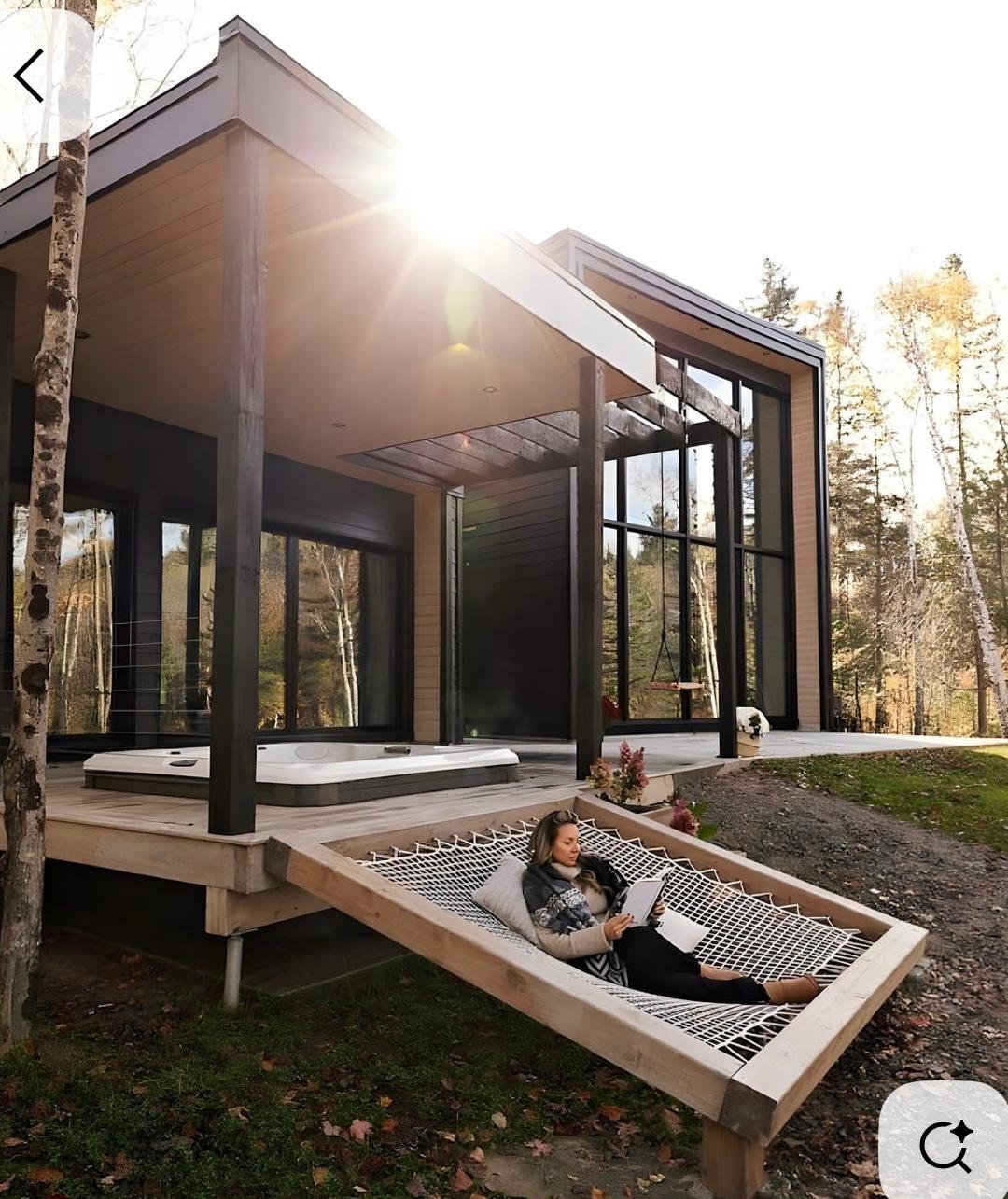
- A sauna, hot tub and outdoor shower on the right side of the garden (as you face the house).
- Wellness retreat for the adults, wet play zone for the kids.
- Guiding principle: the easier it is to do, the better.
Sauna
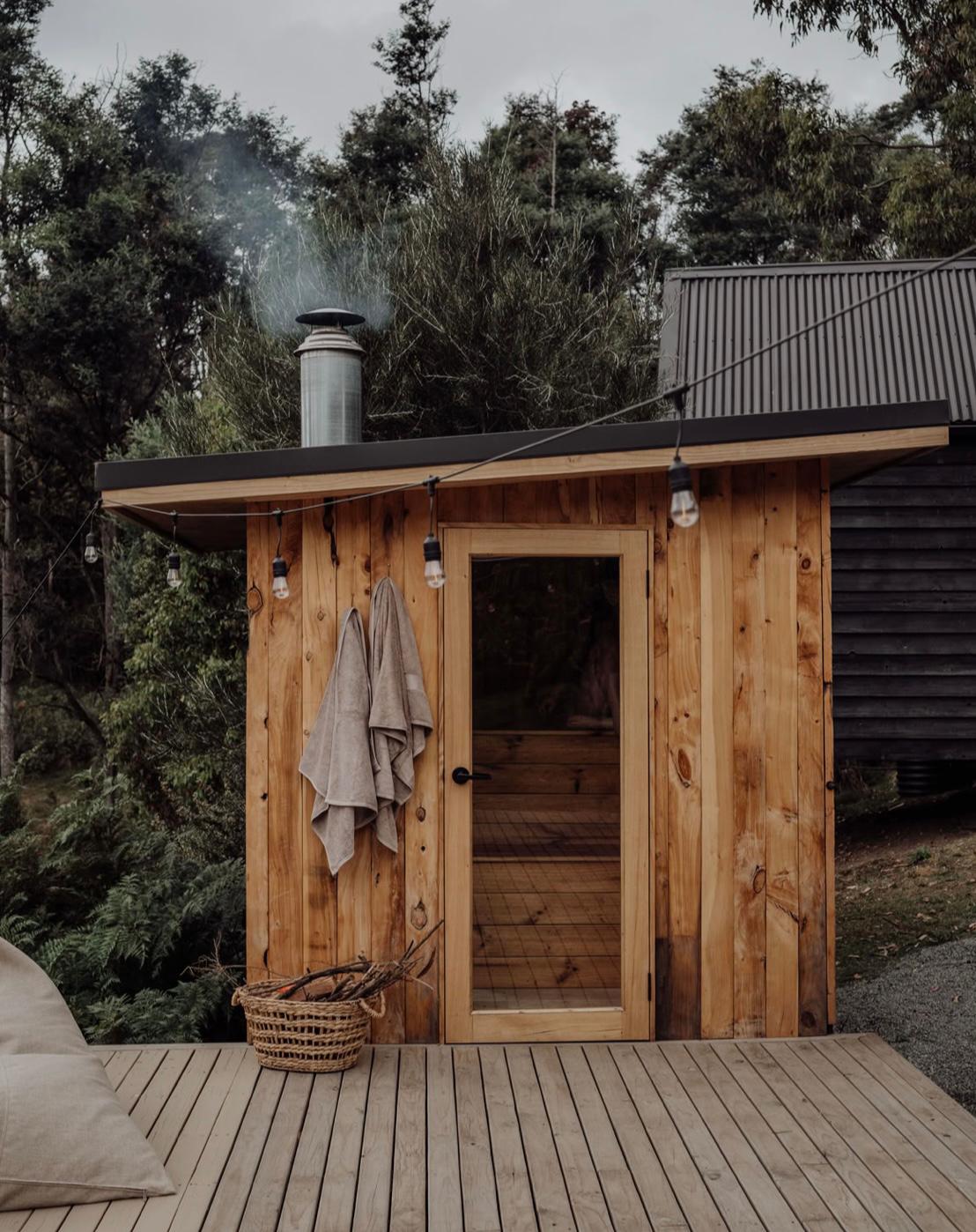
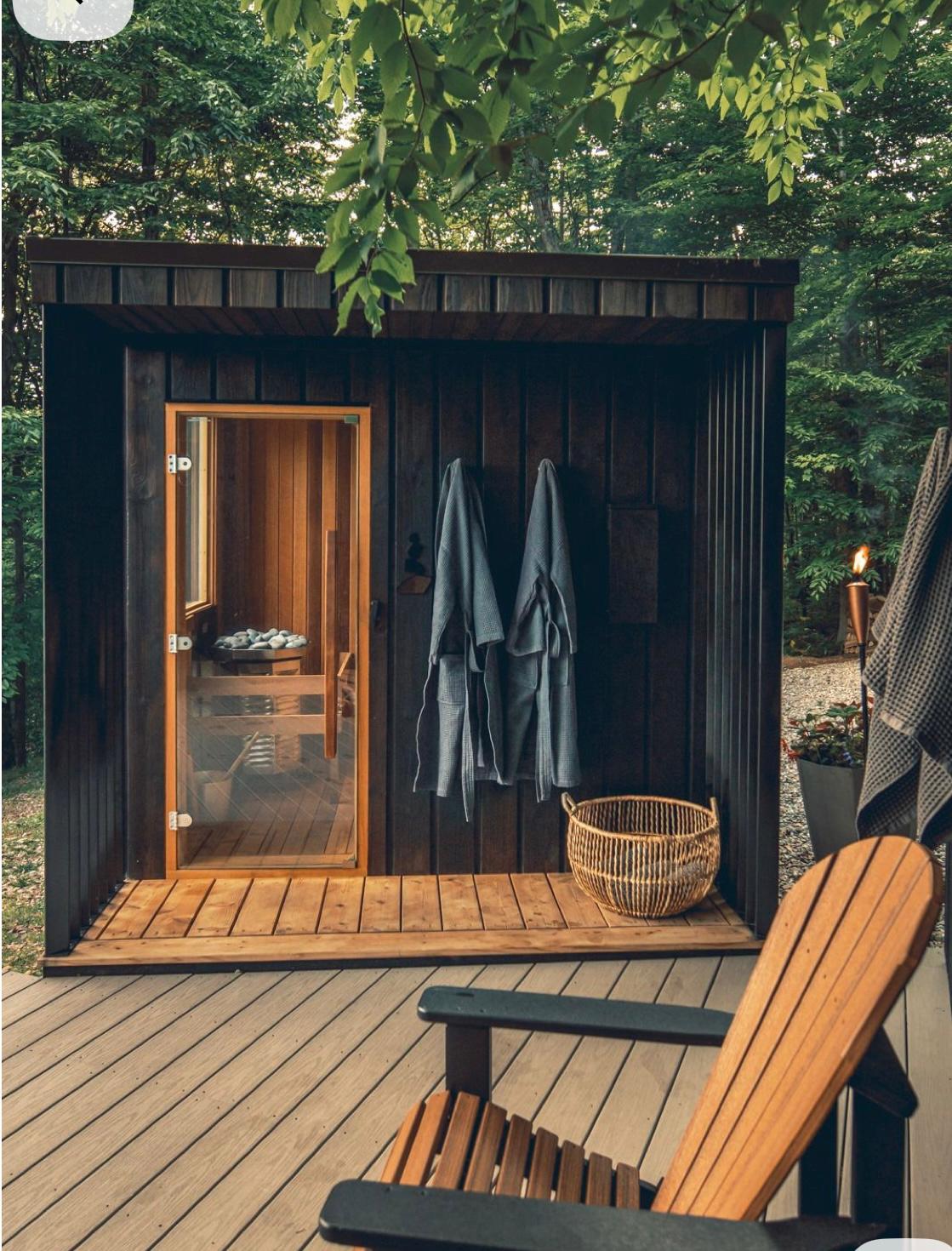
- A small, simple wooden sauna hut on a deck (light cedar with string lights and a glass door, or a dark-stained modern cabin).
- Towel hooks and a wicker basket outside.
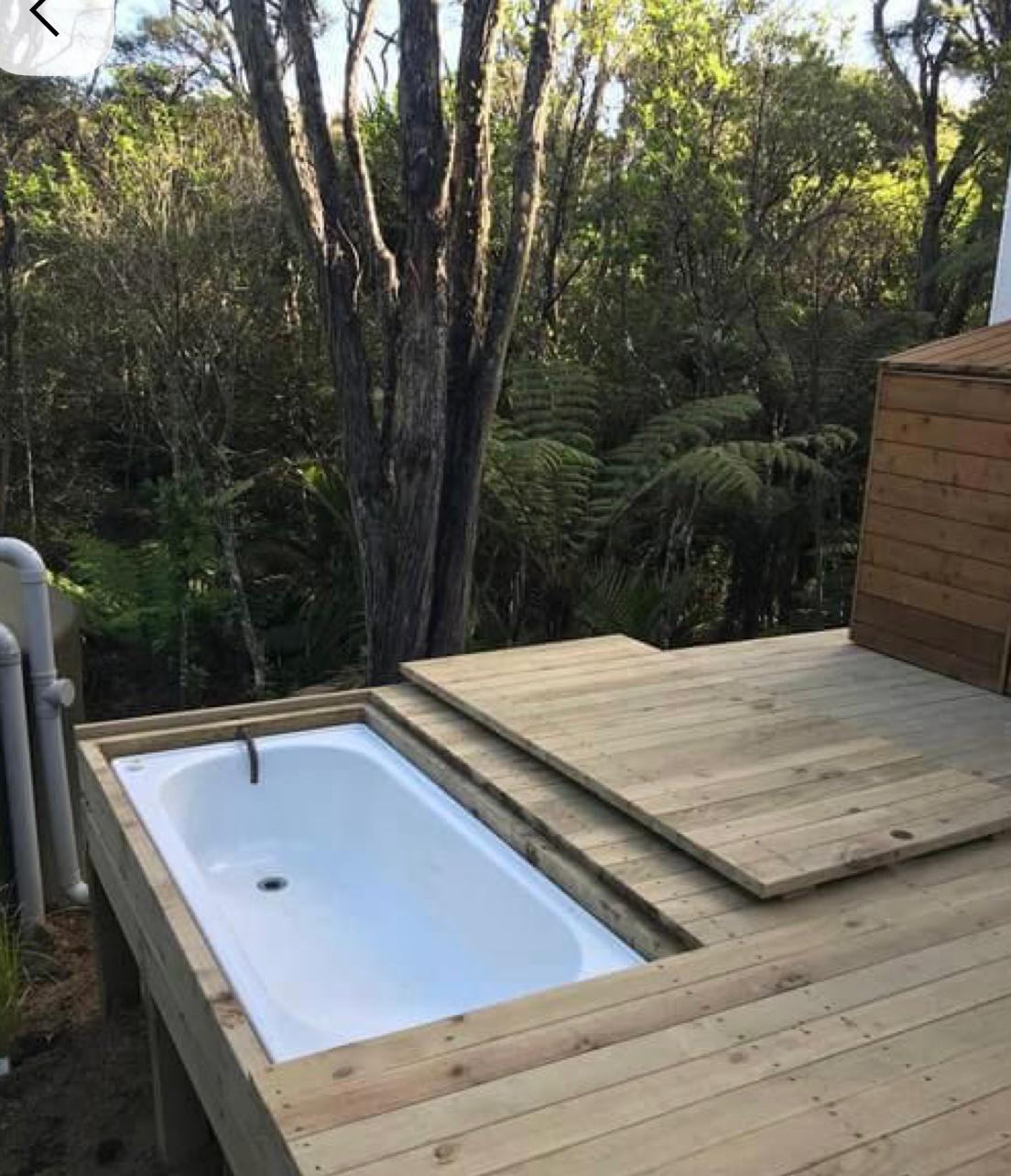
Hot tub
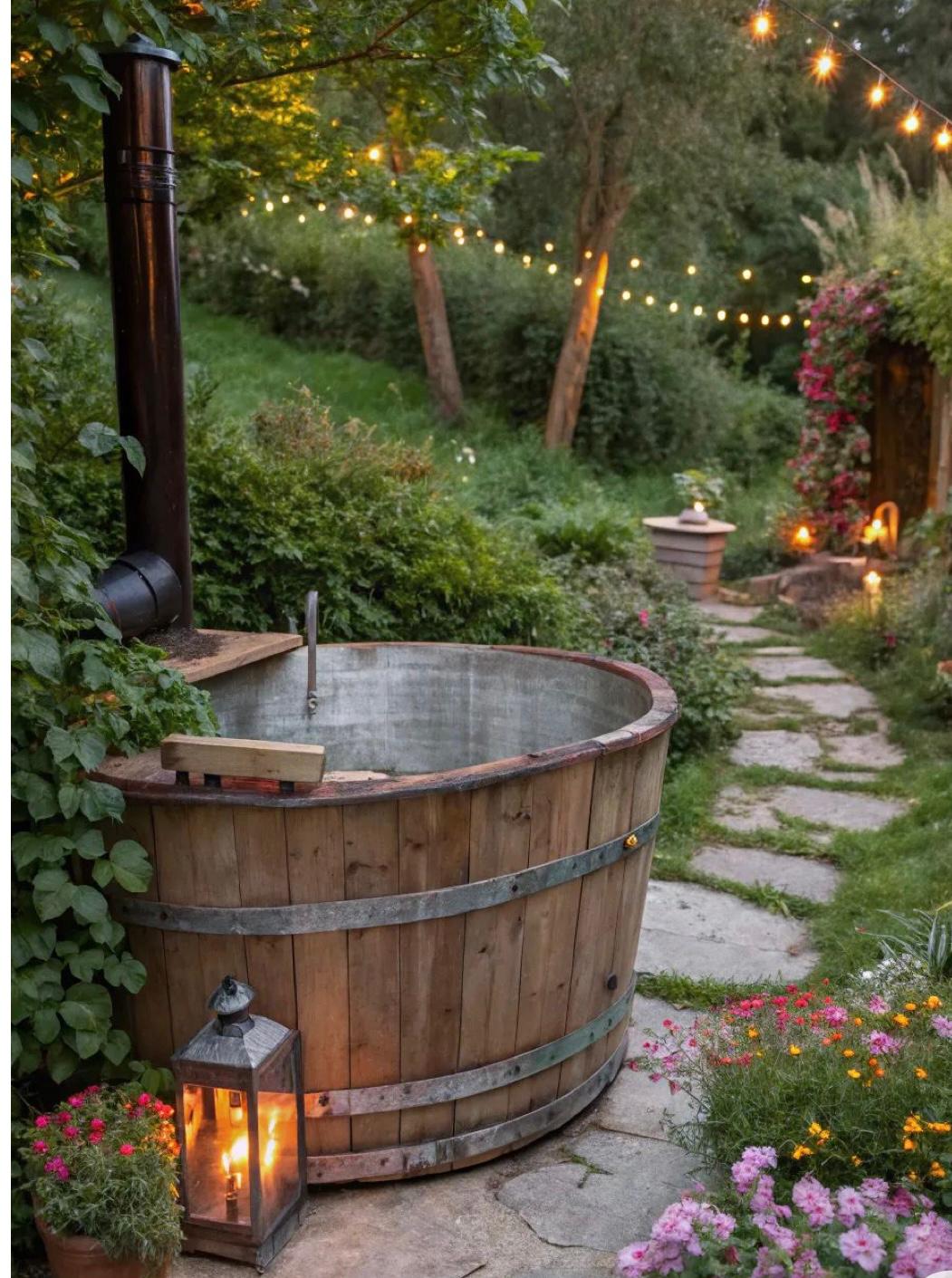
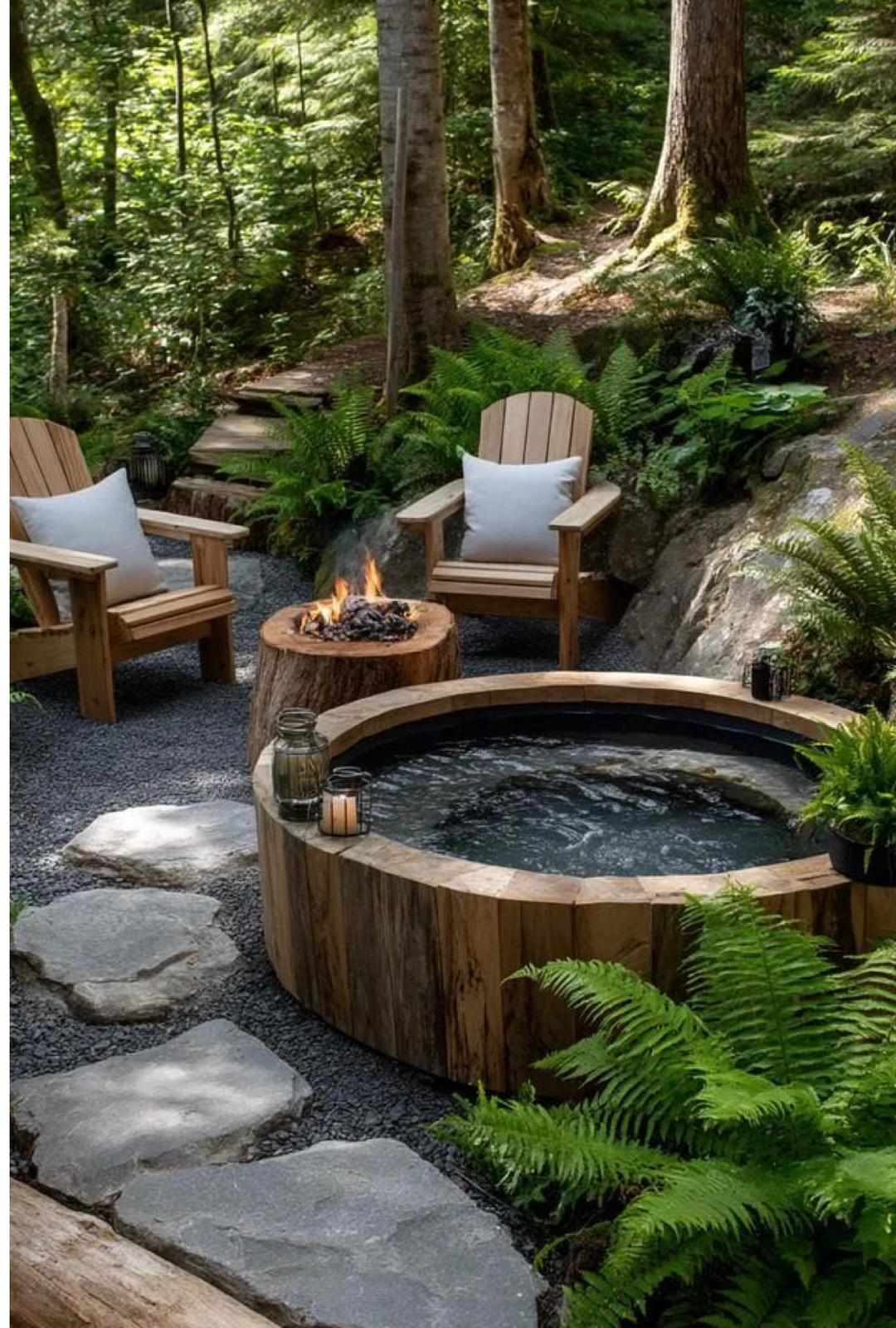
- A wood-fired barrel or round wooden soaking tub, ideally with a small firepit nearby.
- Adirondack chairs, lanterns, and string lights overhead.
- Doubles as a water feature for the kids.
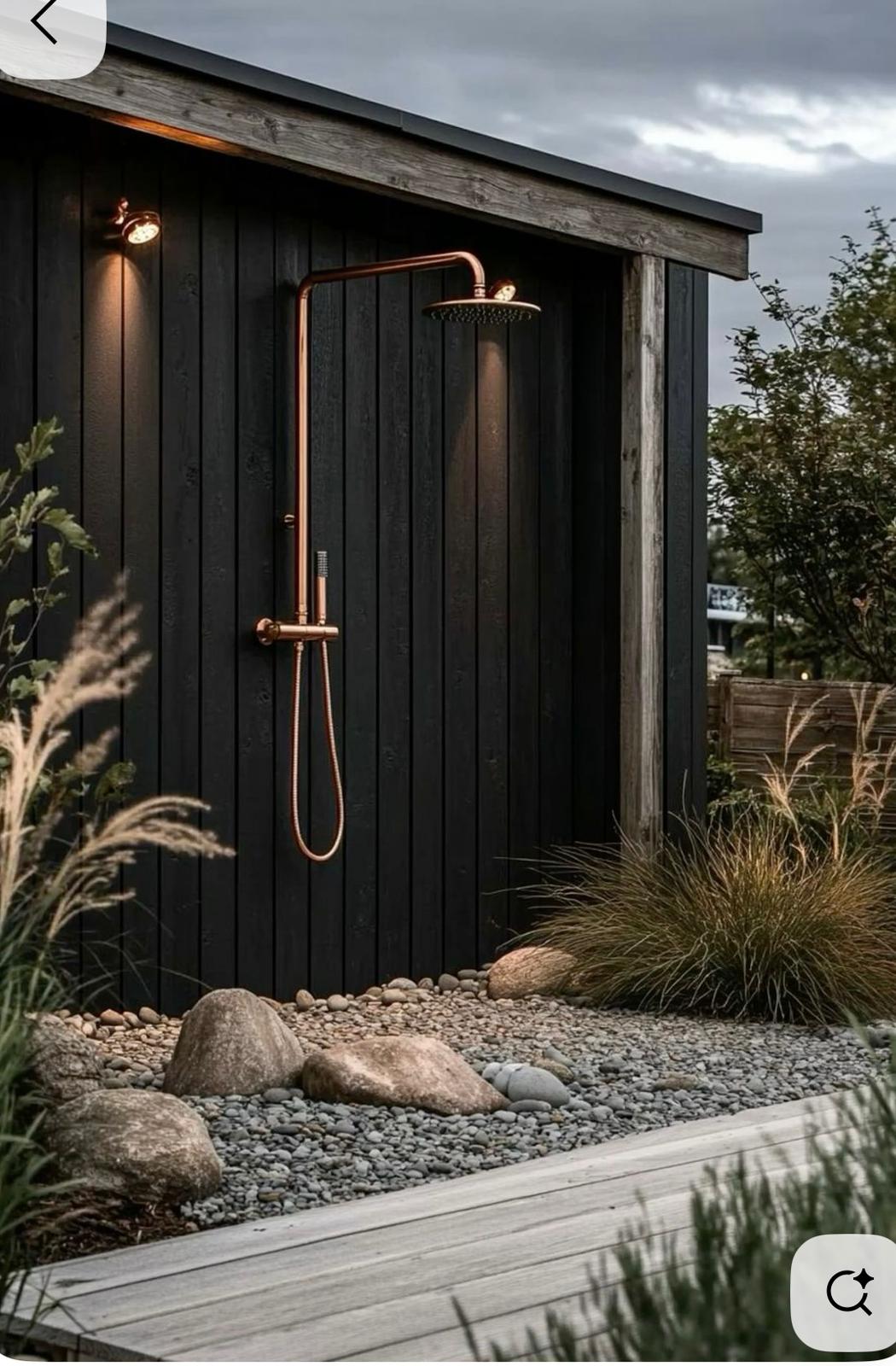
Outdoor shower
- A simple outdoor shower attached to the sauna or close by.
- A black wood panel wall with a copper rain shower on a gravel/pebble base.
- For rinsing off after the sauna or hot tub.
A wooden deck ties the sauna, hot tub and shower into one area. Open question: is wooden decking sustainable enough in the long run, or do we need an alternative?
The palette
Scroll back up and the same threads run through every room: cream, sand, honey wood, sage, terracotta, reclaimed wood, linen, lime plaster, rattan, natural stone. Built-in furniture where it solves a real problem. Indirect lighting, never the cold ceiling glare of a rental flat. And nothing in the house you’d be scared to set a wine glass down on.
We're looking for an architect / interior designer
If you’re an architect or interior designer and this is your taste, get in touch. We have the property, the mood boards and an opinionated brief. What we need is someone with better judgment than ours. Please include references or a portfolio link, and if you know someone it fits, pass this on.