Article · Field notes
Stickers Are Serious
08 Jun 2026 3 min read
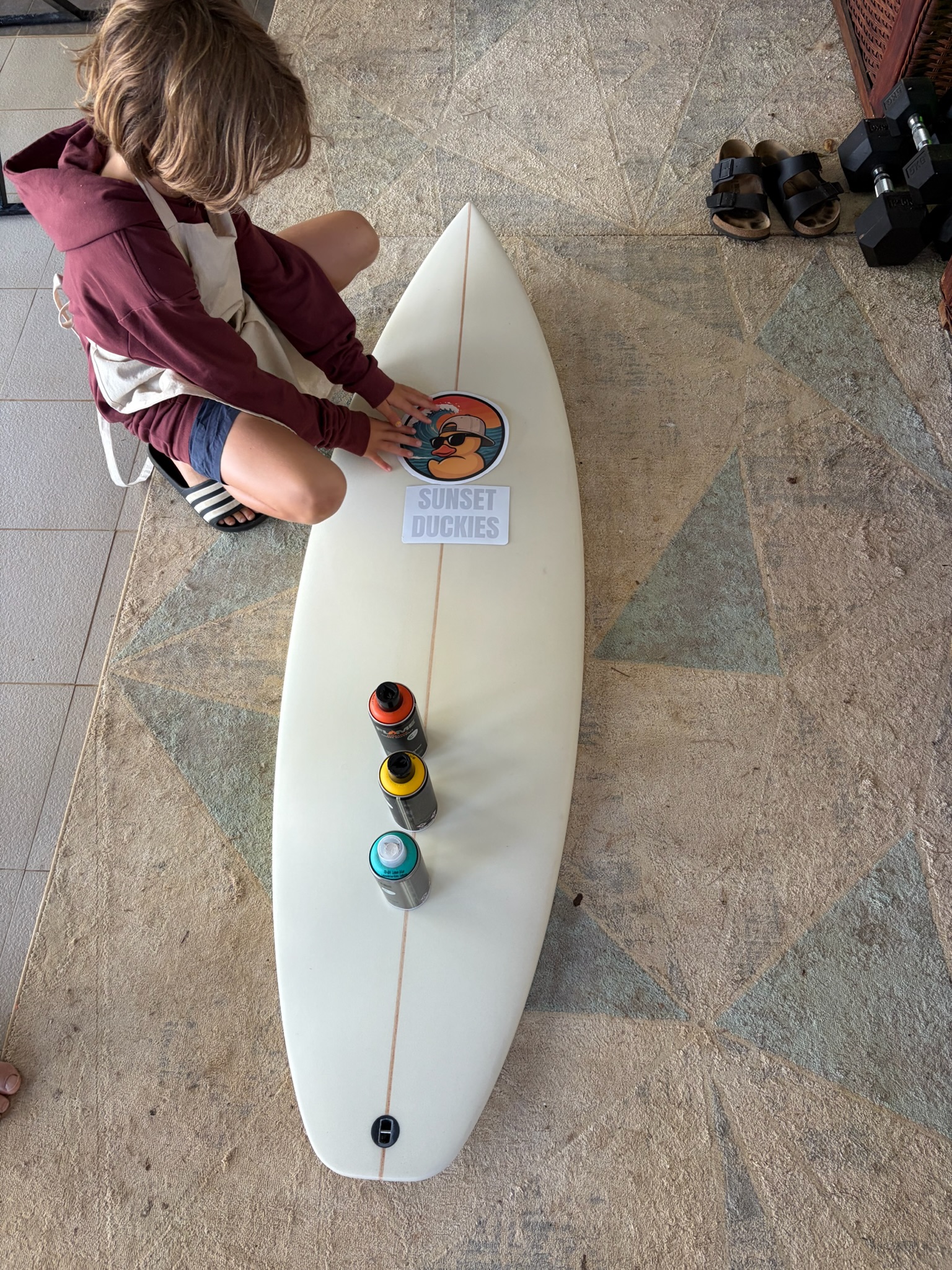
I’m suspicious of merch. It turns things into products too quickly. A good afternoon becomes a drop. A joke becomes a logo. A child’s drawing becomes content, which is one of the fastest ways to make it feel dead.
But then the kids saw the duck off the page and wanted it on everything.
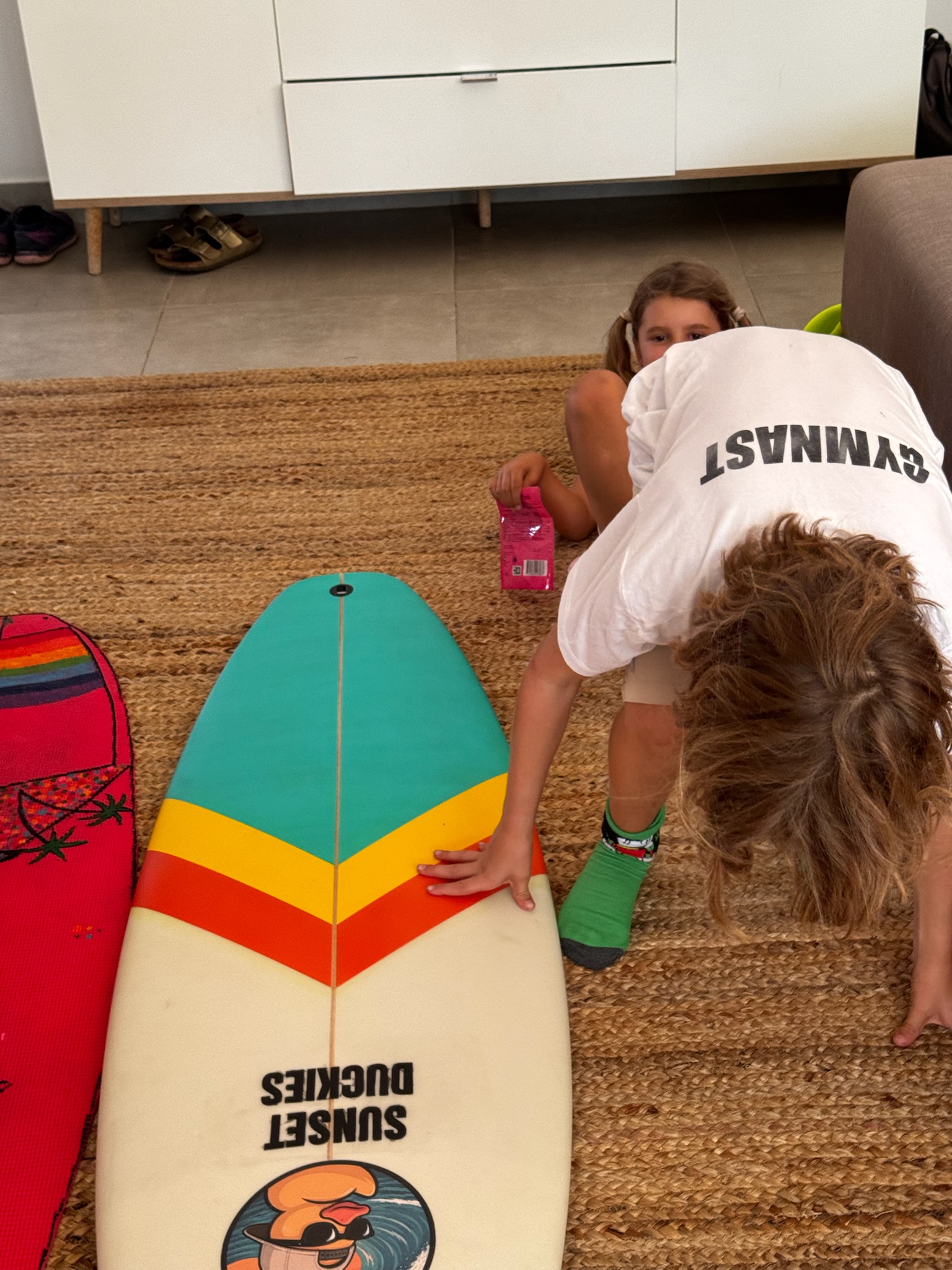
Noah wanted it on his board first, then on a shirt, then on a cap, then on other boards at the break. The others had already voted on versions and argued for favourites, so by then the duck belonged to the group, not just to Noah. Saying no would have been the adult version of missing the point. Nobody was trying to monetize anything. They’d discovered that a drawing could travel.
Stickers came first because stickers are low-risk. You can give them away. You can put one on crooked and survive. You can hand one to another kid without making it a transaction.
The first one went dead centre on the nose of Noah’s board. He applied it with the concentration adults reserve for passport forms and phone screen protectors.
Then came shirts. Then caps, which were non-negotiable because the duck wears one. The traction pad says DUCKIES across the tail, which is the strangest category of merchandise: the kind you stand on.
None of this is a business. It all lives at sunsetduckies.com, but there’s no margin hiding behind it, no inventory plan, no lesson about entrepreneurship. It’s a few kids and one over-involved dad printing a duck onto things because the kids asked and the duck looked better there than expected.
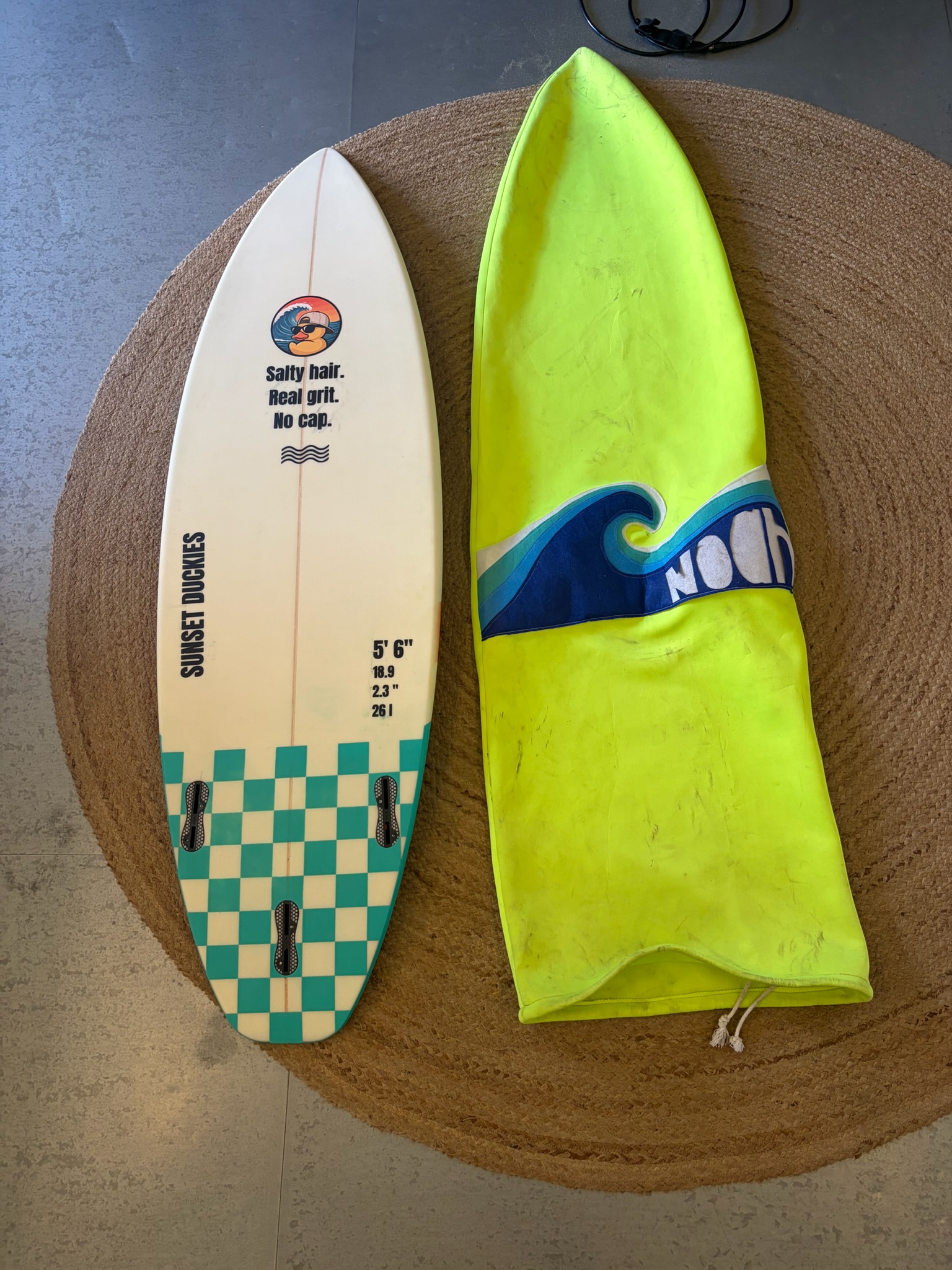
What surprised me is how different the project felt once the stickers left our house.
A board is one object. It belongs to the person riding it. A sticker is smaller and less precious. It can end up on another board, another water bottle, another kid’s shirt. It lets the thing spread without asking anyone to take it too seriously.
That may be why stickers work so well for children. They’re membership without paperwork, a cheap way of saying you can be part of this too.