Article · Field notes
Fifteen Minutes in the Water
03 Mar 2026 6 min read
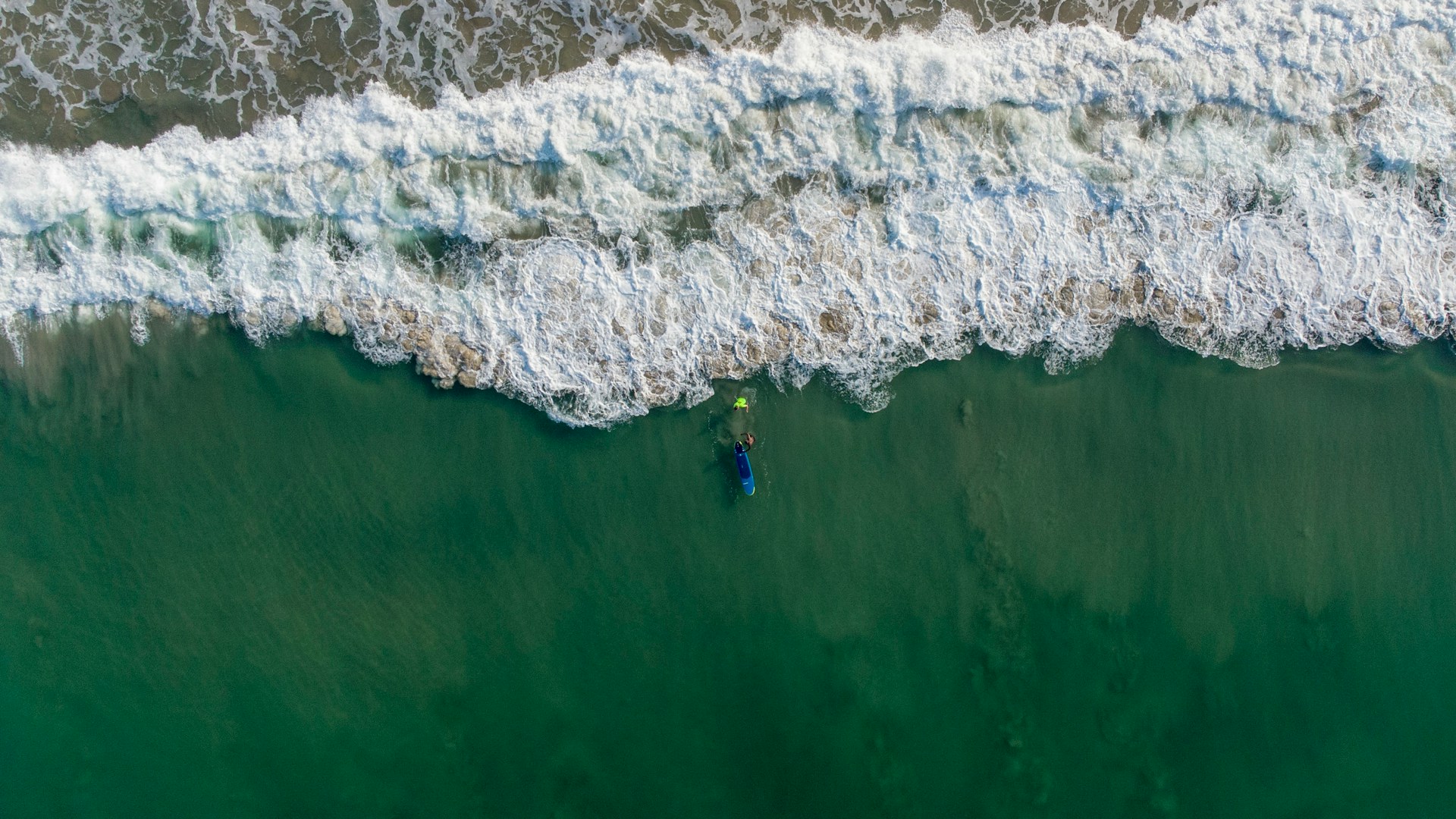
Our surf sessions currently contain about fifteen minutes of surfing.
The rest is running, squats, dry pop-ups, pretend paddling on the sand, and six children asking when they can finally get in the water. It doesn’t look much like the thing their parents signed them up for. That’s deliberate.
We moved to Mauritius about six months ago, and Noah started kitesurfing the week we arrived in September. David Chan Chu did the first few lessons, then I took over, bought a walkie-talkie set, and we went out almost every day. In November we did our first downwinder together: four hours, fifty kilometres. He was eight.
Then in December David ran a kids camp, and something changed. The kids pushed each other and progressed more in a week than Noah had in two months alone with me. I’d been concentrating on instruction. The group was doing work I couldn’t.
For the record, I’ve done this before. I’m a certified volleyball instructor and a certified ski and snowboard instructor. I coached volleyball for over ten years and taught skiing and snowboarding for another ten, always with kids. About a decade ago I stopped, because life and work took over. The instinct stayed. Watch kids train and you can see straight away what’s structured and what isn’t.
So I went looking for that kind of surf coaching here, and didn’t find much.
What you can buy is a one-on-one lesson for 80 euros. A kid shows up, gets a foam board, catches some whitewater and goes home. There’s nobody else their age in the water, nobody to push them, nobody to watch and think “if she can do it, I can do it.” One kid, one instructor, every time.
I wanted to try the group version, and surfing was the obvious sport for it, mostly because of Lara. She’s six, has been doing weekly lessons with David, and can now stand up and ride on her own. Kitesurfing is hard to share with a six-year-old. In the surf, we can all be in the water at once.
Noah talks about it constantly. Lara beams when she paddles out. They even like that I’m the one running it. I know that won’t last forever, so I’m taking the win.
Why the boards stay on the sand
The obvious move was to get a pro coach in straight away. That’s backwards. I’ve seen the same thing in every sport I’ve coached: bring in high-level instruction before the kids have the physical base and they can’t do what they’re being taught. They get the technique in theory, and their bodies just won’t produce it. The kids get frustrated, the coach gets frustrated, and nobody improves.
So the plan is to get the kids super fit first. Able to paddle properly. Able to do a solid, explosive pop-up. Strong enough that an hour in the water doesn’t wreck them. I talked this through with Thomas Barau, another local like David, who’s been very supportive and will probably come in alongside David once the foundation is solid.
That’s where we are now. Almost the entire two-hour session is strength and mobility work: fixing posture, building the movements they’ll need later. At the end they get maybe fifteen minutes of actual surfing, with parents in the water pushing them into waves.
To anyone walking past, it’s a fitness class on the beach with a bit of surfing tacked on at the end. Good. That’s exactly what it should be at this stage.
The other parents are into it, and a couple of them train alongside the kids. You don’t need a pro coach for squats, pop-ups, paddling drills, and keeping six children moving on sand.
The group
Twice a week. Tamarin Bay. Rain or shine.
Noah, Lara, Taylor, Emy, Teo, and Ali, aged 6 to 9. Small enough that everyone gets attention. Big enough that they push each other, which after December is the whole point: a kid watches another kid nail something and thinks “I want to do that too.”
Before the first session, we set the ground rules together:
- We arrive together, greet the coaches, and listen for the start.
- We stay with the group on the sand and in the water.
- We wait for coach instructions before entering the water.
- We speak with respect and save feedback for the debrief.
- We take care of our boards, the beach, and each other.
- We finish properly: boards back, beach tidy, goodbye said.
The session
The structure is the same every time, on purpose. Kids do better when they know what’s coming.
- Welcome, rules, and today’s plan: 5 min
- Theola’s playful opener: 10 min
- Warmup and stretch: 10 min
- Theory on the sand: 10 min
- Water block with one focus: 20 to 60 min
- Debrief and goodbye: 5 min
The sand part is fixed. The water block bends to whatever Tamarin serves up, which some days is clean waves and some days is twenty minutes of chop. Theola’s opener changes, the drills rotate, the theory moves forward, but in the water it’s always one focus.
The ratio will flip as the kids get stronger. The frame won’t. I ran volleyball on the same rule: change the drill, keep the frame.
The tool
I built an interactive session planner for this. Regenerate a session, print it, take it to the beach. What comes out is a single sheet of paper with a plan on it, something a coach can glance at between sets. That’s all it needs to be.
Kids Surf Session Plan
Tamarin Bay • Tuesday & Wednesday • 60-100 min coaching session
Date: ___________
1 | Welcome + Rules + Today We Do
5 min- Welcome together, hear the plan, and set the focus.
- Theola runs a short playful opener so everybody joins in.
- Warm up and stretch to get ready for paddling and standing.
- Learn one simple surf idea on the sand.
- Take that same idea into the water for focused practice.
- Finish with a quick debrief, clean-up, and goodbye.
- We arrive together, greet the coaches, and listen for the start.
- We stay with the group on the sand and in the water.
- We wait for coach instructions before entering the water.
- We speak with respect and save feedback for the debrief.
- We take care of our boards, the beach, and each other.
- We finish properly: boards back, beach tidy, goodbye said.
2 | Theola Playful Opener
10 min3 | Warmup + Stretch
10 min ● mobility ● strength4 | Theory on the Sand
10 min5 | Water Block: One Focus
20-60 min6 | Quick Debrief + Goodbye
5 minThe exercises
And this is the land-based exercise collection behind it: strength, mobility, balance, coordination, cardio. Every drill is tagged, so the planner can pull whatever the day needs.
Surf Exercise Collection
Tamarin Bay • Kids Coaching (ages 6–9) • 14 exercises •
click to expand
No exercises match your filters.
Try removing a filter to see more results.
1. Animal Walk
5 minDiscuss with the group one animal, how it would walk, then everyone walks it across the sand. Focus on quality of movement, not speed.
Variations
- Crabwalk: on all 4, chest towards the sky, keep buttocks locked so there is a straight surface from knees to shoulders
- Bear crawl: hands and feet on the ground, knees off the sand, move opposite hand and foot together
- Frog jumps: deep squat, hands between feet, explode forward and land soft
- Inchworm: hands walk forward to plank, then feet walk to hands
- Gorilla shuffle: deep squat, swing arms side to side and shuffle laterally
🏄 Why: Builds the crawling and push patterns used in pop-ups and paddling
2. 90-90 Hip Switch
3 minGo in small groups of 3. Sit on the sand with legs in 90-90 position (both knees bent at 90 degrees). Rotate both knees to the left, then to the right. Then stand up on your knees. Partners watch and correct each other's form.
Variations
- Add an arm reach overhead during each rotation
- Close eyes for a proprioception challenge
- Hold each side for 3 breaths before switching
🏄 Why: Hip rotation is the foundation for bottom turns and cutbacks on the wave
3. Pop-Up Races
5 minLie flat on the sand face down. On the whistle, pop up to surf stance as fast as possible. Partner checks foot placement and hand position. First to a clean stance wins.
Variations
- Add a 3-step run after the pop-up
- Do it on soft sand for extra difficulty
- Coach calls 'regular' or 'goofy' mid-pop-up
🏄 Why: Directly trains the chest-to-feet explosive movement for taking off on a wave
4. Surf Stance Balance Duel
4 minBoth surfers stand in surf stance, low and stable. Try to unbalance your partner using gentle palm pushes on shoulders only. Feet must stay planted. First to move a foot loses.
Variations
- Stand on one leg instead of surf stance
- Close eyes between pushes
- Do it on a line drawn in the sand for a narrower base
🏄 Why: Trains the low-center-of-gravity balance needed for riding whitewater and making turns
5. Paddle-Up Relay
5 minTeams of 3. Lie flat on your belly and paddle your arms in the air 10 times with good form. Then sprint to the next teammate and tag them. Team that finishes first wins.
Variations
- Add a pop-up at the end before tagging
- Increase paddle count to 15 or 20
- Paddle with fists closed to build grip strength
🏄 Why: Builds paddle endurance and arm speed for catching waves before they pass
6. Crocodile Twist Walk
3 minLunge forward, plant both hands inside the front foot, then twist and reach one arm to the sky. Hold briefly, then step into the next lunge. Alternate sides walking down the beach.
Variations
- Hold each twist for 3 deep breaths
- Add a push-up between each lunge
- Keep the back knee off the ground for extra challenge
🏄 Why: Opens the thoracic spine and hips for rotation during turns on the wave
7. Superhero Hold Contest
3 minLie face down on the sand. Lift arms and legs off the ground like Superman flying. Hold as long as possible. Coach times everyone. Try to beat your own record each session.
Variations
- Add small arm flutter like a swimming motion
- Rock gently side to side while holding
- Alternate lifting right arm + left leg, then switch
🏄 Why: Strengthens the back and core muscles used to arch during paddling and duck dives
8. Beach Plank Tag
4 minEveryone holds a plank position in a circle. One 'tagger' crawls around in bear crawl and taps ankles. If your ankle is tapped, you become the tagger. Drop your hips and you're out.
Variations
- Side plank variation: everyone holds side plank
- Add 3 mountain climbers between each tag attempt
- Two taggers at once for bigger groups
🏄 Why: Core endurance keeps you stable on the board when waves push and pull underneath
9. Wave Jump Drill
4 minDraw a line in the sand to represent a wave. Jump side to side over it, landing in surf stance each time. Coach calls tempo changes: slow, fast, freeze!
Variations
- Jump forward and backward instead of side to side
- Single leg hops only
- Eyes closed on the 'freeze' command
🏄 Why: Trains quick reactive balance for adjusting weight on the board when a wave shifts
10. Seaweed Stretch Circle
4 minStand in a circle. One person calls a body part (shoulders, hips, ankles, wrists). Everyone moves that joint slowly in big circles, swaying like seaweed in the current. Rotate who calls.
Variations
- Add partner-assisted stretches for shoulders and hamstrings
- Combine two body parts at once (e.g., hips and wrists)
- Move in slow motion, then double speed on coach's call
🏄 Why: Full-body mobility warm-up prevents injury and prepares joints for paddling, popping up, and turning
11. Turtle Roll Practice
4 minLie on your back on the sand, arms holding an imaginary board above you. On the whistle, roll to your belly, grab the 'board', and start paddling. Roll back when the whistle blows again.
Variations
- Speed rounds: roll as fast as possible
- Add a pop-up after rolling to belly
- Use a real boogie board for added realism
🏄 Why: Teaches the turtle roll technique for getting through whitewater without losing the board
12. Sand Sprint Pop-Up
4 minSprint 10 meters on the sand, drop to your belly, do one clean pop-up to surf stance, then sprint back. Repeat 3 times. Coach checks stance quality — clean form counts more than speed.
Variations
- Coach calls 'regular' or 'goofy' direction mid-sprint
- Sprint backward to the start
- Add a squat hold for 3 seconds after each pop-up
🏄 Why: Combines cardio fitness with pop-up mechanics under fatigue, simulating real surf conditions
13. Hip Mobility Castle Builder
8 minStart with 1 minute of slow 90-90 hip switches to perfect the movement. Then sit in a circle with legs in 90-90 position. Scoop handfuls of sand and use the hip rotation motion to move and deposit sand on the opposite side to build a castle. Coach shouts "Pat your castle!" — kids scoop sand from knee position, place it, and pat their castle down. Coach shouts "Check the castle!" — kids do a double action, checking their left partner's castle then their own castle on the right. Prettiest castle wins!
Variations
- Eyes closed scooping for a proprioception challenge
- Race to build the tallest castle instead of prettiest
- Winner chooses a partner to work with in the water during surf time
🏄 Why: Hip rotation through play — same movement pattern used in bottom turns and cutbacks on the wave
14. Duck Duck Goose — Animal Moves Edition
8 minClassic Duck Duck Goose with animal exercise twists! Sit in a circle. The "It" player walks around tapping heads saying their chosen animal movement. Instead of saying "Goose", they call out an animal exercise: "Bunny!", "Frog!", "Cobra!", "Peeing Dog!", "Butterfly!", or "Owl!". Everyone does the animal movement while the two players chase each other around the circle twice using those same animal moves. If tagged, the "It" person goes again and picks the next animal.
Variations
- Kids invent new animals and movements each round
- Combine two animals in one round (e.g. Frog-Cobra combo)
- Slow-motion round where both chasers must move in slow-mo
🏄 Why: Builds full-body mobility and coordination through play while keeping energy and group focus high between drills
For now, the kids still measure a session by the fifteen minutes they spend on their boards. I count the pop-ups that came before.