Article · Field notes
The First Heat
31 May 2026 5 min read
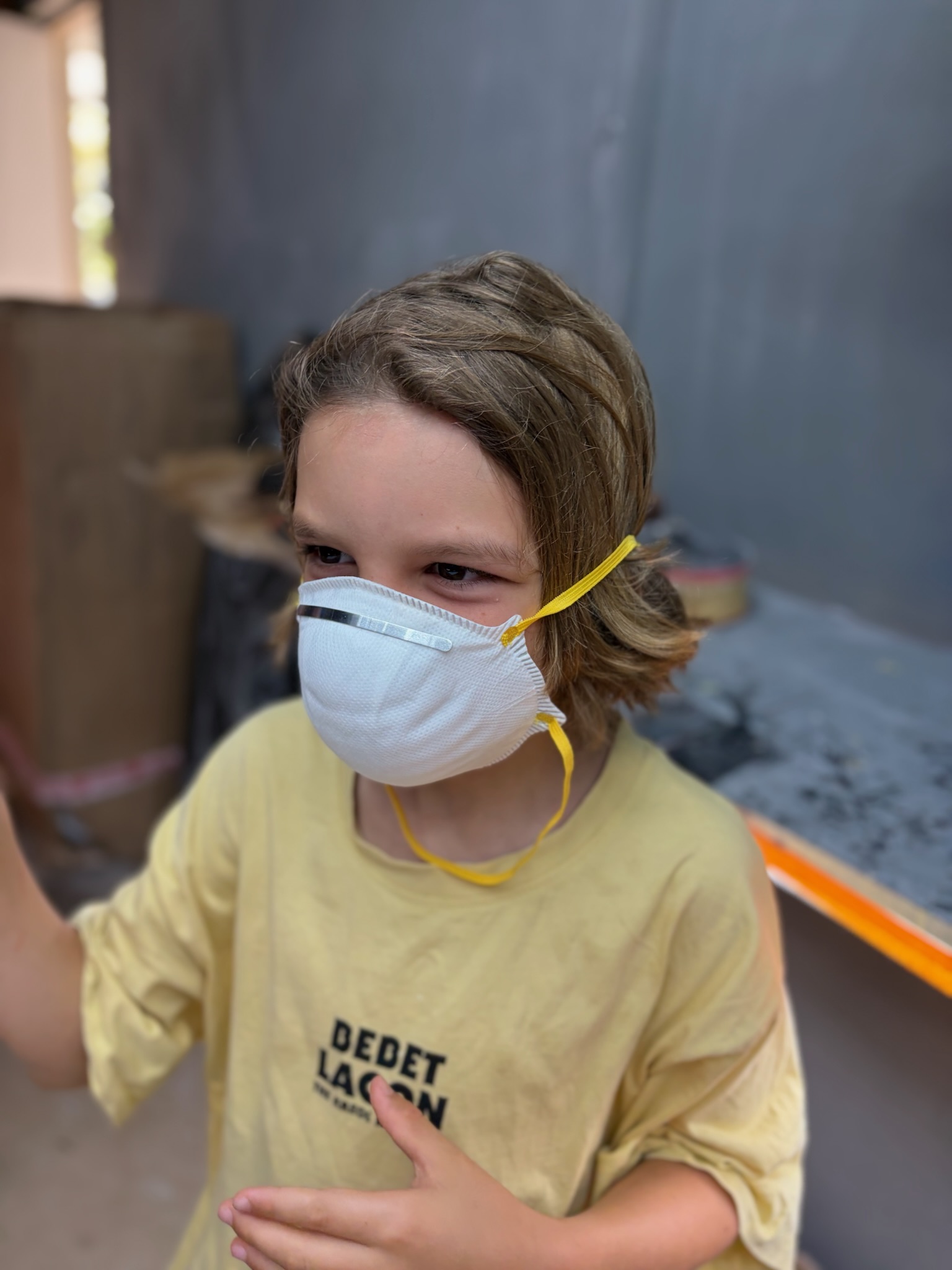
Noah was weirdly quiet in the car.
Not sulking quiet. Not tired quiet. The other one, where the brain is running too fast and the mouth has decided to stay out of it.
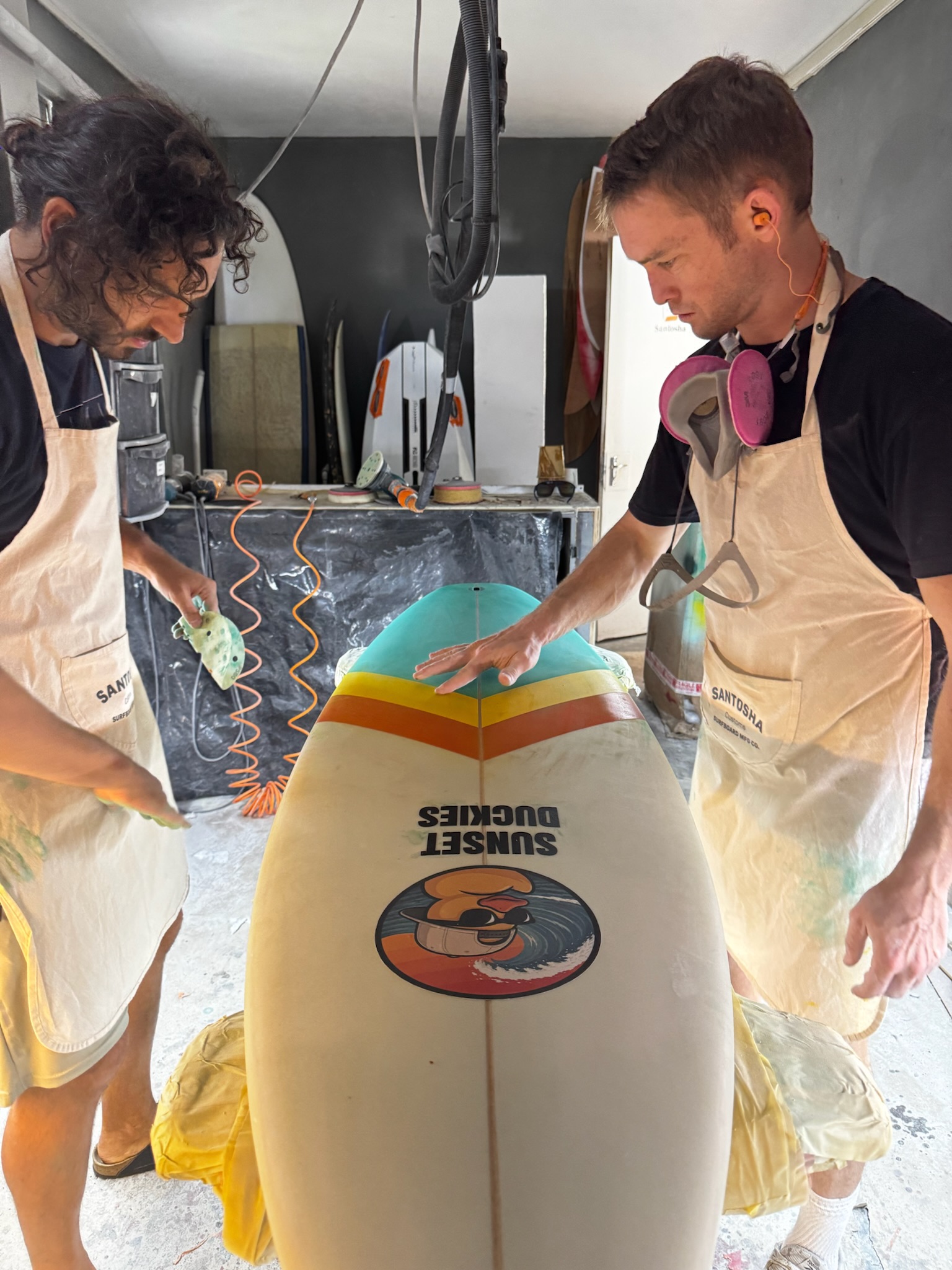
The board was finished. It had survived the shaping bay, the respirators, the spraying, the glassing, the decals, and a long line of adults running a hand along the rail and nodding gravely. It looked like a surfboard. It looked, if I’m allowed to say so, pretty damn good.
But on land everything gets to lie a little.
A board can look fast on a rack and feel dead under your feet. It can have the right dimensions and still paddle like a door. It can carry three months of work and one very confident duck, then meet its first little Tamarin wave and reveal that we’d all been admiring furniture.
So we took it to the water with other kids watching. Because apparently parenting is mostly inventing new ways to make your own heart rate worse.
A very serious contest, obviously
The format was tiny. A few heats, two or three kids in the water, best two waves counted (if the adults remembered to count). Someone had a whistle. Someone had a clipboard. The whole operation had the authority of a gazebo and a folding table, which is exactly the right amount of authority for eight-year-old surfing.
I didn’t want a big event. I wanted enough structure that the kids treated it like a thing, and little enough that nobody forgot this was a bunch of children at Tamarin trying to catch waves.
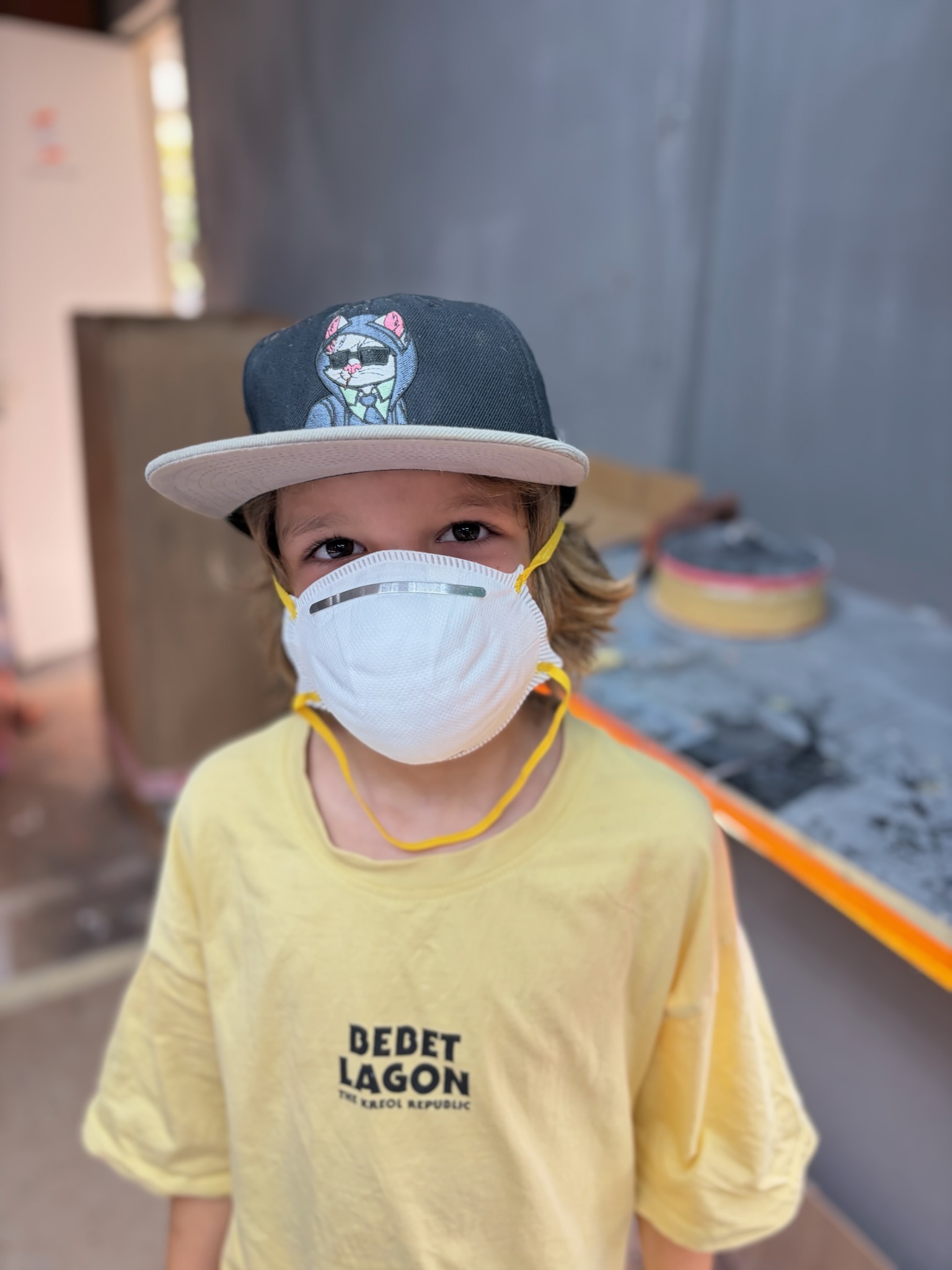
This one’s from the build, not the contest, but it’s the same look I saw that morning: slightly serious, slightly pretending not to be, and fully aware that the adults had now made the thing real.
The other kids knew the board before it ever hit the beach. They’d seen the drawings. They’d voted on duck versions. They’d argued about colours with the confidence of people who have never paid an invoice. So there was no big reveal, just the finished version of something they’d already been allowed to care about.
That made the first paddle-out worse and better at the same time.
Noah didn’t give a speech about pressure. He just carried the board differently. Less like a toy, more like something that could embarrass him.
The first wave
I wish I had a perfect photo of the first wave. I don’t. I was too busy doing the useless parent thing where you stand on the beach and try to control physics with your face.
He paddled. The board moved. Not beautifully, and nothing like a surf movie. But enough.
Then the wave picked him up and the whole project changed category.
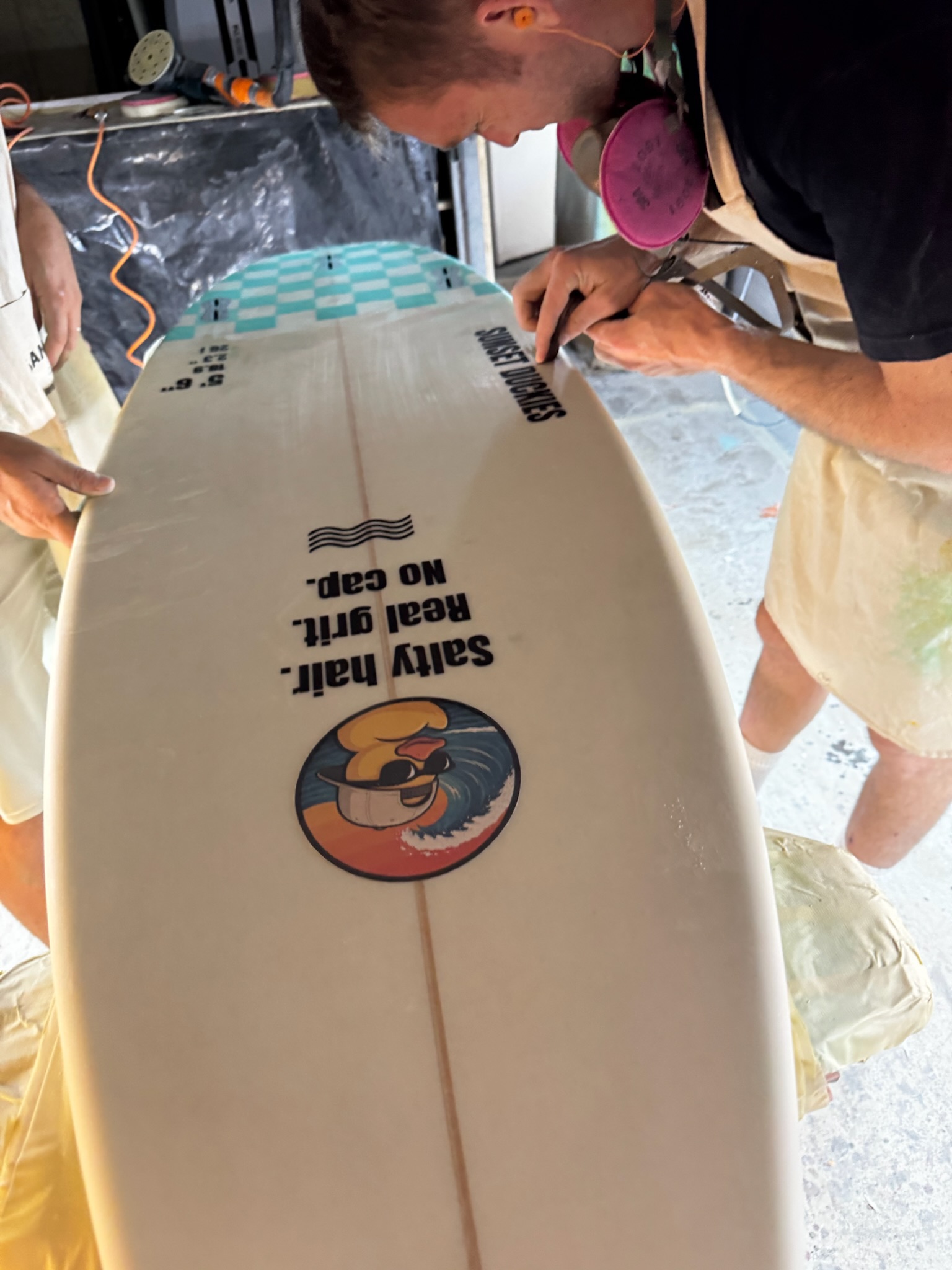
Up to that second, the board was a workshop story: foam dust, sanding, paint, stickers, Daniel and the Santosha guys doing their magic, Noah learning not to rush. After that wave it was just his board.
The official technical review, conducted from the beach:
- It paddles.
- It catches small Tamarin waves.
- It turns when he asks, at least enough for an eight-year-old to feel it.
- It did not become an expensive wall decoration with fins.
Meanwhile, on the sand
The day had a second half on land. Stickers, a few tees, some caps, a folding table next to the cooler. Mostly free. I kept my commerce brain out of it. The duck didn’t need a funnel. It needed to escape the board.
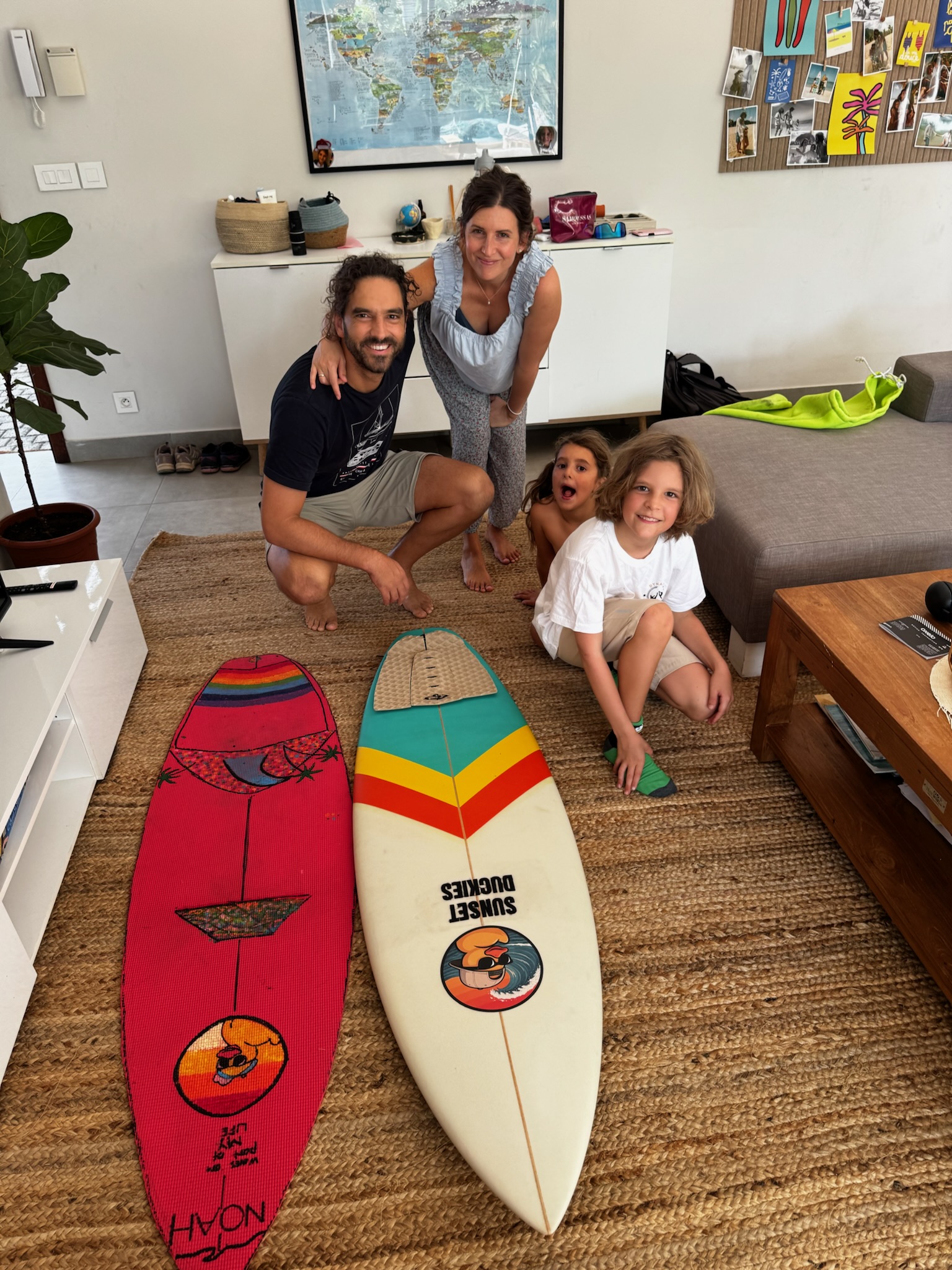
Stickers make ownership fuzzy in a good way. A board belongs to one kid. A sticker can jump to another board, a bottle, a laptop, somebody’s cap, and nobody has to take any of it too seriously.
That was the part I didn’t expect to care about. Noah made the first mark, but the other kids helped choose what it became. When they wore it or slapped it on something, the message in kid language was pretty clear: this is ours too.
By the end of the morning the board had done the only two jobs I really cared about. It surfed. And it gave a few kids the feeling that they were in on something together.
That’s a lot for one duck.
How the board got here
Three months of foam dust, sanding and spray paint that led to this first heat.